
Metabolic Costs Of Unreciprocated Social Baseline Regulation In Leadership
Unreciprocated social baseline regulation forces a leader's brain to expend continuous metabolic energy on top-down inhibition, raising allostatic load.

Seat
Four messages sit open on a desktop display at eleven at night while an engineering incident unfolds in an adjacent terminal. The chief technology officer asks whether to abort the deployment, the lead investor requests an update on the morning board deck, and a department head sends a paragraph detailing personal friction with a peer. None of these messages contain technical data or structural decisions requiring an executive vote.
Each sender is seeking a specific physiological state: the quiet neural baseline of someone who appears entirely untroubled by surrounding chaos.
Social baseline theory establishes that the human nervous system defaults to expecting reliable co-regulators. When another person is perceived as available and capable, the brain budgets environmental threats and cognitive tasks assuming shared effort. Metabolic resources are conserved, neural threat responses in the anterior insular cortex and dorsal anterior cingulate cortex recede, and systemic vascular resistance drops.
Proximity converts demanding environmental work into a lower-cost operation. In executive roles, this biological economy operates in reverse.
A founder or executive sits where team members, board members, and direct reports continuously attach to their emotional state. Rather than experiencing shared load, the leader functions as a non-reciprocating environmental stabilizer for the organization. The team regulates down its own anxiety by leaning against the steadiness of the leader, who receives zero coregulatory input in return.
The metabolic expenditure of maintaining that visible composure falls exclusively on one biological budget.
Social baseline theory demonstrates that proximity to a competent co-regulator reduces neural threat processing, yet in leadership seats the regulator bears the total metabolic tax of both parties alone.
When an executive maintains a predictable posture under heavy load, observers read that calm as evidence of excess capacity. The natural organizational response to visible stability is to transfer additional operational and relational weight. The leader who conceals physiological strain to protect focus accelerates the rate at which others offload their own baseline regulation.
Over extended quarters, this pattern creates a silent structural imbalance. The organization operates efficiently because participants borrow calm from a central reservoir. That calm does not stem from structural clarity or operational alignment; it is purchased through the continuous, unreciprocated self-regulation of one person.
The team feels settled and supported, assuming the arrangement is stable simply because the chair remains occupied.

Signal
The neurological architecture of social baseline regulation relies on low-level perceptual processing. Human neural circuits constantly scan for social safety signals, evaluating vocal cadence, facial micro-expressions, postural tension, and response latency. When these signals indicate a regulated partner, the observer’s hypothalamic-pituitary-adrenal axis suppresses cortisol secretion and downregulates sympathetic autonomic tone.
Borrowed regulation operates automatically, registering in the borrower as organic composure.
Self-regulation, by contrast, is a high-cost metabolic intervention. When a co-regulator is absent or unreciprocated, the prefrontal cortex must actively suppress amygdaloid activation through top-down inhibitory pathways. This process consumes blood glucose, elevates systemic catecholamines, and increases heart rate variability distress metrics.
The human brain treats solitary self-regulation during social interaction as an anomalous, high-energy contingency state.
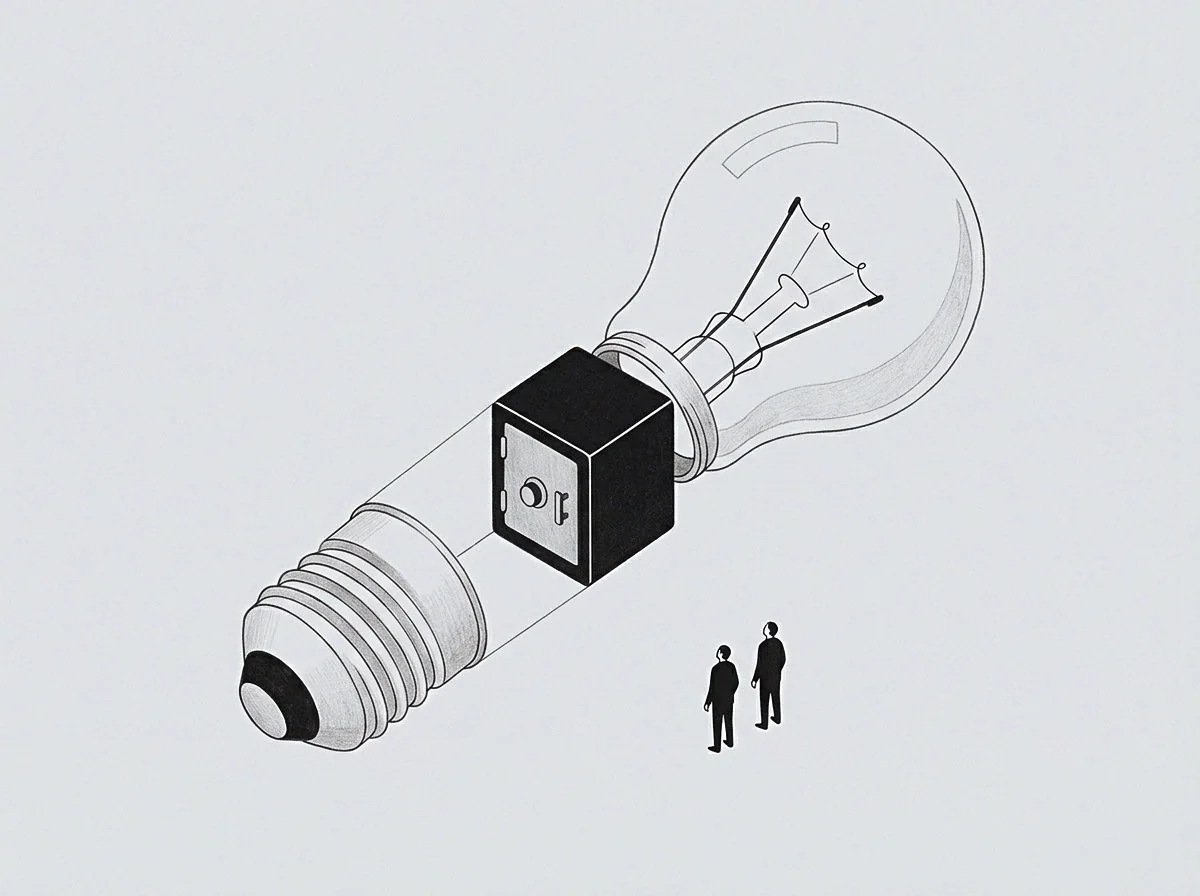
How Unreciprocated Baseline Shifts Neural Budgeting
In a standard dyadic relationship, regulatory responsibility rotates. One participant holds the baseline during an acute stressor, and the other provides coregulatory support when roles invert. In leadership configurations, this rotation breaks down permanently.
The structural power differential prevents subordinates from acting as effective co-regulators for the leader, while investors and board members evaluate composure as a proxy for asset health. The executive seat becomes a unidirectional sink for organizational panic.
- Signal Reception occurs when the leader perceives organizational distress or interpersonal conflict, triggering an immediate internal threat assessment.
- Exogenous Containment involves suppressing outward physiological stress responses to project an invariant, calming baseline to observers.
- Metabolic Extraction takes place as the prefrontal cortex expends glucose and glycogen stores to maintain top-down motor and emotional inhibition.
- Coregulatory Vacuum arises because no incoming sensory signals from the surrounding team provide a compensating safety anchor for the leader.
This biological asymmetry generates a distinct physiological footprint. The brain’s metabolic budgeter, operating through allostatic regulation models, notes that social interactions no longer reduce energetic expenditure. Instead of treating social proximity as a conservation strategy, the brain begins registering team interaction as an additional energetic cost.
The presence of colleagues triggers a subtle cardiovascular pre-activation, preparing the organism to perform unassisted containment.
Research examining autonomic nervous system activity under social baseline paradigms shows that individuals sitting near a supportive partner demonstrate reduced electrodermal activity and diminished neural threat responses when facing pain or uncertainty. When that same partner is present but unresponsive, or when the individual must actively support the partner, the metabolic attenuation vanishes. The supporting individual exhibits physiological arousal identical to or exceeding solitary threat exposure.
The presence of people who require regulation without offering it is physiologically more expensive than total physical isolation.
When this elevated metabolic baseline is maintained without recovery windows, allostatic load accumulates across bodily systems. Endothelial function degrades under persistent sympathetic activation, executive function windowing narrows, and sleep architecture loses deep delta-wave restoration. The energy cost of holding the room clear for others is paid directly out of the physical integrity of the central nervous system.

Asymmetry
Longitudinal attachment research describes how early relational experiences shape an internal working model of coregulation. A person who learned early that caregivers were unreliable or overwhelming often develops a specialized internal template. This individual internalizes a working model where they function as their own sole regulator while serving as the primary stabilizer for those around them.
They run the traditional attachment loop in reverse.
When this person enters a founding or executive role, the alignment between their internal template and organizational demand feels seamless. The seat demands an anchor, and the individual has spent a lifetime refining the capacity to act as one. They attach to the state of the organization rather than to its physical artifacts, measuring security through the steadiness of the environment they are manually stabilizing.
The organization experiences this as exceptional leadership; the biological system experiences it as an ongoing metabolic emergency.
An internal working model built on reversed coregulation creates an executive who absorbs organizational panic while lacking the internal receptor slot to receive incoming support.
The primary structural vulnerability in this arrangement is the absence of a receptor slot. When a colleague, partner, or advisor attempts to offer genuine coregulatory support, the leader’s template parses the input as an anomaly or an incoming demand disguised as help. The offer of presence fails to land because the leader’s neural threat detection system interprets proximity as something to be managed rather than relied upon.
The leader remains biologically isolated even when surrounded by supportive peers.

Can Solitary Regulators Build Earned Security Alone?
Updating an ingrained attachment template requires more than cognitive insight into its origins. Conceptual knowledge of social baseline theory does not alter autonomic cardiovascular responses during an active crisis. The neural circuits governing threat budgeting update through repeated, safe, counter-instinctual physical and relational experiences over time.
Earned security develops when an individual systematically exposes their nervous system to situations where control is relinquished without catastrophic organizational collapse. This process requires testing micro-experiments in non-containment. When a leader allows minor operational friction to resolve without stepping in to soothe the participants, the brain registers a new data point: environmental stability can exist without manual executive intervention.
The delta between perceived operational risk and actual outcome provides the precise feedback needed to recalibrate the internal working model. Over twelve to eighteen months of deliberate practice, the autonomic nervous system begins downshifting its baseline tone during team interactions. The receptor slot forms not through conceptual reframing, but through the accumulating weight of survived exposure to unmanaged organizational noise.
Without explicit structural modifications to how incoming communication and emotional load are handled, an executive’s internal template continually defaults to unreciprocated regulation. The contract signed with the organization remains covert: the team receives borrowed calm, and the leader receives the continuous, unacknowledged biological invoice.
Expenditure
To quantify the metabolic and energetic divergence between coregulated and solitary leadership structures, consider two contrasting operational configurations over a six-month high-growth phase. Both configurations involve a founding team of three managing thirty employees during a major product redesign and concurrent capital raise.
| Operational Dimension | Unreciprocated Solitary Baseline | Reciprocal Distributed Coregulation |
|---|---|---|
| Primary Regulation Mechanism | Unilateral top-down prefrontal inhibition by the founder. | Shared peer coregulation across the core executive team. |
| Autonomic Nervous System Profile | Sustained sympathetic dominance with low heart rate variability. | Dynamic autonomic switching with rapid parasympathetic recovery. |
| Organizational Communication Flow | All emotional escalation routed directly to the founder seat. | Structural filtering with localized conflict resolution. |
| Cognitive Capacity Allocation | High percentage of working memory spent on threat suppression. | Working memory fully directed toward strategic synthesis. |
| Allostatic Load Accumulation | Accelerated cardiovascular and neuroendocrine strain. | Bounded energetic expenditure within sustainable physiology. |
In the solitary baseline model, the founder operates as the single shock absorber for organizational volatility. Every team escalation, investor critique, and interpersonal dispute reaches the founder’s desk unbuffered. To maintain team alignment, the founder actively suppresses visible signs of fatigue or alarm.
This continuous top-down inhibition requires sustained cerebral glucose utilization and maintains elevated circulating catecholamine levels throughout working hours.
By month four of this pattern, cognitive performance metrics begin to degrade. Working memory capacity contracts, restricting the executive’s ability to evaluate multi-variable strategic decisions. The founder experiences a subtle shift from proactive long-range planning to reactive, short-horizon threat mitigation.
The physical body exhibits signs of chronic allostatic overload: persistent sleep fragmentation, elevated resting blood pressure, and generalized sensory irritability during low-stimulus conditions.
When operational calm is maintained entirely through executive top-down suppression, working memory contracts and strategic horizon scanning gives way to short-term threat containment.
In the reciprocal coregulation model, the founding team establishes deliberate peer-to-peer reflection channels where operational vulnerability can be processed without organizational consequences. The founders share regulatory weight, allowing individual members to drop composure in structured, safe environments. The metabolic cost of threat regulation drops because the brain registers the presence of actual, reliable co-regulators.
Autonomic tone shifts back to parasympathetic dominance once acute stressors pass, protecting sleep architecture and executive function.
The financial and operational costs of the solitary model appear on the corporate balance sheet indirectly. They surface as delayed strategic pivots, high turnover among senior staff who lack a grounded operational model, and eventual founder incapacitation. The metabolic invoice always collects; the variable is whether the organization pays in structured relational design or through executive collapse.
What remains uncalculated in most organizational designs is the point at which an executive’s continuous metabolic expenditure crosses from sustainable energy expenditure into permanent neuroendocrine depletion.

Receiver
Transitioning out of unreciprocated social baseline regulation requires structural interventions that alter how load enters the executive seat. Relying on willpower or cognitive reappraisal while leaving communication patterns unchanged guarantees a return to solitary baseline holding. The physical environment and operational protocols must be redesigned to enforce metabolic boundaries.
The first structural move involves establishing explicit intake channels for organizational friction. When direct reports use real-time messaging applications to dump uncurated anxiety into the executive’s digital workspace, the leader’s brain remains in a perpetual state of anticipatory pre-activation. Implementing asynchronous, structured reporting templates forces senders to process their own operational distress before escalating.
The template requires the sender to define the technical problem, list two proposed solutions, and categorize the urgency against objective business metrics.
This operational filter shifts neural work back to the sender. The team member must engage prefrontal executive functions to complete the template, downregulating emotional escalation prior to communication. The founder receives a structured data set rather than a raw emotional signal, immediately lowering the metabolic cost of processing the interaction.
The second move requires building functional peer coregulation outside the organizational hierarchy. Because subordinates cannot safely hold the executive’s baseline, the leader must establish relationships with peers in comparable seats outside the company. These relationships are not for networking or strategic advice; they exist to provide an environment where the executive can drop containment behaviors.
Experiencing physical or verbal safety in the presence of an equal allows the autonomic nervous system to complete suppressed stress cycles and reset baseline cardiovascular parameters.
Finally, executives must practice deliberate non-responsiveness to non-critical environmental pings. The habit of immediate response is often driven by the attachment template: the leader responds instantly to ensure the environment remains calm, mistaking environmental quiet for personal safety. Delaying response windows by fixed blocks creates space for organizational self-correction, teaching the leader’s brain that the system can survive brief periods without executive stabilization.
A regulator who protects their baseline ultimately provides the organization with a far more reliable anchor than one who consumes physical infrastructure to maintain a temporary illusion of peace.