
Neural Regulation Economies and Borrowed Calm in High Load Leadership
Borrowed calm functions as an unpriced physiological transfer where leaders absorb metabolic stress for surrounding teams until neural exhaustion forces throttling.

Seat
Four unread escalation messages sit on the terminal screen at midnight on a Sunday. The chief executive reads the logs while maintaining a cardiac rhythm that remains identical to a resting state. Around the executive, vice presidents, team leads, and operational engineers project high autonomic arousal through elevated heart rates, rapid vocal cadences, and fragmented problem solving.
The room calms down as the executive speaks, not because the technical facts of the outage changed, but because human nervous systems continuously sample the baseline physiological state of the primary presence in an enclosure. The surrounding team members borrow calm from the person holding the seat, offloading their own autonomic expenditure onto an external anchor.
Social baseline theory establishes that the human brain constructs energy budgets under the assumption that other reliable individuals are physically or relationally present. Self-regulation without a stable secondary presence represents the most metabolically expensive operating condition for the central nervous system. When individuals assemble in high-density operational environments, low-arousal nodes function as exogenous regulation supplies for high-arousal nodes.
The leader becomes an unpriced energy reserve, providing the physiological floor that permits others to operate beneath their personal panic thresholds.
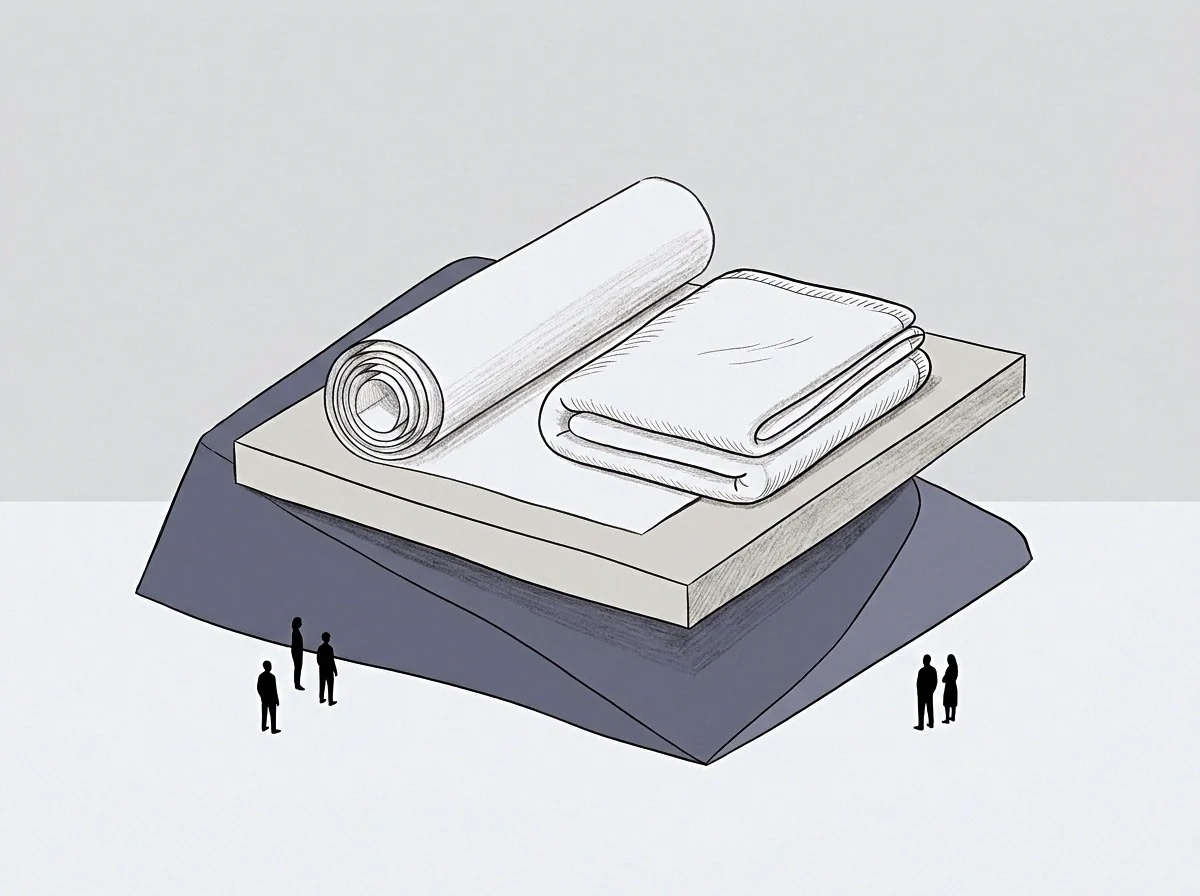
Operational Load and the Visual Signals of Steadiness
Executives maintain flat vocal cadences when systems collapse. The physical expression of steadiness functions as an operational signal, reassuring observers while subtly redistributing neural labor across the organisation. Team members observing a calm leader lower their own threat perception metrics, which conserves their prefrontal glucose reserves.
The leader absorbs the ambient tension of the system through the continuous work of suppressing internal autonomic reactivity.
The seat carries load. The physiological stability projected by an anchor requires active nervous system work, even when executed without conscious effort. Borrowed calm is never named by the people borrowing it, because the drop in their own stress response registers subjective ease rather than external extraction.
The person supplying the baseline pays for the silent transfer with cumulative energy depletion.
The person who holds the baseline longest receives the highest volume of late operational escalations.
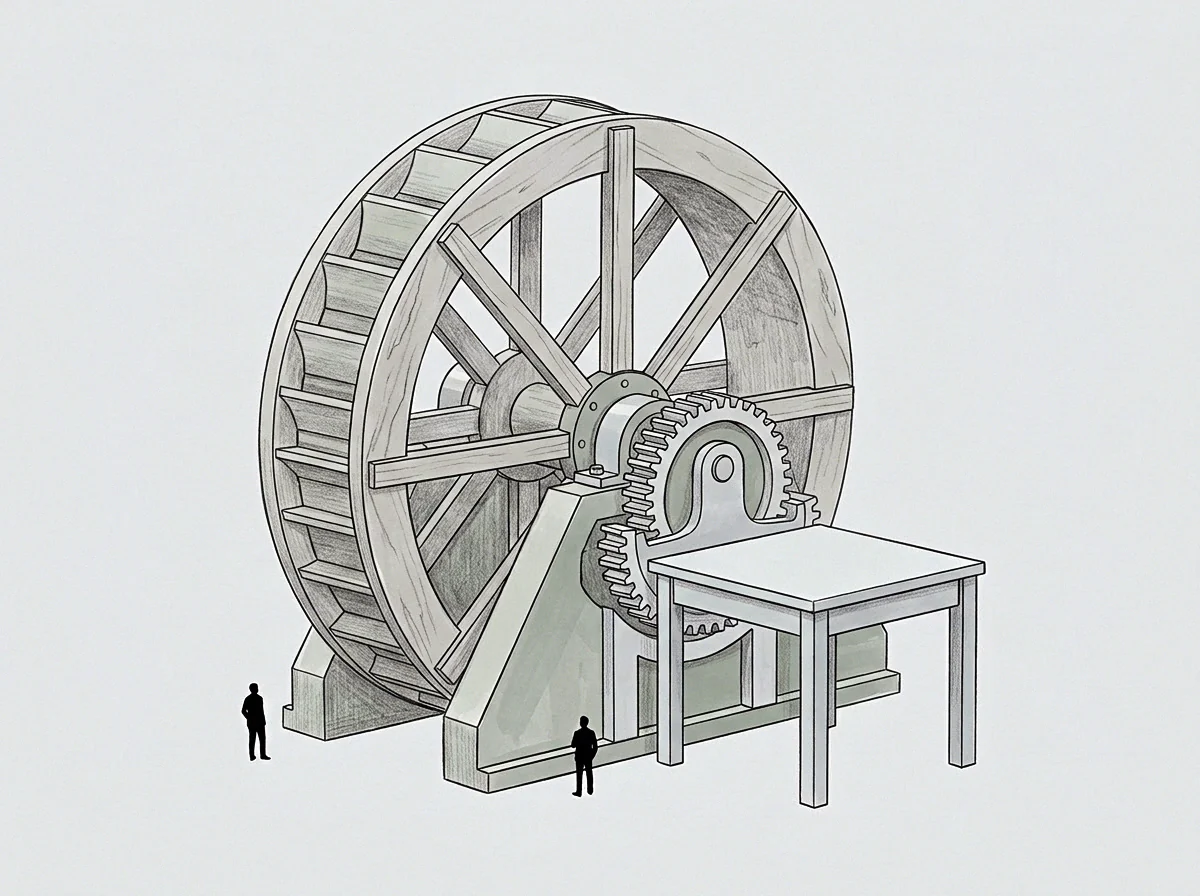
Exogenous Calm as an Unpriced Resource
Relational environments treat physiological steadiness as an intrinsic property of the individual rather than a consumable resource. When a leader consistently demonstrates high autonomic headroom during crises, the surrounding organisation restructures its expectations around that baseline. Team members stop developing internal regulation mechanisms because the external anchor remains continuously accessible.
The unpriced resource experiences higher demand until the supply fails entirely.
Unpriced regulation transfers produce distinct patterns across leadership structures:
- Asymmetric autonomic offloading occurs when subordinate team members rely entirely on executive presence to drop their heart rate variability metrics into functional ranges.
- Structural load escalation develops when high-stability leaders receive additional crisis assignments specifically because their emotional baseline appears unaffected by operational strain.
- Receptor slot atrophy emerges when an executive operates exclusively as a regulation donor, eliminating all internal mechanisms for accepting co-regulation from external sources.
Allowing continuous unpriced drawdown without structural recovery depletes autonomic headroom until abrupt catastrophic throttling occurs.

Budget
Energy consumption in the central nervous system escalates rapidly when threat monitoring occurs in isolation. Social baseline research demonstrates that the human brain treats social proximity as a fundamental metabolic conservation strategy. When an individual operates alone under high load, the anterior cingulate cortex and insular cortex maintain elevated activation levels, consuming disproportionate quantities of blood glucose.
Physical or relational proximity to a predictable individual allows the brain to downregulate these monitoring systems, allocating energy toward complex cognitive tasks.
The neural regulation economy operates on a strict supply-demand calculus. An executive sitting in isolation bears the entire neural cost of threat processing alone. When team members enter the room, they do not bring additional energy reserves into the ecosystem; instead, they draw down the executive’s regulation baseline to suppress their own threat responses.
The executive absorbs the nervous system labor of multiple individuals simultaneously, accelerating personal allostatic accumulation.
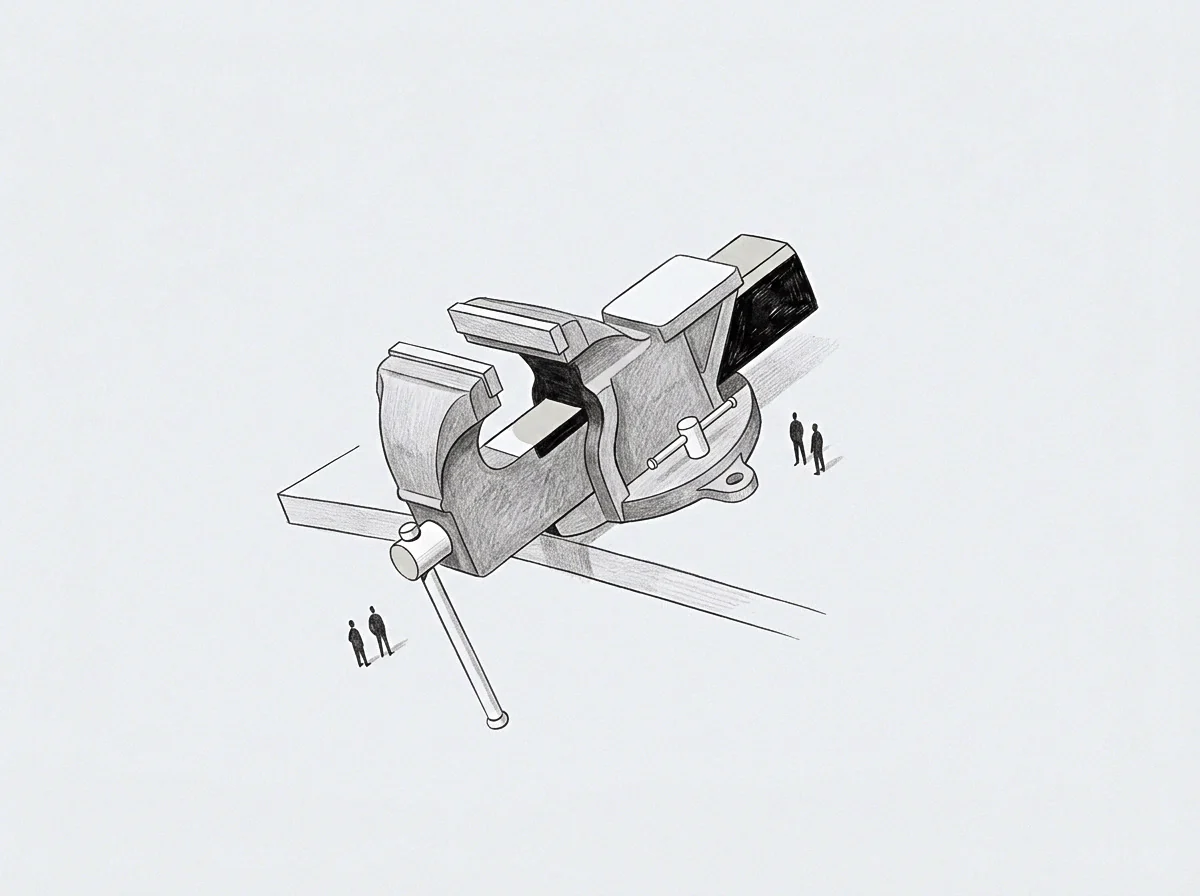
Metabolic Overhead of the Unassisted Baseline
Threat consumes glucose. The prefrontal cortex relies on continuous glucose metabolic availability to execute executive function, risk assessment, and emotional dampening. In high-pressure environments, the metabolic cost of maintaining self-regulation without an external anchor depletes systemic glucose availability within hours.
The unassisted baseline forces the body to mobilize secondary endocrine responses, driving cortisol and catecholamine elevation.
Proximity to a predictable presence reduces autonomic nervous system expenditure during active threat processing.
Allostatic load represents the cumulative wear and tear on physiological systems subjected to continuous stress response mobilization. A leader functioning as a solo regulator accrues allostatic debt far faster than a leader embedded in a reciprocal regulation environment. The neural economy demands balance: regulation must be financed either through internal metabolic oxidation or through shared relational baseline distributions.

Neural Co-Regulation inside High Pressure Enclosures
Enclosed operational environments amplify autonomic signal transmission through subtle visual, auditory, and biological channels. Micro-expressions, respiratory rates, and vocal pitch changes carry immediate regulation information across room boundaries. High-load organizations rely on these automatic perceptual feedback loops to maintain operational coherence during severe stress events.
The table below details the structural metrics governing different regulation modes within high-stress leadership environments:
| Regulation Mode | Autonomic Expenditure | Metabolic Load Source | Capacity Horizon | Receptor Slot Mechanics |
|---|---|---|---|---|
| Self-Regulation Alone | Maximum metabolic wear per unit time | Internal glucose and catecholamine reserves | Short term operational window | Closed to external inputs |
| Co-Regulation via Proximity | Shared distributed metabolic expenditure | Symmetrical baseline energy pool | Extended operational stability | Open bidirectional reception |
| Borrowed Regulation Transfer | Unilateral high cost for anchor individual | Donor central nervous system oxidation | Unstable until donor depletion | Unilateral donor transmission |
Co-regulation functions efficiently only when information flows bidirectionally between participants. When the transfer operates as a one-way extraction, the anchor individual bears all metabolic costs while receiving no peripheral stabilization. The organisation misinterprets this physiological extraction as personal strength, reinforcing the imbalance until the donor nervous system enters metabolic failure.
The leader appeared entirely unfazed by the crisis, so the operational expansion continued as planned.

Template
Early developmental interactions construct the internal working models that govern social baseline expectations. A child who learns that primary caregivers are unpredictable or overwhelmed frequently develops an inverted regulation architecture. This individual internalizes a model of themselves as the sole source of stability in relational environments.
The child becomes the anchor for the parent, running the natural co-regulation sequence backwards and embedding a persistent relational template that persists into adult professional life.
In high-load leadership seats, this inverted template manifests as an extraordinary capacity to hold space for others combined with a total absence of an internal receptor slot for receiving support. The individual attaches to their own state of functional stability, deriving security exclusively from their ability to regulate surrounding people. Regulating themselves and regulating others merge into a single operation on one rigid template.

Internal Working Models of the Primary Supporter
Attachment research establishes that internal working models function as automatic relational algorithms, predicting how the self and others interact under threat. The primary supporter template operates on a simple assumption: safety exists only when the self holds total control over the emotional climate of the enclosure. Receiving calm from another person feels inherently dangerous to this template, because external anchors are categorized as historically unreliable or fragile.
The internal template governs daily operational decisions without conscious oversight:
The leader steps into crisis situations automatically, taking ownership of high-arousal problems before team members request intervention. The signal stays flat. Threat level rising in peripheral departments triggers immediate autonomic suppression in the leader, bypasses personal fatigue metrics, and forces direct hands-on operational stabilizing.
The slot remains empty. Offers of help from peers or board members register as perceptual anomalies, producing discomfort rather than physiological ease.
An unstated operational limit forces the surrounding environment to treat the leader as an infinite energy reservoir.

Comparing Structural Architectures of Relational Regulation
The backward template attracts specific organizational dynamics. Teams instinctively locate and organize around individuals who possess high regulatory headroom and low demands for external emotional inputs. A leader with a primary supporter template acts as a magnet for high-arousal subordinates, creating an asymmetric ecosystem where all systemic stress drains through a single central nervous system.
Load attracts load. An executive proven under threat reads to the board and team as capable of bearing additional operational weight. The organisation adds responsibilities, escalations, and crisis management mandates to the executive’s portfolio, assuming that past steadiness indicates infinite baseline capacity.
The executive’s backward template accepts these additional loads without resistance, viewing increased systemic dependency as validation of the self-reliance model.
The primary supporter template generates distinct operational liabilities in senior leadership positions. Because the executive cannot process incoming regulation, attempts by partners or co-founders to offer support generate friction or withdrawal. The executive continues to supply unpriced calm until their metabolic reserve reaches zero, whereupon the entire relational structure collapses simultaneously due to the absence of distributed regulation nodes.
Setting an explicit availability limit changes the relational structure by forcing peripheral nodes to internalize their own autonomic stabilization.

Ping
High frequency messages directed at an executive test availability before testing competence. In high-load technology and financial environments, the constant stream of digital notifications operates as a continuous physiological query. Peripheral nodes send notifications to confirm that the central anchor remains responsive, seeking an immediate reduction in their own uncertainty metrics.
Each incoming ping demands a small allocation of prefrontal processing, forcing the leader to maintain a state of continuous hyper-vigilance.
Availability becomes a proxy for systemic safety. When an executive responds instantly to non-critical communications, team members receive a micro-dose of borrowed calm, confirming that the central regulation anchor remains operational. This mechanism creates a addictive feedback loop where the organisation generates higher message volumes to maintain its autonomic baseline, driving the executive’s ambient cognitive load toward maximum capacity.

Does Availability Disguise the Peripheral Cost of Capacity?
Continuous digital reachability masks underlying systemic fragility. When a team relies on constant executive presence to resolve minor operational ambiguities, peripheral units fail to develop internal decision-making resilience. The executive’s continuous presence acts as a crutch that prevents the team’s autonomous problem-solving capabilities from maturing under stress.
Throttling represents the physiological defense mechanism activated when an anchor nervous system reaches capacity ceiling. Unlike clinical depression, which involves persistent negative affective valence, nervous system throttling functions as an automatic energy conservation strategy. The leader cuts communication velocity, delays response times, and projects cold detachment, not due to personal animosity, but because the central nervous system must reduce incoming regulatory demand to prevent metabolic insolvency.

Throttling Responses and Misread Operational Signals
Organizations routinely misinterpret executive throttling as a failure of engagement or leadership alignment. When a previously hyper-available executive suddenly enforces communication delays, boards and executive teams often assume burnout, disinterest, or strategic conflict. The organisation responds by increasing monitoring intensity and scheduling additional alignment meetings, ironically compounding the exact operational load that triggered the throttling response initially.
The progression toward total regulation exhaustion follows a predictable sequence:
- The executive maintains continuous digital availability, answering high-frequency operational queries within minutes regardless of time or setting.
- Peripheral team members increase ping volume, offloading their operational anxieties onto the executive baseline.
- The executive’s cognitive headroom depletes, prompting automatic nervous system throttling, characterized by extended communication latency and flat emotional tone.
- Surrounding teams read the latency as operational risk, generating higher message volumes and demanding urgent alignment discussions.
- The central anchor experiences total baseline exhaustion, forcing an abrupt complete exit from operational communication channels.
Capacity declines silently. The transition from active regulation donor to throttled defender occurs without advance verbal warning because the primary supporter template discourages early admissions of strain. By the time peripheral nodes observe functional changes in executive availability, the underlying neural economy has already been operating in deficit for months.
It remains uncertain how long an executive team can maintain velocity when the underlying neural anchor begins systematically withholding proximity.
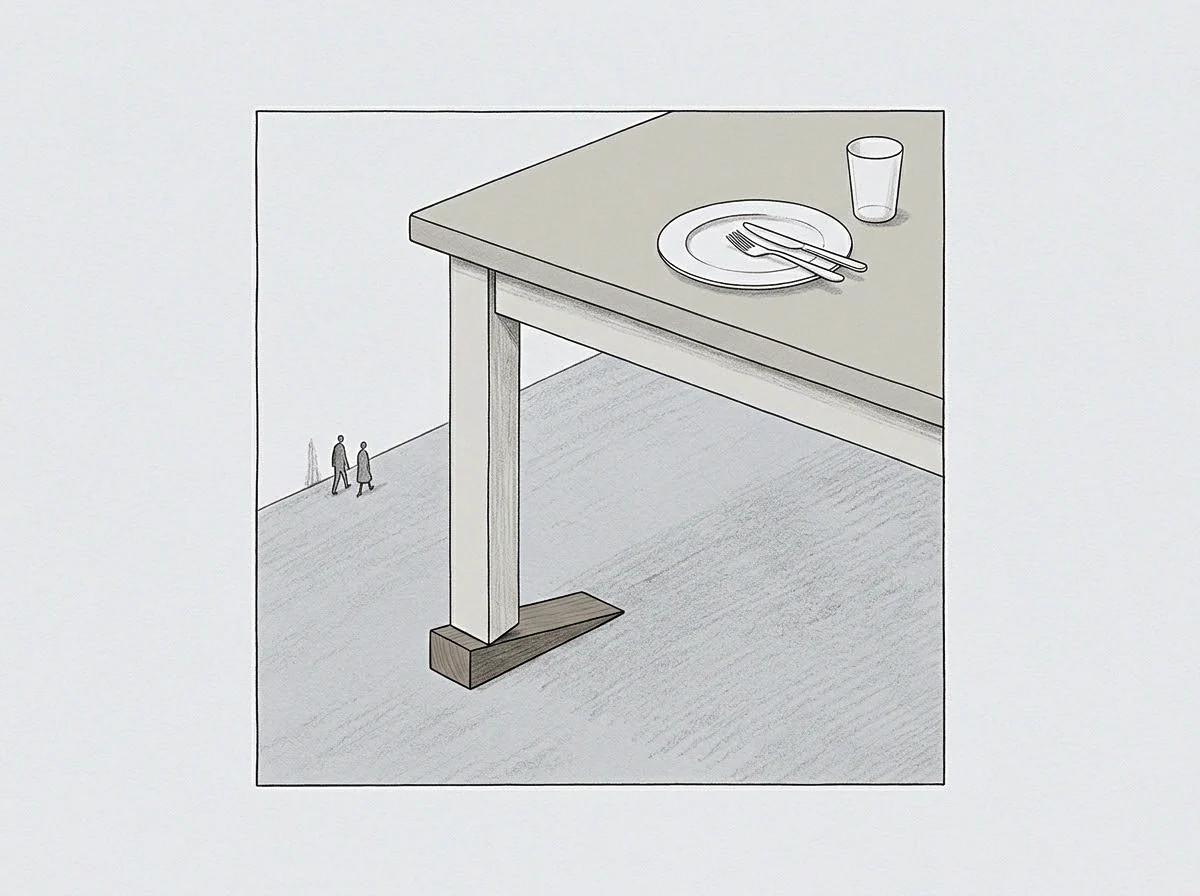
Update
Neural plasticity requires sustained exposure to novel relational configurations. Understanding an internal working model theoretically provides zero update momentum to an underlying relational template. Intellectual insight resides in cortical structures, whereas regulation templates are embedded in subcortical autonomic circuits that respond exclusively to repeated physical and operational realities.
Rebuilding a regulation template requires lived experience of reciprocal regulation under conditions of real operational load.
Earned security defines the process by which an individual with an insecure or backward attachment template develops a resilient, flexible internal baseline later in life. This update occurs through structured, predictable interactions with reliable secondary anchors who can hold their own baseline without extracting energy from the leader. The central nervous system slowly updates its expectation parameters, learning that receiving regulation does not induce structural collapse in the secondary presence.

Earned Security Through Repeated Grounding Sequences
Updating a regulation template requires installing a functional receptor slot. The leader must intentionally remain in proximity with a stable co-founder, partner, or executive peer during high-load events without taking ownership of the secondary person’s physiological state. The body registers presence.
Repeated exposure to a stable peer who does not collapse under load forces the subcortical nervous system to rewrite its baseline energy calculus.
Template updates occur through physical repetition of safety rather than conceptual insight into origin.
Repetition rewires baseline. The delta over time measures the gap between the historical automatic reaction and the newly installed regulation capacity. Over extended high-pressure epochs, the leader tracks progress not by the absence of stress, but by the increasing speed with which the nervous system returns to baseline after a crisis event.

The Delta Over Time across Extended High Pressure Epochs
Transitioning from borrowed calm to structural reciprocal regulation shifts the broader organisation’s dynamics. As the executive stops providing unpriced regulation, surrounding team members are forced to develop their own internal coping mechanisms or establish peer-level co-regulation structures. The organisation matures from a star-topology dependency network into a distributed mesh network capable of absorbing stress across multiple nodes.
The leader learns to differentiate between authentic operational needs and peripheral emotional offloading. Limits are stated plainly, without anger or defensive posturing, as operational facts that preserve executive processing capacity. The seat becomes a locus of deliberate strategy rather than an unpriced emotional shock absorber, transforming the neural regulation economy of the entire leadership team.
Systematic exposure to reciprocal regulation shifts the baseline expectation, establishing a durable secondary template across subsequent operational epochs.