
Recognizing Physical Throttling After Leaving Demanding Executive Seats
Vacating a high-demand executive seat collapses exogenous regulation, triggering autonomic neural throttling to protect physiological reserves from chronic overload.

Switch
Three weeks after stepping down from a chief executive role, someone sits at a quiet kitchen table at ten in the morning, holding an open laptop with two unread messages from a board member. The structural urgency that drove twelve-hour days for six years has vanished, yet drafting a four-sentence reply produces sudden physical paralysis, an elevated resting heart rate, and an intense aversion to the screen. The inbox contains no active crises.
Operational authority was handed over to a successor, financial obligations were settled, and the calendar was intentionally cleared for rest.
People on the outside expect immediate relief, quiet focus, or renewed creative energy once administrative burdens drop away. Instead, the body shows severe motor inhibition, physical heaviness, and cognitive resistance whenever self-directed initiative is attempted. The executive role forced constant external co-regulation, where urgent incoming demands supplied outside neural stimulation that bypassed internal motivational barriers.
Without that continuous stream of structured crisis, the autonomic nervous system enters a state of deep energy suppression.
The baseline physical state remains clamped at this level.
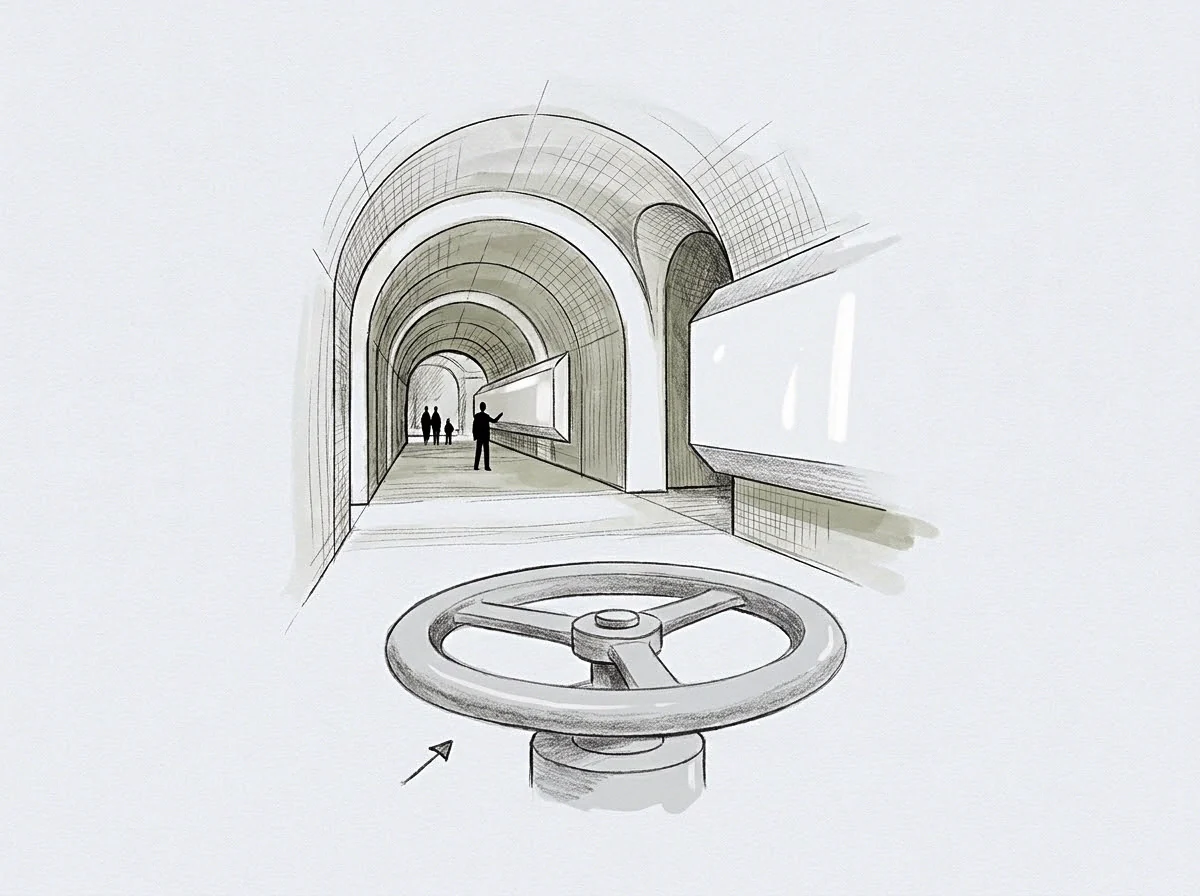
Autonomic Tone Beyond the Executive Chair
High-demand leadership roles require sustained sympathetic nervous system dominance to manage large organizations, absorb operational risk, and allocate capital quickly under uncertainty. Over time, this chronic activation shifts physiological baseline set points through allostasis. When structural demands stop abruptly, the central nervous system does not simply reset to a calm resting state.
It treats the sudden loss of protective structural scaffolding as a severe disruption, triggering protective visceral shut-down responses.
The sudden loss of structured external demand causes the central nervous system to enforce immediate metabolic conservation.
Physiological measurements during this phase reveal low heart rate variability, persistent sleep fragmentation, and elevated nocturnal cortisol levels despite minimal daily exertion. Minor administrative tasks feel physically impossible to start while internal restlessness continues. Systemic exhaustion sets the maximum functional limit.

The Sudden Collapse of External Regulation
Demands continue to arrive. Former colleagues reach out for brief guidance, advisory boards request transitional check-ins, and personal obligations surface after years of neglect. Each incoming request, regardless of its low objective complexity, hits a depleted regulatory system that can no longer process unstructured input.
The executive seat provided clear boundaries, explicit priority hierarchies, and dedicated staff to filter incoming noise. Stripped of those structural buffers, every trivial message consumes a disproportionate share of remaining metabolic headroom. The individual often mistakes this physical barrier for personal laziness or cognitive decay, compounding systemic wear with severe internal frustration.
People expect casual availability once the calendar opens up.

Fuse
Somatic throttling represents a targeted biological protective response driven by chronic neural overload rather than a mood failure. When the hypothalamic-pituitary-adrenal axis undergoes prolonged hyperactivation without adequate recovery windows, receptor sensitivity drops across central and peripheral tissues. The nervous system trips an active biological circuit breaker to prevent permanent structural damage from continuous stress exposure.
The body enforces a hard boundary on output.
Clinical misdiagnosis frequently occurs when this somatic gating is misidentified as major depressive disorder or generalized anxiety. Depressive states typically feature pervasive anhedonia, global hopelessness, and flat cognitive affect across all environments. Neural throttling presents as a localized functional block: cognitive clarity remains intact for low-demand, highly structured passive observation, but motor and cognitive execution halts the moment active self-initiated output is demanded.
Allostatic Overload and Somatic Energy Gating
Allostatic load represents the cumulative physiological wear resulting from chronic exposure to fluctuating or elevated neuroendocrine responses. In executive roles, this load accumulates through continuous decision-making, emotional containment for teams, and constant situational vigilance.
| Evaluation Parameter | Somatic Throttling State | Major Depressive State |
|---|---|---|
| Systemic Motor Initiation | Inhibited primarily during self-initiated executive tasks | Globally suppressed across basic daily life activities |
| Cognitive Clarity | Preserved for passive analysis and external inputs | Impaired by pervasive slowed processing and brain fog |
| Autonomic Response Profile | High sympathetic tone with low heart rate variability | Blunted autonomic reactivity with variable baseline tone |
| Recovery Pattern | Restored through structural gating and sensory isolation | Requires clinical neurochemical or psychological intervention |
Uncertainty increases neural wear. Physical manifestations of this overload extend beyond simple fatigue to include gastrointestinal motility suppression, chronic muscle hypertonicity, and acute sensory sensitivity. The body actively restricts energy expenditure to preserve core metabolic functions, treating discretionary effort as an immediate threat to biological equilibrium.
Distinguishing Neural Throttling From Clinical Depression
Misinterpreting biological throttling as clinical depression leads to counterproductive strategies. Former executives often attempt to force engagement through rigorous self-discipline, aggressive exercise regimes, or structured personal productivity systems. These interventions add fresh cognitive and physical load to a system whose protective circuit breaker is actively tripped.
Systemic capacity drops below baseline when chronic regulatory demand exceeds biological recovery rates.
When an individual forces performance through a tripped biological circuit breaker, the nervous system escalates its protective response from peripheral exhaustion to acute somatic collapse. Cognitive capacity drops further, immune function degrades, and basic motor initiation becomes exceptionally difficult.
Misreading protective physical throttling as psychological depression forces the nervous system to trip deeper biological circuit breakers that extend physical recovery from weeks to years.

Relay
Demanding executive roles function as external regulatory scaffolds, supplying environmental structure, social validation, and continuous urgency that mask underlying metabolic depletion. When an individual steps down, this exogenous co-regulation abruptly dissolves, forcing the internal nervous system to handle all self-regulation independently.
Recovery requires sustained structural quiet.

How Does Allostatic Overload Preserve Core System Functions?
The central nervous system prioritizes basic metabolic survival over complex executive processing when total systemic load exceeds sustainable limits. Under chronic allostatic overload, neural resources shift away from prefrontal cortex operations toward brainstem and limbic preservation pathways.
Removing external executive scaffolding exposes deep internal metabolic exhaustion that was previously obscured by daily operational urgency.
This functional realignment suppresses higher-order planning, long-term conceptual thinking, and complex decision-making. The individual remains capable of reacting to immediate physical threats, but lacks the metabolic headroom required to construct new strategic initiatives or process open-ended social interactions.

Exogenous Scaffolding and the Social Baseline
According to social baseline theory, human neurobiology assumes proximity to reliable external regulatory structures and supportive social networks to conserve individual energy expenditure. Executive roles provide an intense, high-cost form of external scaffolding where clear institutional roles, predefined agendas, and administrative support manage incoming information flow.
- Unfiltered communication channels accept unrestricted incoming messages without administrative screening, immediately consuming remaining neural headroom.
- Unstructured calendar commitments allow open-ended requests for time, triggering anticipation anxiety and persistent autonomic activation.
- Ambiguous advisory arrangements create continuous ungated obligations that prevent complete neuroendocrine down-regulation.
- Continuous self-monitoring replaces lost organizational metrics with hyper-vigilant tracking of personal productivity, worsening systemic exhaustion.
Stripping away organizational infrastructure without establishing personal operational gates forces an individual with a depleted regulatory engine to process raw, unfiltered environmental input.
A transition agreement that leaves advisory duties open-ended guarantees continuous autonomic activation until explicit date limits and fixed call windows are established.

Scale
Evaluating systemic state requires measuring available metabolic headroom rather than assessing emotional outlook or subjective motivation. Traditional assessment methods rely heavily on self-reported mood, which frequently misrepresents physical energy reserves in highly disciplined individuals trained to ignore physiological fatigue signals.
The physiological brake remains applied.

Slot Arithmetic and Concurrency Limits
Human attention operates under strict structural concurrency limits. Each open loop, unresolved decision, or pending communication line occupies an active processing slot in working memory, regardless of whether that item is actively worked on.
A single unaddressed decision consumes an active working memory slot even when postponed.
An executive who managed fifty operational projects concurrently while supported by corporate infrastructure may find that holding three unstructured personal commitments completely saturates available processing slots after departure. The absolute number of projects matters far less than whether those projects carry defined scopes, fixed review dates, and explicit terms.

Quantifying Headroom and Open Regulatory Loops
To accurately gauge physical throttling, an individual must calculate current operational load against true biological headroom rather than historical performance capacity.
- Count every open project, unread personal message, and pending decision currently demanding attention.
- Identify every active relationship that lacks defined communication frequencies or explicit boundaries.
- Convert every open-ended obligation into a binary status: fully gated with fixed terms or immediately terminated.
- Establish absolute rest windows completely protected from digital input and social interaction.
- Monitor somatic markers including resting heart rate, sleep efficiency, and daily motor initiation thresholds to verify recovery progress.
Reducing the absolute count of active open loops frees immediate biological capacity, providing the autonomic nervous system with the space necessary to down-regulate sympathetic tone.
When available metabolic headroom drops below the baseline required for basic self-care, any incoming request must be gated instantly without debate.

Piston
Restoring metabolic capacity requires establishing firm structural gates that protect the physical system from continuous regulatory draw. The individual cannot rely on willpower or emotional readiness to enforce limits; they must implement objective operational boundaries that function automatically.
Systemic capacity requires clear structural boundaries.

Structural Gates for Energy Recovery
Effective structural gating involves establishing clear operational constraints before accepting any fresh commitments, advisory roles, or board seats. These gates specify exact time allocations, communication methods, and performance expectations in unambiguous language.
Restricting availability through explicit contractual terms or fixed operational schedules prevents the external world from imposing unstructured regulatory demands on a recovering system, restoring autonomic balance.

Gating Scope and Terminating Open Loops
Terminating active open loops requires explicit decisions to either complete, delegate, or formally abandon pending commitments. Leaving tasks in an ambiguous state maintains continuous background neural computation that drains recovery reserves.
Parking a pending commitment with a firm, calendar-anchored review date six months in the future completely frees that processing slot, allowing somatic recovery processes to proceed unimpeded.
How long must the autonomic nervous system remain under complete structural protection before baseline neural elasticity and voluntary executive drive are fully restored?