
Rebuilding Parasympathetic Receptivity In Shared Rooms When Prolonged High Load Destroys Co-Regulation
Chronic high operational load desensitizes parasympathetic receptivity, turning shared rooms from energy-conserving baselines into demanding threat environments.
Desk
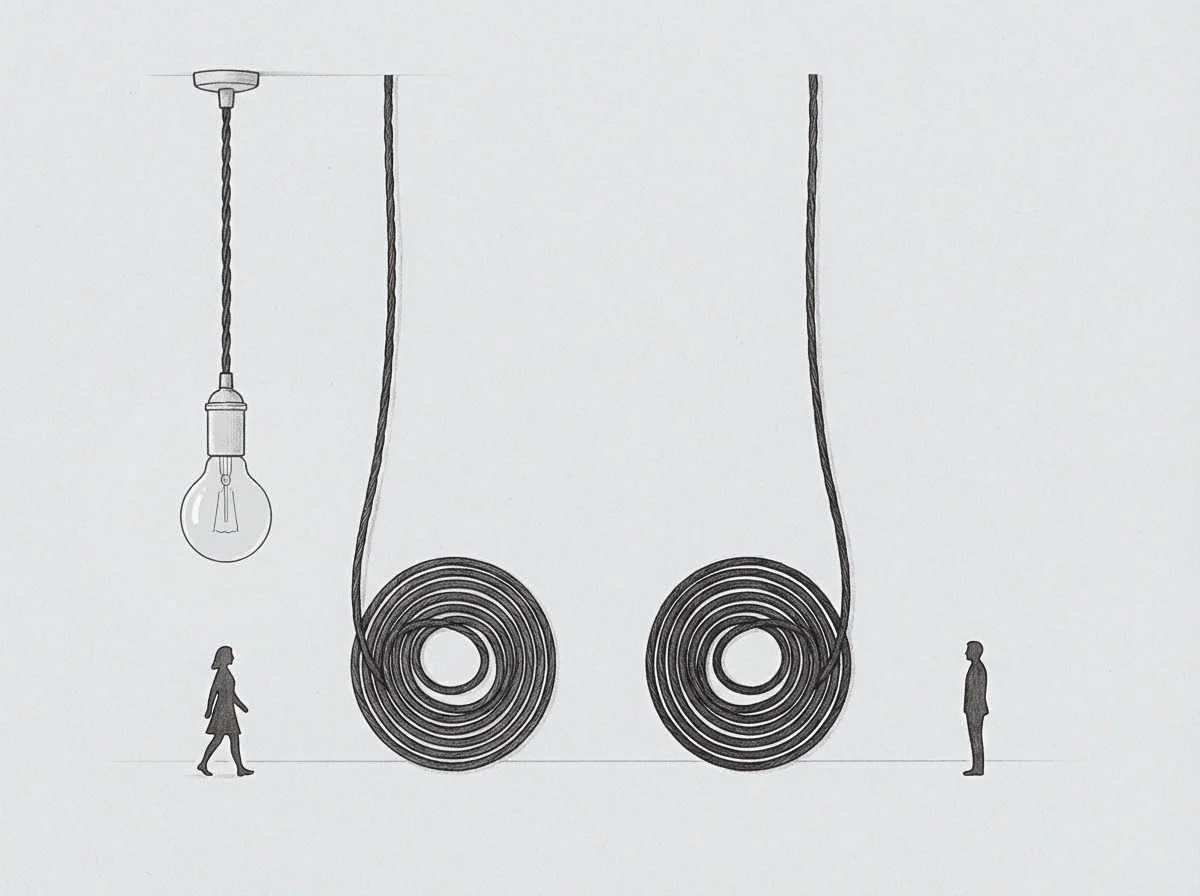
Four browser windows remain open at midnight beside a cold dinner plate. The operator sits six inches from a partner reading quietly on the same sofa, yet maintains an elevated heart rate, a tight chest, and eyes locked on incoming server pings. Physical proximity normally allows the nervous system to offload autonomic maintenance by sharing vigilance across two people.
When chronic work strain goes on for months, the neural machinery for social buffering turns off. The nervous system stops recognizing another human body as an energy-saving resource, treating every ambient signal as another claim on depleted reserves.
Social baseline theory shows that the mammalian brain conserves metabolic energy by outsourcing threat tracking and thermal regulation to familiar companions. Under acute pressure, sitting near a trusted partner lowers sympathetic arousal and cuts the metabolic cost of neural processing. Long-term operational strain reverses that efficiency.
When an individual operates at cognitive ceiling for consecutive quarters, the prefrontal cortex keeps subcortical defense circuits continuously suppressed. Being near another person stops triggering vagal deceleration. The room contains two bodies, but only one solitary, high-cost regulatory circuit is running.
A saturated nervous system treats adjacent human presence as an unpaid operational demand rather than an energy-conserving baseline.
This breakdown in co-regulation reshapes the home environment. The partner reaches out or asks a simple question about tomorrow’s schedule. Instead of bringing a calming parasympathetic shift, the gesture registers as a fresh processing demand.
The operator feels somatic friction, muscle tightness, and an urge to withdraw into isolation. The partner sees the retreat, senses the wall, and either steps back with quiet resentment or pushes harder for connection. The dynamic raises the allostatic burden on both sides.
Under sustained detachment, sitting in the same room eventually feels emptier than being alone in the house.
Current
Autonomic Saturation and Receptor Resistance
The neurobiology of relational receptivity depends on the ventral vagal complex to mediate vocal tone, facial expression, and visceral deceleration. When chronic sympathetic tone persists without recovery periods, allostatic load accumulates across the hypothalamic-pituitary-adrenal axis. Sustained cortisol and adrenergic signals downregulate oxytocinergic receptor sensitivity in the anterior cingulate cortex and amygdala.
The receptors that normally turn shared gaze, touch, and calm speech into parasympathetic tone grow desensitized. The body stays locked in an active defense posture.
This receptor shutdown creates an uneven relational dynamic. One person tries to offer soothing cues through low-frequency speech, stillness, and quiet pacing. The exhausted operator lacks the capacity to process those cues as harmless.
The incoming signal arrives as noise requiring translation and behavioral effort. Because translating an affiliative attempt costs more energy than the operator has left, solitary withdrawal becomes the default strategy to prevent autonomic collapse.
The operational failure extracts its cost directly from the household. The operator paid for the quarter by burning through physical reserves, and the partner pays for the evening by navigating a room filled with constant vigilance.

Comparative Dynamics of Relational Proximity
Relational dynamics shift measurably before and after prolonged operational saturation takes hold within a shared domestic environment.
| Variable | Intact Co-Regulation | Saturated Autonomic State |
|---|---|---|
| Vagal Signaling | Rapid ventral vagal brake engagement in proximity | Sustained sympathetic mobilization despite low environmental threat |
| Affiliative Vocal Tone | Parsed as safety cue that lowers baseline vigilance | Processed as logistical demand requiring cognitive framing |
| Physical Proximity | Lowers measured metabolic and neural processing cost | Elevates bracing response and increases solitary withdrawal |
| Metabolic Sourcing | Distributed evenly across mutual baseline economy | Paid entirely by solitary prefrontal inhibition |
When relational proximity fails to distribute metabolic costs, both parties accumulate unchecked allostatic debt that compromises sleep architecture, immune function, and sustained attention.
Friction
The Regulator Template and Backward Operation
People who build companies or run high-stakes teams often operate from an internal model where they function strictly as the stabilizing anchor for everyone else. In developmental terms, their regulatory template formed around being the calm center of an unstable early environment. They internalize a model of themselves as the sole source of containment, leaving no receptive capacity to receive containment from anyone else.
They treat a steady exterior under stress as an asset, pushing down internal distress signals to keep their organizations steady.
This regulatory pattern works well during periods of business growth. Investors, direct reports, and partners rely on the operator’s calm state, passing off their operational anxiety onto that steady baseline. The operator absorbs the load without complaint.
The issue appears when returning home. The domestic partner attempts mutual co-regulation, expecting rest to move in both directions. The operator cannot step into the receptive role, and instead tries to regulate the partner, treating the relationship like another system that needs managing.
A regulatory template structured solely around containing others possesses no operational mechanism for accepting borrowed calm.
The internal machinery behind this asymmetry involves distinct developmental and physiological mechanisms:
- Unilateral containment habituation establishes a permanent defensive posture where the operator equates relaxing physiological control with imminent environmental collapse.
- Affective misattribution leads the saturated mind to interpret benign relational presence as an intrusive evaluation requiring performance.
- Suppressed interoception disconnects conscious awareness from somatic fatigue signals until peripheral endocrine exhaustion forces an involuntary shutdown.
The field remains divided over whether an individual with an entrenched unilateral template can develop somatic receptivity through cognitive insight alone, or whether nervous system recalibration strictly requires visceral, non-verbal physiological retraining under low-threat conditions.

Drift
Which Input Signals Baseline Safety First?
Rebuilding parasympathetic receptivity requires breaking the connection between physical proximity and operational performance. When two people occupy a shared room after months of high-load detachment, jumping straight into heavy conversations usually backfires. Verbal dialogue requires prefrontal effort, auditory processing, and impression management.
An exhausted brain lacks the glucose and metabolic capacity for those demands. The first step toward repair relies on low-bandwidth somatic co-presence that asks for nothing.
Low-bandwidth proximity operates below social expectation. Two people share the same room, porch, or sofa while doing parallel tasks that require no interaction. Reading physical books, walking in silence, or preparing food side by side without eye contact lets subcortical threat detection track the other person without triggering a defense response.
The sensory system picks up regular breathing, while the ventral vagus registers the absence of demand. The baseline economy resets because being near another person costs no extra processing energy.
Baseline safety enters through the subcortical registration of stillness before the conscious mind grants permission to rest.
A concrete protocol restores autonomic receptivity through distinct operational phases:
- Parallel low-demand occupancy creates spatial proximity without eye contact, conversation, or shared task goals for thirty minutes daily.
- Non-contingent physical resting introduces weight-bearing physical touch without sexual expectation or conversational requirements, letting gravity ground both bodies.
- Auditory prosodic stabilization replaces rapid analytical speech with slow, low-cadence vocalization focused on immediate sensory observations.
Implementing a strict twenty-minute silent presence agreement upon entering the house removes the expectation of immediate emotional translation, allowing the autonomic nervous system to complete its transition out of workplace vigilance before social engagement begins.
Pact
Earned Security and Long-Horizon Recalibration
Updating an ingrained regulatory template takes repeated physical experience over long periods. Rational insight into baseline safety does not change autonomic tone. The nervous system updates its predictive models only when proximity is experienced repeatedly without a metabolic penalty.
Earned security builds through accumulated time spent in shared rooms where no performance is demanded, no crisis needs fixing, and no operational cost is extracted.
The operator gradually learns that an outstretched hand offers rest rather than another task. The partner learns that initial silence is a biological recovery delay rather than personal rejection. The relationship shifts from two isolated nodes running on emergency power back to a shared regulatory network.
Living costs less energy, sleep quality improves, and clear thinking returns during work hours because the brain is no longer funding round-the-clock threat management alone.
Physical stillness shared without speech restores the receptivity that exhaustion took away.