
Shift From Coregulative Touch To Sensory Intrusion In Saturated Nervous Systems
High allostatic load degrades thalamic sensory gating, causing coregulative physical touch to register as an intrusive, energy-consuming sensory demand.

Skin
Tactile Gating Breakdown in High Arousal States
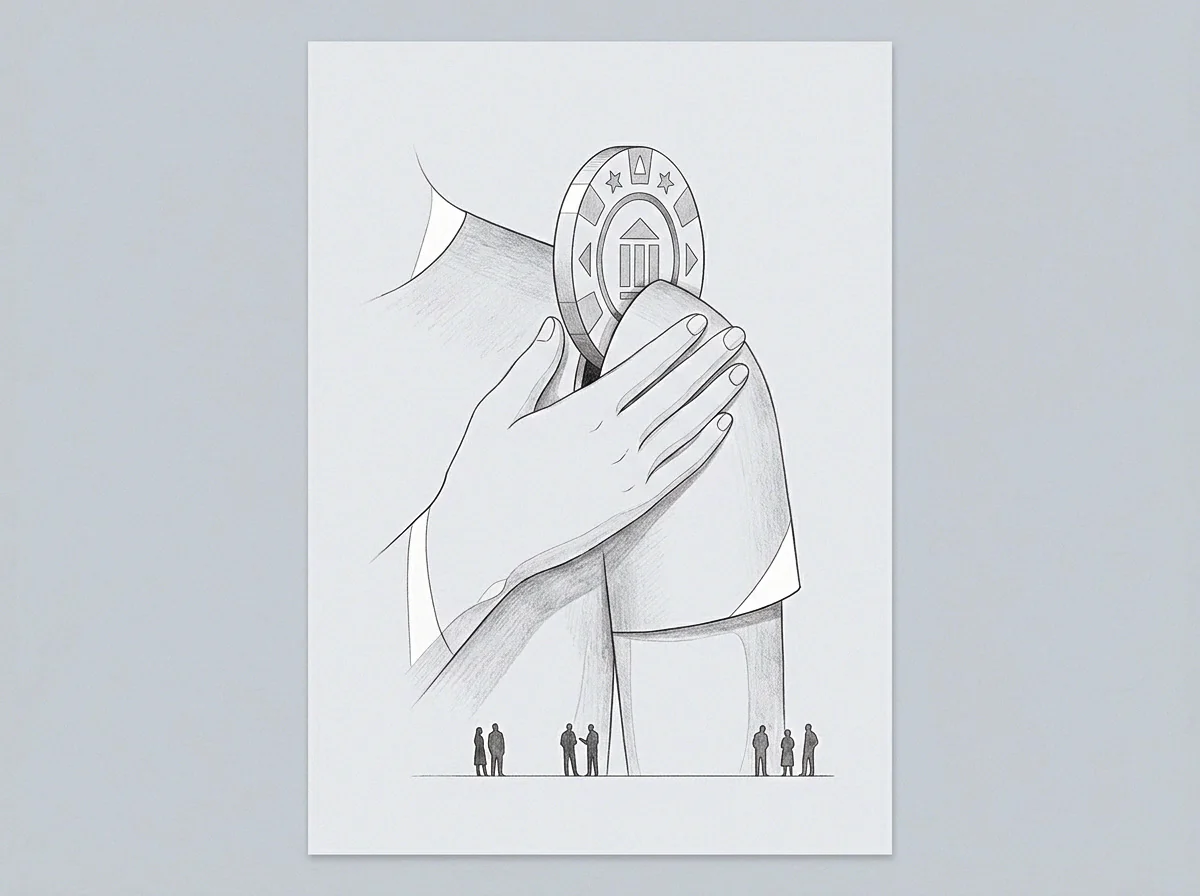
A hand rests on a shoulder after fourteen hours of continuous decision making. Under baseline physiological conditions, cutaneous mechanoreceptors send low-frequency unmyelinated C-tactile afferent signals to the insular cortex, lowering heart rate, attenuating cortisol release, and reducing the metabolic expenditure of self-regulation. When the sympathetic nervous system operates near allostatic ceiling, the central nervous system reinterprets this exact incoming afferent volley.
Thalamic sensory gating, which normally filters secondary peripheral touch to preserve focus, degrades under high adrenergic tone. The brain reads the physical pressure not as a coregulatory signal of shared safety, but as an additional sensory payload requiring real-time neural decoding.
Tactile processing relies on pre-existing autonomic headroom. When internal working memory holds multiple open operational loops, the somatosensory cortex processes physical contact through a high-threat filter. Mechanoreceptor excitation adds sensory noise to an over-stimulated cortex.
Physical contact forces the brain to calculate the social, emotional, and physical demands of the person initiating touch. Touch demands attention.
High arousal shifts sensory gating. The physical skin surface, designed as a coregulatory interface under Social Baseline Theory, transforms into a defensive boundary. The neural architecture responsible for mapping proximity flips its baseline assumption.
Physical presence no longer signals that environmental threat is shared across two organisms. Physical presence signals an immediate requirement to process another human being’s emotional and physical state while internal capacity sits at zero.

The Metabolic Shift in Social Baseline Processing
Social Baseline Theory establishes that the human brain evolved to budget energy under the assumption of social proximity. In low-stress environments, physical contact acts as an external metabolic subsidy. The brain offloads neural work to the surrounding social unit, lowering ambient baseline vigilance.
When a person sits in a saturated state, this baseline assumption breaks down completely. The brain can no longer accept external regulation because the neural circuits that translate touch into safety are occupied by high-priority survival processing.
Touch becomes sensory intrusion at the precise inflection point where autonomic headroom collapses. The incoming touch requires active motor inhibition, interoceptive evaluation, and social signaling responses. Skin registers contact.
What should serve as a neural resting state converts into an active processing task. The person receiving touch experiences an involuntary muscle contraction, an elevation in skin conductance, and a drive to increase spatial distance.
When allostatic capacity reaches maximum threshold, touch functions as a high-cost sensory event that alters the immediate relational dynamic.

Ceiling

Autonomic Ceiling and the Concurrency Limit
The human autonomic nervous system operates under strict concurrency limits. The prefrontal cortex manages a finite set of active monitoring channels before cognitive and sensory degradation occurs. When operational load, unresolved organizational threat, and high environmental demands consume these channels, the central nervous system enters an allostatically saturated state.
In this state, the brain throttles incoming sensory information to protect core executive functions.
Allostatic load represents the cumulative physiological wear on tissue and neural networks resulting from chronic autonomic activation. As this load accumulates, the baseline baseline sympathetic tone elevates, shrinking the dynamic range of the parasympathetic brake. The vagal nerve, which normally mediates the slow down of cardiac output during supportive social touch, loses its capacity to rapidly suppress sympathetic fight-or-flight signaling.
Interoceptive feedback circuits become flooded with endogenous stress signals, rendering the brain unable to differentiate between external physical comfort and external physical threat.
Social Baseline Theory dictates that physical proximity reduces neural effort only when the recipient retains the internal headroom required to process social safety signals.
Saturated systems experience a total collapse of sensory gating efficiency. Under normal conditions, tactile inputs travel through sensory pathways where reticular activating structures attenuate predictable, benign stimuli. Under chronic load, thalamic inhibition fails.
Peripheral contact arrives at the primary somatosensory cortex with unattenuated force, joining an already saturated neural network.

Interoceptive Overload in Saturated Autonomic Channels
Interoceptive channels monitor internal visceral states, translating heart rate variability, respiration depth, and muscular tension into a real-time map of biological stability. High baseline strain fills these channels with continuous error signals. When another person initiates physical contact, tactile mechanoreception merges with these existing internal error signals, producing acute interoceptive overload.
The physiological mechanisms driving this transition follow a clear biological pattern under high load:
- Thalamic Gating Failure occurs when high sympathetic arousal suppresses the thalamic reticular nucleus, causing unfiltered sensory inputs to flood the cerebral cortex.
- Vagal Suppression Breakdown arises as chronic high allostatic load exhausts the myelinated ventral vagal pathways, preventing the autonomic system from down-regulating heart rate during touch.
- Interoceptive Error Cascades develop when incoming tactile stimulation collides with high baseline visceral distress, producing an exaggerated neuroendocrine threat response.
- Receptor Slot Saturation occurs because the internal working model of the individual possesses no active operational capacity to process incoming care without calculating reciprocal obligation.
Safety becomes load. Autonomic capacity hits zero. When physical touch arrives during this state of internal saturation, the brain evaluates the contact through an active cost model.
The contact demands immediate social engagement, eye contact, reciprocal physical positioning, and emotional attunement. The metabolic expenditure required to generate these responses exceeds available energetic reserves, prompting immediate withdrawal.
Attempting to use physical contact to calm a person operating at allostatic ceiling forces their central nervous system to spend energy it does not possess, escalating fight-or-flight activation rather than resolving it.
Misalignment
Why Does a Partner’s Hand Feel Like Demanding Load Under High Strain?
A fundamental structural disconnect emerges between the person offering physical touch and the saturated individual receiving it. The person initiating touch typically operates from a standard coregulatory model. They offer proximity and contact to lower physiological distress, drawing on basic attachment dynamics.
The receiving party, holding an allostatic load near capacity, processes that touch through an inverted internal working model. Intention does not alter physiology.
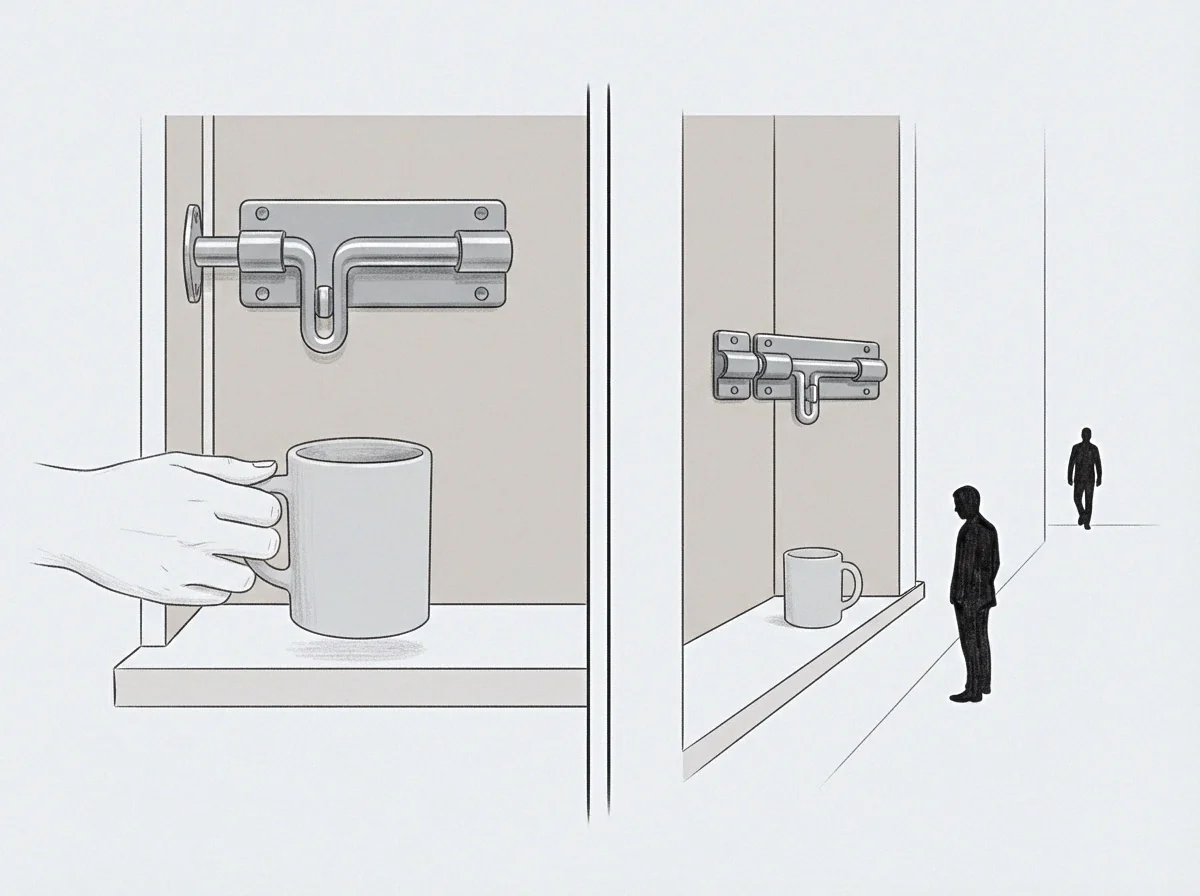
To the saturated individual, a hand placed on the back does not convey comfort. It functions as an uninvited signal requiring a response. The receiver’s system registers an immediate obligation to modulate their tone of voice, adjust their posture, and validate the initiator’s caring gesture.
The incoming physical gesture creates a covert transaction. The saturated partner must pay for the incoming contact with scarce attention and energy.
When internal headroom collapses, every external attempt at coregulation registers as an unstated demand for social output.
This dynamic creates a severe relational mismatch. The initiator interprets the receiver’s physical flinch or shoulder withdrawal as personal rejection, defensive detachment, or emotional coldness. The initiator reads the physical boundary through an attachment lens, inferring relational damage or hostility.
The receiver experiences the initiator’s proximity as an insensitive intrusion that ignores clear physiological distress signals. Proximity costs energy now.
The Inverted Internal Working Model Under Load
Internal working models govern how individuals process relational proximity. In healthy baseline states, these models route incoming social touch into secure neural pathways, interpreting contact as evidence of shared resource allocation. Under chronic operational load, these models invert.
The individual operates from an operational template formed under high self-reliance conditions, where survival required managing threat entirely alone.
In individuals who have ran operational cycles backwards—regulating others while receiving no external regulation themselves—the internal working model lacks an open receptor slot for physical comfort. They possess deep neural pathways for delivering stability, but no passive infrastructure for receiving it. Every incoming physical approach activates an automatic subroutine designed to manage the other person’s state.
When a partner moves close, the receiver’s template assumes they must now regulate the partner. The brain prepares for interpersonal effort rather than resting state recovery. Demand exceeds metabolic capacity.
Neural channels reach saturation. The receiver pulls away not because they reject the partner, but because their central nervous system is attempting to prevent total sensory shutdown.
The partner leaves the room assuming their presence is unwanted, completely unaware that their touch was registered as a heavy administrative task.
Threshold

Comparative Processing of Tactile Signal Across States
The shift from coregulative touch to sensory intrusion follows a predictable trajectory dictated by autonomic state. Processing characteristics change fundamentally as an individual moves from baseline stability to allostatic saturation.
| Physiological Variable | Unsaturated Baseline | Elevated Arousal | Saturated Overload |
|---|---|---|---|
| Thalamic Gating Status | Fully operational; filters non-essential tactile input | Partially degraded; increased sensory sensitivity | Completely compromised; tactile inputs arrive unattenuated |
| Interoceptive Interpretation | Touch mapped as peripheral safety signal | Touch mapped as ambiguous environmental event | Touch mapped as active physical threat or demand |
| Vagal Brake Function | Ventral vagal tone increases; heart rate slows | Vagal tone fluctuates; minimal cardiac attenuation | Vagal brake suppressed; sympathetic spike triggered |
| Metabolic Processing Cost | Net reduction in self-regulatory energy spending | Neutral expenditure; minor cognitive decoding cost | High expenditure; forces active motor and emotional inhibition |
| Relational Output | Physical relaxation and social approach behaviors | Vigilance and conditional physical acceptance | Involuntary muscle flinch and spatial retreat |
The Sequence of Sensory Throttling
Sensory throttling under allostatic load follows a defined neural sequence when physical touch is introduced to a saturated system.
- The external physical contact activates cutaneous mechanoreceptors, sending immediate tactile signals through peripheral nerve pathways into the spinal cord.
- The incoming volley ascends to the thalamus, where impaired gating mechanisms fail to suppress the sensory input, allowing it to hit the cortex with high intensity.
- The insular cortex attempts to map the sensory signal against existing interoceptive data dominated by high sympathetic arousal and baseline exhaustion.
- The prefrontal cortex evaluates the environmental context, calculating that responding to the touch requires immediate motor, emotional, and social resource allocation.
- The central nervous system initiates a protective sympathetic discharge, triggering muscle contraction and behavioral retreat to enforce spatial distance.
An autonomic system operating at ceiling treats every incoming sensory input as a potential threat to remaining executive function.
When internal capacity drops below the threshold required for sensory integration, reducing physical proximity remains the only effective means of preserving remaining autonomic control.
Restoration
Re-Establishing Distance Without Signal Severance
Resolving the shift from coregulative touch to sensory intrusion requires rebuilding autonomic headroom. Re-establishing this capacity cannot occur through intellectual insight alone or forced exposure to physical contact. The central nervous system updates its sensory gating parameters exclusively through repeated actual experiences of low-demand proximity and explicit verbal clarity regarding boundaries.
The primary task when managing a saturated state is eliminating covert expectations attached to physical presence. When a person reaches allostatic ceiling, the introduction of touch must be replaced by ambient, non-intrusive proximity. Sitting in the same room without eye contact, touch, or conversational expectations permits the sensory processing architecture to disarm.
The brain observes that physical presence does not demand an operational response. Baseline regulation fails here. The template dictates processing.
Stating sensory limits directly removes the cognitive effort required to suppress sensory discomfort. A clear verbal statement establishing that physical contact cannot be processed in the moment eliminates the partner’s ambiguity while protecting the receiver’s autonomic system from sensory overload. This explicit boundary prevents the partner from interpreting protective physiological withdrawal as intentional relational rejection.
Second Template Formation Through Low Demand Proximity
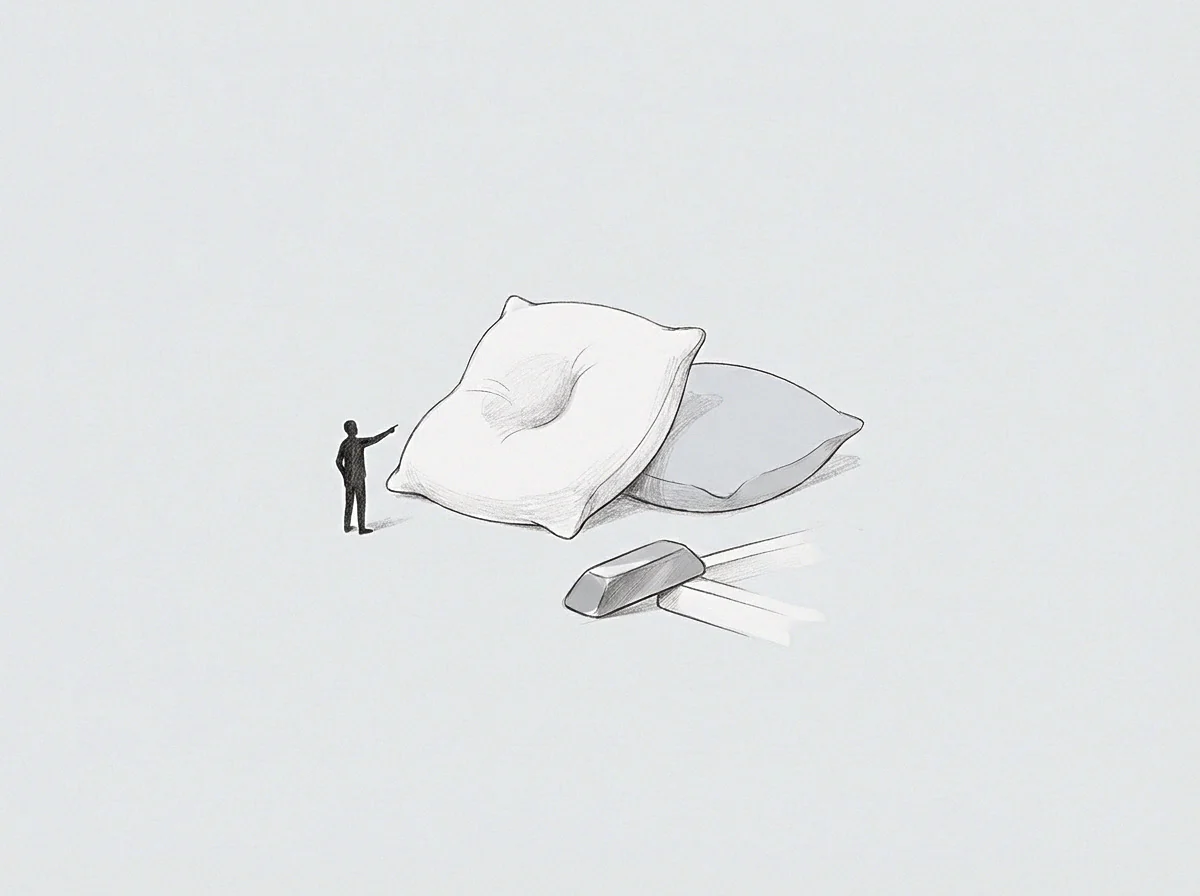
Rebuilding the internal working model requires forming a second operational template. Earned security develops when a person with no baseline slot for receiving care experiences sustained proximity that makes zero demands on their energy. The recipient’s brain slowly maps the fact that another person can remain close without requiring active emotional management or social output.
Over extended timeframes, low-demand proximity restores vagal flexibility. As ambient sympathetic tone drops, thalamic gating mechanisms regain normal operation. Interoceptive channels clear, allowing the insular cortex to once again distinguish between internal threat signals and external supportive touch.
The signal flips. Headroom opens.
Physical touch regain its original coregulatory function only after autonomic headroom is fully restored through structural adjustments to operational load and environment.
How many cycles of zero-demand spatial proximity must a saturated nervous system experience before tactile contact ceases to register as sensory intrusion?