
The Allostatic Load Of Sole Regulators Inside Early Stage Ventures
Allostatic load in solitary venture leaders stems from unreciprocated down-regulation of organizational panic through an isolated prefrontal cortex.
Seat
Midnight messages stack across three different channels while the company bank balance shows five weeks of runway. Two engineers argue about database latency, an early sales hire requests an immediate compensation revision, and a lead investor asks for updated churn figures before dawn. The person holding the company answers each thread with steady cadence, neutral phrasing, and complete tactical reassurance.
Nobody reading those replies detects panic.
Social baseline theory demonstrates that human neural architecture treats social proximity as the primary resource for conserving metabolic expenditure. When a group operates under acute threat, individuals decrease personal vigilance by leaning against the apparent stability of an available figure. The venture founder frequently becomes that sole stabilizing reference point.
Junior employees, contractors, and co-venturers deposit anxiety into that single station without measuring the volume, while the recipient converts organizational panic into structured execution by absorbing the stress responses around them.
A calm presentation under environmental threat registers to observers as an invitation to transfer more load.
Early operations lack institutional shock absorbers. Established corporations distribute panic across human resource policies, legal departments, and layered management tiers. A ten-person venture possesses only the nervous system of its primary operator, who carries the baseline.
Operational volume remains constant, yet the capacity to metabolize relational strain diminishes with every incoming escalation.
The Unidirectional Absorption Pattern
Team members bring disorganized affect directly to the desk of the executive, expecting calm resolution. That transaction looks like standard management, yet biologically it represents unreciprocated down-regulation. The employee leaves the conversation with normalized cortisol levels, restored cognitive focus, and lowered heart rate variability.
The venture lead absorbs that physiological turbulence and maintains operational composure through sustained prefrontal inhibition.
Sleep deteriorates first. Sustained sympathetic activation prevents deep restorative slow-wave rest, which impairs next-day memory consolidation and executive restraint. The executive assumes personal grit can compensate for interrupted biological replenishment, an assumption that breaks under stress.
Over six consecutive quarters, constant physiological mobilization creates systemic wear across cardiovascular, metabolic, and neuroendocrine systems.
They handle every crisis with total composure, so giving them another fire to put out feels completely safe.
Economy
Neural systems calculate environmental threats through metabolic expenditure. Solitary threat appraisal carries high energetic expenses because the brain must finance defensive vigilance, physical mobilization, and emotional suppression simultaneously. Proximal access to a reliable, attuned other decreases baseline neural activity in the dorsal anterior cingulate cortex and anterior insula.
When an operator serves as the sole external regulator for eight other people while having zero reciprocal regulatory partners, that metabolic calculation becomes unsustainable.
Allostatic load describes the cumulative biological toll exacted by chronic physiological adaptation to environmental volatility. In a venture context, that burden compounds because commercial instability coincides with complete relational exposure. The venture lead regulates downward to keep technical staff calm, regulates sideways to keep co-venturers aligned, and regulates upward to prevent investor panic.
Each interaction demands continuous self-monitoring and somatic containment.
Sustained physiological mobilization without relational replenishment converts acute operational stamina into chronic neuroendocrine wear.
Steady presence costs biological energy. In laboratory paradigms examining hand-holding during electric shock, holding a trusted partner’s hand significantly attenuates neural responses to threat compared to holding a stranger’s hand or facing threat alone. Venture operators almost universally endure organizational threats in total physiological solitude, sitting alone in rooms writing payroll explanations while maintaining an outward demeanor of cheerful inevitability.

Comparative Metabolic Demands Across Venture Structures
The operational distribution of regulatory responsibility alters the biological survival curves of leadership teams. The following comparison outlines the energetic realities across isolated versus distributed organizational designs.
| Structural Variable | Sole Regulatory Design | Distributed Regulatory Design |
|---|---|---|
| Down-regulation vector | Unidirectional toward primary operator | Multidirectional across peer group |
| Metabolic threat financing | Funded entirely through single nervous system | Shared across co-equal operational leads |
| Somatic containment duration | Continuous across seven-day workweeks | Intermittent with defined recovery windows |
| Threat appraisal mechanism | Isolated hypervigilance | Consensual validation and reality testing |
| Terminal biological failure mode | Acute allostatic crash and operational withdrawal | Graceful handoff and sustainable rotation |
The differences documented above produce clear divergence in venture durability. Operating as an isolated regulatory sink accelerates systemic inflammation, suppresses cellular immune competence, and impairs long-range decision modeling, leading to physical exhaustion.
The Backward Regulatory Template
Many individuals drawn to founding enterprises developed an inverted regulatory model long before signing company incorporation documents. Early childhood environments frequently demanded that they stabilize chaotic parents or volatile family systems to maintain physical and emotional safety. Those individuals internalize a model of themselves as the sole protector and stabilizing presence, developing zero internal capacity to seek or accept care from external sources.
This psychological pattern operates through specific traits:
- Compulsive self-reliance drives complete refusal to delegate emotionally fraught company problems to colleagues.
- Affective suppression keeps inward panic invisible from co-venturers to protect collective morale.
- Absence of receptor slots makes external offers of practical or emotional support register as dangerous liabilities.
- Hyper-attunement to volatility detects minor environmental micro-shifts long before team members perceive impending disruptions.
Protracted reliance on solitary stabilization permanently degrades executive functioning, creating erratic strategic choices and severe operational detachment across subsequent fiscal quarters.

Current
Incoming demands flow continuously toward whichever station presents the least friction. In venture environments, operational questions naturally route to the individual who provides rapid psychological reassurance alongside technical answers. Employees stop developing independent stress tolerances because outsourcing existential anxiety to the founder remains cheaper than sitting with commercial ambiguity.
Attachment patterns within enterprise hierarchies mimic early developmental dynamics. Team members attach to the regulated state of the executive rather than to abstract equity incentive schemes or product roadmaps. A calm voice in an all-hands meeting creates biological coherence across a room of anxious specialists.
The team borrows that coherence, uses it to write software or close enterprise contracts, and departs for the weekend feeling confident.

Whose Calm Stabilizes The Operating Rhythm?
Organizational stability functions as a consumed commodity. When an operator provides unconditional stability, team members interpret that balance as infinite baseline capacity. They do not comprehend that borrowed calm carries an explicit biological cost paid entirely by the lender, making silence an expensive answer.
The central nervous system records debt. When acute venture emergencies become permanent conditions, the regulator begins throttling cognitive throughput to preserve vital biological functions. The operator stops answering messages within five minutes.
Emails sit unread for three days. Direct reports interpret that sudden communication latency as personal hostility or impending venture termination. The team panics precisely because the borrowed calm was abruptly withdrawn.
Unstated regulatory limits create covert contracts that extract biological interest from the solitary stabilizing figure.
A venture lead who never shows somatic strain naturally invites the transfer of every peripheral organizational crisis, as load moves toward quiet stability. Without deliberate interruptions, that incoming flow continues until systemic collapse halts operations entirely.
Fault
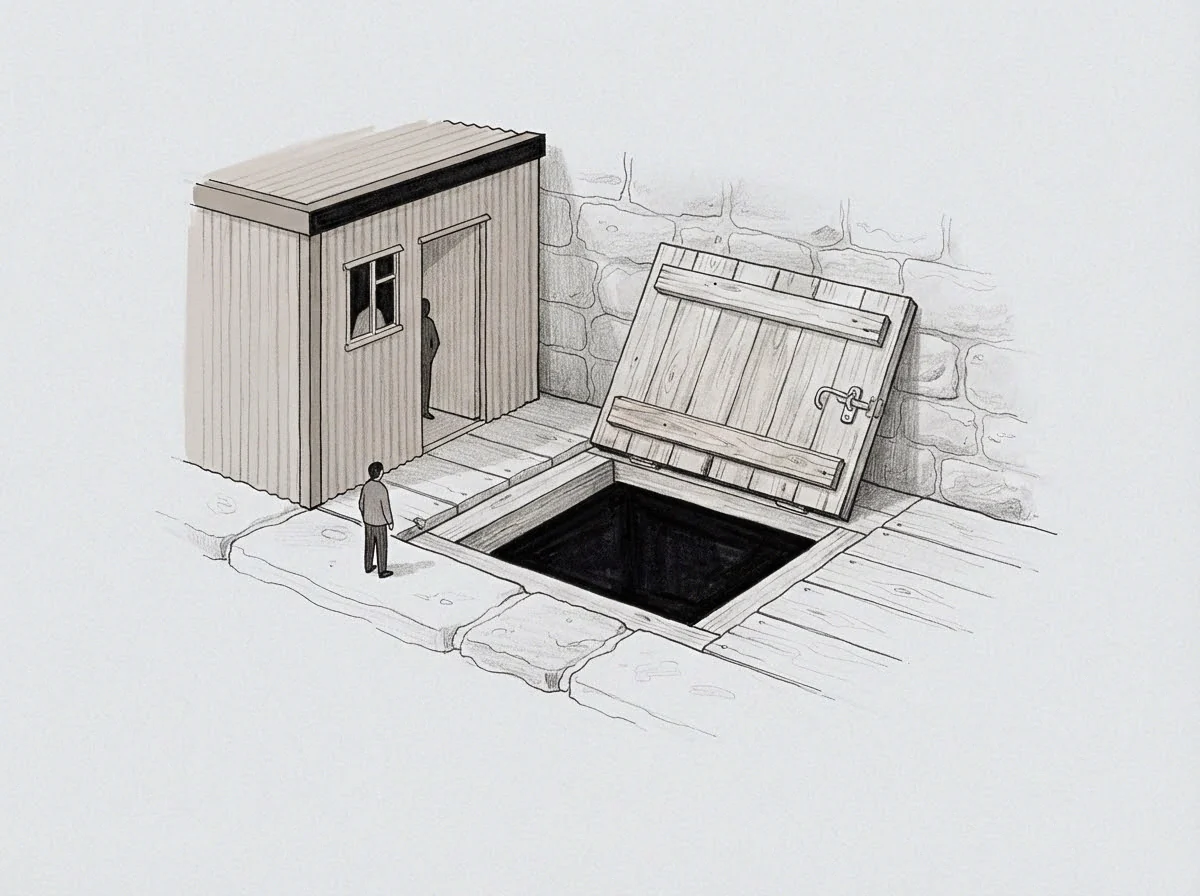
Mechanical assemblies reveal micro-fractures under cyclic stress before total structural severance occurs. Human biological systems exhibit identical progression. Allostatic load accumulates across identifiable stages, beginning with subtle changes in cognitive flexibility and ending in profound endocrine exhaustion.
In early venture settings, leaders misinterpret these somatic warning flags as motivational deficits. An operator who easily synthesized conflicting product specifications six months earlier suddenly stares at simple financial models for hours without comprehension. The prefrontal cortex, starved of rest by elevated circulating catecholamines, sheds complex associative modeling to preserve survival functions.
Irritability replaces patience. The venture lead begins snapping at trusted engineers during routine planning discussions.
The operator continues showing up to board sessions, delivering investor updates, and smiling during recruitment calls, but internal biological reserve tanks read empty. Capital cannot purchase biological recovery. At this junction, founders frequently double down on solitary willpower, increasing caffeine intake and extending work hours into early mornings.
A simple historical precedent clarifies this breakdown. During the nineteenth-century expansion of transatlantic maritime commerce, clipper captains regularly held solitary command through weeks of severe gales without relinquishing watch duty to junior officers. Those captains frequently delivered vessels safely to harbor only to collapse into catastrophic nervous invalidism within days of docking.
Their bodies maintained hyper-vigilant operational coherence exactly as long as commercial survival demanded it, then shut down completely the moment environmental threat subsided.
Early-stage enterprise leadership operates on identical biological dynamics. What remains unsettled is whether structural venture capital models can ever accommodate the biological limits of the human nervous systems that power them.
Keel
Stabilizing a commercial enterprise without destroying the primary operator demands shifting from solitary containment to structured physiological distribution. Biological recovery cannot occur through solitary intellectual realization. Insight names the missing balance; repeated practical experience builds it.
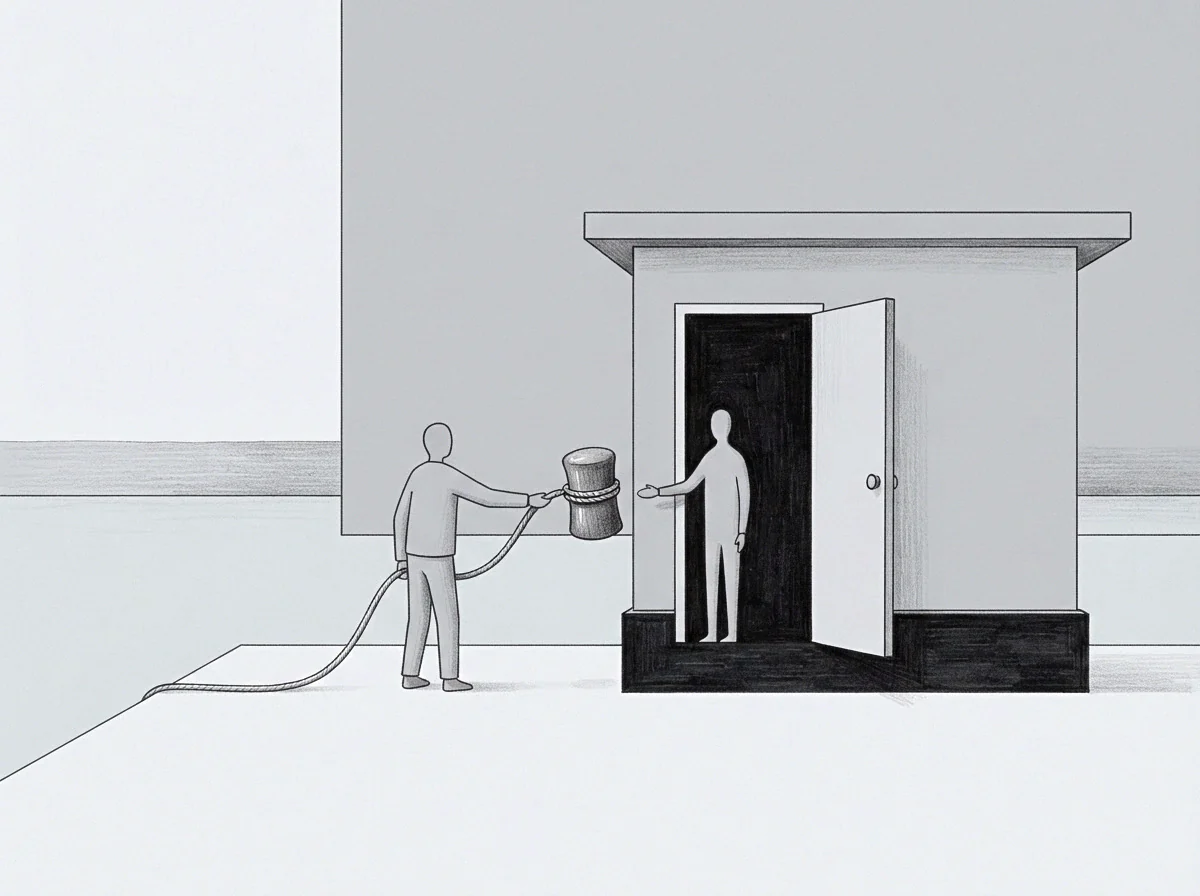
The venture requires explicit operational architecture that functions like a counterbalancing ship keel, distributing relational ballast across institutional mechanisms rather than relying on one spine.
Earned security develops when an individual with an inverted regulatory template experiences consistent, reliable co-regulation from a competent peer over protracted time. For an enterprise operator, that means building relationships where mutual disclosure carries zero commercial penalty. An experienced outside advisor, a peer operator running an equivalent venture, or a qualified clinician can serve as that external baseline.
The operator practices allowing another person to hold operational gravity without attempting to manage that person’s emotional equilibrium.
A biological boundary stated plainly as an operational schedule preserves the executive nervous system against ambient venture anxiety.
The primary operator must implement concrete structural boundaries within the venture. Clear constraints remove ambient availability:
- Structured escalation cadences restrict unscheduled operational crises to defined weekly windows unless an immediate production outage occurs.
- Explicit operational handoffs delegate functional decision rights to functional leads without executive veto requirements.
- Hard communications blackouts enforce twelve continuous hours of offline recovery nightly to restore autonomic nervous balance.
- Peer regulatory circles create bi-weekly spaces where venture executives exchange unfiltered operational realities without performance posturing.
Implementing a formal communication blackout protocol that prohibits internal messaging between eight in the evening and eight in the morning systematically cuts ambient vigilance, returning baseline cortisol production to standard circadian rhythms within three operational cycles.