
The Physiology of Earned Security When Structural Receptor Slots for Support Are Missing
Earned security updates attachment templates by constructing somatic receptor slots that turn incoming co-regulation into low-cost autonomic relief.
Frame
Four messages sit unread on a screen at midnight while an engine issue halts deployment. The operator sitting at the desk feels no surge of panic, no elevation in heart rate, and no impulse to raise their voice. Their physical system maintains an even rhythm, an even respiratory cycle, and a steady arterial pulse.
Across the organization, three leads read that steadiness as absolute capacity. They route two further structural disputes to the same desk, assuming the person sitting there possesses infinite internal headroom. The room stays quiet.
The cost accumulates quietly.
Social baseline theory establishes that the human brain budgets metabolic expenditure on the assumption that coregulatory targets are physically or relationally present. When a reliable counterparty is present, the central nervous system downshifts peripheral effort, offloading threat monitoring and autonomic containment onto the shared environment. In an enterprise or operational setting, this dynamic routinely reverses.
The founder or lead operator becomes the environmental anchor against which the rest of the team regulates their baseline arousal. Team members attach to the steady state of the leader, borrowing calm to settle their own task-related uncertainty.
Proximity to a predictable autonomic state reduces peripheral baseline expenditure when task demands exceed individual capacity.
Borrowing regulation from an anchor person lowers the metabolic cost for the borrower while raising it for the anchor. When the anchor person possesses fully formed internal working models, this expenditure naturally cycles between giving and receiving support. The anchor person coregulates the team during acute operational strain, then offloads their own physiological strain onto a personal support partner, a trusted peer, or a stable institutional structure.
The system remains in dynamic balance because the receptor slots for coregulation exist on both sides of the ledger.
A structural breakdown occurs when the anchor person lacks the underlying receptor slots required to receive coregulation. That capacity fails to form when early developmental environments or prolonged isolated roles require an individual to regulate others without ever experiencing external containment themselves. The individual internalizes a backward working model.
They model themselves as the sole provider of calm and view all incoming offers of support as additional operational noise to be managed. The physical system continues to function as the stabilization anchor for the surrounding enterprise, but it operates as a closed metabolic loop with no incoming credit.
In this arrangement, team members experience the lead operator as an indestructible resource. They increase their operational reliance, bringing more friction to the same desk because that desk consistently absorbs friction without structural resistance. The lead operator absorbs the incoming arousal of four departments while maintaining a flat autonomic baseline, paying for the outward stability entirely out of personal glucose, cortisol, and neural reserves.
The steady presence that others rely upon to quiet their own systems is the precise mechanism that exhausts the anchor.
Anyone working alongside the anchor person simply assumes that a steady desk requires nothing from the room because it never asks for anything from the room.

Economy
Internal neural architecture dictates how an individual interprets external regulatory signals. In standard coregulatory circuits, when an external party offers presence, attention, or physical grounding during acute stress, the recipient nervous system registers the signal through ventral vagal pathways. Heart rate variability increases, sympathetic arousal drops, and the brain reduces its baseline vigilance allocation.
The incoming signal lands in a dedicated physiological receptor slot, registering as immediate relief.
When those structural receptor slots are missing, the neural processing of supportive input alters completely. The brain, having built its predictive processing models around absolute self-reliance, interprets an incoming offer of coregulation as an unpredictable variable requiring heightened evaluation. A partner asking how to help does not trigger autonomic downregulation.
The query forces the overloaded operator to pause, formulate an explanation, allocate attention to the external party, and manage the counterparty’s emotional state. Support registers physically as an additional task requirement.
The person who calms the room receives no incoming calm from the room they calmed.
Consider a typical operational arrangement involving two co-founders who built a firm across four years of sustained stress. Assume the technical partner holds sixty percent of the product delivery burden, while the managing partner holds the operational and investor counterparty burdens. The managing partner notices the technical partner growing terse and offers to take over two core workflows to lighten the load.
In a standard template, this offer triggers immediate metabolic relief for the technical partner. Under a backward working model, the technical partner experiences the offer as an implicit commentary on their failing capacity, paired with the operational tax of transferring contextual knowledge while already at operational ceiling. The offer is refused, the technical partner accelerates their output, and the managing partner interprets the refusal as coldness.
This dynamic creates a specific physical failure pattern across extended operational timelines. The nervous system cannot maintain continuous high-cost self-regulation without suffering structural fatigue. Because the internal working model lacks the pathways to process coregulatory intake, the operator utilizes secondary containment mechanisms to maintain baseline stability:
- Autonomic Throttling reduces emotional responsiveness across all domains to prevent systemic overload from breaking through the operational surface.
- Cognitive Over-Functioning substitutes precise analytical control for organic emotional settling, consuming high volumes of prefrontal energy to manage somatic distress.
- Somatic Shielding converts unmapped affective signals into chronic peripheral muscle tension, altering posture and sleep architecture.
- Behavioral Isolation drives the individual to clear the physical environment of other people whenever task demands peak, ensuring zero incoming regulatory noise.
These containment strategies maintain functional output in the short term, but they carry a compound biological cost. The continuous suppression of somatic distress signals elevates baseline allostatic load. The autonomic nervous system remains locked in a high-cost low-variability state, where cardiovascular expenditure remains elevated even during periods of complete physical rest.
The physical system burns through structural reserves to maintain an external appearance of total composure, ensuring that long-term cellular exhaustion arrives long before any overt psychological distress becomes visible to outside witnesses.
Failure to construct functional coregulatory receptor slots transforms every incoming gesture of support into an involuntary metabolic tax that accelerates systemic exhaustion.

Spine
Updating an internal working model requires establishing concrete physical structures before any cognitive narrative shifts. Standard self-regulation relies on individual prefrontal inhibition to dampen amygdalar activation. This process is metabolically expensive, requiring continuous glycogen consumption to keep autonomic arousal within functional bounds.
Coregulatory integration, by contrast, relies on distributed signal processing, where two nervous systems share the computational burden of threat assessment and arousal containment. The structural contrast between these two modes governs how long an operator can sustain high-density responsibility.
| Operational Criterion | Primary Baseline Self-Regulation | Coregulatory Receptor Integration |
|---|---|---|
| Metabolic Baseline Expenditure | High continuous consumption of prefrontal glucose to maintain autonomic inhibition under load. | Low distributed expenditure as autonomic stabilization is shared across trusted counterparties. |
| Signal Processing Path | Incoming support signals register as operational noise, operational interruption, or potential threat. | Incoming support signals land in ventral vagal receptor slots, triggering immediate somatic relief. |
| Allostatic Load Accumulation | Linear accumulation with zero recovery during operational strain, leading to sudden systemic throttling. | Non-linear accumulation interrupted by periodic coregulatory resets that restore physiological headroom. |
| Response to Operational Strain | Increased isolation, total internal containment, and suppression of peripheral somatic feedback. | Controlled signal distribution, real-time boundary adjustment, and active utilization of external anchors. |
Transitioning from pure self-regulation to coregulatory integration cannot be achieved through intellectual understanding alone. Insight operates in the prefrontal cortex, whereas attachment templates and coregulatory receptor slots reside in subcortical circuits, including the insula, amygdala, and brainstem nuclei that control autonomic state. An operator can thoroughly understand the mechanics of attachment theory while remaining physically incapable of permitting another human being to settle their nervous system.
The subcortical circuits require direct, repetitive, somatic proof before they alter their predictive algorithms.
Take an operator who has spent a decade operating as the sole baseline for an enterprise. When a peer or partner attempts to provide physical or emotional presence during a crisis, the operator’s subcortical threat detection system fires automatically. The offer threatens the operator’s primary survival strategy, which dictates that safety exists only when the operator maintains total control over the regulatory environment.
The operator’s body tightens, respiratory rate shallowly increases, and cognitive focus sharpens into hyper-vigilance. The brain misinterprets the somatic reaction as evidence that the external party is unsafe, reinforcing the backward working model.
An unstated operational boundary converts missing coregulatory intake into metabolic baseline expenditure.
Building an earned receptor slot requires interrupting this predictive loop at the somatic level. The operator must remain physically present during micro-moments of coregulatory offer without executing the habitual retreat into total self-containment or cognitive over-functioning. This process does not begin with dramatic, high-stakes emotional disclosures.
It begins with micro-exchanges where the operator allows another person’s stable state to register peripherally without actively managing or dismissing the interaction.
A system built to bear load attracts additional load until a hard structural limit stops the transfer.
Absence
Interpreting somatic distress requires distinguishing between cognitive awareness and autonomic state. When structural receptor slots are absent, the body registers the continuous burden of unshared regulation long before the conscious mind acknowledges any difficulty. The operator continues to execute high-level strategic decisions, handle complex founder disputes, and manage operational capital with absolute precision.
Below the surface of conscious awareness, the autonomic nervous system begins to exhibit signs of systemic throttling.
Why Do Physical Markers Precede Cognitive Recognition?
Subcortical survival circuits operate on faster processing timelines than prefrontal narrative circuits. When an operator habitually absorbs ambient strain without receiving incoming coregulation, the brainstem and autonomic control centers continuously adjust physiological setpoints to preserve core operational function. The resting vagal tone drops, baseline sympathetic tone elevates, and diurnal cortisol rhythms flatten.
The operator feels neither sad nor anxious. They feel flat, efficient, and increasingly detached from their physical environment.
Autonomic shifts manifest through distinct somatic markers across four primary systems:
- Cardiovascular Rigidity appears as a persistent reduction in heart rate variability, signaling that the cardiac pacemaker has lost its dynamic responsiveness to subtle environmental shifts.
- Gastrointestinal Throttling occurs as persistent sympathetic activation diverts blood flow away from enteric processing, resulting in chronic low-grade digestive dysfunction and altered metabolic absorption.
- Sleep Architecture Degradation presents as premature morning awakening paired with an inability to enter deep slow-wave sleep, driven by an elevated nocturnal cortisol floor.
- Sensorimotor Blunting reduces the precision of interoceptive feedback, rendering the operator unable to detect physical fatigue, hunger, or muscle tension until functional impairment occurs.
The absence of coregulatory receptor slots causes these somatic markers to solidify into a permanent physiological baseline. The operator treats these physical symptoms as minor operational inconveniences to be managed through caffeine, targeted exercise, or sheer force of will. The prefrontal cortex constructs a rationalizing narrative that attributes the somatic fatigue entirely to current work volume, ignoring the underlying reality that the metabolic tax stems from the isolated mode of regulation rather than the task demands themselves.
Consider an operational scenario where a founder manages a company through a sixty-day regulatory audit. Assume the raw work volume requires ten hours of daily focused effort, a load the founder has handled comfortably in past years. During this specific audit, the founder’s personal relationship breaks down, eliminating their primary non-work anchor.
The raw task load remains unchanged at ten hours, but the founder’s nervous system loses its singular coregulatory grounding point. Within three weeks, despite maintaining identical sleep hours and nutritional intake, the founder experiences severe cognitive sluggishness, elevated resting blood pressure, and persistent systemic inflammation.
The work volume did not break the founder. The loss of the solitary coregulatory anchor forced the founder’s system to cover the entire regulatory budget through high-cost self-regulation, exhausting metabolic reserves.
How much operational capacity decays before an anchor person recognizes that single-handed containment is a physical impossibility rather than an attitudinal posture?
Scaffold
Earned security is the empirical process of constructing functional coregulatory receptor slots late in development. Unlike innate security, which forms effortlessly through responsive early caregiving, earned security is forged through deliberate, repeated somatic updates to an existing working model. The process requires an operator to systematically expose their predictive neural networks to actual experiences of safe coregulation while actively inhibiting the habitual impulse to self-contain or control the interaction.
The creation of a new internal template demands precise conditions. The counterparty providing the coregulatory signal must possess an exceptionally stable autonomic baseline, low personal reactivity, and zero operational dependency on the lead operator. If the counterparty requires reassurance, validation, or emotional management from the operator, the interaction immediately falls back into the backward template, reinforcing the existing pathology.
The counterparty must function as a clean physiological ground.
Repeated actual experience updates neural working models that cognitive insight cannot reach.
The update path unfolds through four distinct operational phases across extended calendar time:
- Micro-Somatic Toleration involves allowing a stable counterparty to remain in physical proximity during periods of mild distress without the operator initiating verbal management or task delegation.
- Boundary Shift Execution requires stating a clear operational limit to a counterparty without softening the statement with emotional labor or immediate compensatory work.
- Active Receipt Testing consists of accepting a concrete offer of task or emotional support from a counterparty and forcing the nervous system to remain idle while the counterparty executes the action.
- Somatic Integration marks the phase where incoming presence from a trusted counterparty automatically lowers resting heart rate and reduces prefrontal cognitive load during acute operational stress.
The transition between active receipt testing and somatic integration represents the critical neural threshold. When an operator accepts help while internally tracking the counterparty’s execution with hyper-vigilant scrutiny, zero coregulatory receptor construction occurs. The operator’s prefrontal cortex remains fully engaged in threat monitoring, maintaining elevated sympathetic tone.
The update occurs only when the operator allows their threat monitoring system to go offline in the presence of the counterparty, permitting the counterparty’s steady autonomic state to regulate the operator’s peripheral biology.
This structural transformation alters the operational baseline of the individual. As new receptor slots open in subcortical circuits, the overall metabolic cost of living drops significantly. The operator no longer needs to run continuous prefrontal containment protocols to manage ambient strain.
They can absorb operational friction during high-stakes corporate execution, then drop into immediate, low-cost coregulatory recovery the moment they enter proximity with a trusted anchor counterparty.
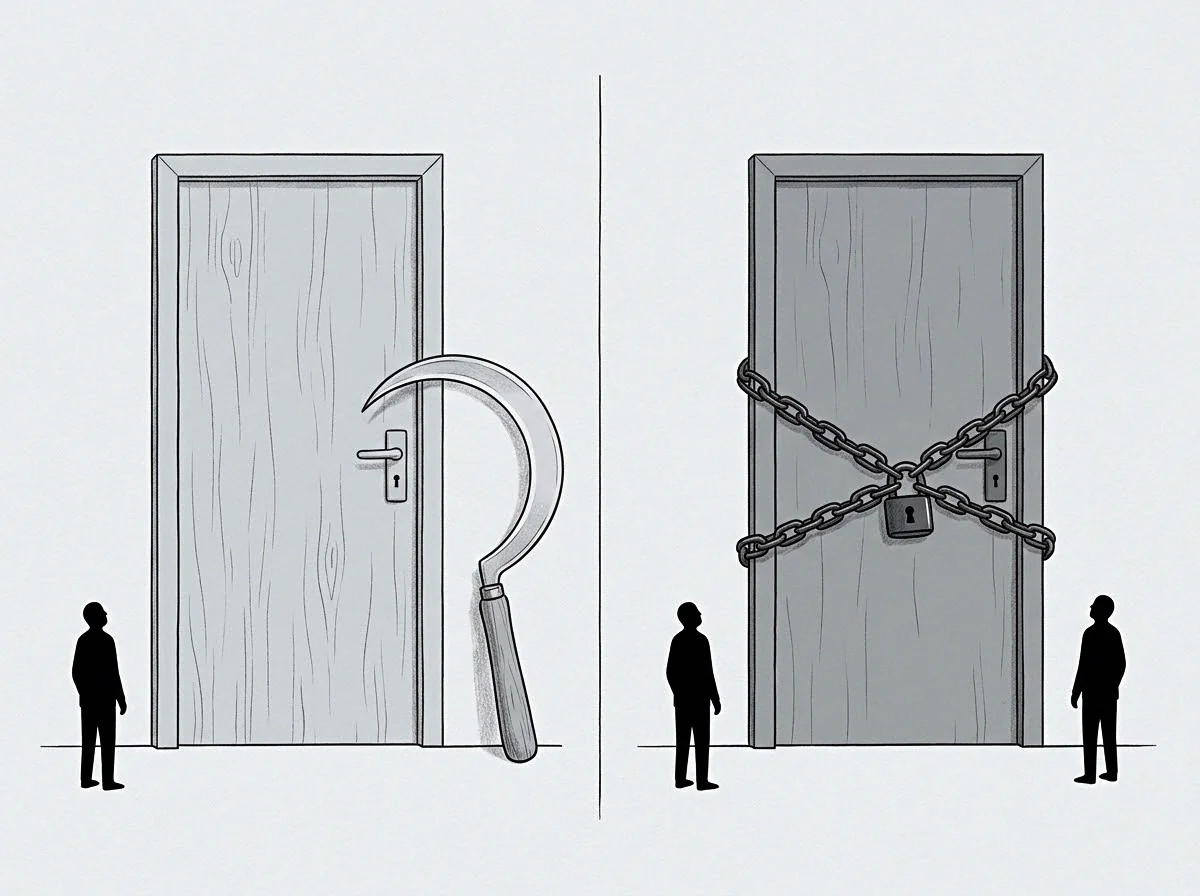
A stated operational limit paired with zero compensatory emotional management alters the baseline dynamic by forcing the external environment to bear its own regulatory load.
Receipt
Two years after initiating deliberate coregulatory reconstruction, the operator sits at the same operational desk facing a similar deployment breakdown at midnight. The screen lights up with six unread messages from department leads. The physical baseline inside the room presents a fundamentally different architecture than it did under the backward template.
The operator’s arterial pulse remains calm, but the internal state is no longer maintained through rigid, high-cost autonomic throttling. Prefrontal glucose consumption is low, resting respiratory depth is natural, and interoceptive awareness remains fully active. When a trusted operational partner walks into the room and takes a seat at the table, the operator’s nervous system registers the physical presence immediately.
Vagal tone rises, muscle tension in the shoulders drops, and the brain offloads a portion of its environmental monitoring onto the partner. The incoming signal lands cleanly in an established receptor slot.
The operator does not deliver a long monologue detailing their internal state. They do not request reassurance. They simply state the raw technical parameters of the breakdown in flat, precise terms, allowing the partner’s steady physical presence to settle the ambient room tension.
The workload remains substantial, the technical challenge requires immediate resolution, and the financial stakes are unchanged. The metabolic cost of bearing those realities has been cut in half because the regulatory burden is now distributed across two functional systems.
The delta over time is visible in the physical durability of the operator. The persistent gastrointestinal issues have resolved, sleep architecture shows consistent deep slow-wave cycles, and heart rate variability reflects dynamic autonomic flexibility under acute strain. The enterprise continues to utilize the lead operator as a core operational anchor, but the anchor is no longer a closed, self-consuming system destined for systemic exhaustion.
Structural receptor slots now exist to receive incoming calm, balancing the relational budget and anchoring the operational floor in sustainable physical reality.