
The Structural Limits Of Earned Security When Operating Under Unrelenting Organizational Load
Earned security collapses under unthrottled organizational load when metabolic prefrontal depletion forces the nervous system to revert to primary defenses.
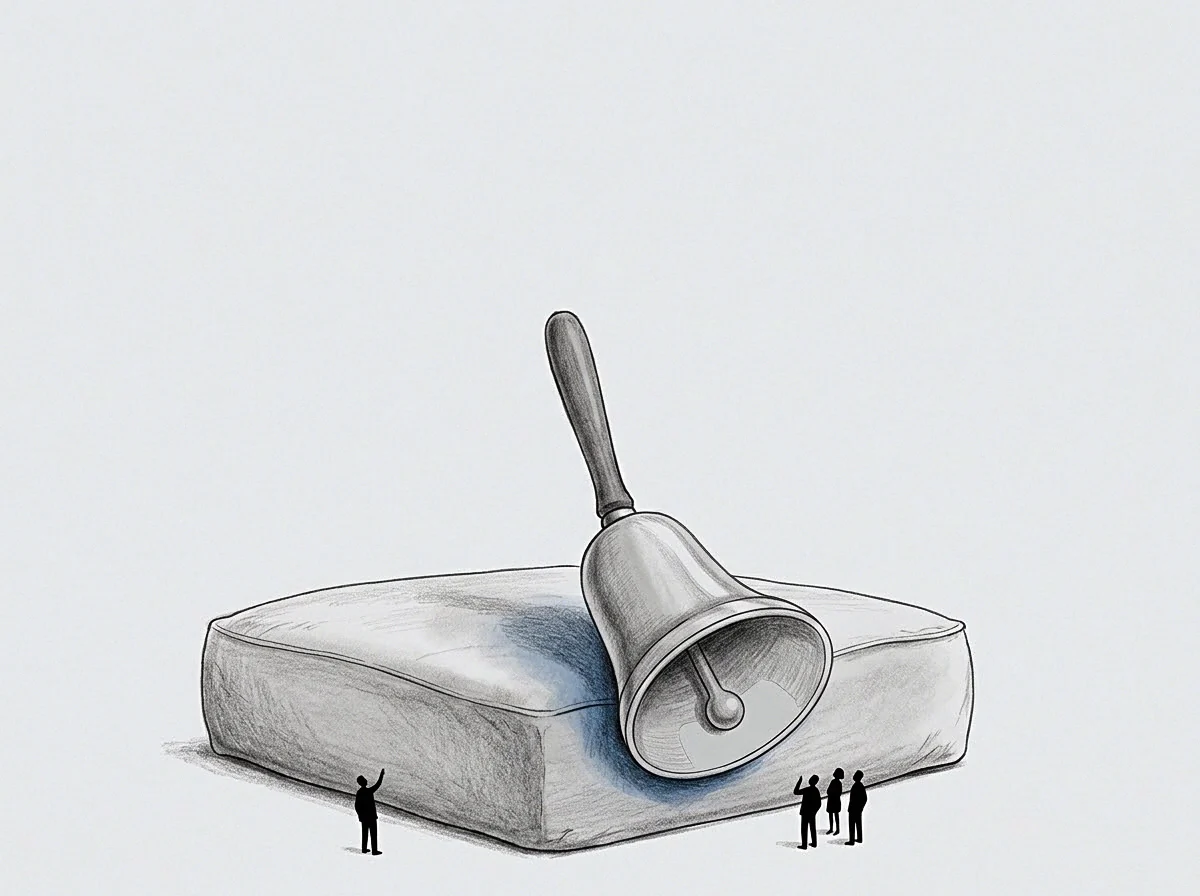
Ceiling
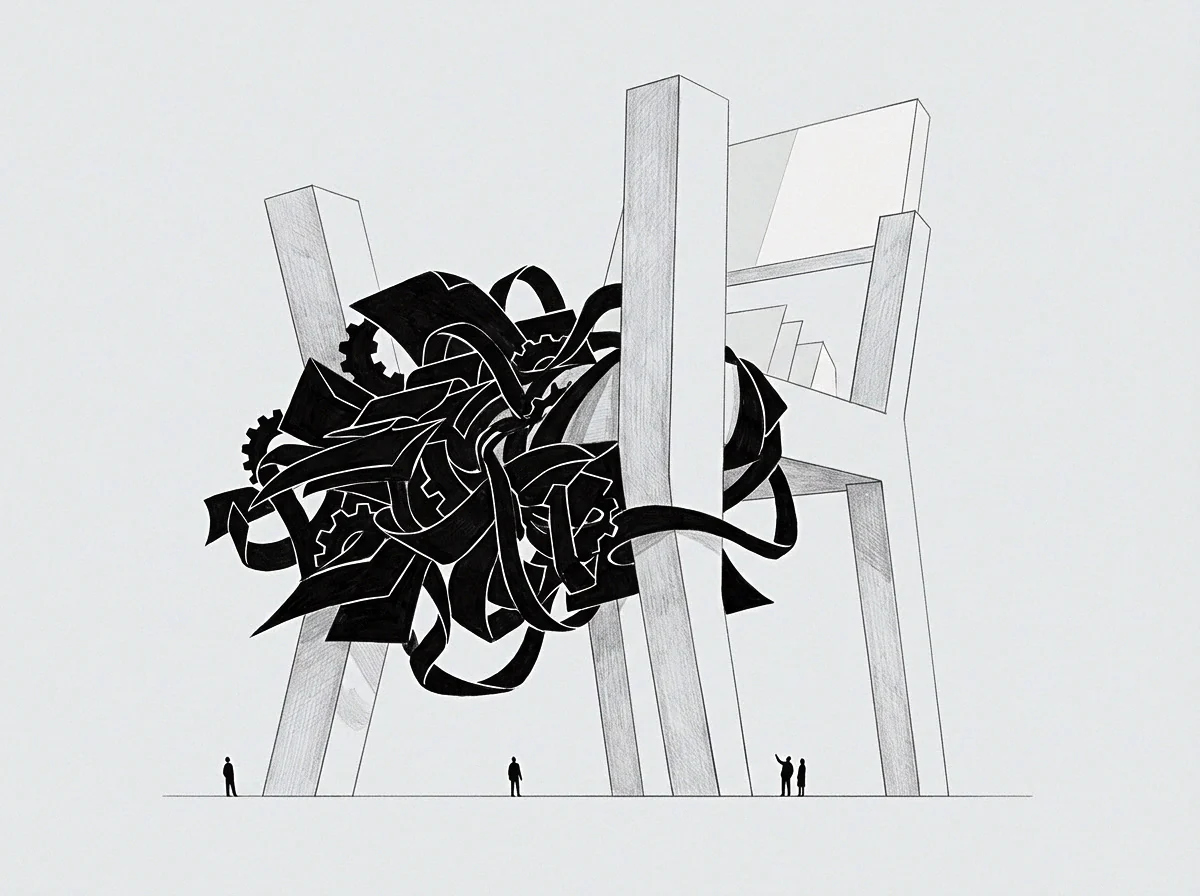
Metabolic Depletion of the Acquired Working Model
Four unread operational escalations sit on a screen while two senior leads wait for directional decisions in an open conference thread. The heart rate of the person in the executive seat remains at sixty-two beats per minute. Across the company, that outward physiological stillness gets read as inexhaustible capacity.
Teams take the steadiness as a signal to route more organizational ambiguity toward that single desk. The composure is expensive metabolically. Earned security functions as an updated internal cognitive structure built through corrective relational history, allowing someone without secure early attachments to operate with reflective coherence and collaborative trust.
This secondary model sits downstream from baseline threat evaluation circuits. When relentless organizational throughput drains executive energy reserves, maintaining this secondary architecture overtakes available neural bandwidth.
Human nervous systems budget regulatory effort against environmental predictability and social resources. Under social baseline theory, baseline physiological functioning assumes the proximity of reliable conspecifics who share vigilance, motor, and metabolic loads. An executive operating without functional lateral peers carries the full computational cost of systemic risk evaluation alone.
Remaining open, curious, and non-defensive under pressure demands continuous prefrontal recruitment. Under relentless operational volume, the prefrontal cortex burns through its glycogen stores. Sustaining an earned template during an unbroken crisis stops being an efficient adaptation and becomes an ongoing allostatic drain.
Under chronic organizational crisis, the neural maintenance of an earned attachment model competes directly with rapid decision processing for limited prefrontal metabolic reserves.
Adult attachment research shows that individuals with earned security achieve reflective functioning measures comparable to continuously secure individuals under standard testing conditions. Those equivalences break down once physiological stress induction protocols run long enough. In prolonged dual-task conditions combining cognitive load with relational threat, biological markers diverge.
Salivary cortisol and sympathetic vascular resistance climb significantly faster in adults who acquired security later compared to those with continuous early security. The earned architecture depends on active top-down suppression of primary procedural defenses, and that suppression draws real energetic resources.
The cost in attention and metabolic energy lands entirely on the person maintaining the stable interface.
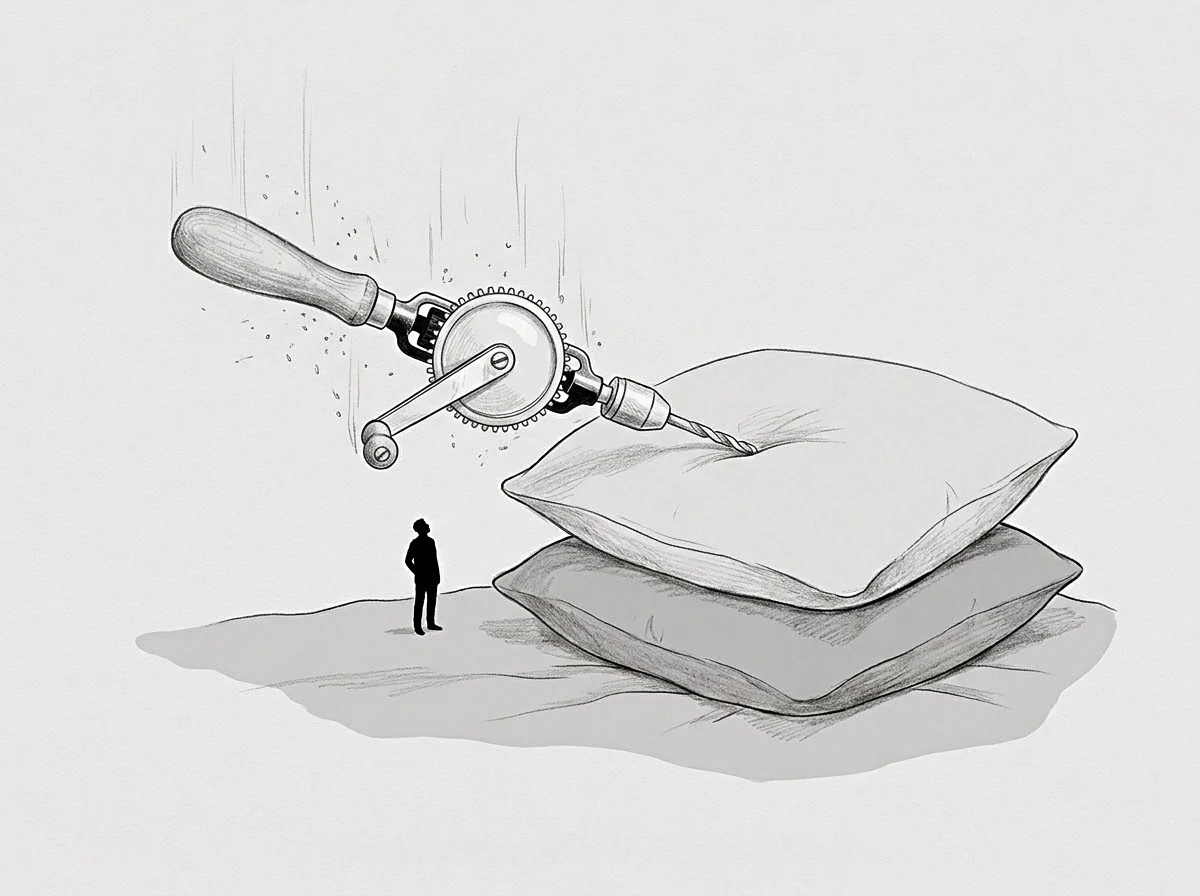
Concurrency

The Asymmetry of Borrowed Regulation
A steady operator functions as an environmental regulator for the surrounding enterprise. Subordinates, co-founders, and board members bring uncontained anxiety, unstructured decisions, and operational turbulence into meetings, walking out stabilized. The dynamic runs on borrowed regulation: dysregulated people lower their autonomic arousal by anchoring to the steady physiological state of an available leader.
The stabilizing person absorbs high-entropy social input and sends back low-entropy behavioral direction. Work keeps moving without catastrophic friction, so the exchange looks generative, but autonomic strain gets shifted upward through the reporting hierarchy.
This dynamic accelerates because human attachment systems naturally track regulatory competence. A leader who stays contained through severe product failures or financial contractions turns into a primary attachment figure for the executive tier. Incoming channels see an exponential rise in concurrency.
Team members stop working through local operational tensions on their own, routing ambiguous relational and technical friction toward the proven stabilizer instead. The organization treats the person as an infinite emotional sink, while the leader’s own regulatory receiver slot sits completely unoccupied.
- Asymmetric autonomic transfer occurs when direct reports discharge operational panic into routine update meetings while the executive expends prefrontal energy maintaining composure.
- Channel saturation develops as distributed operational problems bypass local resolution and queue in the executive inbox as urgent escalations.
- Attentional fragmentation emerges when the concurrency of unmoderated interpersonal demands prevents the sustained cognitive consolidation required for high-order organizational design.
- Receptor starvation manifests when an executive spends twelve consecutive working hours stabilizing organizational constituents without experiencing a single instance of reciprocal containment.
The person providing the baseline feels a quiet contraction of subjective headroom. Concurrency volume turns relational presence into high-frequency triage. Because security was built through deliberate reconstruction, the leader retains an intellectual conviction that openness and containment remain the right stance.
They keep taking in pings, offering synthetic patience while the autonomic system downshifts into survival-oriented conservation. The organization sees steady leadership; the operator experiences progressive isolation.
The entire enterprise runs on borrowed physiological reserves without accounting for the exhaustion of the source.

Reversion

Can Earned Security Survive Unthrottled Demand?
Prolonged high-volume strain eventually exceeds the metabolic ceiling of the secondary attachment model. When allostatic load hits a critical threshold, the central nervous system falls back on automated protocols. The acquired model of collaborative trust yields to earlier procedural defenses.
Reversion rarely looks like a dramatic collapse. Instead, organizational boundaries harden, emotional detachment sets in, cognitive reframing turns cynical, or execution becomes hyper-autonomous and unilateral. The executive steps out of shared deliberation and issues directives with detached precision.
When allostatic overload exhausts prefrontal control, the central nervous system automatically reactivates primary procedural defenses to preserve baseline physiological integrity.
This structural reversion creates immediate confusion across the organization. Direct reports accustomed to steady co-regulation run into sudden cognitive rigidity or cold distance. Teams read the shift as erratic management or personal rejection.
In reality, the nervous system has shed an unsustainable energetic luxury to protect basic homeostatic functions. The acquired relational model takes active neural synthesis; primary developmental defenses run on cheap, automated subcortical circuits.
| Operational Dimension | Active Earned Security State | Reverted Primary Defense State |
|---|---|---|
| Decision Processing Mode | Reflective, collaborative, multi-variable analysis | Unilateral, heuristic-driven, defensive risk minimization |
| Response to Operational Ambiguity | Curious inquiry and deliberate problem definition | Premature closure and rigid procedural enforcement |
| Interpersonal Communication Tone | Low-reactivity containment with explicit nuance | Flat declarative brevity, intellectualized sarcasm, or cold withdrawal |
| Autonomic Regulatory Mechanism | Active prefrontal attenuation of amygdala activation | Subcortical sympathetic mobilization or parasympathetic numbing |
| Organizational Resource Allocation | Invests personal capacity into distributed development | Hoards critical decision rights and isolates key workflows |
The fallback state preserves biological integrity at the expense of organizational trust. Withdrawing from relational attunement brings immediate metabolic relief. Unilateral decision-making burns far less working memory than continuous collaborative alignment, and detachment cuts off the drain from borrowing dynamics.
The primary defense does what it was formed to do in early development: protect the organism when the social environment proves unrelenting, unpredictable, or unsupportive.
The cost in executive trust and team alignment surfaces later in fragmented coordination and eroded confidence.
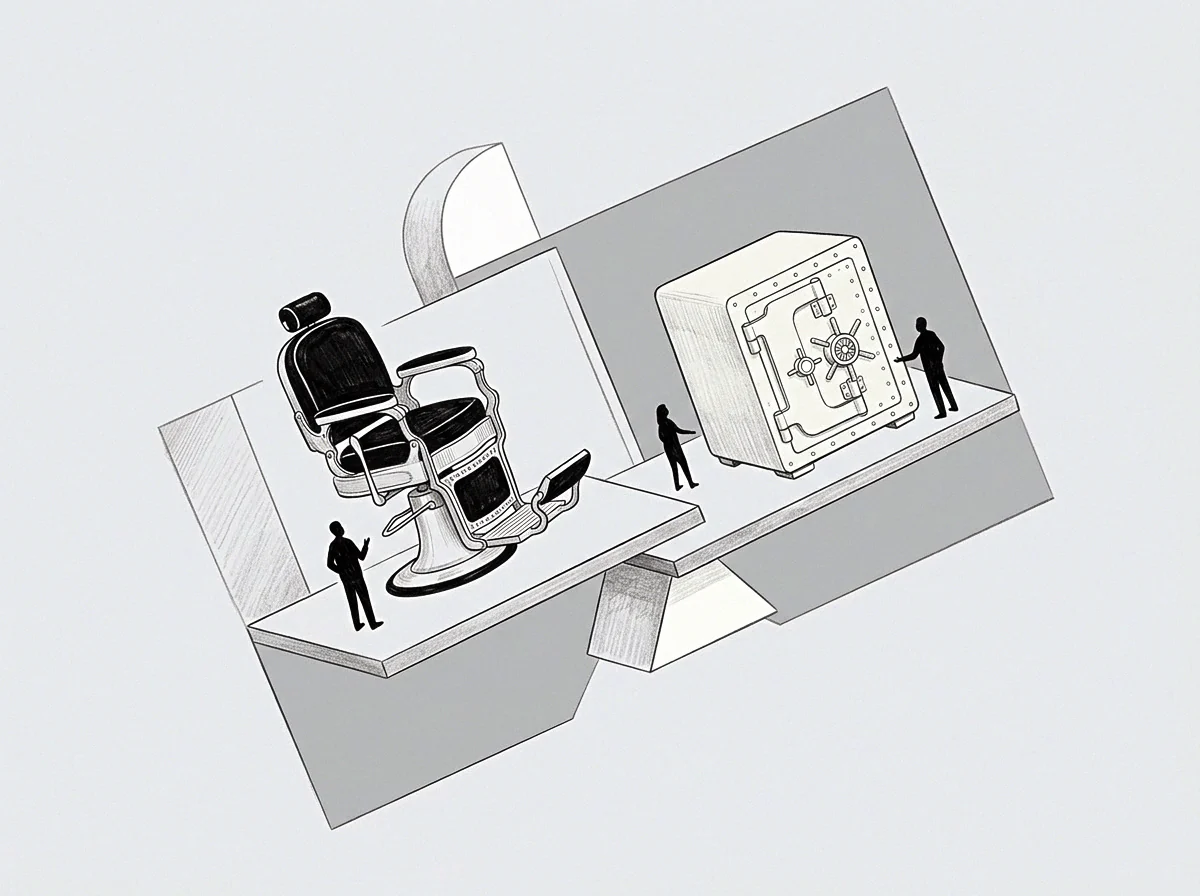
Containment
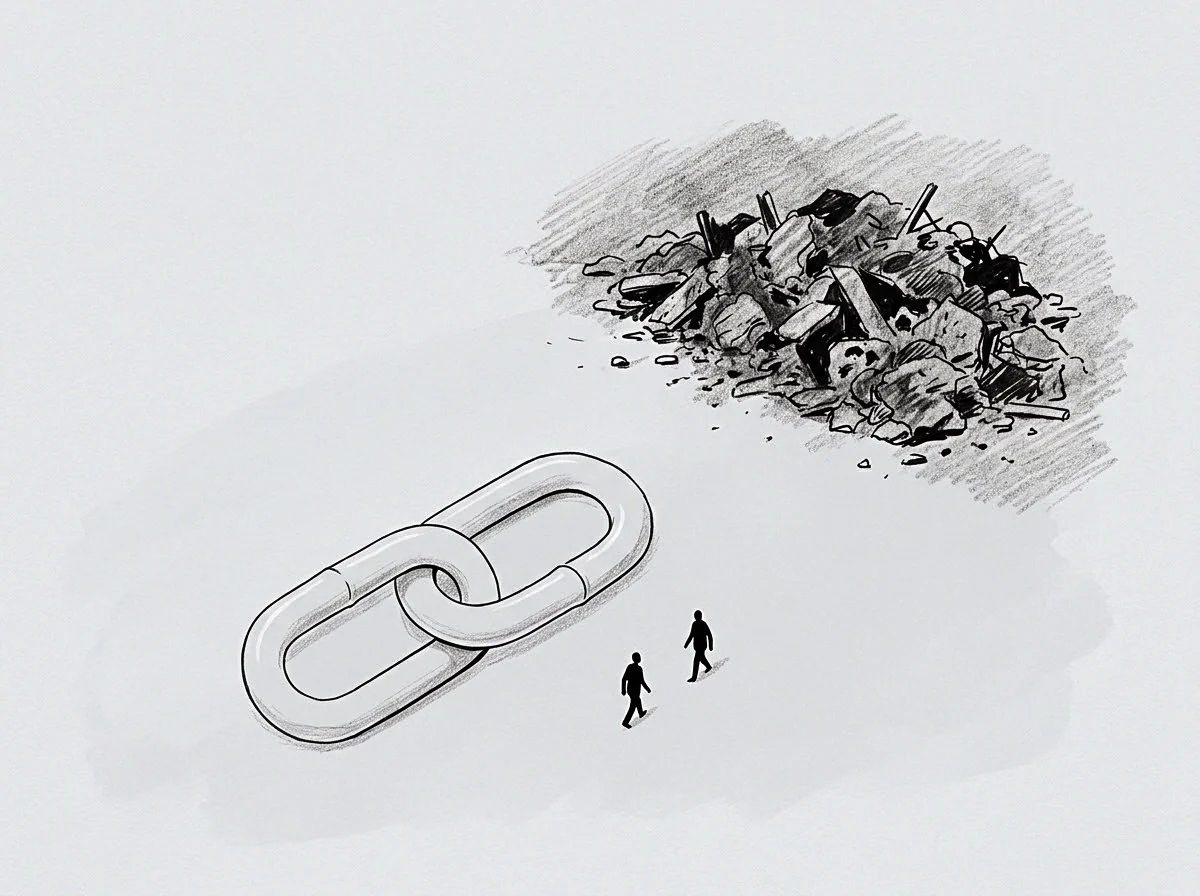
Mechanisms of Structural Insulation
Preserving an earned attachment architecture under relentless organizational volume means shifting regulation from individual physiology into structural policy. An operator cannot rely on willpower or personal resilience against unbounded interpersonal demand. Left unchecked, the organization consumes every increment of regulatory capacity placed in front of it.
Keeping the acquired model intact requires hard operational throttles that intercept, queue, and filter incoming ambiguity before it hits the executive nervous system.
Consider an organization of forty engineers, four product lines, and three executive co-founders working across multiple time zones. If the chief executive operates from an earned secure template while carrying board alignment, capital runway, and inter-departmental friction, unmediated escalations in direct messaging channels push concurrency past safe limits within forty-eight hours of a high-stakes deployment. Establishing explicit operational boundaries changes this dynamic immediately.
- Channel consolidation routes all cross-functional escalations into a structured asynchronous tracking document, terminating real-time interpersonal pings across unmoderated chat applications.
- Threshold definition specifies quantitative criteria that an operational issue must satisfy before qualifying for direct executive intervention, delegating minor frictions to local operational leads.
- Scheduled availability windows constrain collaborative interaction to discrete, pre-planned blocks, protecting sustained spans of deep analytical isolation.
- Reciprocal peer governance establishes an uncompromised lateral space with trusted external advisors or functional equals whose regulatory stability matches the operator, restoring the missing receptor slot.
A structural limit acts as a mechanical firewall that prevents organizational anxiety from directly depleting individual prefrontal capacity.
Putting these structural constraints in place inevitably sparks initial friction. Teams used to immediate borrowed regulation view hard gates as bureaucratic delays or executive detachment. The operator has to withstand that early resistance without falling back into over-functioning.
Structural containment is not administrative avoidance; it is the practical architecture required to protect the decision-maker’s biological capacity.
Without an explicit throttle, the individual nervous system remains the only shock absorber in the enterprise.

Anchor

The Concrete Substrate of Sustainable Regulation
Long-term operational endurance cannot lean entirely on continuous cognitive vigilance. Physical architecture, somatic state preservation, and steady material routines provide the real stabilizing baseline when organizational friction peaks. The nervous system relies on concrete cues that signal safety independent of valuations, revenue projections, or interpersonal pressure.
A chair in an isolated workspace, the cadence of structured physical training, and protected circadian rhythms anchor the organism when abstract demands threaten to overrun cognitive capacity.
An acquired working model holds up only when supported by tangible ecological anchors. The biological brain requires predictable glucose replenishment, regular sleep architecture, and periods of sensory quiet to rebuild depleted neurotransmitter reserves. When an executive gives up those physical baselines to handle late-night investor emails or ongoing personnel issues, the earned attachment template breaks down through somatic depletion.
Psychological insight cannot override biological exhaustion.
Sustainable leadership begins with the biological limits of the person. The enterprise is an abstraction capable of generating limitless operational tasks; the human nervous system is a finite instrument bound by strict metabolic constraints. Sustaining earned security under continuous load requires acknowledging that personal regulatory capacity has a real ceiling.
Structuring the organization around that physical limit keeps leadership clear, stable, and effective over decadal horizons.
When the physical limits of the biological system are ignored, the organizational load breaks the mind running it.