
Unresolved Metabolic Drains in Executive Leadership During Post Insolvency Reconstitution of Downward Support
Post-insolvency downward support drains executive capacity when leaders act as un-anchored regulation sinks without structural limits or peer co-regulation.

Desk
Four operational channels open simultaneously on a Tuesday evening following a corporate reorganization. The insolvency proceedings concluded three weeks prior, leaving the operational core intact while severing the secondary management layer. Downward support structures, once mediated by team leads and project directors, now terminate directly at the executive chair.
The remaining staff require daily directional alignment, emotional re-anchoring, and technical sign-offs. The founder sits at the desk, maintaining a calm vocal cadence while resolving operational logjams across multiple screens. This physical projection of stability signals to the organization that the crisis has passed.
Behind that steadiness, the physiological cost of serving as the sole stabilizing anchor for thirty people accumulates without an offsetting entry.
Post-insolvency reconstitution demands an immediate re-establishment of organizational trust, yet the metabolic reality of providing direct downward support is rarely calculated. When direct reports experience structural uncertainty, their neural threat architecture remains active. They seek proximity to executive leadership to regulate their own systemic stress.
The executive brain, operating under the assumption of social baseline efficiency, naturally budgets energy expenditure based on available external support. In a reconstituted organization where downward support flows exclusively outward, the executive functions as a one-way regulatory sink. The leader absorbs organizational anxiety while suppressing personal physiological strain to maintain external baseline signals.
Executive stability under organizational stress functions as a continuous metabolic expenditure paid through unreciprocated neural regulation.
The operational capacity drops rapidly. The baseline reserves empty. Self-regulation alone represents the most metabolically expensive mode of human neural functioning.
When an executive provides continuous baseline anchoring without receiving co-regulatory feedback from peers or board members, cognitive resource depletion accelerates. The brain prioritizes immediate relational stabilization over long-range strategic processing. Decisions regarding long-term capitalization or market repositioning are deferred in favor of resolving acute interpersonal friction within the newly restructured teams.
The immediate environment demands presence, and presence costs glucose.
Unresolved metabolic drains emerge precisely when external indicators suggest recovery. The legal filings are complete, creditors are managed, and revenue generation resumes. Yet the leader experiences a profound, non-clinical systemic exhaustion.
This condition stems directly from the ongoing structural deficit in downward support architecture. Continuing to run high-bandwidth direct co-regulation across an entire organization without personal regulatory backstops guarantees executive physiological failure.

Physiology
The human nervous system relies on external cues to maintain homeostasis at low energy costs. Social baseline theory demonstrates that proximity to reliable, supportive conspecifics reduces the metabolic burden of threat prediction and emotional control. When an executive interacts with a stable partner or an aligned leadership peer, shared baseline regulation lowers vascular reactivity, suppresses cortisol elevation, and conserves prefrontal cortex resources.
The brain treats social resources as baseline assets, distributing metabolic load across the network.
Insolvency disrupts this distributed economy. The restructuring process frequently removes executive peers, shrinks advisor networks, and heightens board oversight, isolating the founder at the apex of the operational pyramid. During the subsequent reconstitution of downward support, junior staff lean heavily on the executive for emotional baseline calibration.
The executive must continuously simulate absolute certainty, operational clarity, and psychological safety. This requirement forces the executive nervous system to operate in high-cost self-regulation mode throughout every working hour.

Why Does Rebuilding Downward Support Consume Executive Capacity?
The neural mechanics of downward support reconstitution turn on the distinction between structural communication and somatic regulation. Transmitting operational directives through documents or dashboard updates requires minimal physiological energy. Transmitting baseline safety through physical presence, active listening, and calm vocal modulation requires substantial metabolic work.
The executive prefrontal cortex works continuously to down-regulate internal threat responses caused by residual insolvency risk while simultaneously outputting non-verbal signals of safety to the surrounding team. Presence costs glucose.
The threat response stays active. The brain maintains a state of hyper-vigilance to ensure the newly reconstituted organization does not slide back into financial distress. When direct reports bring operational problems to the executive desk, the executive nervous system processes these inputs both as tactical queries and as potential threats to organizational viability.
The internal working model of the executive, forged through the isolation of the insolvency phase, defaults to total self-reliance. The leader internalizes a template wherein they are the sole source of stability, leaving no functional receptor slot to receive regulatory support from others.
A regulator proven under severe organizational threat naturally attracts cumulative operational load from every destabilized layer of the company.
This dynamic creates a feedback loop of metabolic drain. As the team senses executive competence under load, their reliance on the executive deepens. Direct reports decrease their own autonomous problem-solving and increase their frequency of contact, seeking the stabilizing presence of the leader.
The team reads steadiness as headroom. The executive, operating from an internal model that links personal hyper-availability with organizational survival, accepts the incoming load without setting structural boundaries. Over time, the continuous expenditure of metabolic energy on downward co-regulation starves the executive brain of the capacity required for executive function, deep focus, and systemic recovery.
The physiological deficit manifests as systemic somatic fatigue, impaired working memory, and emotional blunting. The leader remains physically capable of holding meetings and signing off on operational plans, but the subjective experience of executive agency deteriorates. The nervous system, running a chronic energy deficit due to unreciprocated regulation demands, begins throttling peripheral cognitive systems to preserve core metabolic functions.
What appears to board members as post-crisis executive withdrawal is the direct outcome of an exhausted neural economy.
The long-term consequence of this unmanaged metabolic drain extends beyond individual executive fatigue into organizational structural fragility. Whether an executive can successfully update this self-reliance template while actively holding the operational core of a restructured company remains an open question in organizational physiology.

Balance
Managing executive energy during post-insolvency support reconstitution demands a clear comparison of downward support channels. Different communication structures impose radically different metabolic costs on the executive nervous system. Evaluating these modalities based on their neural expenditure allows leadership to design support structures that protect executive function while stabilizing the team.
The table below details the metabolic cost profile of four primary downward support modalities utilized during organizational reconstitution.
| Support Modality | Primary Regulatory Mechanism | Executive Metabolic Cost | Organizational Stability Impact |
|---|---|---|---|
| Unstructured Open-Door Access | Continuous direct somatic co-regulation | Severe metabolic depletion due to unpredictable context switching | High immediate reassurance, low long-term team autonomy |
| Scheduled One-on-One Syncs | Time-bounded direct relational alignment | Moderate metabolic expenditure with predictable recovery windows | Sustained relational trust and structural clarity |
| Asynchronous Artifact Broadcasts | Symbolic structural orientation | Low metabolic expenditure focused on clarity of output | Moderate operational alignment, minimal emotional regulation |
| Delegated Tier-Two Lead Cadence | Distributed peer co-regulation | Minimal direct metabolic load on executive chair | High scalable stability across all operational layers |
The baseline reserves empty when organizations rely exclusively on unstructured open-door access. While direct somatic co-regulation provides immediate reassurance to anxious staff, its metabolic price on the founder is unsustainable over extended reconstitution phases. Shifting downward support from continuous direct contact to structured, asynchronous, or delegated channels preserves executive energy reserves without sacrificing operational alignment.
The contract remains unwritten. Reconstituting downward support through clear, time-bounded modalities establishes an operational parameter that alters the overall metabolic footprint of executive leadership.
Boundary
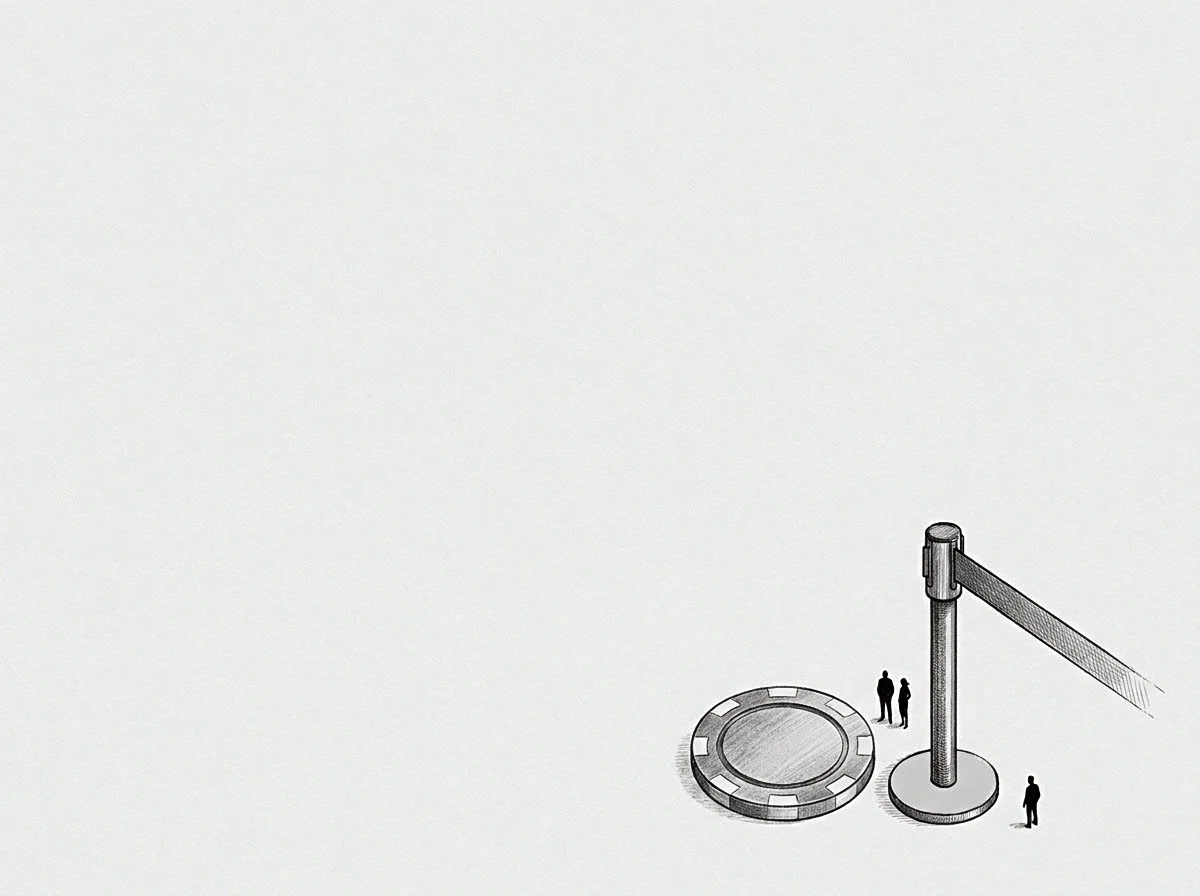
Unresolved metabolic drains frequently worsen due to covert contracts established between executive leadership and the reconstituted team during the post-insolvency phase. In the immediate aftermath of restructuring, leaders often promise absolute availability to prevent key personnel from departing. This implicit agreement creates an unsustainable operational posture where the executive exchanges personal metabolic reserve for temporary organizational calm.
The system demands stability. When limits are left unstated, direct reports interpret executive responsiveness as baseline capacity. The team habituates to using the executive as an external cognitive and emotional processor, escalating minor operational queries to the top desk.
The resulting failure modes systematically erode both executive health and team self-reliance.
The primary structural failure modes occurring during downward support reconstitution include:
- Unbounded Availability Mandates where the executive offers continuous access across all communication channels, driving baseline exhaustion and continuous hyper-vigilance.
- Absorptive Problem Handling where the leader routinely resolves operational logjams directly rather than forcing secondary layers to build autonomous problem-solving capacity.
- Co-Regulatory Monopoly where the executive acts as the sole source of psychological safety, preventing the emergence of peer-to-peer support networks within the team.
- Vicarious Risk Retention where the founder carries the full weight of residual corporate risk in solitude while shielding the executive team from realistic operational conditions.
A stated limit on downward availability alters the psychological contract from continuous dependency to structured performance.
Metabolic drains accumulate quietly. The operational friction generated by these failure modes eventually manifests as organizational paralysis. The founder, depleted by continuous downward co-regulation, begins responding to incoming requests with delayed decisions or defensive irritability.
The team reads this shift as a return of organizational crisis, accelerating their own anxiety and increasing their demands for executive reassurance. The cycle reinforces itself until structural interventions break the loop.
I expected the executive chair to remain available at all times until the company fully recovered from the restructuring.

Anchor
Eliminating unresolved metabolic drains after insolvency requires replacing personal co-regulation with structural operational anchors. The executive nervous system cannot update its internal baseline template through cognitive effort alone. It requires repeated, real-world experience of organizational stability operating within strict metabolic boundaries.
Earned security for the leader emerges when the organization demonstrates that it can sustain performance without demanding continuous executive somatic presence.
The transition from personal baseline holding to structural support relies on a precise execution sequence designed to rebuild downward capability while protecting executive bandwidth.
- Establish Hard Availability Boundaries by defining specific operational windows for direct downward interaction and securing uninterrupted blocks for strategic work.
- Institute Structured Reporting Templates that require direct reports to present synthesized status updates and proposed solutions prior to requesting real-time executive intervention.
- Distribute Co-Regulatory Responsibilities across secondary management tiers by training middle leaders to handle operational alignment within their own teams.
- Construct Peer Regulation Channels for the executive layer through formal interactions with external board members, advisors, or peer networks to restore reciprocal regulatory balance.
- Audit Metabolic Capacity Weekly by measuring personal cognitive clarity and adjusting direct support allocations to match actual physiological reserves.
The transition from direct somatic holding to structural governance restores the executive baseline and enforces organizational autonomy.
Capacity dictates boundary strength. The operator sits alone. Downward support reconstitution succeeds when leadership capacity is treated as a finite metabolic resource rather than an infinite structural buffer.
By constructing clear operational parameters, establishing robust tier-two management layers, and enforcing structural boundaries on direct availability, executive leaders can fully stabilize post-insolvency organizations while preserving the physiological foundation necessary for long-term strategic execution.
Structural limits preserve executive capacity far better than continuous personal regulation.