
Accumulator Drift Rate Degradation in Saturated Decision Systems
Continuous communicative concurrency injects background noise into neural processing, degrading evidence accumulation rates and forcing premature decision boundary collapse.

Signal
In sequential sampling models, a choice forms as evidence accumulates toward a set boundary. The accumulation rate reflects the signal-to-noise ratio of incoming information against the immediate task. When demands arrive faster than sensory buffers clear, background noise rises across parallel processing loops, flattening the mean trajectory toward the threshold.
An operator under saturation spends longer gathering data yet reaches decisions with lower statistical confidence.
Each new inquiry consumes working memory before the previous evaluation is finished. Under light volume, the accumulator moves steadily toward the boundary because task-relevant inputs dominate the stochastic fluctuations of the channel. As concurrency mounts, attention fragments across competing sources, driving the accumulation rate down until the outcome is governed more by random channel noise than by deliberate evaluation.
A decision system subjected to continuous interruption extracts less evidence per unit of time from the same raw data.
Operators in high-load seats often treat this mechanical deceleration as an intellectual deficit and lengthen their hours to compensate. The extended schedule increases physiological fatigue and biological noise in the neural architecture, slowing the accumulator further: small choices demand prolonged deliberation, while larger choices suffer premature boundary termination.
When evidence integration remains depressed, time pressure pulls the decision boundary inward, introducing systematic judgment errors across concurrent operational commitments.

Load
System capacity degrades non-linearly once concurrent background channels pass steady-state limits. Cortical networks treat unresolved communications as active open loops, maintaining partial activation states that drain metabolic resources from the prefrontal systems responsible for weighting evidence.
Experimental literature on multi-attribute choice demonstrates that competing input streams erode the precision of internal sensory representations. When three or four urgent matters demand simultaneous monitoring, the informational value of each stream decays rapidly, requiring heavy subjective effort for minimal directional progress.
- Interference overhead scatters working memory across competing operational priorities before an active calculation terminates.
- Attentional switching penalties drain local metabolic reserves and inject latency into subsequent perceptual cycles.
- Premature threshold collapse ends the deliberation sequence early to relieve the immediate physiological strain of continuous cognitive conflict.
Sustained concurrent processing transforms structured informational inputs into undifferentiated biological strain.
Under heavy load, an operator stops distinguishing urgent notifications from significant data. Incoming alerts receive equal preliminary weight, and the nervous system defaults to high-frequency, shallow scanning that ensures complex decisions proceed on degraded accumulation rates.
A formal communication quota stated as an explicit operating contract restores the drift rate by eliminating unscheduled interruptions during designated analytical blocks.
Shelf
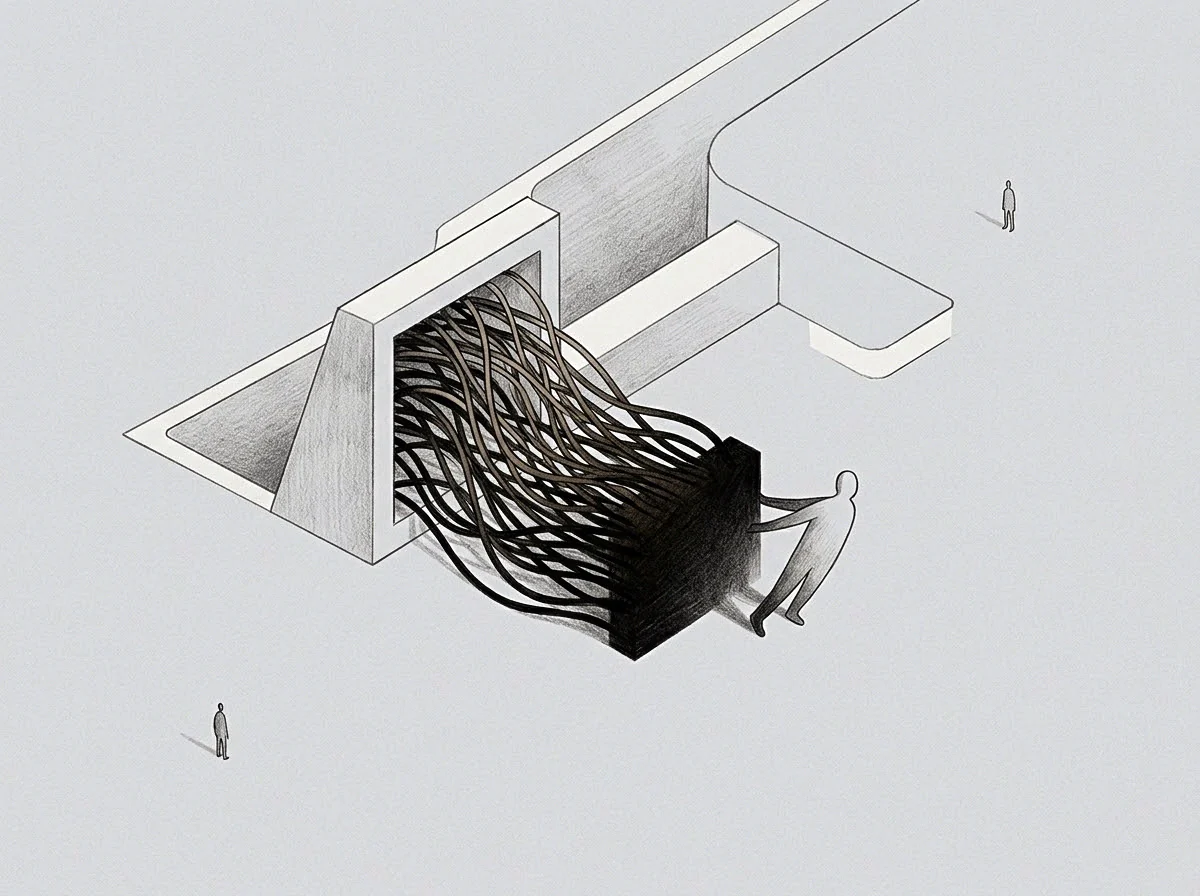
A cognitive shelf holds a fixed number of items before displacement begins. When an operator attempts to carry five active crises in working memory, the oldest drop below the threshold of active maintenance, and subsequent retrieval requires reconstructive processing that adds latency to the accumulator.
Working memory acts like a constrained physical surface: placing new problems onto an overcrowded desk forces older files to the floor. The operator expends scarce attention recovering misplaced context rather than evaluating current evidence, depressing the trajectory toward decision boundaries.
- Capacity ceiling forces existing active files out of immediate awareness when novel inputs arrive unexpectedly.
- Context reacquisition latency slows active processing by demanding complete neural retrieval sequences before every basic calculation.
- Decisional paralysis sets in as the accumulator fails to reach any boundary before the arrival of the next operational disruption.
Physical workspace constraints mirror the hard physiological limits governing neural evidence integration.
Deliberate structure preserves accumulator fidelity. Isolating critical evaluations from ongoing operational chatter maintains the baseline signal-to-noise ratio, allowing an operator to sustain decisional velocity by refusing concurrent inputs until the current evaluation touches its defined boundary.
Heavy operational queues clear faster when processed sequentially rather than concurrently.
Tension
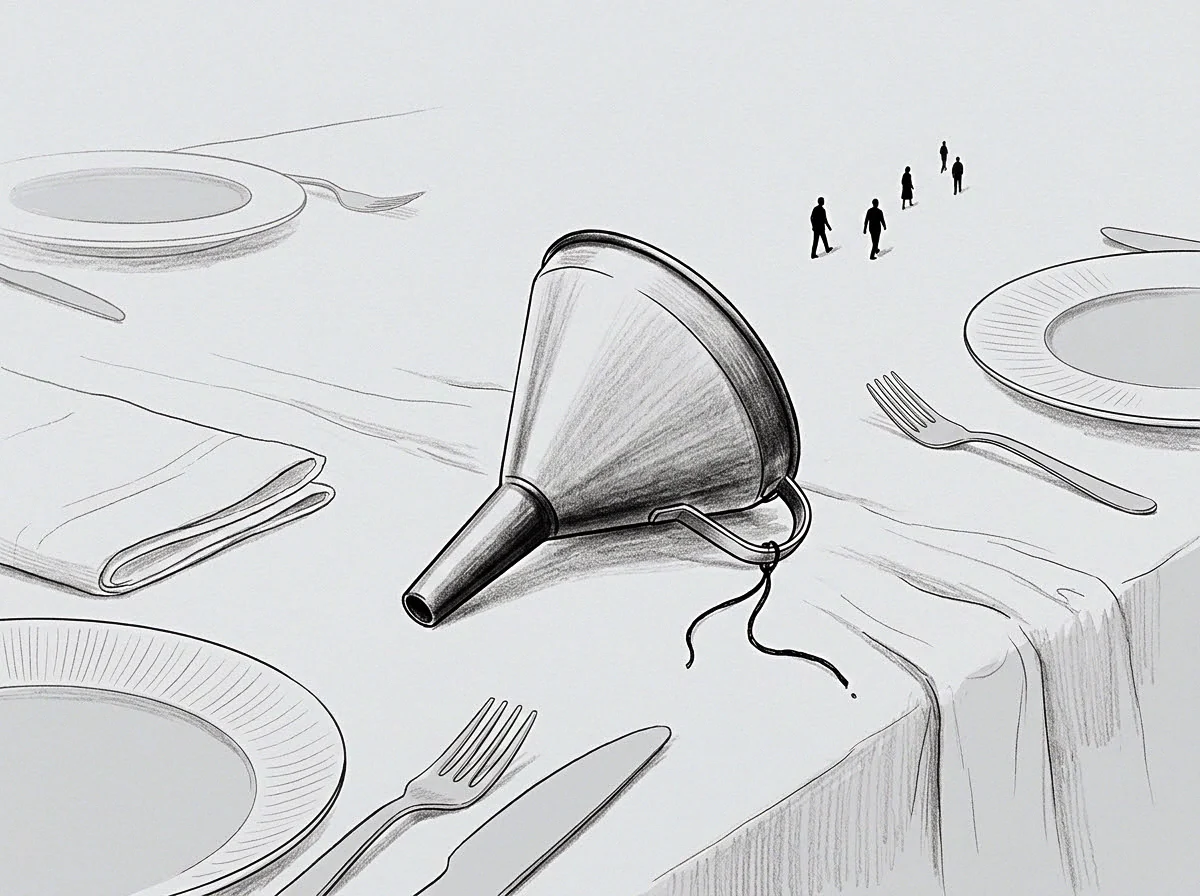
Operators frequently mistake response speed for the quality of evidence accumulation. Under heavy load, rapid reactions often signal boundary collapse rather than efficient processing: an exhausted operator deciding instantly has simply allowed the internal threshold to meet the noise floor.

Whose Demands Determine the Effective Drift Rate?
External stakeholders introduce urgency into the operator system through constant inquiry. Each urgent request resets the accumulator timer, breaking longitudinal evaluations into reactive bursts until the operator becomes a conduit for peripheral priorities.
| Processing Regime | Effective Drift Rate | Decision Boundary Height | Error Probability |
|---|---|---|---|
| Isolated Single-Task | High positive trajectory | Nominal stable threshold | Minimal stochastic error |
| Moderate Concurrency | Attenuated positive slope | Variable elevated threshold | Moderate rate of oversight |
| Saturated Multi-Channel | Near-zero stochastic drift | Collapsed urgent threshold | Dominant systemic failure |
The distinction between high-precision execution and rapid threshold termination governs long-term institutional survival. An organization that rewards instantaneous replies selects for collapsed boundaries, gradually reducing strategic drift rates across leadership teams to baseline noise levels.
Low thresholds produce rapid choices stripped of analytical fidelity.
If the response is not received within ten minutes, the assumption is that leadership has abandoned the operational problem entirely.

Post
Establishing an unyielding structural post insulates the decision core from communicative saturation. Stating absolute operational terms once establishes an objective boundary, sparing the metabolic capacity usually spent debating incidental pings. The boundary handles the filtration mechanically.
Availability is derived from the silence of a stated position rather than announced through repeated personal negotiation. When an operator establishes fixed windows for operational input, stakeholders adjust their transmission habits to match the constraint, and the accumulator recovers its steep drift trajectory as ambient noise recedes.
State-gated execution protects critical functions from transient fluctuations in energy and attention. An operator who commits to evaluating major capital allocations only during zero-load morning blocks ensures adequate evidence accumulation, keeping the apparatus within sustainable physiological limits.
Whether an organization can deliberately tolerate temporary operational silence in exchange for decisive strategic accuracy remains an active point of governance tension across high-velocity industries.