
Allostatic Load Caps and Derived Capacity Limitations in Founder Seat Execution Handovers
Allostatic load caps executive processing, requiring structural boundaries to prevent capacity failure during operational handovers.
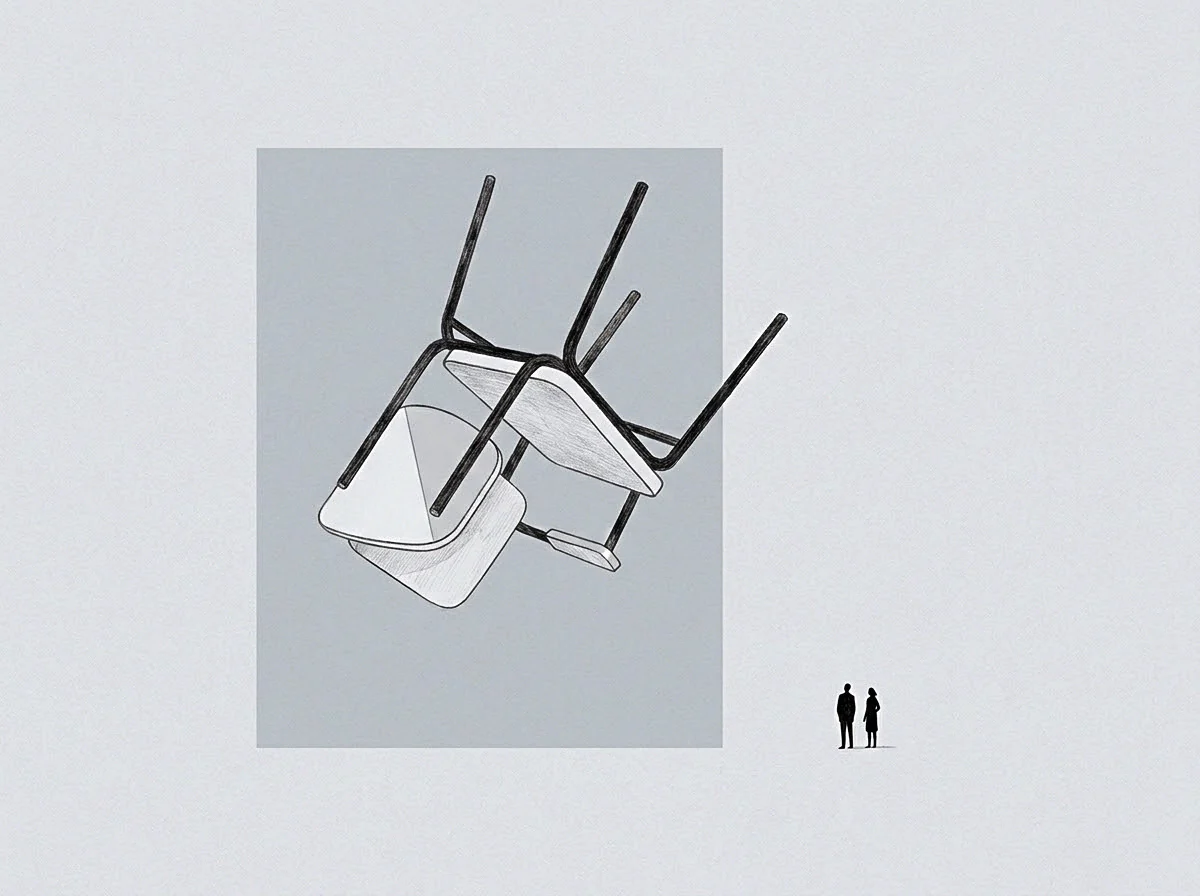
Ceiling
Incoming demands hit the desk long before the morning review begins, filling the queue before deliberate priorities get attention. When operational responsibility runs continuously across consecutive quarters, the baseline physiological state resets higher. Elevated urinary cortisol and salivary alpha-amylase levels track this persistent friction.
The body maintains stability through systemic state shifts, accumulating allostatic load over prolonged periods of unbuffered operational ownership. Saturated baseline activation shrinks working memory buffers, reduces executive flexibility, and impairs fine-grained conditional reasoning during resource handoffs.
The seat holds four supervisory lines simultaneously: engineering delivery schedules, treasury management, investor relations, and hiring pipelines. As operational pressure pushes strain toward biological limits, processing shifts from careful evaluation to defensive heuristic filtering. Decisions become state-gated acts, occurring only when physiological headroom absorbs the processing cost, or decision-gated acts, which execute mechanically regardless of somatic depletion.
Saturated operators default to defensive deferral, often treating systemic exhaustion as an absence of discipline in incoming leadership.
Baseline physiological strain fixes the volume of active supervisory context an operator can hold without corrupting handover instructions.
Execution handovers started during peak physiological saturation produce erratic directives. The incoming operator receives fragmented procedural artifacts instead of clear operational parameters. Leaving structural limits unstated turns the handover into an added strain rather than relief, causing administrative paralysis and operational drift across downstream functions.

Notch
Structured operational handoffs rely on step-wise reductions in administrative scope rather than sudden transfers of broad authority. Each step acts as an operational peg, halting backslide and limiting the immediate cognitive demands on the exiting operator. Without explicit markers, delegations collapse back to their point of origin under minor operational friction.

Structural Handover Parameter Contrast
Comparing execution structures clarifies the administrative strain an organization absorbs during an executive transition.
| Handover Structure | Cognitive Headroom Required | Error Propagation Probability | Latent Loop Retention | Administrative Recovery Pace |
|---|---|---|---|---|
| Unbounded Concurrent Execution | Extreme | High | Complete | Stagnant |
| Discrete Parameterized Transfer | Moderate | Low | Bounded | Predictable |
| Abrupt Role Severance | Low | Severe | Zero | Volatile |
Unbounded concurrency keeps every existing responsibility intact while demanding parallel instructional output. This double load quickly drains cognitive reserves, leading to severe communication breakdown between incoming and outgoing executives. Discrete transfers establish clear stages of operational surrender, keeping functional domains isolated until the successor demonstrates autonomous control over the baseline.
Consider an executive managing nine operational direct reports while onboarding a chief operating officer over ninety days. Splitting administrative territory into three discrete cohorts protects organizational rhythm. The first cohort transfers financial reporting and vendor contracts on day thirty, ending the outgoing operator’s review obligations in those areas.
Stated limits act as a buffer against backward delegation, moving handovers forward through sequential surrenders of territory instead of shared custody.
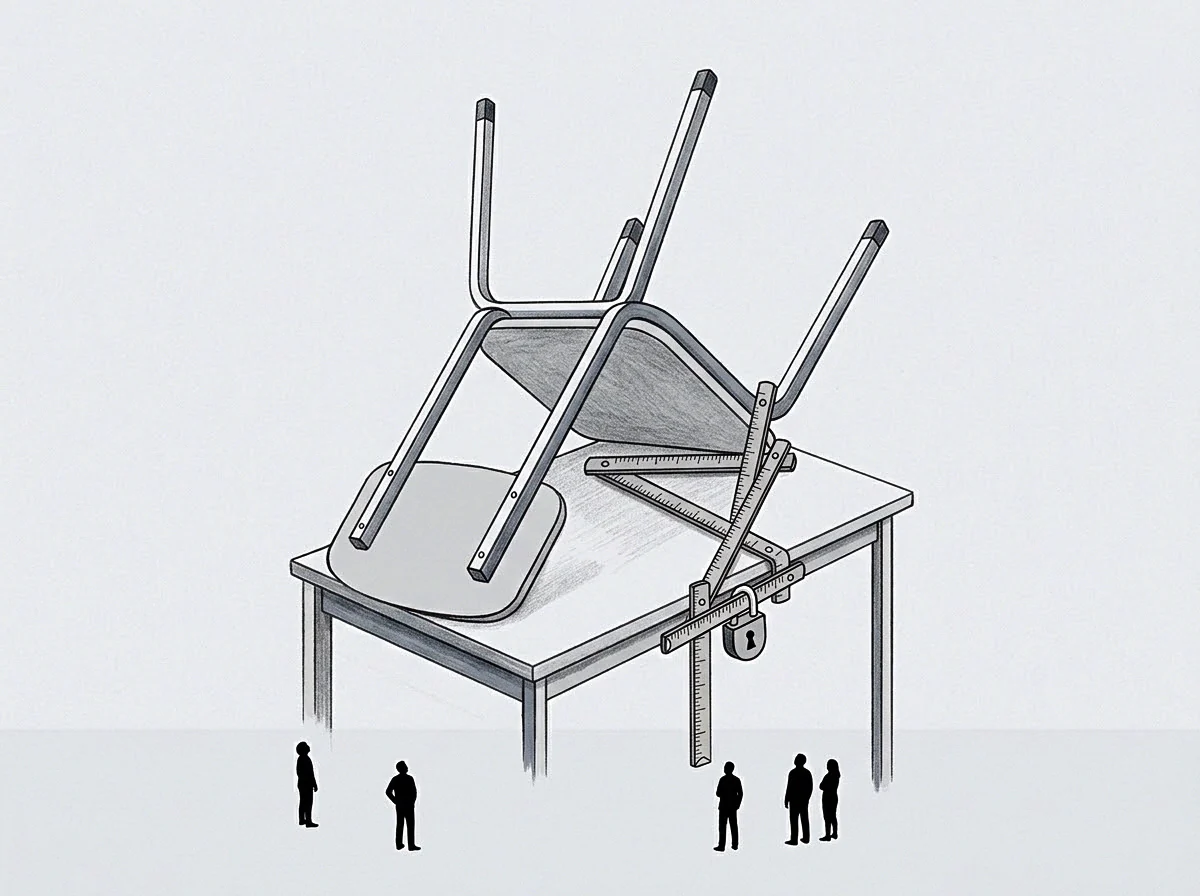
Splice
Placing an incoming operator into an active administrative seat exposes latent dependencies. Functional authority stays tied to historical relational pathways until formal structural barriers cut the line. Left unchecked, the organization keeps routing exceptions to the original seat holder out of habit, bypassing newly installed command chains.

Where Operational Authority Fractures Under Saturated Headroom?
Sustained administrative saturation degrades boundary discipline in the incumbent. When inbound requests bypass the incoming operator, fatigued incumbents routinely absorb the work rather than redirecting queries to their successor. This pattern signals clear capacity limitation, preventing organizational structure from stabilizing around the new leadership configuration.
- Intervention threshold defines the specific deviation in production metrics required before the incumbent retains supervisory veto over the incoming operator.
- Channel isolation cuts off direct communication between historical line managers and the incumbent regarding daily tactical blockers.
- Escalation delay imposes a mandatory forty-eight-hour holding window on non-fatal operational discrepancies before supervisory review occurs.
- Execution quarantine restricts the outgoing founder to strategic advisory memos, barring direct operational intervention in daily production sprints.
Intervention parameters stated in writing terminate informal supervisory appeals before operational authority fractures.
Establishing structural parameters protects the incoming operator from quiet authority dilution. A formal transition clause setting absolute budgetary authority below two hundred thousand dollars cuts off executive second-guessing, binding both parties to explicit operational boundaries.

Wire
Signal transmission across operational boundaries follows rigid constraints. Early copper telegraph lines suffered signal attenuation over distance, requiring repeaters to boost voltage and prevent total information loss. In organizational architectures, supervisory signals attenuate just as quickly when routed through congested channels.
A communication channel that stops pinging reflects structural prioritization rather than relational friction. Asynchronous latency marks operational segregation, giving visual proof of administrative detachment. When an incumbent stops checking daily channels, that silence marks out the successor’s operational perimeter.
Supervisory strain shrinks available communicative bandwidth, turning long directional memos into short status directives. Incoming leaders often misinterpret administrative brevity as personal friction. Groups under acute administrative or physical strain compress language into minimal functional signifiers to preserve metabolic resources.
- Asynchronous ping latency measures the exact elapsed duration between operational queries and supervisory acknowledgment across functional channels.
- Supervisory query volume tracks the raw count of clarification requests sent upward by the incoming operator during weekly execution sprints.
- Relational bandwidth compression reflects the reduction of conversational exchange to binary operational decisions during high-stress deployments.
Channel silence indicates operational delegation rather than interpersonal avoidance.
An incoming operator often asks for explicit direction, but administrative absence remains the clearest indicator that the seat has actually been surrendered.

Brake
Deceleration requires deliberate resistance against operational momentum. Addressing systemic overload means pausing active lines instead of pushing higher output under the guise of organizational velocity. Throttling administrative inputs lets physiological markers normalize, restoring executive function across subsequent quarters.
Handovers fail when an exiting executive tries to maintain external stakeholder relationships while managing internal onboarding protocols. Biological capacity sets a hard boundary on cognitive output. The nervous system handles acute operational surges, but continuous multi-year operation at maximum output brings broad endocrine and cognitive degradation.
Ignoring biological limits eventually forces structural detachment through physical collapse or operational failure.
Research on autonomic recovery shows that resetting cognitive baselines after sustained allostatic elevation takes months of reduced sensory input and severed supervisory accountability. Stating an operational limit creates the initial barrier between a depleted operator and an extractive organization. Corporate structures push for infinite continuity, but biological systems run on hard metabolic and neurological limits.
A physical baseline recovers through structural disengagement rather than renewed operational discipline.
Whether executive handover protocols can deliver stable transitions without driving incumbents to total physical exhaustion remains an open question in corporate design.