
Managing Executive Workload Distribution In High Growth Leadership Interfaces
Executive workload distribution requires structural interface impedance to prevent operational overload from routing directly into executive attention.
Interface
Four direct reports send operational escalations inside seventy minutes while customer churn figures diverge from the board deck projections. The founder sits in a cold room with twenty open browser tabs, reading a performance audit that contradicts the chief operating officer’s self-assessment. Cognitive capacity runs at ceiling.
By answering each prompt directly to preserve speed, the founder turns the seat into a general shock absorber. The boundary between executive roles shears apart when input volume outpaces routing rules, leaving the desk to handle undifferentiated operational overflow.
Workload distribution breaks across leadership interfaces through structural ambiguity rather than individual failure. When two executive roles lack explicit throughput definitions, incoming volume naturally routes to whichever post displays lower resistance. Answering messages at midnight sets that resistance to zero, which guarantees an automated transfer of operational strain from peer executives directly to the founder.
Executive workload distribution operates as a mechanical property of leadership boundaries; without formal dissipation rules, rapid operational scaling concentrates residual strain into the highest-authority post.

Structural Impedance Across Executive Boundaries
Interface boundaries depend on functional impedance to prevent raw operational transfers. Impedance measures the friction required to escalate a decision up an organizational tier. High-growth environments systematically erode this friction by treating instantaneous responsiveness as an unalloyed virtue.
The resulting pattern shunts daily tactical coordination into executive attention, displacing capital allocation and regulatory oversight.
The interface that offers zero resistance converts every tactical escalation into executive load.
Leadership interfaces operate either as filters or as open conduits. A conduit passes unshaped variance straight through to the person in the seat. A filter imposes friction: it demands structured terms, operational proofs, and explicit resource allocations before granting access to executive attention.
Without those stated terms, input expands until cognitive fatigue forces a halt, usually presenting as executive exhaustion, decision latency, or erratic intervention.
The operational cost compounds across the entire executive tier when workload distribution remains unmanaged, leaving downstream directors stranded without decision criteria while the primary regulator suffocates under tactical backlog.

Conduit
Operational conduits develop predictable pathways that govern the transit of organizational strain. When an executive team doubles head count within two quarters, transaction frequency across peer boundaries escalates exponentially. The structural channels designed for ten people tear under the transactional density of eighty.
Without explicit protocol revisions, the sheer mass of ambiguous decisions flows backward through historical lines of least resistance.

Pathways of Least Resistance
Strain routes mechanically through an organization’s existing gaps. In a typical leadership topology, the chief technology officer, chief revenue officer, and head of operations run into local bottlenecks where queues routinely overflow. The quickest way to clear a desk is to pass the unresolved coordination item upward or laterally to the founder, who takes it on to preserve delivery dates.
Over time, this establishes an unwritten rule: the founder functions as secondary compute capacity for unresolved departmental work.
Organizational cybernetics shows that open loops multiply cognitive load faster than linear task accumulation. Each unassigned operational conflict represents an active control loop requiring attentional maintenance. Carrying forty open operational loops across disparate functional domains generates severe cognitive drag, fragmenting attention until strategic perception degrades into reactive triage.

Asymmetric Flow Dynamics
Asymmetric interface design typically creates a one-way accumulation of informational debt. Operational details reach executive attention without friction, while strategic direction returns downstream with mounting delay and distortion. The executive becomes an information sink.
Departmental leads wait days for critical capital sign-offs while continuing to route tactical disputes to the same desk.
- Unfiltered escalation channels allow operational managers to offload decision ambiguity without providing complete contextual documentation or trade-off analysis.
- Direct messaging dependencies dismantle temporal concentration blocks, replacing continuous strategic focus with continuous micro-interruptions that destroy executive bandwidth.
- Ambiguous charter boundaries create jurisdictional overlaps where multiple executive officers claim joint ownership while taking zero singular operational responsibility.
- Informal approval loops bypass established management layers, inviting line employees to solicit founder validation on routine technical and operational exceptions.
When interface impedance breaks down completely, the company behaves like a distributed network routed through a single choked processor. Latency spikes across every department. Critical customer agreements stall, architectural technical debt compounds, and hiring pipelines freeze because the central node lacks the operational capacity to clear the queue.
A leadership team operating under these conditions inevitably concludes that execution failure stems from poor executive talent rather than hydraulic structural failure.
Regulator
The executive seat acts as an organizational governor. In classical control theory, an external regulator maintains systemic equilibrium by absorbing disturbance and applying corrective feedback. When the incoming disturbance exceeds the governor’s maximum thermodynamic dissipation capacity, the governor either trips a circuit breaker or burns out its internal windings.
Executive workload management requires treating personal capacity as a finite physical mechanism rather than an infinitely elastic psychological attribute.
Allostatic Load and Executive Attention
Chronic cognitive overload triggers physical allostatic adaptation. Prolonged exposure to high-entropy decision environments induces persistent autonomic arousal, elevating systemic cortisol and degrading prefrontal executive control. The physiological transfer function shifts.
Under sustained strain, an executive’s capacity to evaluate ambiguous risks deteriorates into blunt risk aversion or impulsive risk blindness, as the nervous system prioritizes immediate relief over long-term optimization.
A stated operational limit acts as a structural wall rather than a personal declaration.
The regulator cannot protect organizational equilibrium while operating in systemic exhaustion. Founders routinely misinterpret physiological depletion as moral or motivational failure. They attempt to resolve structural interface design flaws through willpower, time management hacks, or motivational self-reproach.
These personal interventions fail because they ignore the governing physics of load-transferring systems.
Capacity Degradation Under Continuous Strain
A compromised regulator produces defective organizational outputs. The downstream consequences of an overloaded executive node cascade through the entire leadership interface:
- Decision latency elongation forces dependent engineering and commercial teams into prolonged operational paralysis while awaiting strategic guidance.
- Erratic pattern matching causes the executive to make sweeping organizational interventions based on fragmented anecdotes rather than systematic operational telemetry.
- Attentional withdrawal patterns emerge when the executive abruptly stops answering channels entirely, triggering organizational panic and operational paralysis.
- Subordinate disempowerment deepens as the executive periodically re-enters tactical domains to execute frantic, low-context interventions that override delegated authority.
The mechanism functions remorselessly. An organization that overloads its primary regulatory node degrades the precise cognitive faculties required to architect a sustainable distribution interface.
Executive performance deteriorates until explicit throughput ceilings restrict incoming operational mass.
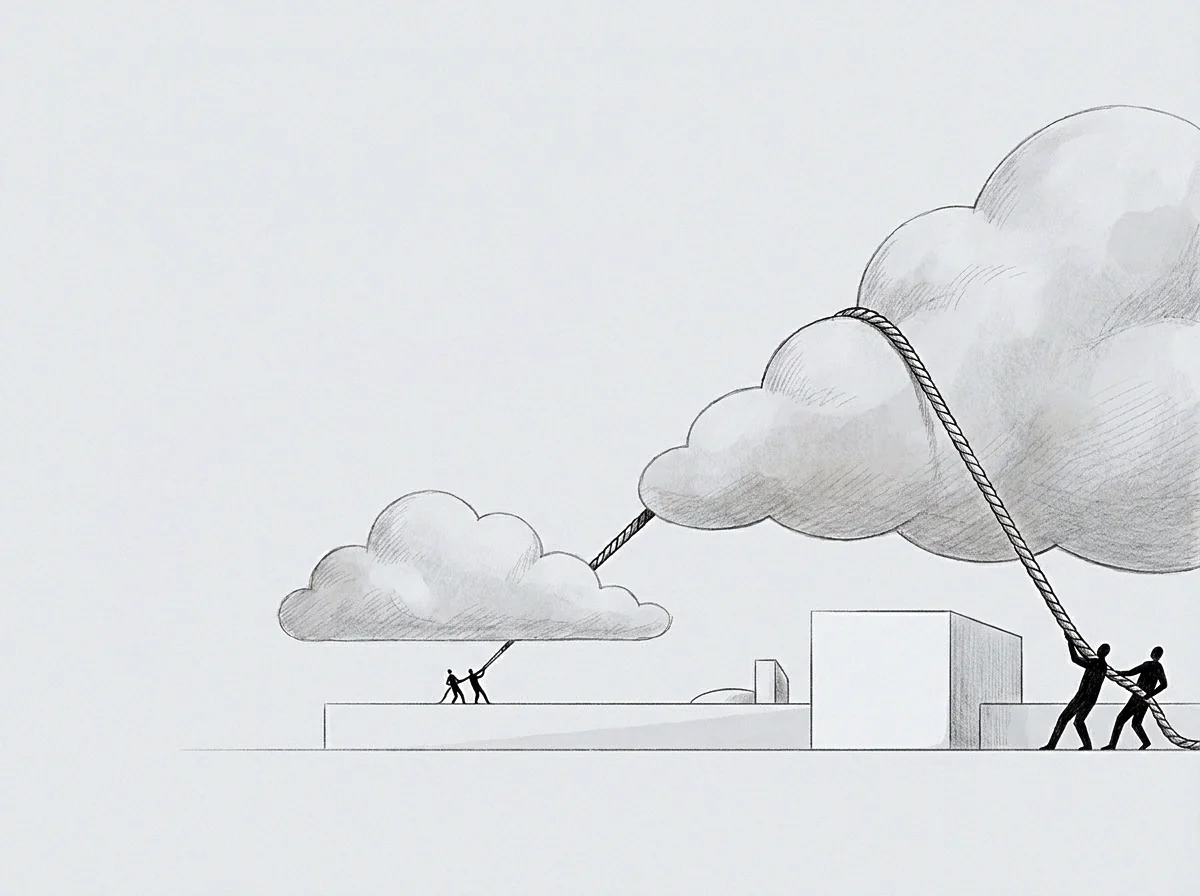
Allocation
Balancing executive workload requires structural redistribution rather than psychological coping tactics. The leadership interface must separate coordination bandwidth into distinct operational tiers. Without strict taxonomy and mechanical routing constraints, high-urgency operational noise reliably crowds out strategic architecture.

Topological Separation of Leadership Work
Executive duties break down into three mutually incompatible modes: capital allocation, systemic architecture, and operational exception arbitration. Each operates on a distinct time horizon and demands different cognitive conditions. Mixing these responsibilities across an unstructured calendar erodes the deep attention required for institutional governance.
A functional interface enforces mechanical separation between continuous operational monitoring and discontinuous strategic synthesis. Operational tracking demands asynchronous, structured telemetry that summarizes throughput, error rates, and capital efficiency. Strategic synthesis demands multi-hour blocks of uninterrupted cognitive focus completely insulated from tactical communications.
| Interface Mode | Temporal Horizon | Cognitive Transfer Function | Structural Impedance | Failure Manifestation |
|---|---|---|---|---|
| Capital Allocation | Twelve to thirty-six months | Discontinuous analytic synthesis | Absolute asynchronous barrier | Strategic drift and balance sheet insolvency |
| Systemic Architecture | Six to eighteen months | Continuous structural mapping | High formal documentation gate | Organizational fragmentation and execution drag |
| Exception Arbitration | One to ten days | Rapid thresholded logic | Tiered escalation friction | Executive bottlenecking and cognitive collapse |
These operating characteristics explain why pairing tactical emergencies with long-range capital stewardship causes systemic breakdown. Tactical inputs carry immediate emotional urgency and seize executive focus. Long-range governance carries no immediate procedural pressure, meaning tactical items will displace architectural responsibilities indefinitely if permitted.

Why Do Interface Protocols Fail Under Pressure?
Protocols fail under operational pressure because teams construct them as aspirational guidelines rather than physical constraints. An interface agreement relying on executive willpower dissolves during the first authentic quarterly crisis. When shipment targets miss their marks, executives abandon formal escalation criteria, reverting instantly to unstructured real-time messaging channels.
The old load pathways re-engage instantly.
Sustainable interfaces rely on mechanical constraints that operate independently of immediate human mood. If an escalation bypasses required documentation standards, the executive interface rejects the payload automatically without evaluating its underlying emotional urgency. The interface functions as a mechanical sieve.
This operational posture requires the founder to accept short-term localized friction to preserve global systemic throughput.
Until an organization formalizes hard entry gates across executive communication channels, operational distribution remains a theoretical aspiration that collapses under ordinary commercial stress.
Downstream executives interpret soft operational boundaries as implicit authorization to transfer operational complexity upward.

Gate
A gate controls flow through stated operational criteria rather than personal willingness. The difference between an open conduit and a sustainable interface lies in the structural rigor of its admission criteria. When an executive establishes hard gates, the organization learns to resolve operational ambiguity at the periphery rather than exporting it to the central leadership node.
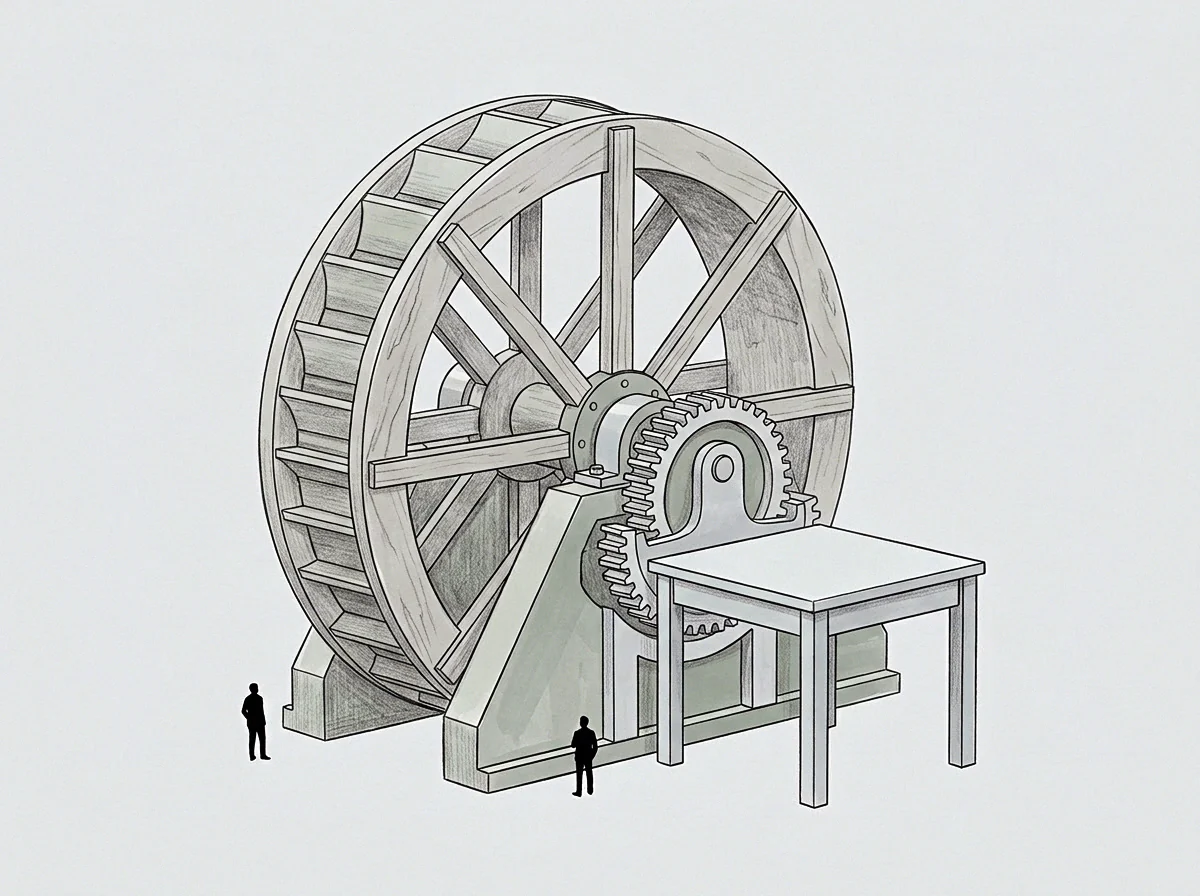
Establishing Friction and Entry Requirements
Effective interfaces introduce deliberate friction into the escalation sequence. When a departmental leader encounters a cross-functional dispute, the default path must require structured documentation rather than an informal conversational ping. Requiring the escalating party to define the dispute, articulate two competing proposals, quantify resource trade-offs, and state an operational recommendation alters the economics of escalation.
This operational friction forces cognitive synthesis backward onto the originating executive. In seventy percent of operational disputes, the sheer discipline of completing the required structural documentation reveals the optimal path, eliminating the need for higher-tier intervention entirely. The interface successfully deflects the load without consuming executive processing bandwidth.
The peripheral nodes expand their autonomous regulatory capacity.
A term stated once holds only when the interface rejects every payload lacking compliance.
Consider two leadership structures operating at parallel scale: one team handles escalations through real-time open messaging channels, while the other demands structured asynchronous briefs before placing items on the executive agenda. The first team burns executive hours managing conversational cross-talk, tracking informal agreements across diffuse threads, and pacifying reactive emotional escalations. The second team processes double the strategic volume with half the executive meetings because incoming payloads arrive pre-filtered and pre-computed.

Defending the Operational Threshold
The primary barrier to maintaining executive gates is the emotional discomfort of enforcing boundary friction against immediate colleagues. Founders struggle with the initial social baseline dissonance when refusing to resolve subordinate problems. They worry that rejecting an unstructured payload signals disengagement or organizational arrogance.
This hesitation breaches the gate. A single unmetered exception re-establishes the expectation of universal availability, prompting the entire operational network to resume dumping unshaped complexity onto the executive desk.
Preserving executive bandwidth requires treating stated terms as immutable structural fixtures. When an unstructured escalation arrives via direct message, the founder returns a standardized routing protocol rather than engaging the substantive operational question. The transaction stays strictly procedural.
The interface remains closed until the payload arrives through authorized, structured channels.
The long-term health of an executive team relies entirely on keeping the cost of boundary enforcement lower than the systemic cost of chronic attentional collapse.
If the executive team refuses to honor interface protocols, does structural redistribution remain possible, or does executive churn become the only available circuit breaker?