
Mechanisms of Escalation Circuit Breaking in Overloaded Early Stage Leadership Regimes
Mechanical circuit breakers decouple saturated leaders from operational escalation loops by enforcing rigid structural thresholds and automated communication quarantines.
Surge
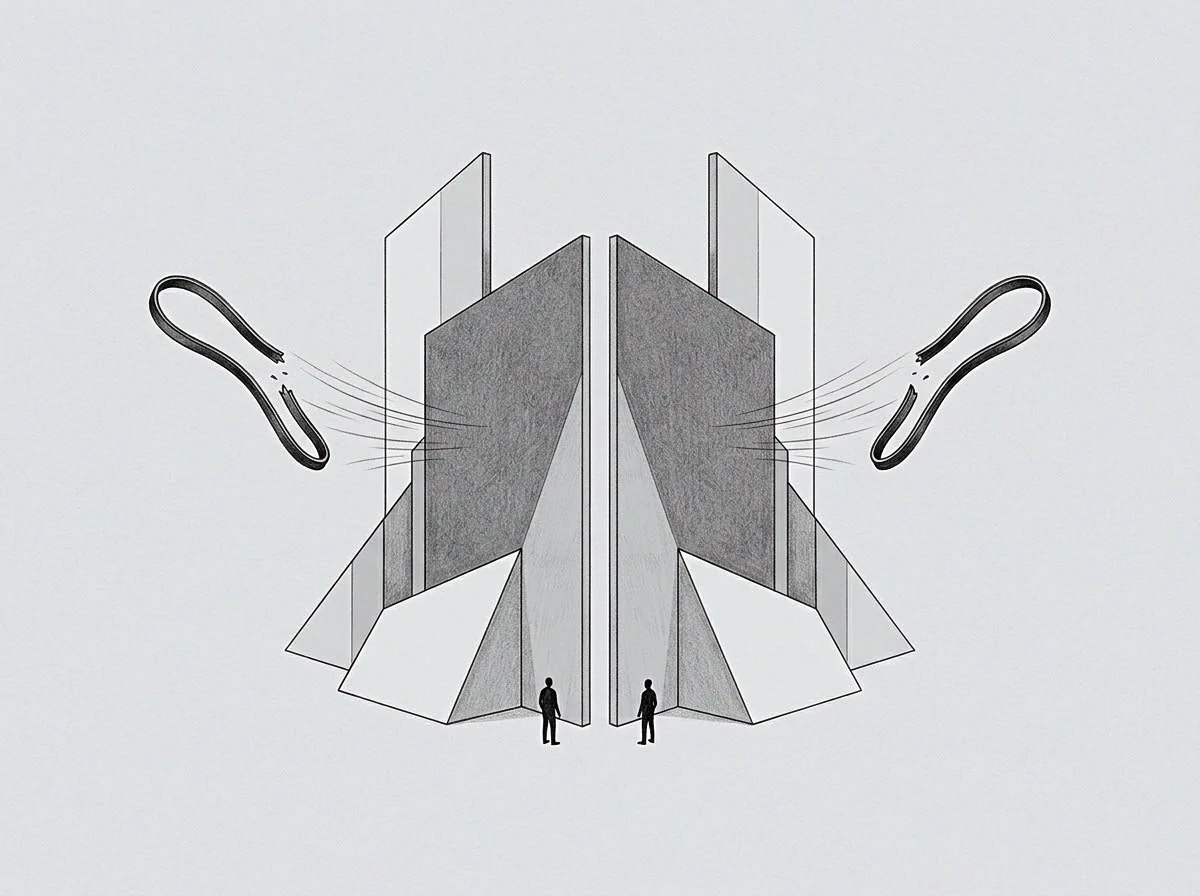
Four communication streams run past midnight while two core operational incidents remain unresolved on the primary dashboard. The operator sits in the glare of multiple terminal windows, typing responses across four channels to maintain an appearance of infinite immediate throughput. Incoming demands escalate because the setup rewards every urgent input with immediate senior processing.
The nervous system registers this sustained triage as severe baseline pressure. When leadership operates at saturation, external friction converts into an emergency escalation, directing raw operational turbulence straight to the founding seat.
Control theory models describe this dynamic through load-transferring loops. A system lacking mechanical impedance transfers all unbounded kinetic volume directly toward the central regulator. In early stage leadership regimes, that regulator is an individual human nervous system.
When the regulator absorbs turbulence without a rigid stopping surface, the surrounding organization learns that escalation yields faster settlement. Team members therefore route ambiguities upward rather than resolving them locally.
A regulator proven under load attracts escalating volume until the central circuit fails.
Allostatic load accumulates during these uninterrupted operational marathons. The physiological cost of continuous triage degrades executive discernment, shrinking cognitive bandwidth down to immediate threat defense. The operation enters an escalation spiral.
Decisions made under severe saturation produce administrative errors, which produce secondary operational crises, generating further emergency escalations back to the saturated center.
Feedback Amplification in Saturated Operations
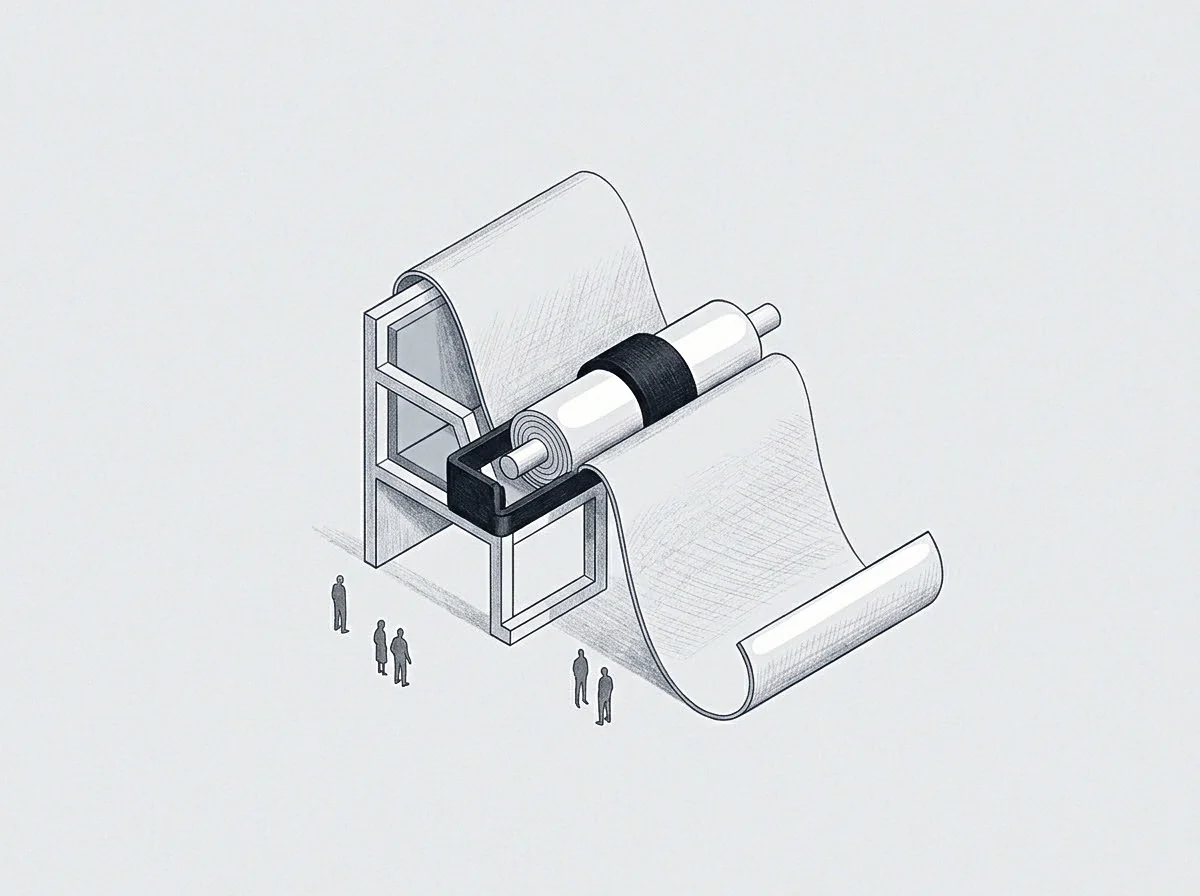
Triage velocity creates false expectations across operational interfaces. When an operational lead answers priority pings within ninety seconds at midnight, counter-parties calibrate their expectations to that latency. That response speed conceals systemic operational debt.
Colleagues stop independent conflict arbitration because invoking the senior regulator resolves deadlock faster than peer negotiation.
The operational layer experiences rapid structural degradation under this pattern. Middle operators defer ordinary functional choices, waiting for executive confirmation on standard procedural discrepancies. The senior seat becomes an involuntary bottleneck.
Velocity declines across parallel workstreams while total communications volume expands exponentially.
Prolonged exposure to uncontained operational volume causes cognitive fragmentation, missed strategic commitments, and catastrophic organizational drift.

Trip
Mechanical interruption arrests systemic collapse before physiological exhaustion dictates operational failure. In electrical engineering, circuit breakers interrupt current flow during dangerous overloads to prevent catastrophic thermal destruction. Leadership systems require an identical mechanical instrument.
A reliable breaker functions as an explicit operational trigger that severs incoming demands automatically once predetermined thresholds are crossed.
A circuit breaker exists as an objective operational covenant rather than an ad hoc emotional plea. Explicit quantitative boundaries set the framework: maximum active operational incidents per executive, strict latency windows for non-critical transmissions, and absolute quarantines on asynchronous communication after defined hours. Crossing these parameters trips the circuit, routing subsequent incoming inputs into hard buffers or local operational quarantine.

Automated Thresholds for Load Disconnection
Execution of a disconnect sequence proceeds mechanically once triggered. The breaker operates independent of momentary personal sentiment or counter-party insistence. Operational triage ceases entirely for secondary tiers, forcing incoming friction back down onto the functional layers where the discrepancy originated.
Consider the structural differences between informal operational throttling and an explicit structural breaker:
| Dimension | Ad Hoc Leadership Throttling | Mechanical Circuit Breaking |
|---|---|---|
| Trigger Origin | Acute emotional distress or sudden collapse | Predetermined quantitative capacity boundary |
| Systemic Visibility | Interpreted as arbitrary personal withdrawal | Understood as standardized operational pause |
| Load Redirection | Queued indefinitely at the saturated center | Diverted systematically to secondary conduits |
| Organizational Impact | Escalates panic across dependent operators | Enforces local resolution across edge nodes |
An objective trigger disconnects the channel, maintaining that disconnection until core physiological and operational reserves return above safety margins.
A stated boundary acts as a wall that stops incoming volume rather than an appeal for personal accommodation.
When the operational threshold trips, a mandatory seventy-two-hour quarantine locks out secondary administrative escalations, forcing functional teams to resolve operational discrepancies autonomously.

Clamp
Structural constraints must physically restrict the cross-sectional intake of administrative traffic. A clamp restricts flow by reducing channel aperture. Without strict structural clamping, broken escalation loops re-form within days as counter-parties seek alternative paths to re-engage the senior regulator.
The organization secures its boundaries by constraining access channels, latency terms, and transmission protocols.

Whose Capacity Absorbs the Residual Friction?
Peripheral operators face immediate discomfort when central channels close. When executive regulators refuse upward escalations, functional tensions remain trapped within peer dynamics. Middle managers must resolve jurisdictional ambiguities without executive intervention.
Some operational friction dissipates through local accommodation; other friction explodes into visible interpersonal dispute.
Leadership holds firm under this transitional pressure, refraining from arbitrating peer disputes during clamping intervals. The organization learns through direct exposure that the central regulator is no longer available as an informal dispute clearinghouse. Team members adapt by constructing local consensus mechanisms.
Channel architecture governs behavioral reality. Operations that run on open, synchronous chat rooms inevitably succumb to unbounded escalation surges. The ping functions as an invasive priority demand, commandeering focal attention and draining executive reserves.
Restricting communication to asynchronous, structured documentation clamps the incoming rate, forcing the sender to structure their thinking before requesting executive intervention.
The divergence appears clearly in counter-party reactions during initial clamping phases.
The project stalls indefinitely because nobody answers operational questions inside the chat room within ten minutes.
Post
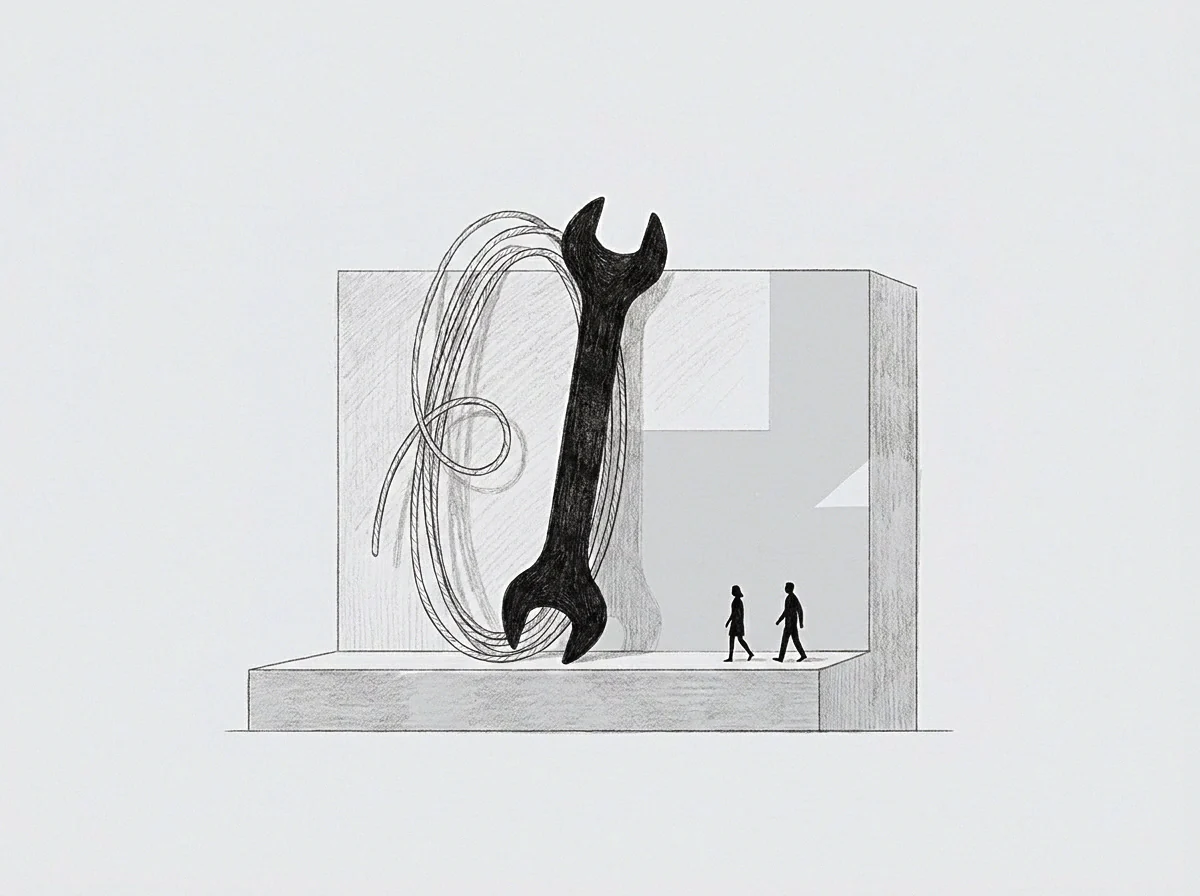
A rigid marker establishes where administrative obligations terminate. In structural mechanics, a sturdy post anchors tension wires, bearing lateral pull to stabilize the overall framing. Within an operational system, an explicit post defines the exact demarcation between collective systemic responsibility and individual executive obligation.
The leader states the operational perimeter once, establishing what tasks belong to the seat and what demands remain outside it.
The organization frequently mistakes an unstated boundary for available capacity. When leadership declines to articulate explicit limits, colleagues assume every incoming request is legitimate. Articulating a rigid term transforms vague relational negotiations into objective operational architecture.
- Stated Quarantine Terms define non-negotiable operational quiet intervals where all outbound and inbound administrative channels remain completely closed.
- Autonomous Settlement Latency specifies a mandatory delay interval before any executive arbitration occurs, forcing local functional nodes to negotiate settlements independently.
- Definitive Handover Criteria establish mandatory procedural milestones that incoming operational challenges must satisfy before qualifying for executive review.
Administrative throughput recalibrates to sustainable mechanical tolerances. The executive preserves cognitive focus for high-order capital allocation, principal commercial arrangements, and core strategic design. Subordinate functional divisions take ownership of edge operations, establishing durable institutional capability.
A boundary held consistently transforms systemic behavior while a flexible preference invites constant boundary testing.

Vault
Durable reserves protect an organization from sudden systemic shocks. A secure vault encloses essential assets within reinforced perimeters, protecting critical capital from everyday operational friction. Early-stage leadership requires cognitive and emotional reserves insulated from tactical disruptions.
When an organization burns all internal margins to sustain baseline activity, minor disruptions trigger catastrophic failure modes.
Executive headroom functions as the foundational asset of the entire enterprise. Depleting this headroom to resolve routine operational friction represents an inefficient misallocation of organizational resources. Maintaining deep operational reserves requires deliberate, systematic refusal of non-essential demands.
Reserve preservation is enforced through formal governance protocols. Operational calendars incorporate mandatory structural insulation periods. Strategic reserves receive absolute defense against opportunistic tactical demands.
The enterprise operates with deliberate slack, allowing localized operational surges to expend themselves against mechanical dampers rather than breaching core leadership functions.
Reserves preserved through systematic operational denial provide the insulation required to survive acute systemic crises.
Sustainable operational leadership persists solely because mechanical circuit breakers, rigid structural clamps, and insulated reserves insulate the central nervous system from unbounded systemic turbulence.
Does the enterprise possess sufficient structural discipline to let localized operational errors fail at the functional perimeter without deploying the central regulator to rescue them?