
Physiological Allostatic Thresholds and Structural Load Transfer Mechanics in Early Founder Seats
Structural corporate deficiencies transfer directly into human physiology when organizational buffers are absent, terminating in autonomic threshold failure.

Joint
Cardiovascular Strain in Unbuffered Positions
Three terminal screens cast white glare over cold coffee at two in the morning, with payroll clearing in forty-eight hours and an empty receivable line. The person in the primary executive seat sits motionless, reading an unhedged merchant banking debit notice. Arterial pressure rises twenty millimeters of mercury without physical movement.
The autonomic nervous system acts as the default damping mechanism for every missing commercial shock absorber in an undercapitalized venture. When an enterprise lacks cash reserves, structured debt facilities, or administrative insulation, systemic tension bypasses non-existent balance sheet reserves and lands immediately on the vascular tree of the sole governing officer.
The institutional arrangement expects continuity from a biological body. Every unresolved vendor conflict, stalled customer payment, and delayed capitalization event travels straight to the center of command. In mature corporate architecture, legal separations, working capital tranches, and operational protocols absorb external friction.
In an early corporate seat, these buffers do not exist; the operator’s body absorbs the structural load directly. Every missed wire transfers into unmitigated vascular resistance, elevated peripheral tone, and suppressed restorative parasympathetic function.
A commercial shock unabsorbed by legal or procedural dampening converts directly into autonomic stress.

The Midnight Inflow
Demands arrive through digital channels without time boundaries or volume filters. Subordinates, early capital sources, and commercial counterparties transmit operational anxieties immediately, treating the founding operator as an infinite sink for systemic turbulence. Incoming messages demand instant triage, constant tactical reassurance, and immediate financial coverage.
Each unbuffered notification triggers catecholamine release, maintaining sustained smooth muscle contraction across peripheral blood vessels. The human occupant absorbs the collective instability of twenty unwritten employment contracts and forty ambiguous commercial deliverables.
Everything felt steady from the outside because the checks cleared and the replies kept arriving inside four minutes.
Threshold

Endocrine Depletion Across Operating Quarters
Prolonged exposure to structural enterprise deficits alters hormonal secretion profiles over successive quarters. The initial response involves excessive glucocorticoid output, elevating circulating cortisol to mobilize glucose for acute tactical emergencies. Sustained operational exposure converts this acute activation into chronic endocrine flattening.
Diurnal salivary cortisol curves lose their steep morning acrophase and gentle evening nadir, collapsing into a horizontal, unresponsive plateau.
Three distinct physiological failure modes mark this state of complete systemic saturation:
- Basal sympathetic elevation maintains elevated resting heart rates above eighty beats per minute during sedentary desk work.
- Diurnal cortisol flattening suppresses normal evening immune replenishment while eroding morning waking clarity across successive weeks.
- Vagal brake withdrawal eliminates high-frequency heart rate variability, removing the primary neural mechanism responsible for rapid emotional down-regulation.
Controlled clinical assessments across executive cohorts show that sustained high allostatic load indices correlate with measurable reductions in hippocampal gray matter volume and altered frontal-striatal connectivity. This finding rests upon longitudinal ambulatory telemetry combined with high-resolution structural magnetic resonance imaging across enterprise leaders facing sustained corporate insolvency. Interventions utilizing beta-adrenergic receptor blockade or synthetic external delegation structures might alter these neurological correlations by dampening peripheral autonomic feedback to the central amygdaloid complex.
The body pays the split.
Vagal Tone and Executive Drift
Autonomic dysregulation directly degrades the cognitive apparatus tasked with enterprise navigation. When the myelinated vagus nerve reduces inhibitory control over the cardiac sinoatrial node, physiological threat signaling dominates higher-order cortical regions. Decision-making shifts from long-horizon resource evaluation to primitive threat avoidance.
Complex commercial contracts are conceded hastily to eliminate acute relational friction.
The affected officer experiences severe daytime somnolence coupled with hyper-aroused insomnia between two and four in the morning. Rapid eye movement sleep drops below ten percent of total recumbent time, terminating normal affective memory consolidation. The company continues to project aggressive commercial targets while its chief executive operates with degraded frontal inhibition and compromised working memory capacity.
Chronic neuroendocrine overload dissolves working memory capacity, degrading capital allocation choices until emergency liquidations occur.
Transfer
Where Does Structural Absorption Become Biological Debt?
Institutional voids siphon energy from human physiology whenever organizational definitions remain unwritten. A missing middle-management layer, an uncodified billing dispute policy, or an unhedged operational exposure creates vacuum pressure inside an operational layout. This vacuum exerts continuous mechanical pull on the principal seat.
The founder attempts to patch missing procedural infrastructure through sheer conscious exertion, answering unresolved inquiries during off-hours and personally guaranteeing commercial obligations.
When contractual limits remain unspecified under capital strain, peripheral biological tissue functions as the default organizational shock absorber.
Structural deficiencies convert into physical strain through three primary operational transfer pathways:
- Capital latency forces personal liquid assets and autonomic stability to backstop delayed customer invoices.
- Procedural void pulls executive attention down into low-altitude tactical firefighting, obliterating strategic scheduling.
- Relational asymmetry leaves commercial boundaries unstated, training external counterparties to demand immediate out-of-hours responses.
Naval architects construct watertight transverse bulkheads inside vessel hulls to isolate localized flooding, ensuring that hull breaches do not swamp the entire structure. Civil builders apply identical load-bearing isolation to suspension bridges, anchoring massive dead-weight spans into bedrock piers rather than flexible deck joints. Early venture seating lacks this isolation entirely.
When external commercial turbulence strikes the perimeter of the firm, the absence of contractual bulkheads permits the full dynamic load to travel uninterrupted into the primary officer’s central nervous system.
Co-Regulation Deficits in Small Assemblies
Social baseline theory demonstrates that the human nervous system conserves metabolic resources by distributing risk and task management across reliable interpersonal units. Proximity to dependable, highly competent partners reduces the metabolic cost of environmental surveillance, down-regulating neural threat circuits in the dorsal anterior cingulate cortex. Early commercial seats frequently feature profound co-regulation deficits.
The founder sits isolated at the apex of a fledgling enterprise, managing employees who look upward for reassurance and investors who demand linear performance metrics.
Laboratory fMRI threat-cue paradigms confirm that holding the hand of a trusted partner during acute threat exposure dampens neural activation across the hypothalamus and prefrontal cortex. These data rest upon functional neuroimaging of interdependent pairs subjected to electric shock cues under laboratory observation. Controlled clinical trials evaluating isolated founders who maintain baseline prefrontal metabolic efficiency during prolonged liquidity shocks without interpersonal co-regulation would overturn this theoretical model.
In the absence of shared institutional burden, the solitary executive bears unmitigated metabolic expenditure for every existential threat the firm encounters.
Whether an early venture can erect operational baffles fast enough to outrun the biological exhaustion of its principal officer remains unsettled across contemporary enterprise data.
Shunt
Comparative Mechanics of Structural Load Dissipation
Organizations must route systemic pressure away from human biology through formal administrative and legal machinery. Establishing procedural conduits transfers incoming operational and financial shocks onto institutional agreements rather than personal nervous systems. The contrast between unbuffered founder absorption and structured procedural load transfer reveals fundamentally opposing mechanics of enterprise resilience.
| Operational Dimension | Unbuffered Founder Absorption | Procedural Load Transfer |
|---|---|---|
| Accounts Receivable Default | Founder covers payroll from personal savings, elevating acute cardiovascular stress. | Accounts receivable lines absorb delay through predefined bank covenants and invoice factoring. |
| Client Emergency Communication | Unfiltered instant messages hit founder mobile devices at midnight, fragmenting deep sleep. | Ticketing gates enforce strict asynchronous queues and contractual response windows. |
| Talent Attrition Shocks | Founder personally absorbs departed employee operational tasks, working eighteen-hour days. | Cross-trained redundancy pools and written runbooks absorb immediate operational workflow. |
| Capital Runway Contraction | Founder experiences continuous panic-driven sympathetic activation during all waking hours. | Pre-negotiated board triggers execute structured operational spend reductions automatically. |
The desk cannot fully verify whether asynchronous message latency alone triggers restorative parasympathetic rebound in people with entrenched sympathetic hyper-reactivity; under that uncertainty, a careful operator implements absolute hardware separation alongside time-gated communications. Implementing procedural shunts replaces subjective heroics with mechanical, deterministic operational responses.

The Friction of Institutional Absorption
Erecting procedural barriers initially generates friction with external counterparties accustomed to immediate executive capitulation. Clients prefer having unrestricted midnight access to the chief executive. Investors prefer an operator who absorbs market swings through unbilled personal life sacrifice.
Implementing structured operational interfaces forces the surrounding commercial environment to adapt to institutional protocols rather than biological compliance.
The transition requires writing explicit terms that define service response latencies, emergency escalation protocols, and working capital minimums. When an operational failure occurs, structured runbooks process the deviation without waking the executive officer. Autonomic stability returns only when the enterprise functions as a closed mechanical loop that metabolizes its own internal strain.
A written ninety-day capital freeze condition transfers all liquidity exposure directly to external underwriters, preserving human nervous systems from speculative insolvency.

Brace
Stated Terms as Hard Retaining Structures
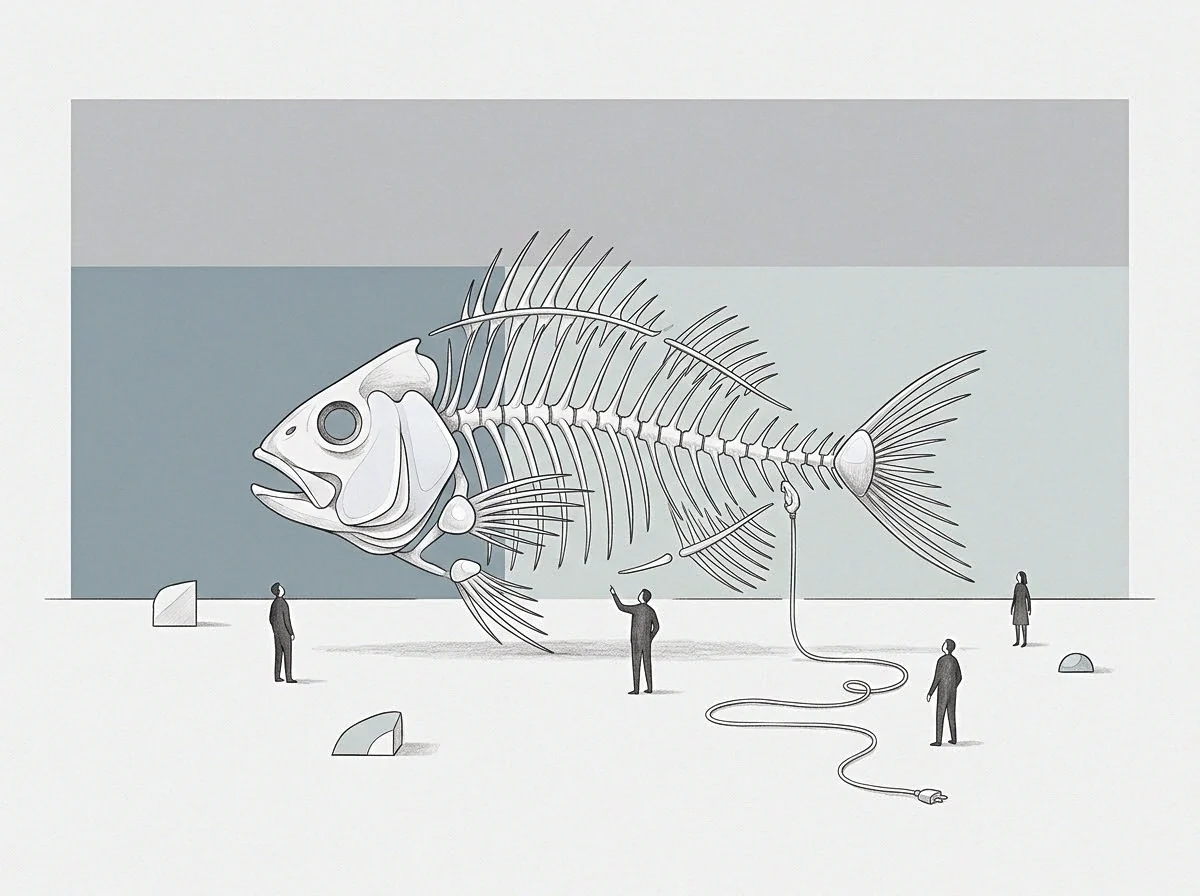
A stated term serves as a rigid retaining wall between the pushing commercial environment and human physiological stability. Pushing systems naturally advance until they encounter an unyielding boundary. An ambiguous personal intention yields under sustained pressure, collapsing whenever an urgent counterparty demands attention.
A written contractual term, backed by concrete operational costs, provides the first immovable surface that an expanding commercial load meets.
Stated limits convert subjective emotional resistance into predictable procedural facts. By anchoring terms in written corporate charters, service level agreements, and capital thresholds, the operator ceases personal negotiations over biological availability. The term states the boundary; the surrounding system adapts its workflow to conform to the stated parameter.
The stated limit terminates the transfer of systemic strain into neuroendocrine wear.

Channel Silence and Derived Availability
Availability exists as an outcome derived by counterparties from observed response latencies, not as an announced corporate philosophy. Announcing personal limits invites continuous boundary testing from aggressive counterparties. Maintaining absolute communication silence across designated off-hours forces counterparties to derive actual availability mechanically.
When an inbound digital transmission receives no acknowledgment until the designated operating window, the sender recalibrates their operational assumptions.
State acts as the primary transfer function determining executive throughput. A biological state characterized by autonomic hyper-arousal and sleep debt renders high-order capital allocation impossible, regardless of conscious willpower. Decision-gated acts yield completely to state-gated biological limits.
Acknowledging these physiological barriers allows the executive officer to treat biological preservation as a hard structural constraint rather than a negotiable personal preference.
Erecting rigid structural braces terminates the unsustainable transfer of enterprise strain into biological wear, preserving the human operator from systemic collapse.
The durability of a company matches the hardness of the terms separating structural shortfalls from the human heart.