
Setting Systemic Boundaries Using Objective Capacity Metrics In Startups
Systemic boundaries enforce operational capacity through objective setpoints that automatically shed load when incoming volume exceeds physical structural limits.

Ceiling
Four operational software queues send direct alerts simultaneously at eleven on a Tuesday night. The founder sits in the seat, reviewing incoming error rates while human messages arrive across three separate application channels. A client requests an emergency configuration update, an engineer asks for architectural sign-off, and an investor sends a meeting request for eight the following morning.
The founder attempts to absorb the incoming volume through extended manual coordination. Capacity is finite. Without an objective metric attached to the founder’s physical seat, the internal system treats every incoming request as an immediate demand for personal regulation.
Operational overload occurs when an executive seat operates without hard parameters. Human regulators under continuous strain rely on personal refusal, which requires active decision energy for every incoming request. A load-transferring system pushes against a human regulator until it discovers where that regulator fails to hold.
When the regulator relies on mood or immediate energy levels to process incoming demands, the surrounding team perceives the boundary as variable. The team continues pushing because the boundary appears subjective, dependent entirely on the founder’s current emotional energy.
An objective capacity metric transforms a personal refusal into an impersonal system condition whenever incoming operational load exceeds the stated setpoint.
An objective metric defines capacity through measurable physical parameters rather than internal feelings of tiredness. Workloads are quantified through active concurrent threads, explicit daily decision counts, or fixed context-switching limits. Load transfers.
When a founder defines maximum concurrent active projects as three, the fourth project waits in a queue by systemic rule rather than personal rejection. The limit sits inside the system architecture rather than the person.
A founder who relies on willpower to throttle operational intake rapidly depletes cognitive bandwidth. Research in stress physiology demonstrates that allostatic load accumulates when an organism remains in a state of continuous heightened responsiveness without predictable recovery intervals. The baseline physiological cost of remaining perpetually available shrinks executive capacity over six-month horizons.
Executive functioning deteriorates, leading to erratic decision cycles and degraded systemic oversight.
Failure to anchor limits in objective metrics forces the founder to negotiate every boundary individually, compounding cognitive exhaustion and accelerating systemic friction across the organization.

Channel
Communication pathways carry structural assumptions about founder availability. Incoming messaging queues generate a constant priority signal that demands cognitive intake regardless of organizational urgency. When communication architecture lacks hard capacity rules, messaging platforms operate as unfiltered conduits directly into executive bandwidth.
Pings accumulate fast. The frequency of incoming notifications alters the setpoint of executive focus, converting deep strategic blocks into reactive triage windows.

Asynchronous Load Metrics
Establishing objective thresholds within communication streams prevents unstructured work from bypassing operational triage. Objective metrics specify maximum response windows, messaging concurrency limits, and scheduled processing intervals. Silence carries position.
Setting structural parameters around communication channels clarifies availability without requiring interpersonal defense.
- Concurrency ceiling sets the maximum number of active cross-functional operational discussions permitted within a single working window, automatically routing surplus requests into an intake log.
- Queue depth limit defines the precise volume of unread internal requests allowed before incoming channels automatically switch to slow-mode delivery.
- Latency window establishes explicit, role-based response times that decouple notification arrival from immediate processing demands.
When communication streams lack objective metrics, internal teams read immediate availability as standard operational protocol. A team member sends an internal message at midnight, expecting immediate triage because previous midnight messages received immediate replies. The absence of a systemic rule converts past endurance into future expectation.
The surrounding team derives executive availability directly from response speed rather than operational mandate.
The operational team reports that work remains stalled because the intake valve rejects requests past the five-discussion maximum.

Matrix
Evaluating operational load across multiple executive roles demands structured measurement tools. A founder sitting in both product and revenue seats experiences compounding demands that cannot be evaluated through intuition alone. Terms absorb load.
Mapping capacity metrics across functional domains creates an explicit record of systemic saturation.

Capacity Allocation Metrics
The distribution of executive time and cognitive bandwidth requires formal parameters that track active load against physical limits. The table below delineates the structural differences between subjective personal boundary management and objective capacity metrics across key operational dimensions.
| Variable | Subjective Limit Mode | Objective Capacity Metric Mode |
|---|---|---|
| Allocation Determinant | Immediate emotional energy and perceived request urgency | Pre-defined concurrent thread ceilings and fixed operational slots |
| Load Transfer Mechanism | Personal refusal requiring verbal negotiation and defense | Automated queueing rules and systemic intake throttling |
| Visibility of Boundary | Opaque to team, inferred through founder mood and latency | Explicitly stated in system rules, dashboards, and contracts |
| Allostatic Impact | High cognitive cost due to continuous decision-gated access | Low cognitive cost due to automated state-gated filters |
The metric stands. Introducing an objective allocation matrix shifts the executive burden from defending personal time to monitoring system variables. When a founder assigns eight hours weekly to investor relations, sixteen hours to product architecture, and sixteen hours to key account execution, the total capacity reaches forty hours.
An incoming request for an additional ten-hour strategy sprint cannot enter without explicit displacement of an existing allocation.
When operational capacity reaches its stated ceiling, incoming demands transfer to the queue rather than the person.
Systemic clarity emerges when operational allocations operate as fixed capacity blocks. If the product seat demands twenty-five hours during a deployment phase, the revenue seat automatically contracts by nine hours under pre-established rules. The adjustment occurs through metric formulas rather than mid-crisis negotiation.
The organization observes capacity redistribution as an administrative function of the matrix.
Updating the executive allocation matrix to limit external stakeholder meetings to three slots per week restricts access, forcing incoming investor requests into pre-designated monthly windows.

Barrier
Executive performance depends directly on the physiological and cognitive state of the person occupying the seat. State governs output. The transfer function that converts executive input into high-quality operational output deteriorates when cognitive saturation exceeds baseline thresholds.
Human decision-making declines predictably under conditions of prolonged sleep restriction, constant context shifts, and unmanaged administrative load.
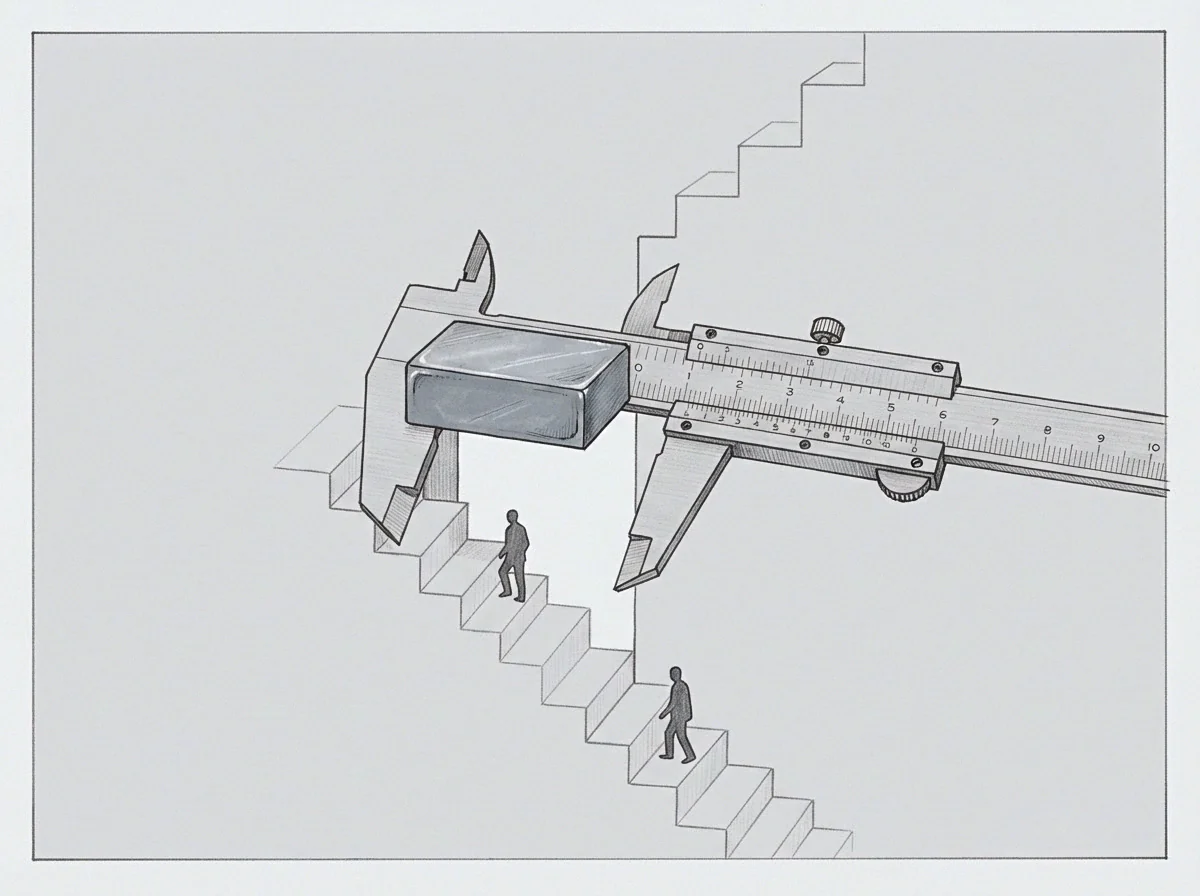
What converts an operational limit into a hard wall?
A personal boundary remains soft when it depends on daily willpower to resist incoming demands. Converting a soft boundary into a hard wall requires anchoring the limit in objective operational conditions that function independently of human mood. State-gated acts operate automatically when internal system variables cross specified parameters, whereas decision-gated acts require active emotional enforcement.
The limit holds.
Decision quality drops when state variables signal elevated allostatic load across consecutive work cycles.
Cognitive load research confirms that task-switching carries a heavy switching cost, reducing working memory capacity and processing velocity. When a founder moves between financial modeling, customer escalations, and technical architecture within a single hour, cognitive throughput drops precipitously. The brain experiences residual activation from previous incomplete tasks, polluting active problem-solving blocks.
Objective metrics set strict daily context-switch ceilings to protect working memory integrity.
How long can an early stage executive team maintain high decision quality when incoming systemic demands consistently exceed physiological setpoints?

Circuit
Systems absorb push. Installing structural circuit breakers within startup operations protects executive seats from structural collapse. When incoming organizational operational volume breaches capacity setpoints, automated load shedding must occur to preserve core execution loops.
The circuit breaks.

Automated Load Transfer Sequence
Enforcing objective capacity metrics requires a systematic deployment sequence that moves boundary management from human negotiation to automated systemic rules.
- Quantify physical maximum operational thresholds across active projects, communication queues, and decision-making slots.
- Publish objective metrics within shared organizational dashboards to establish visible capacity setpoints for all team members.
- Configure communication tools and task systems to enforce intake ceilings through automated slow modes and structured intake forms.
- Route surplus operational demands directly into prioritized queues managed by delegated operators or asynchronous repositories.
- Audit system metrics weekly to recalibrate capacity setpoints against executive state variables and organizational throughput.
Signals clear early. Automated circuit breakers transform founder availability from an open-ended resource into a derived variable calculated from system state and stated cost. When internal operational requests hit the maximum ceiling, the system automatically defers non-critical execution threads.
The surrounding organization learns to operate within structured intake parameters, adjusting intake velocity to match explicit systemic capacity.
A hard concurrency limit prevents system collapse by automatically rejecting incoming requests past the threshold.
A structural circuit breaker holds firm when defined by objective capacity metrics rather than executive endurance.