
Stated Capacity Bounds in High Stress Executive Governance
Stated capacity bounds protect executive governance by replacing human endurance with explicit structural refusal rules that halt external load transfers under strain.
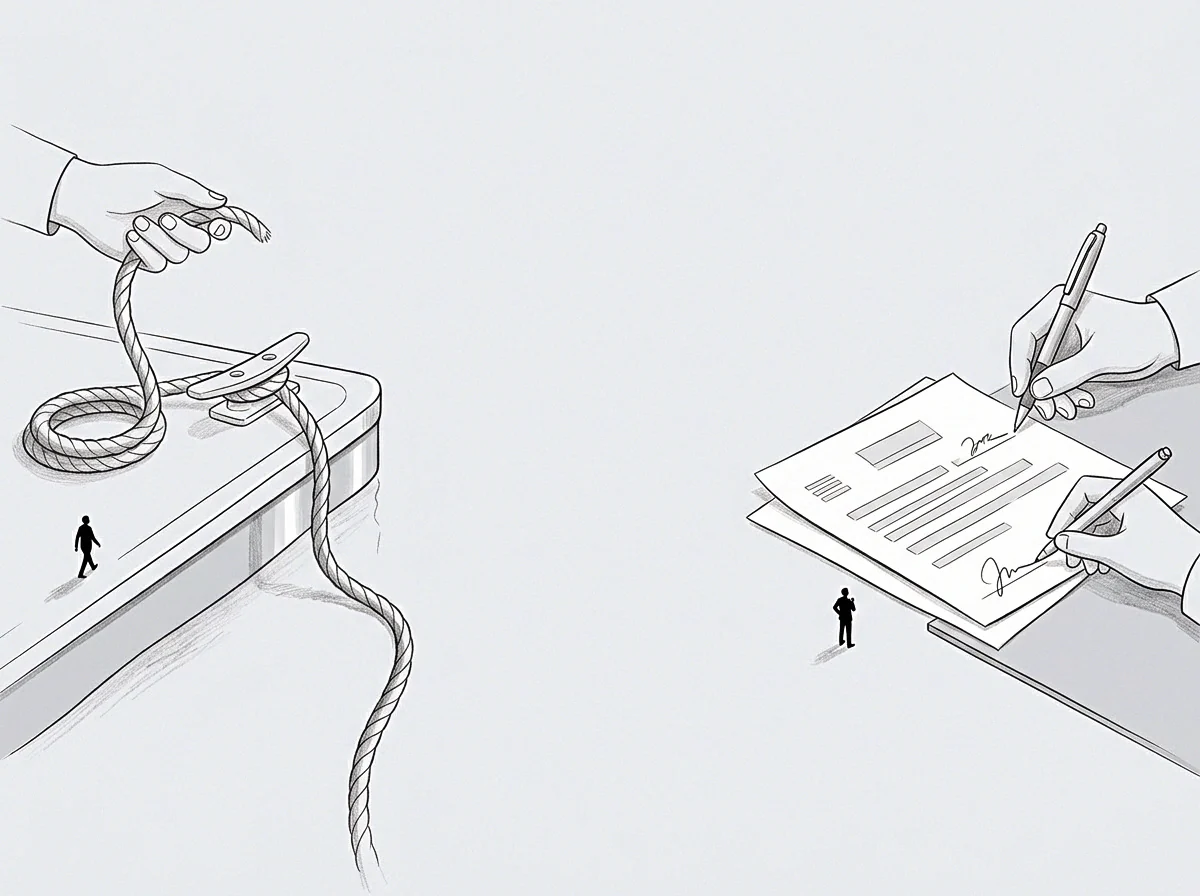
Seat
Four governance dockets arrive unread at midnight while incoming operational alerts pile onto the executive desk. An executive holding multiple board seats or direct operational control meets incoming systemic load through physiological capacity alone when formal operating limits are absent from corporate charters. Organizational systems route unresolved ambiguity toward the highest authority in the room.
A chairperson absorbs structural conflict, an operator takes the fallout of fragmented supply contracts, and an executive director answers late stakeholder inquiries until the nervous system enforces a halt. Repeated activation of cardiovascular and neuroendocrine responses accumulates allostatic load, narrowing executive attention into a defensive posture.
State functions as the mathematical transfer function determining what an input produces inside an operational seat. Mood remains a lagging output variable carrying negligible predictive signal about structural resilience. Under sustained operational strain, working memory contracts, reducing the executive attention available for synthetic decisions.
When an executive seat operates without published capacity bounds, counterparties treat incoming executive availability as infinite. The board assumes availability because previous crises resolved through sheer endurance, and operating partners escalate routine friction once the seat establishes a pattern of absorbing unbudgeted organizational complexity.
Executive cognitive headroom contracts predictably whenever ambient load exceeds the biophysical clearance rate of sustained endocrine activation.
In typical governance arrangements during early expansion, founders and chief executives often maintain informal open-channel policies on the assumption that responsiveness preserves institutional velocity. Yet an executive sitting across five board committees while running active treasury interventions operates on fragmented attention. When an urgent resolution arrives demanding an immediate signature, the executive either signs without thorough diligence or delays the transaction into gridlock.
Neither outcome reflects a failure of willpower or strategic dedication; both stem from an uncalibrated seat that permits external systems to dictate its operating throughput.
- Stated volumetric throttling restricts the cardinal count of board-level governance reviews permitted within any seven-day operational cycle.
- Asynchronous ratification protocols mandate three business days for statutory evaluations, terminating spontaneous weekend escalations.
- Emergency delegation carveouts transfer transactional signature authority directly to secondary officers once operational variance crosses defined tolerances.
The structural problem deepens when organizational participants misread executive exhaustion as emotional disengagement. Counterparties interpret delayed replies as personal neglect rather than arithmetic exhaustion of working memory.
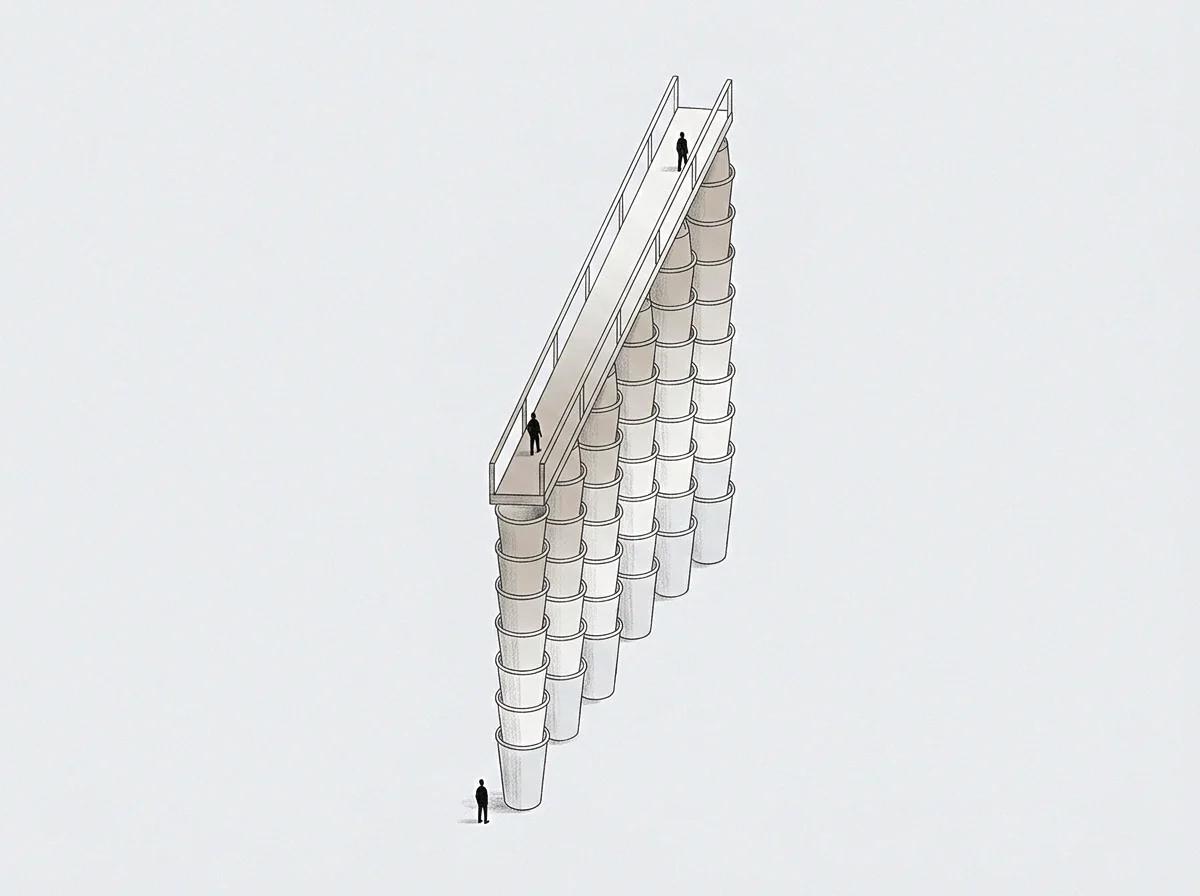
Line
A capacity bound functions as an exterior physical partition rather than an internal emotional resolution. When an executive attempts to hold governance boundaries through interpersonal negotiation alone, the counterparty pushes against the regulator until the person fractures. Load-transferring systems do not stop when an operator displays fatigue; they stop when they encounter a documented term that terminates procedural transmission.
A stated capacity bound establishes the cardinal frontier where executive involvement formally ceases, transferring operational risk back to the originating department.

Can Governance Concurrency Contract Under Acute Strain?
Concurrency limits dictate the maximum number of high-stakes operational disputes an executive board member can govern concurrently without degradation of decision fidelity. Laboratory experiments on human supervisory control confirm that decision accuracy drops sharply once concurrent operational streams exceed human processing limits. When an executive seat attempts to govern twelve concurrent litigations, financings, and joint ventures, systemic failure becomes inevitable.
A stated capacity limit halts external load transfers by presenting an explicit procedural refusal rather than personal exhaustion.
A formal distinction exists between unstated capacity buffers and stated capacity limits embedded in governance architecture. The following comparison illustrates how an executive desk responds across identical stress conditions under both structural arrangements.
| Operating Dimension | Unstated Capacity Buffer | Stated Capacity Bound |
|---|---|---|
| Load Absorption Route | Executive nervous system and nocturnal hours | Procedural deflection to designated deputies |
| Counterparty Perception | Perceived emotional withdrawal or personal indifference | Explicit institutional constraint of the seat |
| Friction Location | Internal psychological strain and somatic depletion | Contractual boundary between the seats |
| Derivation of Availability | Derived ad hoc through erratic message latency | Derived systematically from published governance schedules |
Research examining social baseline theory indicates that the human brain conserves metabolic resources when interpersonal environments offer predictable, bounded cooperation. Maintaining an ambiguous border, by contrast, consumes substantial metabolic energy, keeping the baseline nervous system in perpetual vigilance. Placing the limit into legal bylaws, board resolutions, or investor side letters separates the human occupant from the operational constraint.
The counterparty confronts the governance charter rather than an executive whom they can coax, guilt, or outlast. A line declared in advance binds the system without requiring personal defense.

Silence
Availability is derived rather than announced. When an executive states explicit governance parameters, counterparties read operational positions through non-responsiveness and the absence of immediate reaction. If an executive declares that weekend communication remains closed yet responds to an investor inquiry on Sunday evening, the counterparty ignores the verbal claim and registers the behavioral channel.
Across modern corporate interfaces, prompt compliance signals total structural permeability.
The channel that does not ping was rarely an emergency for either party. Incoming messages in enterprise systems generate artificial urgency, driving executive attention toward local optimization at the expense of enterprise governance. In a multi-jurisdictional compliance investigation, an executive officer who responds to minor updates within minutes encourages operational subordinates to route half-formed dilemmas up the hierarchy.
Silence signals structural compliance with governance bounds once latency ceases to fluctuate with interpersonal guilt.
When an executive maintains a forty-eight-hour latency window on non-statutory operational inquiries, counterparties recalculate their escalation pathways. Teams find internal operational remedies because the executive seat is procedurally unavailable for immediate rescue work. This structural discipline protects the executive state from continuous disruption.
Complex contract evaluations demand contiguous blocks of attention; an executive cannot manufacture cognitive headroom through concentration alone while multiple communication channels interrupt every twelve minutes. The state dictates the cognitive output, and silence preserves the state.
Specific governance provisions convert passive silence into recognized institutional procedure. An explicit thirty-six-hour mandatory cooling interval on non-consensual board motions prevents reflexive voting under manufactured deadlines, establishing that lack of rapid response constitutes statutory procedure rather than tactical delay.

Lock
The lock represents the irreversible structural commitment that prevents executive overextension during systemic panic. Under extreme organizational volatility, such as insolvencies or hostile recapitalizations, human operators experience powerful physiological impulses to breach their own limits. Sympathetic nervous activation urges the person to stay at the desk, consume stimulants, and absorb every incoming dispute.
A cognitive bound that relies solely on executive discipline dissolves under this acute hormonal surge.
Structural locks remove decision autonomy during predetermined overload states. A corporate charter can include automatic circuit breakers that suspend board deliberations if an executive session extends beyond six continuous hours, requiring an obligatory twelve-hour adjournment before any binding vote. Similarly, treasury protocols can prohibit capital disbursements above specified amounts without dual-signature validation from independent trustees, physically preventing an overtaxed chief executive from executing rapid liquidity transfers under panic.
Empirical occupational health literature demonstrates that chronic overextension degrades executive risk appraisal, inducing cognitive distortions similar to clinical sleep deprivation. Under these physiological conditions, an executive becomes incapable of recognizing personal impairment. The person operates under the impression of sharp precision while approving governance concessions that compromise corporate solvency.
Structural locks exist precisely because the executive cannot evaluate capacity limits reliably while experiencing acute allostatic saturation.
Omitting explicit capacity locks from executive governance systems risks abrupt operational failure, in which an indispensable leader suffers total physical depletion and leaves the institution unguided amid active litigation.