
Stated Terms and Availability Limits in Founding Teams
A stated limit acts as a structural wall that forces an operational system to triage work rather than exhausting the personal capacity of the person in the seat.

Wall
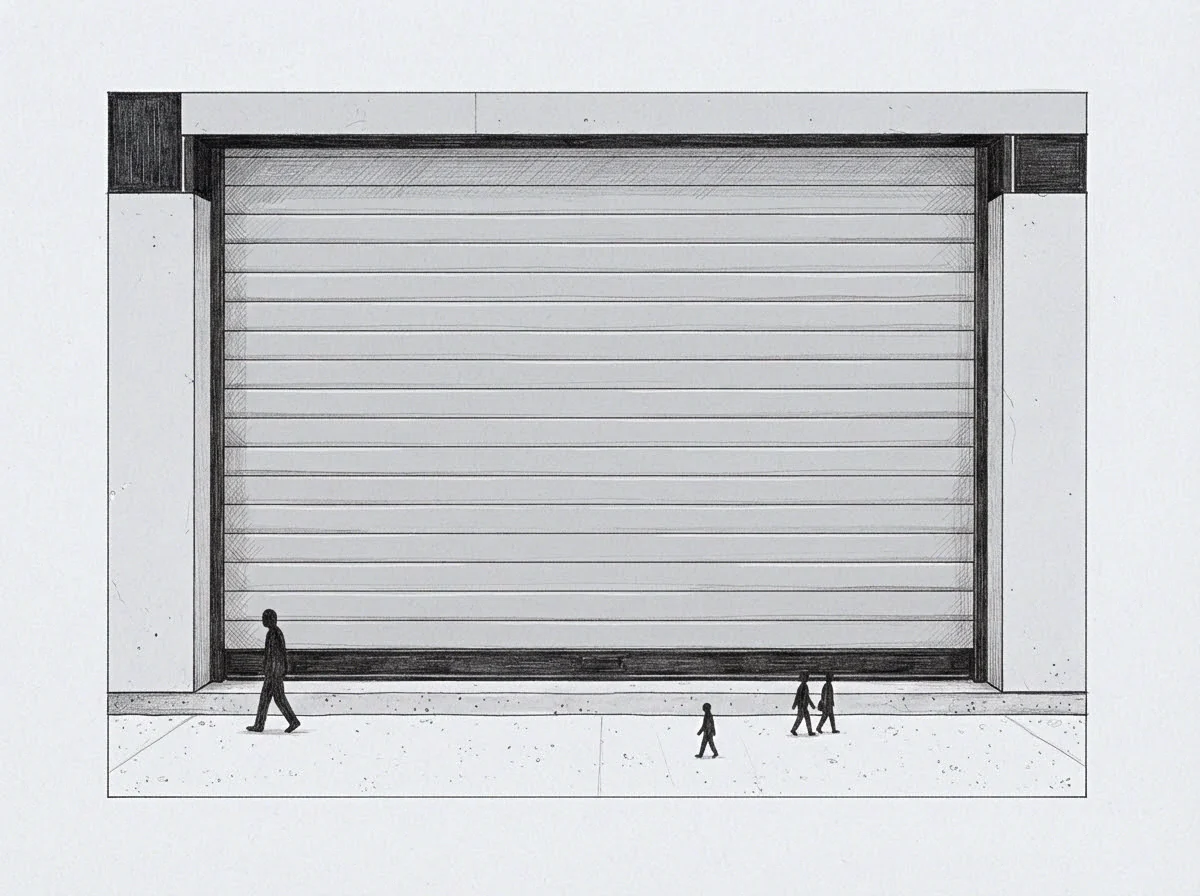
Operational Resistance and Inelastic Enclosures
Four messages sit unanswered past midnight on a Tuesday while a production database runs a schema migration. The person watching the progress bar watches their partner type into a shared room, erase the sentence, and post a question about second quarter hiring plans instead. The question does not receive a response until morning.
That delay produces a distinct strain, because the unspoken agreement assumed both people remained tethered to the operational pulse at all hours.
A regulator proven under pressure attracts incoming volume. When an individual absorbs operational friction without resistance, collaborators interpret that absorption as baseline capacity. The system routes every escalation toward the silent node because that node presents the lowest coordination friction.
Systems push a regulator until they discover where the regulator ceases to yield. Without a stated boundary, that discovery takes the form of operational exhaustion. The human container absorbs the push until physical exhaustion forces an uncontrolled stoppage.
A silent regulator converts every incoming operational friction into personal physical debt.
A stated limit operates as an explicit barrier rather than personal defiance. When an individual declares a boundary in plain language, collaborators encounter a distinct rule rather than an ambiguous person. Friction transfers onto the explicit boundary.
The counterparty negotiates with the operating rule rather than pressing against an individual will. Load transfers across the broader team only when a fixed perimeter prevents continuous absorption by a single node.
Leaving the operational perimeter unstated forces collaborators to deduce availability through intermittent friction, which converts ordinary coordination into chronic relational attrition.

Load

Control Theory and Asymmetric Depletion
Biological systems manage continuous input through negative feedback loops, adjusting internal expenditure to maintain physiological equilibrium under changing environmental demands. The human organism regulates blood pressure, glucose, and neuroendocrine balance against external shocks through allostasis. Repeated shocks force allostatic adaptation, extracting a physical toll measured as systemic wear across cardiovascular and immune tissues.
In a company setting, incoming queries, customer emergencies, and strategic debates represent environmental demands that trigger energetic expenditure.
Two distinct operational postures govern how early teams distribute this pressure. Measuring their structural properties clarifies why implicit agreements degrade under prolonged stress.
| Evaluation Criterion | Implicit Elastic Availability | Explicit Structural Terms |
|---|---|---|
| Primary Coordination Mechanism | Continuous presence across communication channels | Fixed operational windows and declared response latencies |
| Absorption Pattern | Individual absorbs sudden volume surges directly | Queue thresholds force immediate organizational triage |
| Relational Attribution | Delays are interpreted as personal neglect | Delays are recognized as rule compliance |
| Recovery Headroom | Intermittent and unprotected from unexpected alerts | Predictable operational silence during off hours |
When an operating model relies on elastic responsiveness, the system maintains no structural incentive to sequence work. Collaborators dispatch inquiries the moment an idea occurs. The recipient experiences every ping as an immediate claim on attention.
Cognitive switching fragments sustained reasoning into disconnected fragments. The physiological cost accumulates silently because each individual query appears trivial in isolation.
A structural limit forces work to sequence before it reaches the person holding the seat.
Field studies in occupational health demonstrate that sustained sympathetic nervous system activation without adequate recovery windows precipitates clinical burnout, marked by emotional exhaustion, depersonalization, and reduced efficacy. This observation holds reliably across high-output technical and financial cohorts under long-term surveillance. The effect would reverse only if human physiological adaptation operated without energetic limits, a condition contradicted by mammalian metabolic biology.
The operating term specifying complete asynchronous disconnection after seven in the evening redirects emergency operational triage to the on-call engineer.
Buffer
Can Stated Windows Prevent Relational Debt?
Social baseline theory demonstrates that the human brain conserves metabolic resources when operating near predictable partners. Proximity to reliable collaborators reduces the perceived difficulty of external tasks, lowering neural vigilance and motor preparation expenditures. When availability boundaries remain hazy, this baseline collapses.
The uncertainty surrounding when a collaborator will answer transforms ordinary silence into an ambiguous cue.
Ambiguity forces the nervous system to maintain active threat monitoring. The partner waiting for a response expends neural capital evaluating whether the silence signals disagreement, indifference, or catastrophic delay. The responder expends equal capital managing guilt while trying to secure personal rest.
Both individuals operate under continuous vigilance.
Predictable silence generates safety while erratic responsiveness keeps the entire system vigilant.
Stating explicit parameters replaces perpetual estimation with reliable structure. A partner knowing that technical architecture queries receive attention between two and four in the afternoon can release active monitoring until that operational window opens. Headroom returns to both desks.
The team establishes stability through explicit agreements rather than personal forbearance.

Social Baseline Economics and Borrowed Stability
The desk cannot fully confirm whether formal response compacts eliminate tacit resentment across every team configuration, as published research primarily examines structured corporate enterprises rather than equity-sharing co-creators facing existential pressure. Under that uncertainty, a prudent operator states the response window explicitly, tracks operational friction over sixty days, and renegotiates parameters if collective delivery slows. Explicit adjustments remain superior to unspoken strain.
The conditions governing functional reserves require specific structural interventions:
- Defined latency windows assign explicit response timeframes to non-critical communications, preventing immediate interruption during focused technical creation.
- Dedicated offline intervals protect unbroken blocks of cognitive isolation, allowing deep architectural synthesis without the intrusion of incoming queries.
- Emergency communication paths establish unambiguous criteria for voice calls during absolute revenue interruptions, separating real operational crises from general anxiety.
Reliability grows from adhering to declared parameters rather than demonstrating boundless endurance.

Span

Concurrency Caps and Priority Decay
Human attention operates under severe physiological constraints. Working memory holds an exceptionally small number of active information chunks simultaneously. When an operator attempts to track customer negotiations, platform stability, investor communications, and personnel disputes concurrently, task execution slows dramatically.
Error rates escalate according to predictable exponential curves. The brain switches rapidly between competing contexts, expending finite metabolic energy on reloading state configurations rather than advancing tasks.
Industrial logistics and civil aviation manage concurrency through strict physical thresholds. Air traffic management sectors cap the total number of simultaneous aircraft permitted within designated airspace, holding additional flights in holding patterns to preserve navigational safety margins. Early teams routinely ignore these mechanical truths, treating leadership capacity as an infinitely expandable sponge.
They pile concurrent operational domains onto a single person until the system fractures.
The structural distribution of simultaneous domains determines whether an operational post remains viable:
- Domain assignment limits restrict the distinct operating threads managed by a single individual to a verified maximum of three active priorities.
- Handoff stage gates mandate complete operational transfer to arriving operators before an outgoing lead assumes subsequent responsibilities.
- Backlog shedding protocols drop non-critical secondary initiatives the moment primary platform metrics breach predetermined safety thresholds.
Cognitive load research within engineering environments confirms that exceeding three primary concurrent threads degrades strategic decision quality by half. This finding rests on direct experimental testing of memory decay during high-stakes task switching across technical professionals. The finding would fall only if future human cognitive architecture developed parallel, non-interfering executive control centers.
The agreement was clear, yet the constant unavailability on everyday operational decisions forces other desks to run blind during working hours.

Line

Derivation Through Operational Silence
Partners do not evaluate priorities through motivational speech. They derive true operational priorities through observed behavior over time. The communication channel that receives immediate answers reveals real importance.
The channel that remains unread for forty-eight hours reveals where operational attention actually ends. True availability lives in the silence of a stated boundary.
Stating terms explicitly eliminates the toxic practice of psychological guessing. When a technical lead states that code refactoring takes total precedence over partner catch-ups between nine and one, the collaborator reads the subsequent silence as adherence to a shared plan. Silence functions as structural execution rather than passive rejection.
A team learns what matters by observing which requests get deferred without apology.
Assume two co-owners build a logistics business over thirty-six months. Operator A holds commercial relations and equity operations. Operator B oversees platform stability and vendor integration.
In year one, both responded within five minutes at all hours. By year two, Operator B experiences acute allostatic depletion, missing critical server upgrades while answering commercial queries at dawn. Operational errors spike.
The intervention requires no motivational overhaul. Operator B states fixed terms: zero platform work during commercial meetings, complete offline isolation from eight in the morning until noon, and zero evening communication access outside authenticated infrastructure alarms. The immediate result presents a visible operational shock.
Commercial inquiries stall for four hours daily. Operator A experiences brief irritation, then adapts by drafting client notes in batches rather than forwarding individual customer queries. Over four months, system uptime reaches ninety-nine percent while the platform migration concludes without further incident.
The operational wall preserved the system.

State Gating Beyond Will
Certain actions depend entirely on neurobiological status rather than conscious commitment. An individual operating under severe sleep deprivation or acute neurochemical exhaustion cannot execute complex creative reasoning by simply deciding to work harder. The neural substrates for executive inhibition and divergent thinking are physically impaired.
Such tasks are strictly state-gated. Proceeding under degraded conditions guarantees compounding errors that consume subsequent weeks to correct.
Recognizing state-gated limits transforms organizational design. High-stakes negotiations, architectural pivots, and core compensation decisions require optimal biological baseline conditions. Forcing these milestones through sheer determination yields compromised outcomes.
The prudent organization matches task demands to physiological state, constructing protective perimeters around the seats responsible for company direction.
Can a founding group genuinely separate structural boundary enforcement from personal commitment when survival deadlines contract to days?