
Structural Mechanics Of Stated Limits In Executive Positions
Executive limits function as physical walls only when stated as external terms, transferring operational load away from human tissue into structural protocols.

Joint
Four operational threads sit open on a monitor at eleven o’clock on a Thursday night while an executive reads a late request for a budget adjustment. The request carries no emergency status, yet the culture of the firm expects immediate acknowledgment. When the executive replies within six minutes, the incoming system registers an elastic capacity setpoint.
The organizational environment acts as an unconstrained load-transferring loop: every unstated boundary causes surrounding personnel to push demands forward until they encounter physical resistance. Human fatigue rarely functions as a boundary because external counterparties treat personal exhaustion as a temporary condition rather than a structural wall.
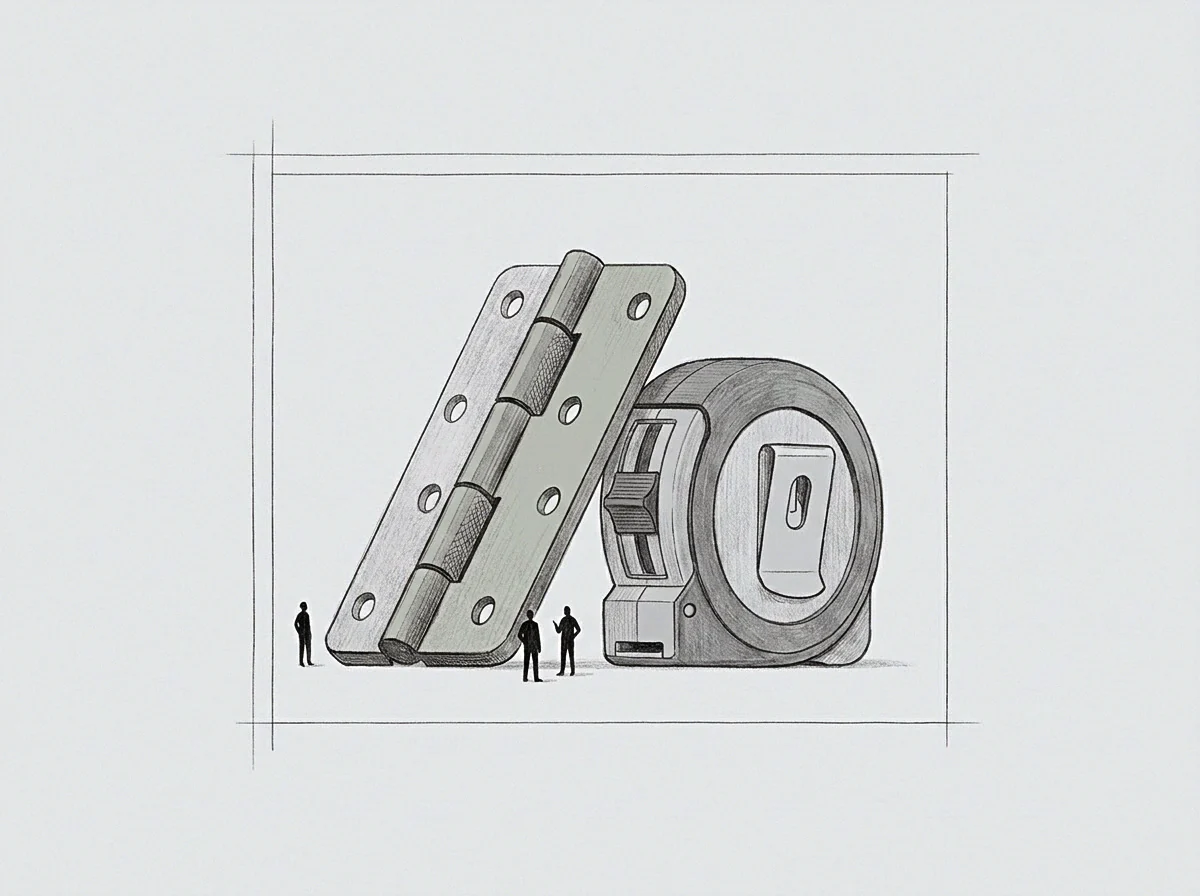
Absorption Beyond Design Tolerances
An executive role carries no inherent mechanical governor. Without an explicit external boundary, the organizational structure transfers operational friction directly onto the person sitting in the seat. This dynamic emerges from basic control theory applied to institutional design.
Systemic inputs expand to fill available bandwidth unless bounded by fixed constraints. Load transfers to structure.
When an executive relies on internal reserve capacity to regulate incoming operational load, the regulating body experiences compounding physical stress. The field of neurobiology documents this accumulation as allostatic load, where repeated adaptation to unpredictable environmental demands wears down physiological setpoints. The individual mistakes personal endurance for leadership performance, while the organization adapts to an unsustainable baseline of executive throughput.
- Elastic absorption occurs when an executive dampens organizational friction by personally working late hours without altering system expectations.
- Permeable response cadence allows incoming communications to dictate attention schedules, converting deep strategic focus into fragmented reactive execution.
- Covert buffering conceals institutional bottlenecks behind individual sacrifice, preventing necessary operational corrections across surrounding teams.

The Mechanics of Structural Load Transfer
Transferring operational pressure away from human tissue demands a limit stated as an object rather than a feeling. A personal declaration of stress invites negotiation, sympathy, or temporary accommodation. A stated structural condition alters the functional rules of the arrangement without requiring emotional validation from either counterparty.
Consider an operational agreement between a founder and a chief operating officer. Assuming both actors built the firm for three years without formal operational boundaries, the founder regularly sends low-priority execution queries across evening hours. If the officer attempts to resolve this issue by stating that late messages cause exhaustion, the founder reads the statement as a temporary mood fluctuation.
The push continues during the next operational sprint. If the officer instead states a rigid rule that communications received after seven o’clock face evaluation at eight o’clock the following morning, the constraint acts as a physical wall. The system meets something other than the person.
A system without stated limits treats human endurance as an infinite buffer.
A boundary stated as a structural property forces the surrounding organization to store its own operational friction. When late queries no longer receive real-time answers, team leaders organize their questions before the afternoon deadline. The operational weight returns to its source point, compelling surrounding nodes to build internal problem-solving protocols rather than relying on executive intervention.
Failing to establish this structural separation causes the executive setpoint to collapse under compounding operational load, forcing the entire governance layer into permanent crisis management.

Channel
Information channels function as priority indicators long before explicit policies exist. A dedicated message feed that pings continuously communicates unrestricted access, teaching counterparties that executive attention carries zero acquisition cost. The frequency and timing of incoming signals map the true operational topology of the firm.

Availability Derived Through Operational Silence
Availability is never successfully managed through broadcast announcements or empty administrative memos. The surrounding organization ignores written policies about work-life balance when real-time behavior contradicts those rules. Surrounding personnel observe response latencies, emergency escalation routes, and the specific hours during which non-urgent decisions receive attention.
Silence operates as precise operational data. When a non-critical request sits in a channel without acknowledgment for eighteen hours, the sender derives the priority baseline without receiving a reprimand. The absence of a ping communicates position far more accurately than a polite policy reminder.
Silence isolates the impulse.
When response windows expand systematically under ceiling load, counterparties recalibrate their submission rate to match the observed delay.
The systematic expansion of response latencies forces surrounding operators to filter their own inputs. An executive who responds to routine operational queries within two minutes creates a low-friction channel that encourages low-value inquiries. By deliberately introducing structural latency into non-urgent channels, the executive creates a cost for non-essential interruptions.
Surrounding personnel begin resolving routine issues independently when the cost of waiting exceeds the effort of local decision-making.
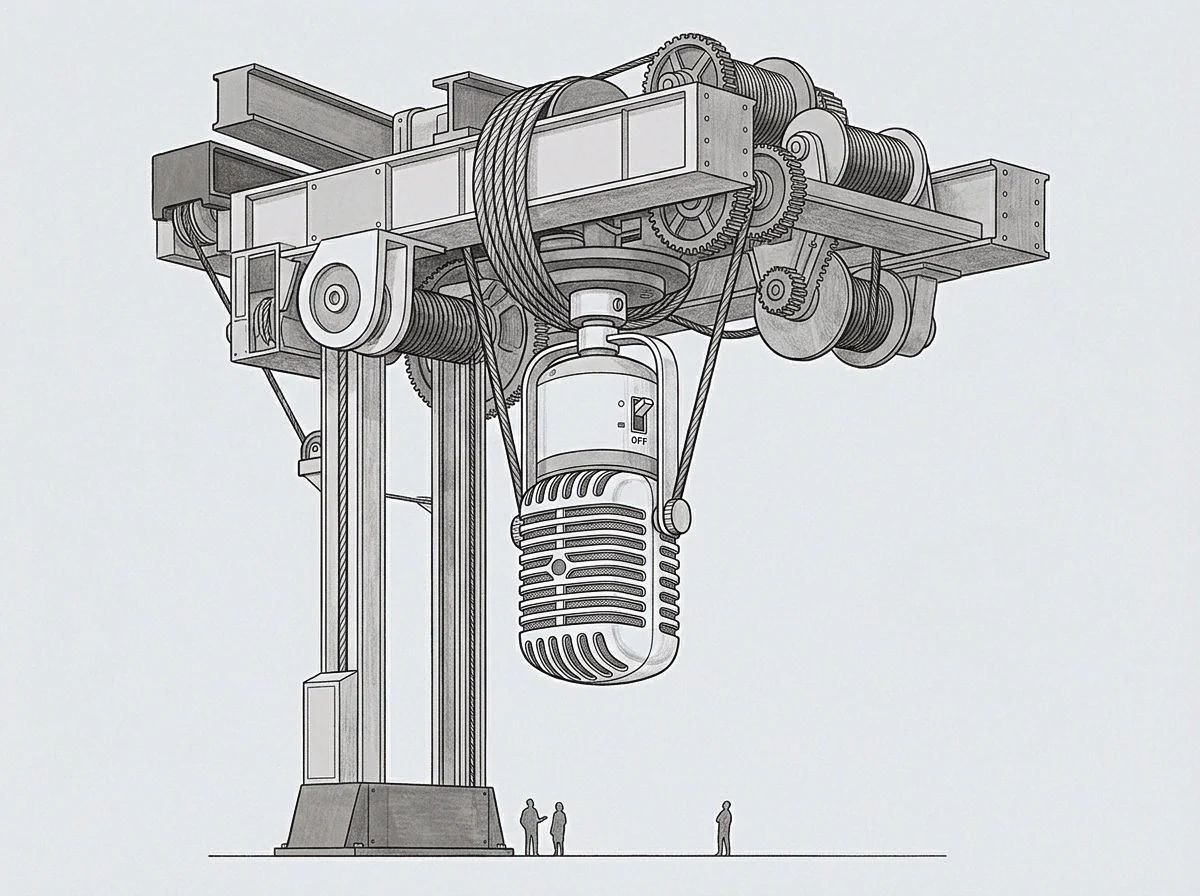
Is Continuous Access a Signal of Priority?
High-frequency communication channels frequently mask a complete lack of strategic alignment. When an organization relies on real-time pinging to maintain execution alignment, the underlying operational protocols are broken. Real priority manifests through systematic deliberate delay rather than instant accessibility.
Consider an executive team operating across three distinct communication feeds: an emergency voice circuit, an asynchronous project board, and a informal messaging chat. If the informal chat functions as an open stream of mixed strategic and operational queries, executive bandwidth fragments across competing contexts. The ping stops.
The operator on the other side of an unmanaged channel quickly learns to rely on immediate executive feedback rather than developing localized judgment, stating flatly that work cannot proceed until the executive approves the draft.
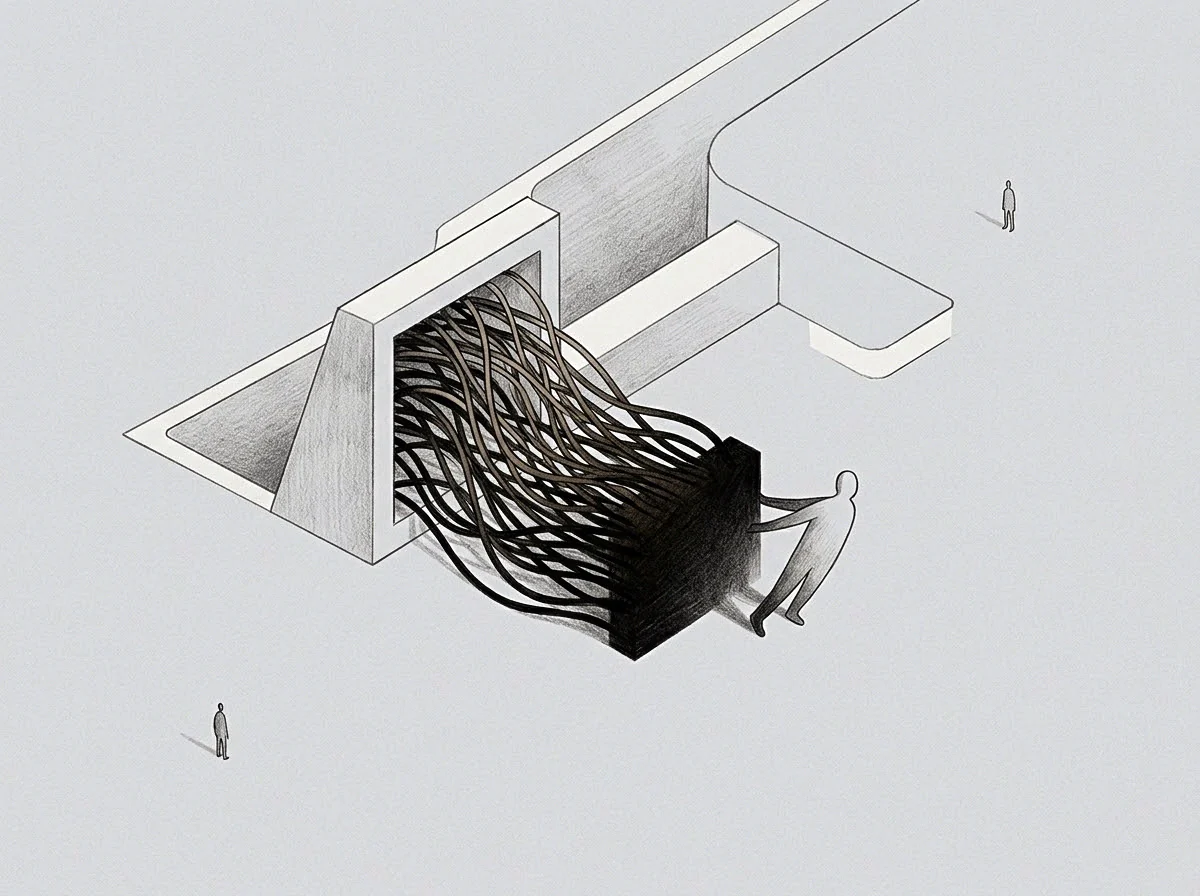
Drain
Cognitive energy follows physiological capacity limits that no degree of professional discipline can alter. When executive capacity reaches its physiological ceiling, executive function experiences systemic performance degradation. Distinguishing between biological state dynamics and subjective emotional mood forms the foundation of sustainable operational governance.

State Against Mood in Executive Function
Mood reflects temporary subjective internal states that carry minimal structural information for organizational design. State represents the underlying transfer function that determines how human hardware converts inputs into decisions under variable physical load. State governs capacity.
When an executive attempts to execute complex capital allocation decisions under severe physiological strain, the decision quality drops predictably. Research in occupational health establishes that prolonged exposure to high cognitive load impairs prefrontal cortex function, reducing risk assessment accuracy and emotional regulation capabilities. Attempting to compensate for state depletion through increased effort accelerates cognitive exhaustion.
- The executive monitors biological readiness variables including continuous sleep debt, cognitive task switching frequency, and uninterrupted focus duration.
- The executive identifies high-complexity strategic tasks that demand pristine cognitive setpoints and isolates them from routine administrative execution.
- The executive enforces non-negotiable cognitive rest windows when operational metrics indicate total system load has reached maximum design capacity.

Gated Execution Under Ceiling Allostatic Load
Certain organizational actions demand pristine biological states and cannot be successfully executed through sheer determination. These state-gated acts include major strategic shifts, co-founder conflict negotiations, capital structure alterations, and key executive hires. Executing a state-gated act during extreme state depletion produces severe strategic errors that cost substantial capital to remediate later.
Conversely, decision-gated acts require simple procedural execution and can be completed under moderate fatigue using pre-established operational protocols. Signing routine contracts, reviewing standardized performance reports, and attending structured status meetings fit within decision-gated parameters. The seat holds.
A state-gated act remains inactive whenever total system load exceeds the physiological operating setpoint.
Take an executive managing a major corporate restructuring while simultaneously navigating a high-stakes investment round. Assume the executive has operated at maximum operational bandwidth for six consecutive weeks. A critical dispute arises between two core department heads regarding resource allocation.
A state-gated act like mediating this structural dispute requires high cognitive flexibility and emotional baseline control. If the executive forces the mediation while running severe sleep debt, the outcome often yields a compromised, reactive decision that satisfies neither party and breaks organizational trust.
What physiological indicators must an organizational structure continuously monitor before permitting an executive to trigger a high-impact, state-gated strategic shift?

Clause
Legal and structural agreements act as immutable shock absorbers between executive energy and organizational demand. Stating a personal limitation invites surrounding parties to assess whether the limit can be pushed or negotiated away. Stating an explicit term changes the contract under which the operational seat functions.

Contractual Anchors as External Shock Absorbers
Terms replace negotiation. When an executive anchors operational limits inside formal board agreements, employment contracts, or clear delegation protocols, the limit ceases to look like a personal preference. It becomes an impersonal structural reality of the organization.
A stated limit works because it removes the person from the daily enforcement loop. The executive does not defend their time through personal argument; the established operational rule carries the weight. The contract takes the weight.
| Dimension | Boundary Stated as Personal State | Boundary Stated as Explicit Term |
|---|---|---|
| Systemic Load Absorption | Absorbed directly by human tissue, increasing allostatic burden | Transferred to operational processes and surrounding teams |
| Response Latency Expectations | Unpredictable, driven by personal fatigue and guilt cycles | Defined by clear asynchronous communication protocols |
| Counterparty Perception | Interpreted as temporary mood, friction, or lack of commitment | Recognized as a fixed operational constraint of the role |
| State Preservation | Continuously degraded under high environmental pressure | Protected by mechanical stopping rules and automated buffers |

Comparative Mechanics of Boundary Enforcement
Comparing these two operational postures demonstrates why personal appeals consistently fail under sustained growth pressures. A personal appeal requires continuous emotional energy to maintain, forcing the executive to defend their decision repeatedly against ambitious co-founders, demanding investors, and urgent client requests.
An explicit term relies on clear pre-committed rules. For example, a board-approved policy stating that executive strategic deep-work blocks take place every Tuesday and Thursday morning without meeting interruptions removes daily friction. The organization adjusts its scheduling algorithms around the rule rather than attempting to negotiate with the executive each week.
Capacity drops under load.
The limit is a wall.
When the governance agreement includes a mandatory ninety-day strategic break clause triggered upon reaching specific operational milestones, the board cannot reframe the rest period as a sudden loss of operational commitment.

Stop
Holding a structural position requires zero emotional escalation. When an executive establishes a clear operational limit, surrounding counterparties often test the boundary to determine whether it represents a real wall or a flexible posture. The stability of the limit depends entirely on the executive’s capacity to remain quiet while the system adjusts.
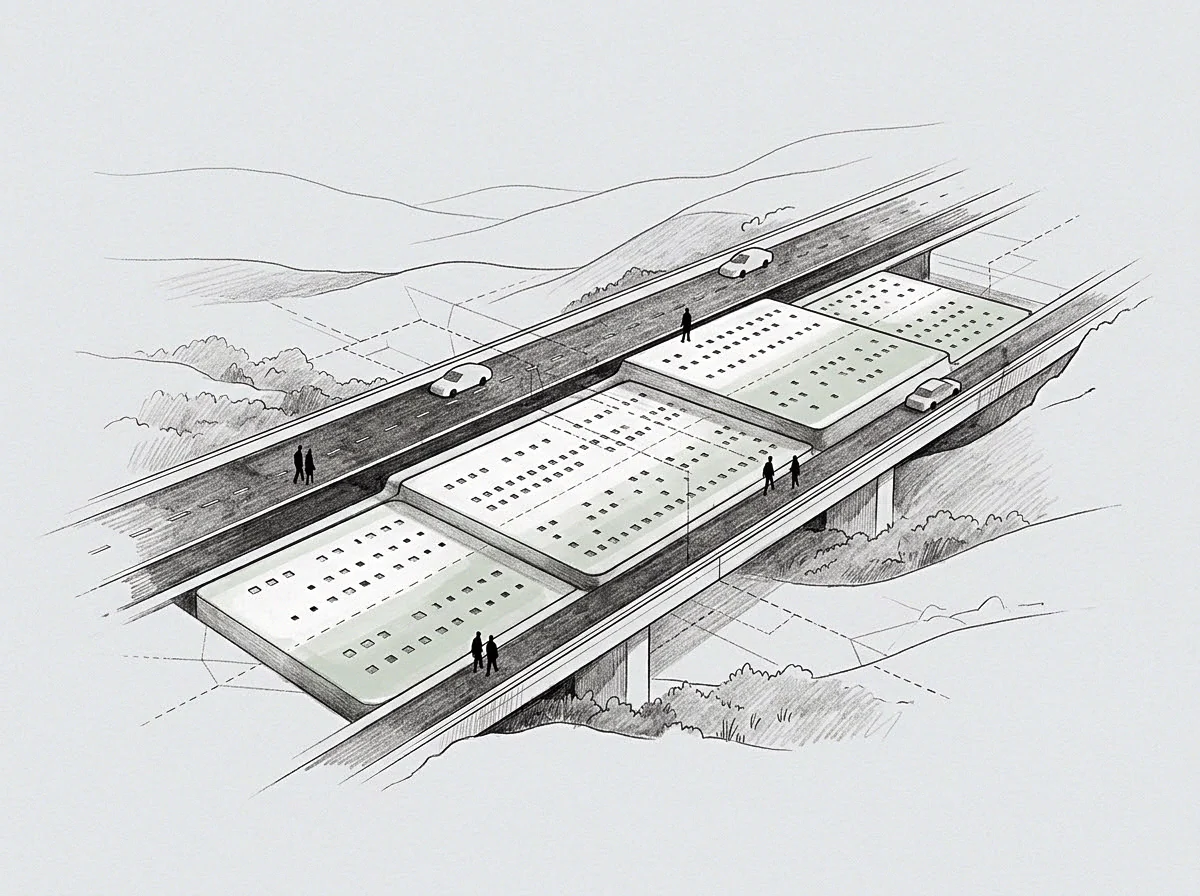
Position Holding Beyond Relational Rupture
Defending a limit with length explanations or emotional justifications signals to the organization that the boundary remains open for debate. An executive who provides extensive reasons for why they cannot attend a late-night call invites the team to solve the stated problems, effectively reopening the negotiation. Priority manifests through delay.
Stating the position once and allowing the surrounding environment to experience the resulting friction forces structural adaptation. The temporary discomfort felt by team members forced to hold their own decisions overnight builds institutional maturity. The position remains flat.
Holding a position flatly without explanatory defense prevents the counterparty from negotiating the underlying setpoint.

The Long-Term Preservation of Setpoint Mechanics
Long-term organizational stability requires leaders who preserve their biological setpoints across years of execution. An executive who burns out after eighteen months of unconstrained availability delivers less enterprise value than one who holds rigid operational boundaries across a decade. Preserving executive capacity is an absolute fiduciary duty to the firm.
A firm built around clear operational limits develops natural resilience, distributed leadership judgment, and predictable communication cadence. The structural mechanics of stated limits convert fragile human endurance into enduring enterprise infrastructure.
A clear limit held flatly without defense transfers operational load to structural mechanisms every single time.