
Transfer Of Allostatic Load In Co-Founded Systems Meeting Persistent Unstated Operational Demands
Unstated operational demands shift physiological stress regulation onto the more responsive partner, accelerating systemic wear until explicit terms define structural capacity.

Desk
Four primary communication streams remain open past midnight during an unbudgeted platform disruption. One co-founder handles client communications, vendor escalations, and financial tracking without stating an operational boundary. The second co-founder interprets the quiet resolution of these tasks as evidence of available internal capacity.
Operational demands arrive continuously, unanchored by explicit terms or defined working windows. The system relies on the biological stress response of one individual to cushion structural volatility.
When co-founded systems operate under persistent unstated demands, allostatic load transfers from the system onto the partner who routinely absorbs operational friction. Allostatic load refers to the cumulative physiological wear and tear on neuroendocrine, cardiovascular, and metabolic systems resulting from chronic stress exposure. In early stage organizations, unstated operational requirements act as open vectors for load transfer.
The partner who regulates their own emotional state to maintain organizational baseline stability becomes an unpriced buffer for the entire entity.
Proximity to a reliable partner alters regulatory expenditure. Social baseline theory establishes that human neural architecture assumes access to social resources as a default state, conserving individual metabolic and regulatory energy when a trusted co-actor is present. In co-founded ventures, this baseline mechanism functions cleanly only when operational commitments carry explicit definitions.
When operational roles lack clear terms, co-regulation degrades into asymmetrical absorption. One co-founder absorbs systemic variance while the other perceives the system as functioning within sustainable parameters.
The system pushes against the regulator until it meets a physical constraint. A founder who manages operational friction without stating terms functions as an internal regulator, drawing upon personal physiological reserves to satisfy organizational requirements. This arrangement conceals operational deficits from the founding team.
The absent boundary invites additional demand, establishing a continuous cycle of unstated load transfer. Pressure builds quietly.
The operational issues were managed smoothly, so the allocation of responsibility seemed optimal for both of us.
Threshold
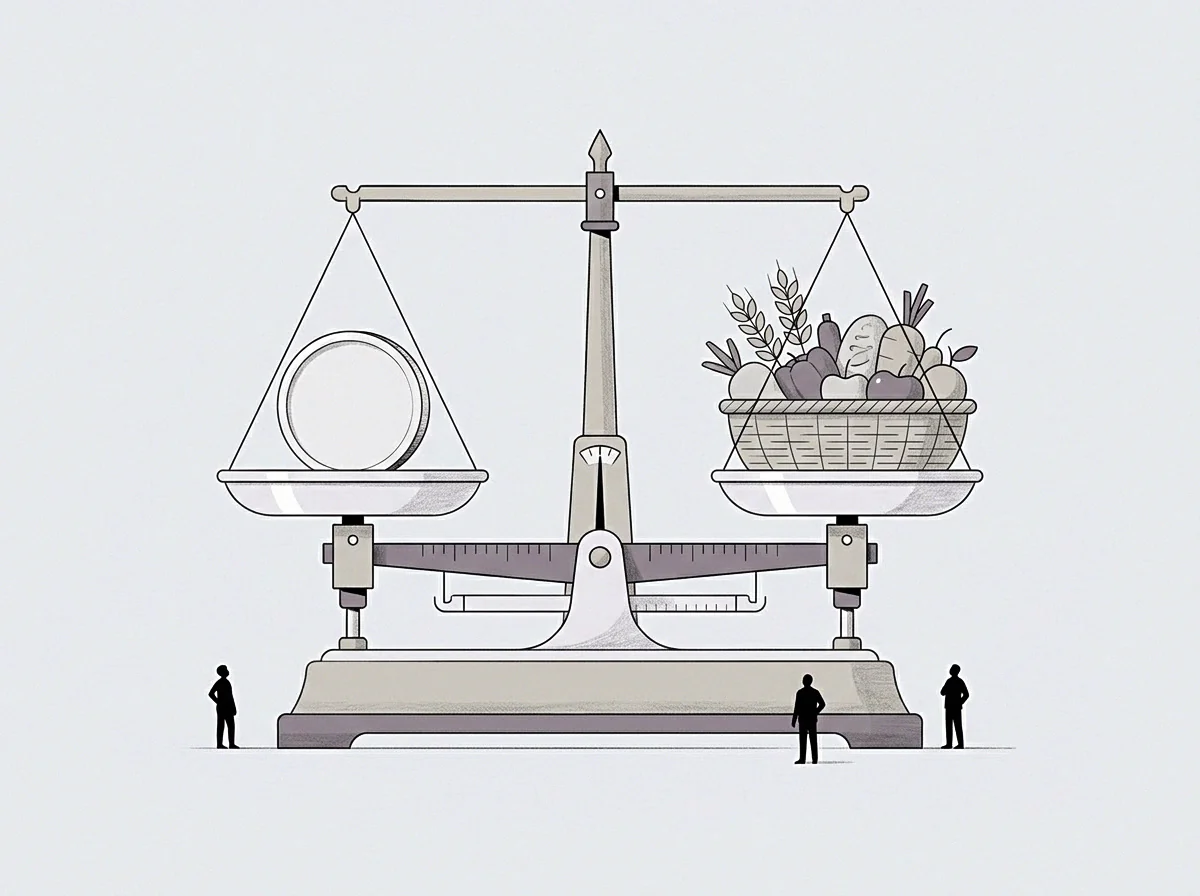
Biological control loops maintain internal stability by adjusting neuroendocrine responses to external operational pressures. Homeostasis refers to the maintenance of static physiological setpoints, whereas allostatic regulation involves adapting internal parameters to meet changing environmental demands. When an operational demand such as round-the-clock client availability or continuous technical escalation remains unstated, the co-founded system operates without a formal control loop.
The system treats the available partner as an elastic physiological buffer rather than a constrained operational node.
Social Baseline Theory, established through neuroimaging of threat response under social proximity, demonstrates that the presence of an accustomed partner reduces neural expenditure during acute stress. The finding rests on fMRI trials observing ventral anterior cingulate cortex activity under acute threat conditions in paired subjects. Proving this model wrong would require longitudinal studies showing that co-regulation in high-stakes operational environments increases long-term neuroendocrine baseline expenditure rather than dampening immediate reactive cortisol spikes.
In co-founded systems lacking stated operational terms, the physiological economy described by social baseline theory breaks down. The presence of a partner who does not absorb operational load fails to reduce the biological expenditure of the partner who does.
A stated capacity limit forces the surrounding system to absorb operational variance directly.
Unstated operational requirements obscure the true cost of organizational output. When an operational node absorbs incoming volatility without raising an explicit error signal, the system miscalculates its baseline efficiency. The true cost shifts from organizational infrastructure to individual biological systems.
Inputs arrive continuously. Over extended operational cycles, elevated allostatic load alters cardiovascular tone, disrupts sleep architecture, and degrades executive functioning.
| Regulation Mode | System Setpoint | Allostatic Cost Distribution | Structural Failure Point |
|---|---|---|---|
| Explicit Term Regulation | Defined operational hours and documented escalation latencies | Distributed across systemic redundancies and automated vectors | Contractual renegotiation or explicit operational pause |
| Unstated Buffer Absorption | Undefined availability driven by real-time incoming demand | Concentrated on the primary absorbing co-founder | Biological exhaustion or sudden relational rupture |
The ceiling remains. Operating without explicit capacity terms creates an unstated covert contract between co-founders. One partner assumes operational stability is a shared state, while the other bears the metabolic cost of maintaining that stability.
Load stays behind. When operational volatility increases, the absorbing partner exhausts personal physiological reserves to maintain outward performance, deferring necessary structural adjustments until biological limits enforce them.
Unstated operational demands continuously extract physiological reserves until the absorbed load forces a sudden, non-negotiable failure of physical capacity.

Vector
Operational systems direct incoming traffic along the path of least resistance. In a co-founded entity, communication channels and task allocations settle into pathways defined by historical responsiveness rather than formal agreement. A channel that pings repeatedly without encountering resistance becomes the default channel for operational urgency.
Silence carries signal. When a co-founder responds to late-night operational demands without establishing boundaries, the system registers that channel as open, setting a high-frequency baseline for future interactions.

How Does Unstated Capacity Shift System Setpoints?
When an operator absorbs incoming tasks without establishing explicit operational limits, surrounding team members adjust their daily demand patterns. The system optimizes for short-term task completion while ignoring long-term physiological depreciation. Availability decreases rapidly.
The absence of a stated limit leads the surrounding system to perceive individual energy as infinite, treating personal capacity as an ongoing operational subsidy.
Research in occupational allostatic load indexing, measured through salivary cortisol diurnal slopes and alpha-amylase markers across executive cohorts, establishes that unbuffered operational ambiguity correlates with flattened cortisol awakening responses. The conclusion rests on multi-day biomarker sampling across high-autonomy roles. Demonstrating the inverse would require clinical data proving that chronic unstated operational scope preserves circadian endocrine variability in high-responsibility environments.
The flattened diurnal curve signals a compromised stress response system, reducing the founder’s capacity to adapt to future acute demands.
An unstated operational limit acts as a continuous siphon on personal baseline capacity.
Take two founders who built a financial technology platform for three years without an explicit operational agreement. Assume Partner A holds sixty percent of client escalation volume while Partner B manages product design, and assume neither partner has specified an availability ceiling. When platform incidents increase, Partner A absorbs the operational surges during evening hours to protect product development focus.
Partner B observes stable deployment metrics and assumes the operational cadence is sustainable. Partner A experiences rising biological markers of exhaustion, but because no term was stated, Partner B reads the continued task execution as consent. The system continues to funnel operational demand through Partner A until the regulatory buffer collapses.
Unstated operational scope produces specific patterns of systemic degradation across founding partnerships.
- Covert operational absorption occurs when one partner manages systemic variance to maintain outward stability.
- Regulatory mismatch develops when one founder interprets silence as excess bandwidth while the other experiences chronic baseline exhaustion.
- Structural ping escalation manifests when the absence of explicit terms increases message frequency during off-hour windows.
An unstated limit functions as an open invitation for the system to expand until physical disruption sets the boundary.
Reserve
Human physiological performance depends on the distinction between transient emotional states and systemic operational capacity. Mood reflects short-term neurochemical output carrying zero structural information about system stability. State represents the underlying physiological transfer function that determines how an individual processes inputs and generates work output.
When allostatic load reaches critical thresholds, operational performance shifts from decision-gated acts to state-gated boundaries. A decision-gated act relies on conscious intent and volition; a state-gated act is governed by physiological headroom, where biological systems block performance regardless of executive intent.
The desk cannot fully defend the precise threshold where acute allostatic transfer converts into permanent institutional rift, as empirical tracking of co-founder breakups under physiological monitoring remains uncollected. Under this uncertainty, a prudent operator establishes clear operational terms at the first sign of chronic sleep disruption or neuroendocrine exhaustion rather than waiting for structural breakage. Establishing terms early preserves executive function and prevents chronic stress from dictating organizational strategy.
When physiological setpoints reach maximum capacity, decision-gated operational choices degrade into state-gated biological blocks.
A stated limit functions as a wall, a physical structure within the operational landscape. The load-transferring system tests the operator until it encounters a boundary that is independent of personal mood or temporary willpower. A term is the first object the system meets that is distinct from the biological tissue of the co-founder.
Terms set capacity. Without stated terms, the system continues to demand regulatory work from the individual until internal capacity is fully depleted. Reserve capacity drops.
Industrial manufacturing plants construct physical relief valves to prevent catastrophic pressure builds in closed steam circuits. In human organizations, the unstated operational demand converts the co-founder into that relief valve, relying on biological tissue to bleed off structural pressure that should have been managed by contract.
Establishing explicit operational limits requires a structured execution sequence that converts unstated assumptions into clear organizational parameters.
- The founder writes down the operational capacity boundary without using emotional justification.
- The founder communicates the term once, defining explicit response latencies for incoming requests.
- The founder enforces the term by allowing off-hour operational requests to sit unserviced past the stated window.
- The operational system redirects unhandled tasks to secondary channels or adjusts delivery timelines.
The state shifts. The wall holds. Systemic demands adapt to the presence of explicit limits once the initial push confirms the boundary will not yield to informal pressure.
A explicit ninety-day operational boundary clause reassigns client escalation coverage and freezes off-hour communication, converting absorbed allostatic strain into measurable structural throughput.

Span
Availability functions as a derivation calculated by external observers rather than a property announced by the individual. A co-founder does not establish availability by declaring open channels; the surrounding system derives availability from observed response patterns, stated terms, and enforced costs. Output drops sharply.
When a founder establishes a clear position backed by a defined operational cost, the counterparty calculates true availability based on those parameters. The system adjusts its ping frequency to align with the new operational reality.
The silence of a channel that has ceased to ping off-hours marks a shift in organizational priority. When operational demands meet a stated wall, the system searches for alternative resolution pathways, such as process automation, role redistribution, or reduced operational scope. Capacity resets slowly.
The friction experienced during this transition reflects the system adjusting to the removal of an unpriced biological buffer.
The channel that stops pinging reveals the exact boundary of derived availability.
The systemic transfer of allostatic load ends when operational terms replace personal co-regulation. The system pushes continuously until it encounters an immovable operational boundary. Establishing that boundary requires replacing unstated expectations with explicit contractual parameters, allowing co-founded ventures to operate within sustainable biological limits.
The term holds.
Whether co-founded systems can construct durable operational boundaries before biological stress markers enforce them remains an open question for institutional design.