
Hypothalamic Throttling Under Persistent High Operational Risk
Persistent high operational risk triggers hypothalamic throttling to suppress metabolic expenditure, distinct from clinical depression or executive failure.

Baseline
Endocrine systems respond to chronic operational uncertainty through a structured reduction of baseline physiological output rather than a sudden structural failure. When an executive seat carries continuous financial exposure, regulatory ambiguity, or existential operational liability for extended periods, the central nervous system shifts from acute stress response modes into a sustained protective suppression. Clinicians and team members routinely observe the outward manifestations of this state, including diminished affective expression, reduced verbal initiation, and flat emotional responses to catastrophic or triumphant news.
These observations frequently result in a diagnostic misclassification of clinical depression or psychological disengagement.
The biological mechanism governing this transition originates within the hypothalamic-pituitary-adrenal axis. During acute risk exposure, high hypothalamic output elevates systemic cortisol and epinephrine levels to mobilize metabolic resources for immediate problem resolution. When exposure to risk remains persistent and unbounded by definite resolution dates, continuous high hypothalamic drive threatens systemic tissue damage, metabolic exhaustion, and receptor down-regulation.
To prevent systemic collapse, the hypothalamus clamps its own signaling threshold. The physiological mechanism is adaptive.

Physiological Adaptation to Continuous Operational Threat
Systemic allostatic load measures the cumulative wear on biological tissue resulting from chronic neuroendocrine activation. In high-risk operational environments, allostatic load accumulates through unclosed operational threat vectors rather than workload volume alone. The human nervous system processes unquantified commercial risk, active litigation, unhedged capital commitments, and unresolved partner disputes as active threats to territorial and material security.
Under continuous exposure to these vectors, the brain reconfigures its baseline energetics.
Continuous exposure to unbounded operational threat forces the endocrine system to clamp baseline hypothalamic output to preserve structural core functions.
Down-regulation protects central systems. Rather than maintaining high sympathetic tone until biological reserves deplete entirely, hypothalamic throttling reduces baseline metabolic expenditure, dampens emotional reactivity, and restricts working memory processing depth. The operator remains functional for routine decisions, yet experiences a sharp drop in capacity for novel synthesis, empathetic coregulation, or spontaneous forward planning.
The capacity floor holds. The system preserves basic operational continuity by shedding high-energy regulatory functions.

Endocrine Shift Versus Pathological Collapse
Diagnostic confusion arises because the overt presentation of hypothalamic throttling shares descriptive surface features with major depressive episodes. Both states feature reduced drive, blunted affect, altered sleep architecture, and social withdrawal. The structural mechanisms, however, diverge completely.
Clinical depression involves a pervasive loss of hedonic capacity across all potential environments, accompanied by negative self-referential cognition and helplessness. Hypothalamic throttling represents a localized, context-dependent conservation strategy executed by a healthy endocrine apparatus operating under intolerable environmental parameters.
If the operational risk removes itself or receives a hard structural bound, hypothalamic output recalculates its baseline within days. Unbounded risk alters endocrine output. Where a depressed individual struggles to initiate action regardless of environmental safety, a throttled operator rapidly recovers exploratory drive once the underlying liability drops below a specific threat threshold.
Biological resources had not vanished; central control systems had placed them behind a metabolic gate to defend against continuous stressor exposure. When an operational risk profile remains open past six consecutive months, the neuroendocrine suppression baseline becomes the active regulatory floor until explicit terminal risk boundaries are established.
Slot
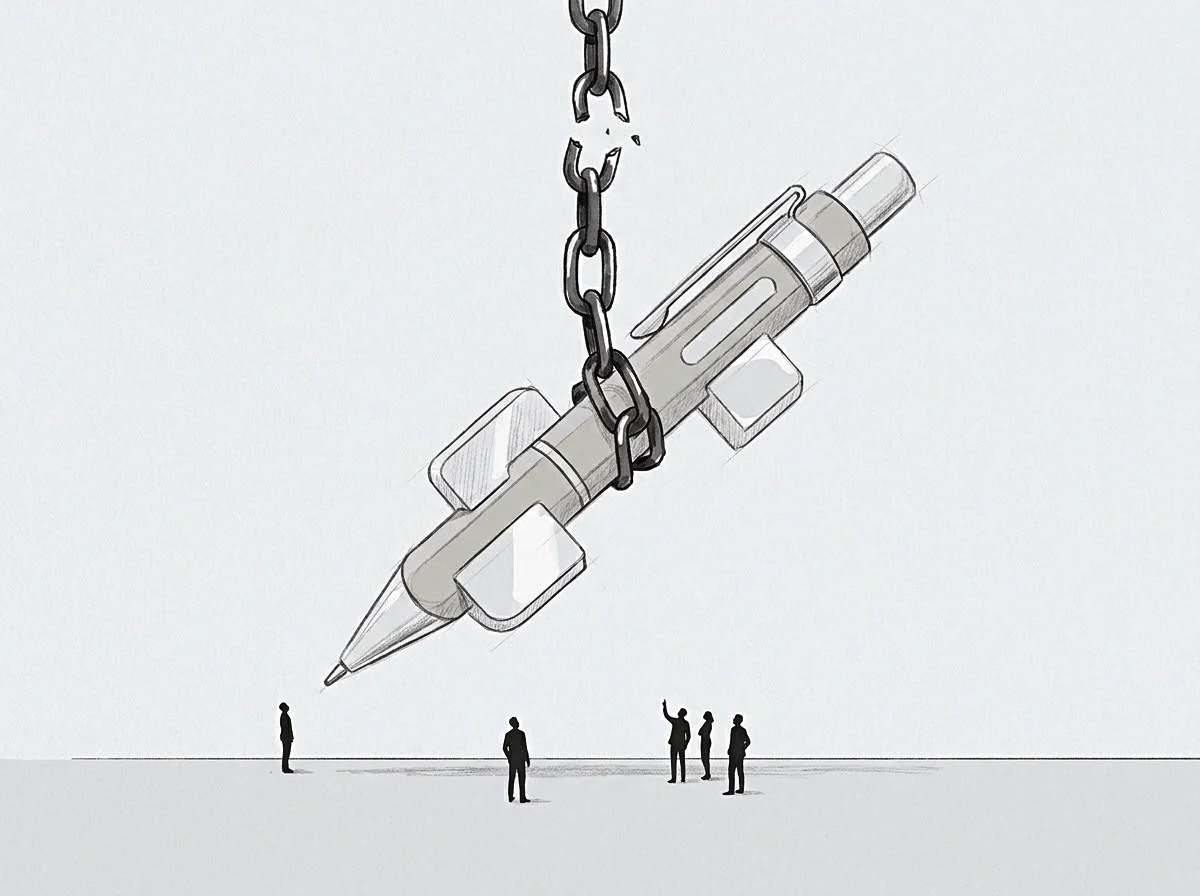
Executive cognitive architecture operates under strict working memory constraints. The human brain maintains a limited count of active working memory slots for complex, unautomated operational problems. When a decision line carries explicit terms, defined scopes, and hard calendar termination dates, its ongoing computational cost remains negligible.
The brain treats the issue as a closed file, storing parameters in external artifacts and retrieving them only at scheduled evaluation dates.
An open loop presents the exact opposite computational profile. When a commercial partnership lacks clear exit terms, or when a capital burn rate threatens insolvency on an unspecified timeline, the human mind cannot park the line. The central executive network maintains continuous active background monitoring of the unresolved variables.
Open loops consume memory slots. Each unclosed liability occupies a dedicated working memory slot, running continuous predictive simulations to guard against sudden operational surprise.

Concurrency Limits in Ungated Decision Loops
Vigilance requires biological energy. The human central nervous system maintains an effective concurrency ceiling of roughly three to four active, ungated operational loops before executive degradation becomes measurable. Beyond this limit, incoming information experiences processing latency, decision fatigue accelerates, and context-switching costs compound exponentially.
The operational profile of an over-capacity executive shows distinct structural signatures across daily decision workflows:
- Unbounded Liability Tracking consumes dedicated working memory capacity continuously, forcing basic operational communications into simplified binary choices to conserve computational energy.
- Deferred Strategic Synthesis occurs as the brain automatically rejects complex long-horizon planning tasks in favor of immediate, low-cognition administrative clearance.
- Affective Dampening During Negotiations develops when available emotional regulation capacity drops to zero, producing flat, unyielding counter-offer behaviors mistaken by opponents for calculated aggression.
- Compounded Switching Latency manifests when moving between unrelated operational threads requires minutes of cognitive recalibration, leaving the operator visibly absent during rapid organizational transitions.

Can Hypothalamic Throttling Reverse Under Continuous Risk Exposure?
Spontaneous biological recovery cannot take place while the underlying environmental threat vectors remain open and active. Neuroendocrine systems respond exclusively to changes in perceived environmental safety and structural load, completely ignoring verbal self-reassurance or psychological framing interventions. The operational baseline drops.
Attempting to force higher emotional output or cognitive velocity through sheer willpower during active hypothalamic throttling accelerates systemic exhaustion.
An unclosed operational liability maintains hypothalamic activation even during periods of complete external inactivity.
Reversal of the throttled state requires structural gating rather than emotional resting periods. Resting for a weekend while holding four unbounded commercial liabilities yields zero neuroendocrine recovery; the background hypothalamic vigilance systems remain fully active throughout the physical pause. True baseline recovery initiates only when active operational lines convert from open, unbounded threats into structurally gated threads carrying explicit scopes, capped liabilities, and hard calendar exit points.
An open thread left without a calendar terminal date burns executive capacity whether the work moves forward or sits still.

Desk
The physical workspace of an operator sitting at the center of a high-risk venture functions as a clearinghouse for organizational anxiety. Team members, investors, and external counterparties bring unresolved liabilities to the main office, seeking emotional co-regulation and structural reassurance. When an executive maintains full physiological headroom, the central seat absorbs these incoming nervous system signals, providing a stabilizing regulatory template that lowers operational panic across the wider organization.
Holding this regulatory position costs substantial biological energy. Social baseline theory establishes that human beings naturally pool regulatory efforts, relying on proximity to trusted, competent co-operators to minimize individual energy expenditure. When the individual occupying the primary operational seat enters hypothalamic throttling, their capacity to offer social baseline regulation to others collapses entirely.
The seat can no longer absorb external ambiguity.

The Operator Capacity Shift and Internal Working Models
When biological headroom reaches zero, the person in the seat adopts an energy conservation posture. Interpersonal interactions convert from broad, open-ended discussions into brief, transactional exchanges designed to clear the interaction as quickly as possible. The operator stops asking probing questions about peripheral projects, skips non-essential organizational rituals, and exhibits minimal non-verbal feedback during team presentations.
Organizational observers consistently misinterpret this physiological posture through the lens of their own internal working models. Subordinates often view the muted affect as personal dissatisfaction, managerial incompetence, or covert organizational restructuring. Investors frequently misread the absence of energetic enthusiasm as a loss of founder commitment or strategic drift.
The systemic load remains real. The operator is simply defending their remaining metabolic capacity against complete central executive exhaustion.

Borrowed Regulation and Social Baseline Dynamics
Organizations operating under persistent market threat frequently run on borrowed regulation. Team members maintain focus and emotional stability by anchoring to the projected calm and unshakeable certainty of the primary seat holder. This organizational arrangement functions efficiently until the central regulatory source throttles down.
A team operating under chronic risk consumes the regulatory energy of the central seat long before operational assets deplete.
Once the central seat stops supplying regulatory buffering, ambient anxiety within the organization spikes sharply. Secondary leaders begin generating redundant tracking systems, raising artificial alarms, or demanding frequent status updates to manage their unbuffered stress. These reactive behaviors generate a secondary cascade of incoming operational noise, directing further unstructured load straight back to the already throttled operator.
The leader stopped responding with enthusiasm to standard operational updates and began asking only for final resolution dates.

Readout
Evaluating human load states in high-exposure operational environments demands objective clinical and structural criteria rather than subjective mood reports. Individuals carrying extreme operational risk routinely report feeling entirely fine hours before cognitive execution collapses, as neuroendocrine adaptations actively blunt internal awareness of fatigue to keep the individual moving away from perceived threat. Objective measurement relies on observable systemic metrics, operational output signatures, and clear boundary behaviors.
Comparing these states across clear systemic criteria prevents inappropriate managerial and medical interventions. The diagnostic matrix below maps the distinct operational profiles of standard regulation, protective hypothalamic throttling, clinical burnout syndrome, and major depressive episodes.
| State Profile | Hypothalamic Tone | Cognitive Concurrency | Affective Baseline | Primary Recovery Vector |
|---|---|---|---|---|
| Baseline Regulation | Dynamic acute response with rapid post-stress return to baseline. | 4 active ungated loops plus multiple background lines. | Flexible, expressive, context-appropriate emotional resonance. | Standard sleep architecture and routine periodic rest. |
| Hypothalamic Throttling | Clamped basal output, flattened cortisol diurnal curve, elevated baseline tone. | 1 to 2 gated loops maximum; strict rejection of incoming open lines. | Flat, transactional, low-affect focus centered entirely on threat containment. | Explicit structural gating and removal of unbounded liabilities. |
| Clinical Burnout | Exhausted HPA responsiveness, blunted systemic stress signaling capacity. | Severe latency across routine decisions; extreme switching costs. | Cynical, detached, pervasive sense of operational inefficacy. | Protracted removal from operational environment with medical support. |
| Major Depression | Dysregulated central monoaminergic and neuroendocrine circuits. | Pervasive cognitive impairment independent of operational load. | Anhedonic, self-critical, pervasive hopelessness across all domains. | Targeted clinical, pharmacological, and psychological therapies. |

Diagnostic Criteria Across Systemic Load States
Correct identification of the operational load state dictates the appropriate recovery strategy. When an organization misidentifies hypothalamic throttling as a motivational deficit, standard management advice suggests personal development coaching, team alignment retreats, or renewed goal setting. These interventions impose new cognitive loops without closing existing operational liabilities, worsening hypothalamic suppression.
Treating structural operational wear with emotional processing increases the cognitive load of a throttled operator.
Applying therapeutic interventions designed for clinical depression to an operator suffering from pure hypothalamic throttling produces minimal biological change. High-intensity psychological processing adds processing burden to an executive system already operating at ceiling. The human nervous system does not require cognitive reframing of a real, unbounded operational threat; it requires the structural elimination or explicit capping of the risk itself.
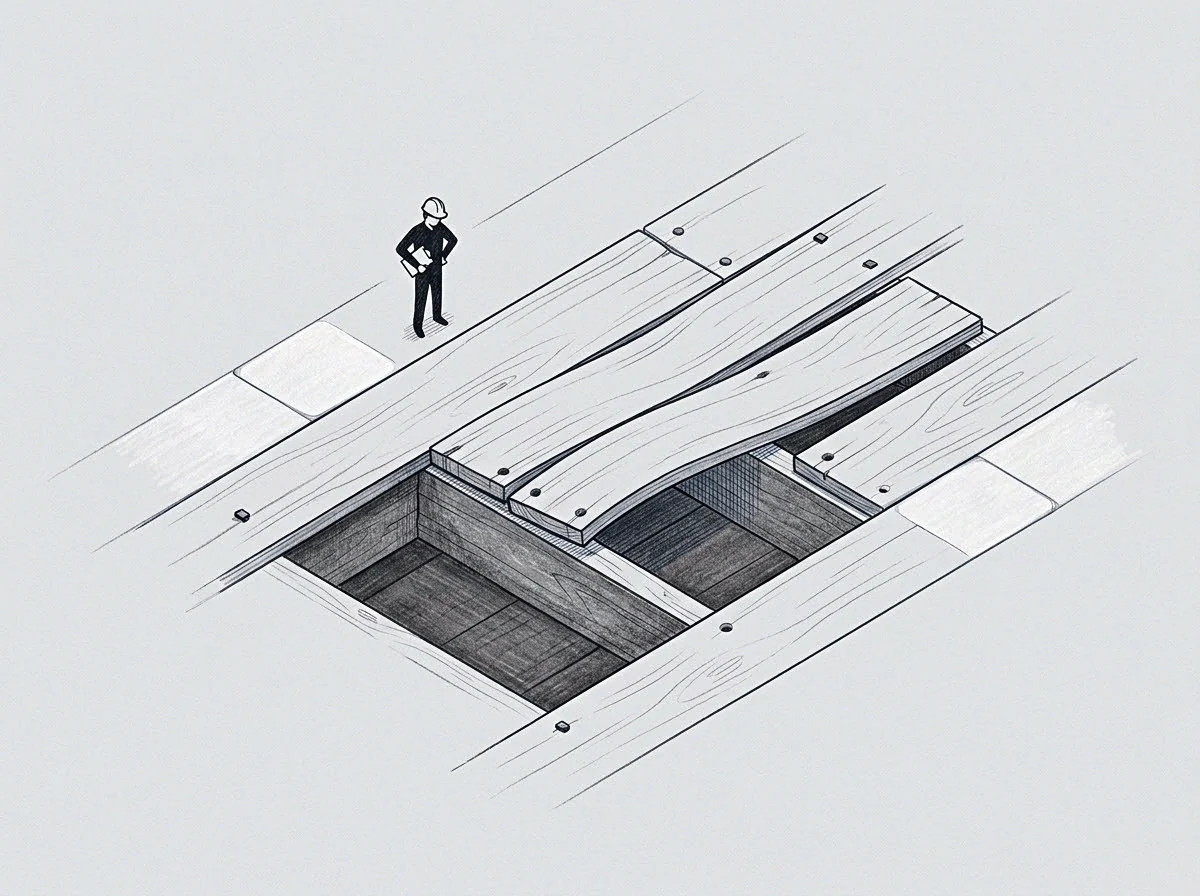
Misinterpreting protective endocrine down-regulation as emotional disengagement causes organizations to increase supervisory pressure on operators precisely when structural capacity has reached absolute ceiling.
Headroom
Reclaiming executive capacity demands hard structural modifications to how an organization handles operational risk. Headroom cannot be wished into existence through psychological reframing or short-term physical retreats. The human nervous system recalibrates its baseline vigilance only when environmental parameters physically change.
The move involves systematically converting ungated, open-ended liabilities into bounded operational threads carrying explicit terms, fixed dates, and clear financial floors.
Gating an operational thread requires defining three mandatory parameters before the work enters the operator’s active mental space. If any parameter remains missing, the brain treats the line as an open threat vector, maintaining background hypothalamic activation.
Structural Gating and Explicit Risk Terminations
Structural limits preserve executive function. Converting unbounded liabilities into gated threads follows a precise operational order:
- Define the absolute financial loss threshold for the project, establishing an automatic cash stop-loss that requires zero ongoing cognitive monitoring.
- Fix an unalterable calendar termination date, stating plainly that the operational line closes on that exact date regardless of project status.
- Establish explicit exit terms with counter-parties in writing, eliminating ambiguous litigation or equity renegotiation vectors.
- Transfer routine tracking responsibilities entirely to external verification systems, removing the operator from the daily status update loop.

Reclaiming Executive Capacity Through Operational Bounds
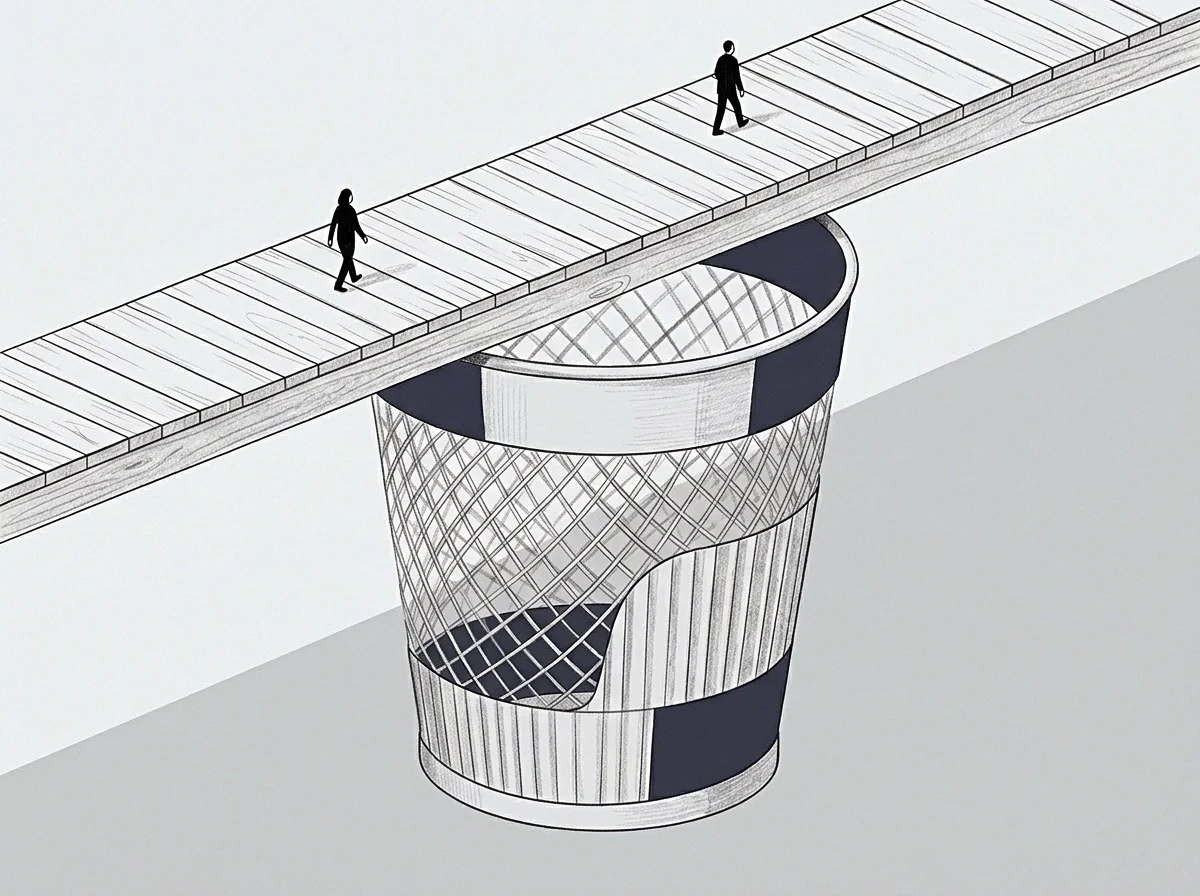
A parked line costs nothing. When an operational problem sits behind a clear financial stop-loss and a hard calendar resolution date, the central executive network safely unloads the line from active working memory. The slot opens immediately.
The hypothalamic-pituitary-adrenal axis detects the reduction in ambient threat monitoring demands, gradually releasing its protective clamping mechanism over the following weeks.
Restoring regulatory headroom transforms how an executive operates within their seat. As baseline neuroendocrine clamping lifts, cognitive concurrency naturally expands back toward baseline levels. The operator regains access to intuitive strategic synthesis, fluid interpersonal coregulation, and sustained creative problem-solving.
This physiological restoration occurs without changing the operator’s underlying character or work ethic; it simply reflects the biological reality of a central processing apparatus whose structural operational risk profile has finally been brought back within natural human baseline limits.