
Long-Term Neurobiological Adaptation Limits in Executives Facing Sustained Operational Demand
Sustained executive strain downregulates central glucocorticoid receptors and restricts prefrontal working memory capacity to conserve metabolic resources.

Gland
Continuous executive performance under acute operational pressure relies on precise neuroendocrine adjustments. Cortisol secretion flattens during chronic operational strain. Prolonged systemic mobilization forces the hypothalamus to release corticotropin-releasing hormone continuously.
Adrenocorticotropic hormone drives the adrenal cortex to produce glucocorticoids at high baseline volumes. Continuous exposure to high cortisol alters central signaling systems. Target tissue sensitivity drops when circulating hormone concentrations remain elevated across consecutive fiscal quarters.
Receptors downregulate rapidly. Receptors in the hippocampus and prefrontal cortex reduce their density to prevent toxic intracellular calcium accumulation. The baseline shifts.
Metabolic costs accumulate. Downregulation protects cellular integrity while lowering receptor responsiveness across regulatory circuits. The human body adjusts to relentless demand by altering the neurochemical environment, converting an acute adaptation into a permanent state of reduced sensitivity.
Adrenal sensitivity declines when circulating glucocorticoid levels remain elevated across consecutive quarter cycles.
This biochemical shift fundamentally alters executive performance parameters. Lower glucocorticoid receptor density disrupts the negative feedback loop of the hypothalamic-pituitary-adrenal axis. The system loses its ability to shut down stress signaling promptly after acute operational triggers conclude.
Systemic inflammation rises as glucocorticoid resistance spreads to peripheral immune cells. High circulating inflammatory cytokines breach the blood-brain barrier, altering microglial function and impairing synaptic plasticity within prefrontal circuits.

Neurochemical Shifts Under Sustained Strain
Brain-derived neurotrophic factor levels decrease under uninterrupted glucocorticoid pressure. Decreased trophic support weakens synaptic connections inside circuits governing executive control, emotional stability, and impulse regulation. Systemic resource allocation shifts priority toward immediate threat response over long-term neural repair.
Noradrenergic signaling from the locus coeruleus remains hyperactive, maintaining high vigilance while eroding spatial processing and working memory performance.
The metabolic cost of sustained hypervigilance consumes central glucose stores rapidly. Astrocytes struggle to clear excess synaptic glutamate under continuous metabolic pressure. Local excitotoxicity triggers mild, ongoing dendritic degradation in vulnerable brain regions.
Executives operating within this biological reality experience a narrowing of perspective, misinterpreting structural operational demands as direct personal threats due to altered amygdaloid processing.
Misidentifying this biochemical adaptation as a simple failure of personal motivation leads to inappropriate intervention strategies. Increasing workload or applying psychological pressure against a downregulated glucocorticoid system accelerates cellular exhaustion and triggers functional systemic collapse.

Shelf
The human brain processes active operational tasks through a limited working memory infrastructure. Prefrontal dendrites retract. Structural remodeling within the dorsolateral prefrontal cortex limits the volume of unstructured input an individual can process simultaneously.
As operational demand increases, neural architecture reorganizes to conserve metabolic energy. Dendritic spines in regions handling abstract reasoning shrink, while pathways inside the basolateral amygdala expand. Capacity limits hold firm.
Working memory functions like a constrained physical surface that holds active operations. Each active task, unparsed message, or unresolved operational variable occupies a distinct slot on this processing surface. When an executive manages multiple unstructured inputs, total processing capacity drops due to continuous context switching.
The metabolic expenditure of moving between incomplete operational streams depletes local glycogen stores in prefrontal astrocytes within hours.
- Prefrontal dendritic retraction reduces the structural capacity of dorsolateral neural networks under chronic glucocorticoid elevation.
- Attentional switching penalties consume micro-molar amounts of cerebral glucose with every unparsed operational transition.
- Working memory slot exhaustion occurs when unstructured operational variables outnumber available active processing sites.
- Amygdalar hypertrophic growth accelerates reactive impulse pathways while dampening long-term strategic analysis.

Structural Ceilings in High-Volume Contexts
Operational complexity imposes hard limits on active executive capacity. An unstructured loop, such as an ambiguous performance metric or an unstated exit term, remains active within working memory, drawing baseline metabolic current continuous attention cycles demand. Structuring an input by defining specific dates, metrics, and parameters removes it from active working memory, placing it into secondary storage circuits.
An open loop left without resolution parameters consumes prefrontal capacity continuously.
Holding four unparameterized operational lines while attempting to resolve a structural strategy issue forces the brain into severe attentional fragmentation. Processing efficiency drops exponentially rather than linearly as open loops accumulate. Neural resource allocation under these parameters favours brief, low-complexity decisions over deep structural synthesis.

Quantifying Working Memory Constraints
The prefrontal architecture maintains a rigid ceiling on concurrent task management. An executive who exceeds this baseline threshold shifts from strategic optimization to survival-driven prioritization. The transition occurs at the biochemical level, marked by an absolute drop in central processing speed and a sharp rise in error rates during multi-variable evaluations.
Operational parameters that ignore working memory slot limits guarantee systemic friction and degraded decision quality.

Valve
Systemic output drops. The engine idling changes. Throttling represents an adaptive physiological down-regulation designed to preserve biological viability, whereas clinical depression reflects a structural failure of regulatory mechanics.
Misinterpreting executive throttling as clinical depression results in misdirected interventions that fail to fix the underlying structural strain.
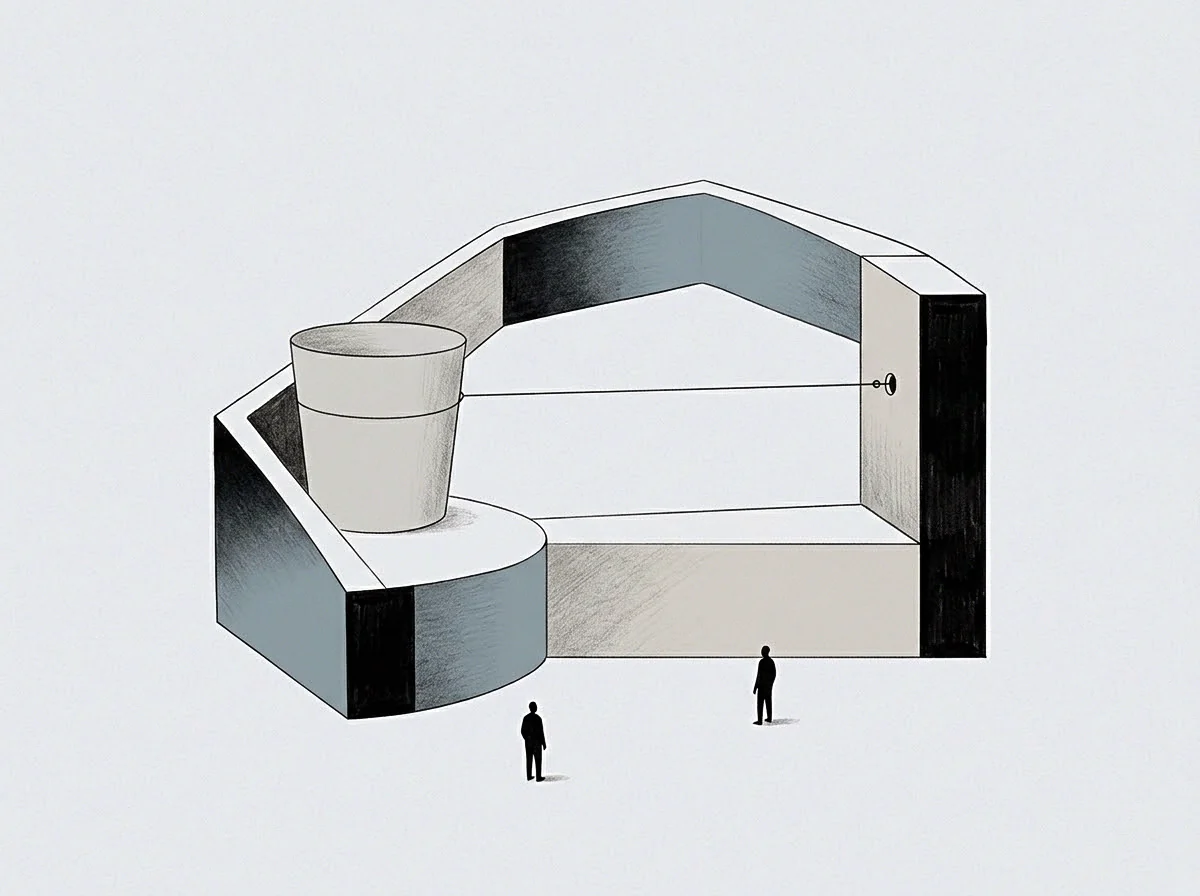
Which biological markers separate executive throttling from clinical depression?
Distinct physiological and operational parameters separate systemic throttling from clinical major depressive states. A throttled system retains core functional mechanics but restricts operational throughput to protect tissue integrity. A clinically depressed system exhibits widespread baseline dysfunction independent of immediate load reduction.
| Evaluation Vector | Systemic Throttling | Clinical Depression |
|---|---|---|
| HPA Axis Reactivity | Preserved acute response with flattened diurnal rhythm | Blunted acute response with uncoupled diurnal control |
| Vagal Tone Modulation | Suppressed under load; recovers during structural rest | Persistently low regardless of operational environment |
| Motor Processing Speed | Motor speed remains intact during core execution | Generalized psychomotor slowing across all tasks |
| Response to Loop Closure | Immediate return of headroom upon task parameterization | Minimal capacity change following task reduction |
A throttled executive retains the structural capacity for high-level analytical performance, but the system restricts access to that capacity when incoming load threatens total tissue collapse. Motor speed remains intact. When operational loops receive clear parameters, a throttled system rapidly reallocates neural bandwidth toward remaining priorities.
Clinical depression, conversely, presents with persistent psychomotor retarding and pervasive anhedonia that persists even after removing all external operational loads.

Physiological Throttling as Protective Adaptation
Vagal nerve activity reflects the real-time balance between sympathetic drive and parasympathetic regulation. Sustained operational demand suppresses vagal tone, shifting the cardiac baseline toward continuous sympathetic dominance. High sympathetic activity increases heart rate variability latency, reducing the executive’s capacity to adjust rapidly to novel operational inputs.
The body applies an internal valve, dampening emotional reactivity and creative synthesis to conserve cardiac and metabolic resources.

The Consequences of Diagnostic Confusion
Applying therapeutic interventions designed for mood disorders to an executive suffering from simple biological resource exhaustion misses the physical structural cause. Pharmacological agents targeting monoamine balance do not restore retracted prefrontal dendrites or close unparameterized operational loops. Restoring functional throughput requires precise structural adjustments to operational inputs rather than subjective emotional re-framing.
When an executive system reaches its operational ceiling under prolonged strain, surrounding team members routinely observe the resulting emotional flatness and state that the person has withdrawn from leadership.

Wire
Neural efficiency declines. Individual executive capacity does not exist in isolation from the surrounding human infrastructure. Social baseline theory establishes that the human nervous system defaults to assuming proximity to reliable coregulators.
Isolated operation under sustained demand increases the metabolic cost of every decision, as the brain must dedicate additional glucose and neural bandwidth to environmental vigilance.
Co-regulation acts as a shared biological energy economy. When executives operate alongside regulated, competent partners, the prefrontal cortex offloads a portion of its threat monitoring to the surrounding group. This shared processing reduces baseline sympathetic activation and preserves working memory slots for direct operational execution.
Social baseline shifts.

Mechanisms of Neural Coregulation
Physiological synchronization between operational partners reduces individual metabolic strain. Heart rate variability, pupillary responses, and electrodermal activity align during joint execution among highly trained leadership teams. This alignment lowers individual allostatic load by distributing regulatory work across multiple nervous systems.
- Shared environmental threat processing lowers individual locus coeruleus firing rates during acute operational volatility.
- Clear division of operational parameter monitoring prevents redundant prefrontal working memory allocation across leadership teams.
- Predictable interpersonal communication protocols reduce amygdalar vigilance expenditure during multi-party negotiations.
Proximity to a regulated operator lowers the metabolic cost of complex decision making.

The High Cost of Borrowed Regulation
An executive who continuously regulates dysregulated subordinates or partners incurs a massive metabolic penalty. Transmitting continuous regulatory stability to others requires subcortical expenditure and continuous prefrontal inhibition. This borrowed regulation drains local energy stores faster than solo operational execution, leaving the executive with zero headroom for strategic synthesis.
When an executive absorbs the emotional volatility of an unstable organization without reciprocal co-regulation, systemic exhaustion accelerates exponentially. The individual functions as an emotional sink for the structure, using personal biological reserves to cover organizational regulatory deficits.
Establishing clear operational parameters, definitive decision rights, and structured communication windows transforms an ungated, high-strain relationship into a predictable, low-cost operational arrangement.

Brace
Operational gates hold. Protecting executive neurobiology over extended operating timelines requires hard structural boundaries embedded directly into organizational mechanics. Relying on personal willpower or vague intentions to manage allostatic load fails, as the prefrontal circuits required for self-regulation are the exact structures compromised by chronic stress.
Parameters dictate throughput. A structured limit acts as an external biological brace, supporting the executive’s neural architecture when central regulatory headroom declines. This requires replacing continuous availability with explicit operational parameters.
Inputs must arrive with predefined scope, clear metrics, and absolute resolution dates before entering the active execution queue.

Parameterizing Incoming Operational Load
Unstructured operational requests enter the executive system as open loops, occupying active working memory slots regardless of urgency. Enforcing a parameterization gate at the organizational boundary ensures that only fully parsed information reaches the prefrontal cortex. Incoming demands lacking clear terms or dates get held in external tracking systems rather than landing on the active executive queue.
Setting fixed limits on concurrent operational lines forces the organization to prioritize work externally, preventing task accumulation at the executive seat. The limit stands.

Establishing External Operational Structures
The transition from reactive operational survival to sustainable high-volume output depends on establishing non-negotiable structural parameters. An organization that respects executive neurobiology structures its communication protocols to minimize unpredictable inputs during high-depth analytical blocks. Strategic focus is preserved through hard environmental gates rather than internal cognitive effort.
Structural gates protect central metabolic reserves, maintain prefrontal dendritic integrity, and sustain operational execution across extended multi-year horizons.
A limit stated without numerical parameters dissolves under immediate operational pressure.
Implementing concrete operational gates forces the surrounding team to resolve ambiguity locally rather than passing unstructured tasks upward. The executive system recovers measurable headroom as the count of unparsed operational inputs drops toward zero.