
Measuring Regulatory Load Transfer in Early Stage Leadership Structures
Regulatory load transfer measures how structural ambiguity moves operational and emotional stabilization demands from team members onto early stage leaders.

Room
Four operational channels remain active at midnight. A product director requests permission to override a technical specification. The head of sales asks for custom pricing terms for an enterprise deal.
The chief technology officer reports a dispute regarding infrastructure priority. Each message arrives without proposed terms or fixed deadlines. The founder reads every incoming ping.
The executive seat absorbs the ambiguity. This pattern repeats every week. Over time, the leadership structure establishes a hidden dynamic.
Operational choices stop settling at the perimeter. Decisions drift upward automatically.
The physical capacity of the leader becomes the default operational filter for the entire organization. When functional leads lack clear authority parameters, they pass unresolved variance back to executive leadership. This transfer is rarely visible on organizational charts or project management boards.
It operates as a steady migration of cognitive synthesis work from team members to a single seat. The founder moves between disparate operational domains without finishing prior threads, creating a high volume of open loops in mental memory.

The Evening Stack of Open Decisions
In early stage companies, operational clarity is an expensive asset. When leadership structures are young, boundaries between executive responsibility and functional execution remain fluid. Team members naturally seek risk mitigation by routing ambiguous choices toward the founder.
This routing converts functional uncertainty into executive cognitive load. The founder spends late hours synthesizing context that team leads could evaluate directly if decision criteria were explicitly defined.
The accumulation of unclosed threads consumes executive mental capacity. Each open loop occupies an internal slot, reducing the space available for long-term strategic analysis. When four or five unresolved choices run concurrently, switching costs escalate rapidly.
The founder moves continuously between technical architecture, revenue models, and personnel conflicts. This task switching prevents deep cognitive engagement in any single domain.
Unresolved operational decisions inevitably migrate upward toward the individual who consistently absorbs structural ambiguity.

Absorbing Baseline Ambiguity Across Executive Seats
The absorption of organizational friction extends beyond operational choices. Executive seats also absorb emotional and interpersonal variance across early teams. When organizational trajectory seems uncertain, team members turn to executive leadership for continuous baseline stabilization.
This demand requires the founder to regulate team anxiety while managing severe strategic pressures.
This dynamic forms a covert structural reliance. The organization relies on founder emotional stability rather than clear operational routines to maintain momentum. The founder carries both the operational weight of active choices and the psychological weight of team reassurance.
The executive seat becomes a continuous sink for organizational strain, operating without explicit operational throttles or capacity limits.
The executive team expects the founder to provide final clarity because the founder always holds the ultimate context.

Shift
Measuring regulatory load transfer requires observing how capacity migrates between roles during operational growth. Early leadership structures often begin with informal, high-touch coordination. As operational scale increases, this informal mode forces significant cognitive demands onto founding partners.
Without deliberate structural shifts, regulatory load shifts continuously toward the most responsive executive seat.
This capacity migration manifests through concrete operational observables. Decision latency increases across all departments as the central bottleneck narrows. Functional leads wait longer for approvals, leading to project stagnation.
Meanwhile, the executive holding the central seat experiences severe fatigue, caused by holding open decision states across multiple functional areas.

Mechanisms of Capacity Migration
The movement of regulatory load follows predictable paths within early stage executive teams. When one founder specializes in external communication while another manages internal execution, internal operational variance concentrates in the internal lead seat. The internal founder becomes responsible for resolving every operational dispute, resource conflict, and execution delay across the enterprise.
This concentration creates an asymmetric load transfer. The external founder operates with fewer concurrent open loops, preserving strategic headroom. The internal founder operates at full capacity, spending all available energy managing incoming pings and team coordination.
Without explicit rebalancing, this structural asymmetry creates friction between founding partners.
Allostatic accumulation accelerates whenever incoming regulatory demands exceed the rate of thread termination.

Comparing Load Transfer Models Across Leadership Seats
Organizations choose between explicit operational structures and informal, covert load absorption. The table below outlines how these two models process decision variance, cognitive capacity, and organizational friction across executive seats.
| Parameter | Explicit Structural Delegation | Covert Regulatory Absorption |
|---|---|---|
| Primary Mechanism | Stated authority with defined decision boundaries | Unconscious drift of unresolved loops to one seat |
| Concurrency Impact | Capped active threads with clear ownership | Uncapped parallel open threads sitting in memory |
| Allostatic Cost Distribution | Distributed across functional leads | Concentrated entirely in the central founder seat |
| Failure State | Localized operational delay | Systemic executive throttling and decision fatigue |
Transitioning from covert absorption to explicit delegation requires redefining how decisions move through the leadership team. Explicit delegation defines precise parameters where functional leads make final choices without executive review. This structural shift stops the continuous upward migration of operational ambiguity and protects central executive headroom.
Unmanaged covert load transfer degrades executive decision quality and forces early leadership structures into severe operational bottlenecks.

Headroom
Headroom measures available regulatory capacity. In stress physiology, chronic exposure to high regulatory demands induces allostatic load, representing cumulative wear on bodily systems. When applied to executive leadership, allostatic load tracks the systemic cost of maintaining organizational stability under constant operational noise.
Leaders operating under elevated allostatic load demonstrate altered risk assessments, reduced cognitive flexibility, and diminished emotional resilience.
Throttling differs from systemic failure. Throttling is an adaptive protective mechanism where an overloaded system intentionally reduces processing velocity to prevent total collapse. Observers frequently misinterpret executive throttling as a lack of engagement or emotional withdrawal.
Clinical diagnostic criteria for depression misdiagnose a throttled leader who is managing excessive cognitive concurrency limits.

When Does Borrowed Regulation Become Structural Wear?
Early stage companies frequently run on borrowed regulation. Team members co-regulate their operational anxiety by anchoring to the presence, confidence, and active involvement of the founder. When structural parameters are absent, this interpersonal co-regulation keeps the organization functioning.
The leader lends regulatory stability to the team, allowing functional leads to operate effectively despite ambient uncertainty.
The body tracks chronic demand. Every hour spent absorbing team anxiety without structural relief adds to the leader’s allostatic count. Human physiological limits cap the volume of external regulation one individual can provide.
When borrowed regulation becomes a permanent operational substitute for structural clarity, the executive’s physical headroom rapidly diminishes.
A concurrency count remaining above four ungated loops reduces strategic cognitive capacity to absolute zero.
Ungated loops consume mental slots. Cognitive science demonstrates that human working memory holds a limited number of active, complex task configurations simultaneously. An open loop, such as an unresolved contract negotiation or an unaddressed team conflict, occupies a processing slot even when the leader is not actively working on it.
When open loops fill available cognitive slots, processing new information becomes remarkably difficult.
This state precedes subjective feelings of overwhelm. The leader experiences severe execution slowing before conscious distress registers. Strategic tasks that require broad context synthesis feel impossible, while simple reactive pings receive immediate attention.
The executive’s cognitive system prioritizes closing quick loops over deep strategic work as an automatic defense against total cognitive overload.
In evolutionary biology, organisms facing continuous environmental demands shift energy allocation away from long-term growth toward immediate threat management. Similarly, an executive seat carrying excessive regulatory load sacrifices long-term strategic development to survive immediate operational demands. This physiological reality limits how far early stage companies can scale relying solely on individual founder stamina.
The open inquiry remains whether early stage organizations can construct self-limiting regulatory gates before executive capacity reaches total saturation.
Deck
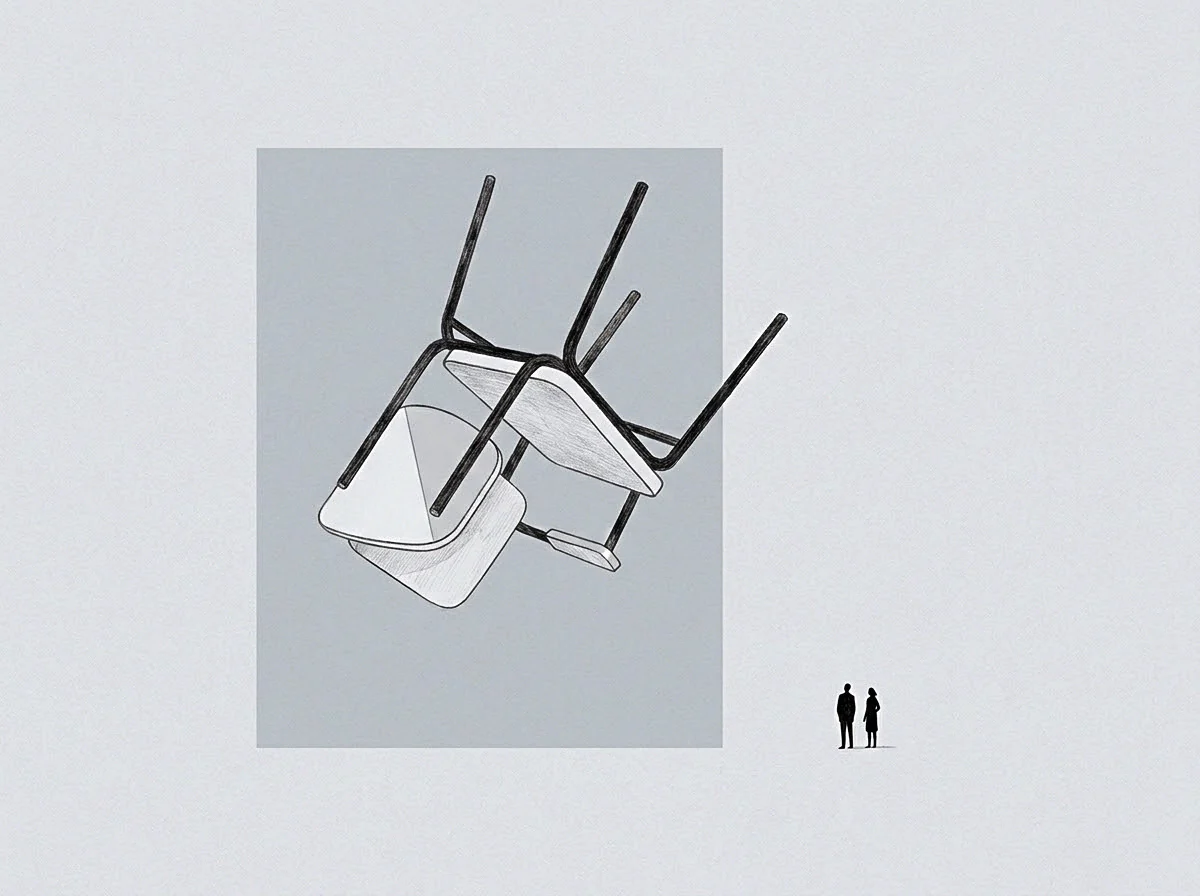
Restructuring regulatory transfer requires building operational gates that enforce strict limits on incoming open loops. A gate is a predefined structural parameter that prevents an ambiguous decision from reaching the executive deck without prior filtering, clear dates, and proposed choices. Without functional gates, every operational issue lands directly on the founder’s desk, regardless of urgency or strategic alignment.
Establishing effective gates requires shifting organizational habits across functional leads. Team members must learn to complete synthesis work before escalating choices to executive leadership. This shift protects founder headroom and builds operational maturity across the broader management layer.
Structural Gates for Active Loops
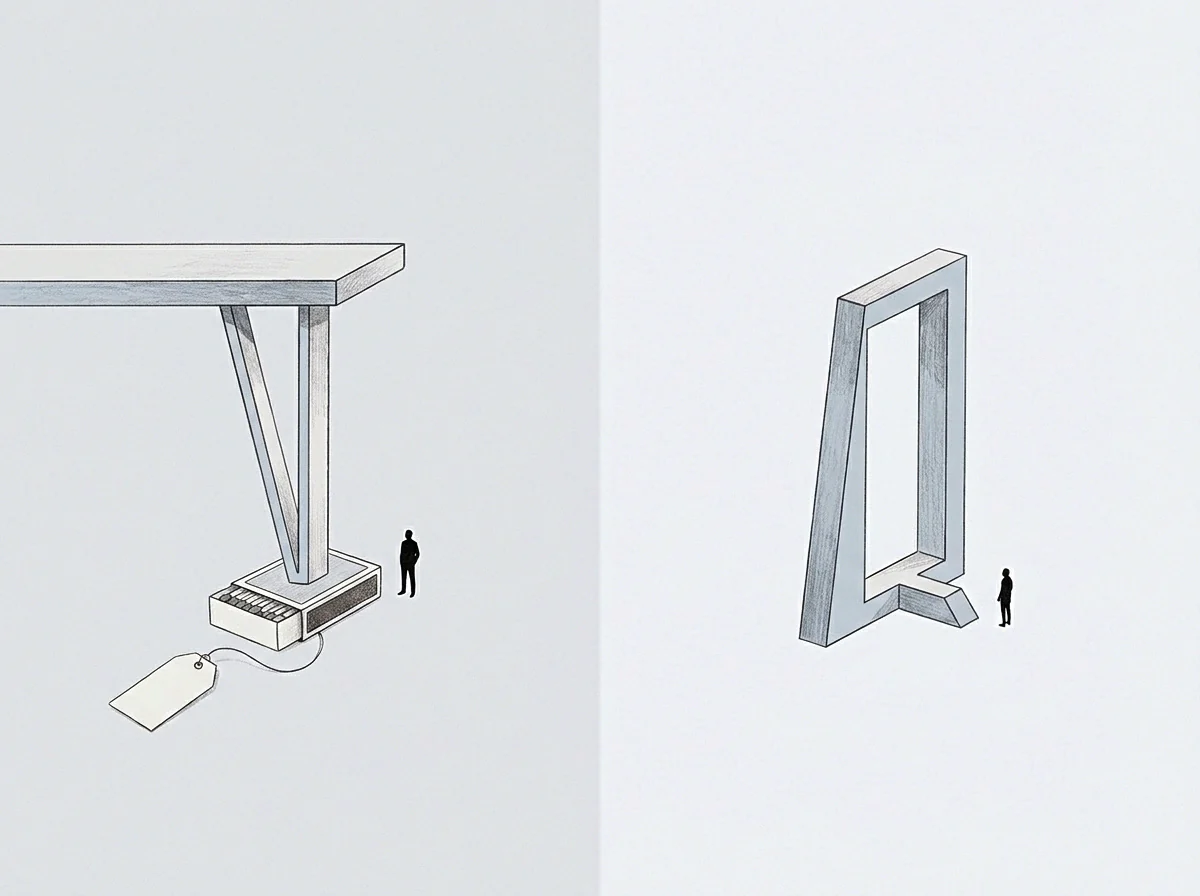
Implementing concrete operational limits requires identifying common points of failure in executive communication. The following patterns illustrate common failure modes that emerge when regulatory transfer operates without explicit structural controls.
- Asymmetric absorption occurs when one founder stabilizes team baseline while the partner focuses purely on operational execution.
- Gated latency emerges from unstated terms where approval steps stack up without explicit decision timeouts.
- Covert co-regulation develops when leadership structures rely on continuous interpersonal reassurance rather than clear structural parameters.
Clear dates and explicit scopes transform heavy open obligations into light static records.

Sequencing Thread Termination and Gate Parameters
To restore executive headroom, organizations follow a clear sequence that systematically reduces the volume of active cognitive loops sitting in memory.
- Primary thread generation occurs when ambiguous strategic directives enter the organization without clear dates.
- Secondary load transfer begins as team members pass cognitive synthesis back to executive leadership.
- Systemic throttling takes hold once executive slots become fully occupied by open regulatory loops.
Gated operational models rely on strict rules regarding thread closure. Every escalated issue arriving at the executive deck must include an explicit decision option, a proposed implementation plan, and a specified resolution date. If an incoming request lacks these three components, the executive seat returns the thread immediately without spending cognitive memory analyzing its content.
Inserting a mandatory decision expiration date on all open strategic proposals eliminates pending loop memory and restores immediate headroom to the leadership seat.

Cost
Every open loop carries a price. Unstated terms create hidden debt. Capacity requires explicit gates.
Structural parameters preserve executive function. When leadership structures neglect regulatory load transfer, the long-term operational cost manifests across team retention, strategic focus, and founder longevity. Organizations that rely on continuous covert absorption eventually encounter hard physiological limits.
The ultimate goal of leadership structure design is creating sustainable operational velocity without relying on individual over-extension. By measuring regulatory load transfer, recognizing throttling, and building explicit structural gates, companies protect executive capacity. This structural discipline ensures the organization scales through functional maturity rather than founder exhaustion.
Measuring load transfer requires observing where decisions stall and which seat holds the unclosed threads. Once those metrics are visible, leadership structures can implement explicit operational gates that protect executive headroom and preserve baseline organizational stability.