
Structural Protocol Architecture for Delegating High Cognitive Load Operations Under Sustained Allostatic Stress
Parametric delegation architectures offload executive function to external artifacts, eliminating continuous verification during allostatic overload.

Throttle
Four communication windows remain open at midnight while operational alerts queue across two monitors. The founder stares at a critical pricing adjustment document sent by an executive three days prior, unable to issue an approval or articulate what needs correction. Standard operating manuals assume delegation demands only managerial willingness and clear task definitions.
Under chronic sympathetic activation, the cognitive apparatus necessary to structure, transfer, and verify complex work suffers functional degradation. The nervous system prioritizes immediate defense reactions, shrinking working memory capacity and restricting multi-variable evaluation.
Allostatic load represents the cumulative physiological wear resulting from ongoing neuroendocrine adaptation to stressors. When stress mediators such as cortisol and catecholamines remain elevated across months, prefrontal cortical networks experience dendritic retraction while basolateral amygdala circuits show dendritic growth. This neurobiological shift diminishes executive function, working memory updating, and attentional flexibility.
Operations characterized by high cognitive load, specifically those featuring ambiguity, interdependent dependencies, and asynchronous risk, demand the very prefrontal bandwidth that chronic allostasis depletes.
A throttled prefrontal cortex treats the ambiguity of an incoming transfer as an acute metabolic threat.
Traditional delegation requests demand that an exhausted operator assess context, formulate precise parameters, predict downstream failures, and calibrate another human being’s comprehension. That structuring activity consumes immense cognitive bandwidth. The founder trapped in chronic allostatic saturation lacks the metabolic headroom to complete that structuring step, bringing the transfer to a complete halt.
The resulting operational pattern splits into two predictable failure states. In the first state, the fatigued principal hoards critical operations, generating massive organizational latency because executing the task directly feels less cognitively taxing than explaining it to a deputy. In the second state, known as operational abdication, the principal hurls unstructured, high-stakes tasks across the desk with zero constraints, creating operational drift and systemic error.

Cognitive Saturation Signals
Early identification of prefrontal throttling preserves organizational momentum before communication breaks down entirely. Neurobiological fatigue reveals itself through measurable functional impairments rather than subjective mood reports.
The founder frequently demonstrates an inability to adjudicate competing priorities among high-value projects, treating trivial operational logistical requests with the same urgency as enterprise-level contractual decisions. Routine inquiries trigger avoidance patterns, manifesting as days of communication silence followed by impulsive, poorly reasoned approvals. As working memory constricts, the operator loses the ability to hold multiple operational variables simultaneously, relying on compensatory mechanisms like fragmented written notes that scatter focus across dozens of physical surfaces.
When chronic stress saturates executive reserves, attempting unstructured operational handoffs forces the organization into cycles of founder intervention, broken deliverables, and compounding operational chaos.

Shelf
Every operational transaction demands mental storage space inside the nervous system. Working memory holds finite operational slots, bounded by neurochemical limits that constrict under chronic hormonal flooding. When an operator runs at ceiling, every unresolved delegation remains an active open loop, claiming continuous neurological resources.
Depositing work onto an external architectural shelf halts this continuous metabolic tax.
Cognitive load theory bifurcates mental expenditure into intrinsic load, extraneous load, and germane load. In an organizational handoff, the intrinsic load stems from the raw systemic complexity of the operation itself, including market dynamics, technical logic, and financial trade-offs. Extraneous load originates from the format and communication protocol used to deliver the operation.
Under sustained allostatic conditions, extraneous load must drop toward absolute zero to preserve working memory for intrinsic execution.
Uncertainty commands working memory.
A functional delegation architecture acts as an externalized prefrontal partition. It offloads working memory onto physical and digital operational artifacts that persist outside the human body. The externalization eliminates the continuous cognitive surveillance typically carried by the delegator.

Structural Elements Of Handover Artifacts
A hardened delegation artifact translates fuzzy intent into deterministic operational boundaries. The principal operates not as an ad hoc instructor, but as a parameter definer who interacts solely through standardized operational containers.
- Boundaries of Discretion define the precise fiscal and organizational limits within which the operator possesses total unilateral authority to execute actions without verification.
- Environmental Assumptions list the external market and internal systemic premises that must remain true for the mandate to retain validity.
- Verification Proofs identify unambiguous physical or computational evidence demonstrating successful task completion, bypassing narrative status reports entirely.
- Termination Triggers specify the metric deviations or contextual anomalies that automatically freeze the mandate and return operational control to the principal.
In aerospace operations, cockpit design deliberately relies on standardized physical checklists to prevent pilot working memory collapse during cabin depressurization or mechanical failure. The checklist serves as an externalized shelf, directing physical actions when biological computation stalls. Enterprise operational delegation during sustained existential strain demands identical scaffolding.
The human mind under physiological threat seeks binary certainties; a rigorously documented parameter shelf provides that stability externally.
Instituting a strict clause of environmental revocation guarantees that any sudden drift in underlying operational variables immediately pauses deputy execution, relieving the delegator from perpetual monitoring anxiety.

Gate
Uncontrolled communication channels annihilate operational focus. Each ad hoc ping, unscheduled inquiry, and narrative progress report consumes working memory through relentless context switching. The metabolic cost of reframing attention across discontinuous tasks impairs prefrontal stamina.
Constructing synchronous and asynchronous operational gates prevents this depletion by regulating the flow of information across organizational boundaries.
An effective delegation architecture establishes explicit filter checkpoints between the delegator and the delegatee. Interaction occurs solely at fixed intervals and through rigid, pre-defined syntactic formats. The protocol forbids spontaneous conversational updates, replacing narrative exchanges with deterministic data states.
The gate converts relational friction into mechanical compliance.
A parked operational line expends zero metabolic energy.
Each incoming notification forces an evaluation that stalls processing capacity. By imposing a binary interface between roles, the organization defends the principal’s residual cognitive reserves, allowing biological recovery while preserving enterprise throughput.

Protocol Interfaces Across Operating States
Delegation protocols vary drastically based on operational structure and administrative overhead. Selecting the wrong interface directly amplifies allostatic strain.
| Protocol Format | Bandwidth Drain On Principal | Verification Overhead | Latency Tolerance | Failure State |
|---|---|---|---|---|
| Unstructured Narrative Transfer | Extreme ongoing continuous drain | High manual interrogation | Zero to low tolerance | Total operational abdication |
| Bilateral Synchronous Signoff | Moderate recurring scheduled drain | Moderate real-time review | Low to medium tolerance | Executive schedule paralysis |
| Asynchronous Parameter Gate | Near zero after initial definition | Automated binary proof evaluation | High tolerance | Protocol stall at trigger limit |
The asynchronous parameter gate demonstrates higher operational efficiency during periods of extreme physiological strain. It completely eliminates exploratory dialogues, demanding that the delegatee present operational updates strictly as binary state confirmations against the defined parameter shelf. The principal expends attention only when an automated trigger registers an anomalous metric breach.
Adhering to strict parameter thresholds ensures that operations progress smoothly without demanding continuous executive presence.

Relay
Executing high-stakes operations under stress involves intense relational dynamics. When an exhausted founder delegates a critical business function to a senior operator, implicit emotional contracts often contaminate functional execution. The founder expects cognitive relief; the operator expects complete strategic clarity.
If the protocol fails to address cognitive load imbalances directly, unspoken operational drift poisons working trust.
Social baseline theory indicates that the human brain conserves metabolic resources by outsourcing vigilance and problem-solving to reliable social partners. When an operational partner operates with ambiguous authority, the brain cannot safely borrow baseline regulation from that relationship. Instead of decreasing cognitive load, the ambiguous partnership introduces additional social surveillance costs.
The principal remains hypervigilant, continuously anticipating partner error while masking physiological depletion behind sudden outbursts of micro-management.
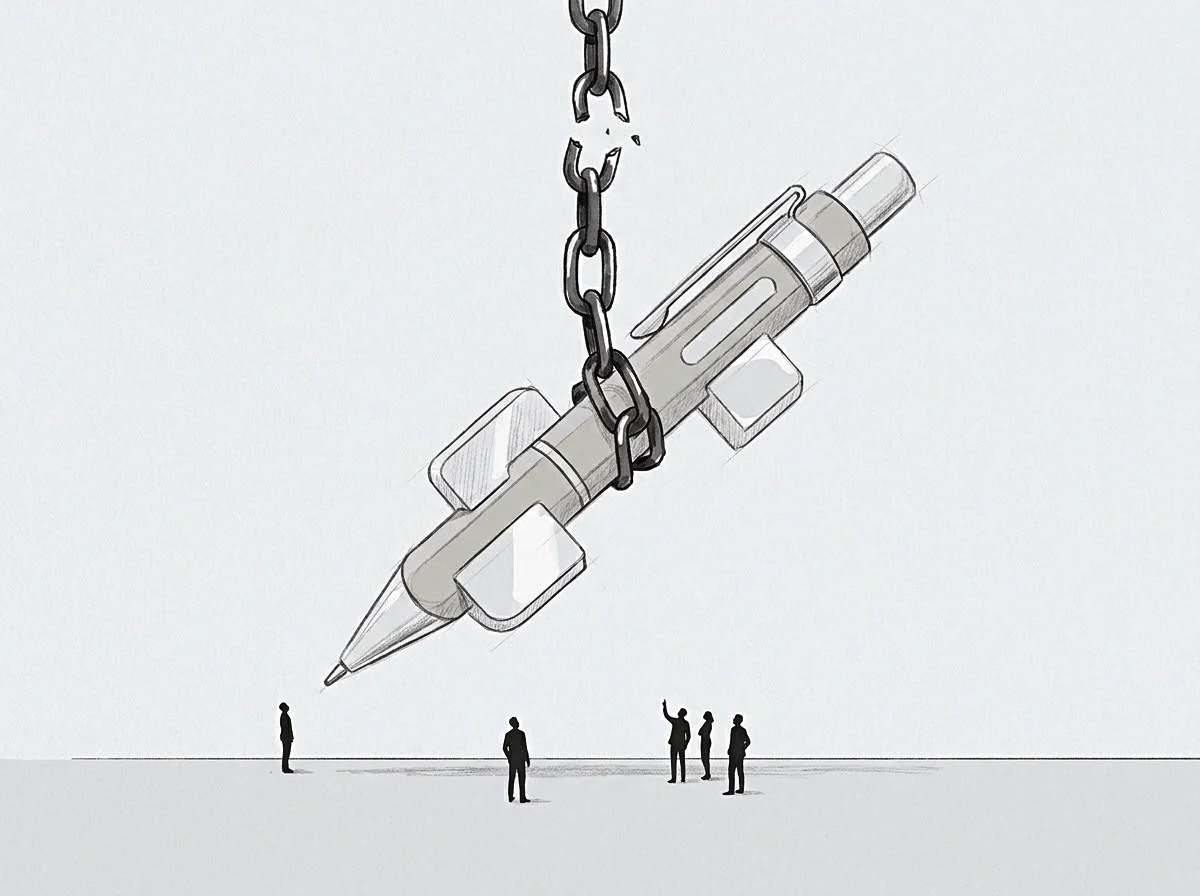
Is Bilateral Protocol Decoupling Sustainable Without Headroom?
Achieving functional operational transfer requires the absolute decoupling of personal validation from systemic throughput. The delegatee must receive structural protection from the principal’s volatile allostatic shifts. This decoupling occurs by establishing an explicit operational translation layer between the tired principal and the executing team.
Take two partners running an enterprise software firm experiencing severe runway compression. Assume the chief executive operates at full allostatic saturation following six months of failed capitalization efforts, carrying sleep fragmentation and baseline autonomic dysregulation. Assume the operations partner holds equity and directs execution across engineering and customer deployment.
In an unmediated environment, the exhausted executive issues erratic commands via text message at odd hours, demanding sudden strategic realignments based on transient anxieties.
The operations partner absorbs this continuous operational noise, interpreting each shift in mood as a strategic pivot that degrades execution and leaves the engineering team redirecting effort. Trust erodes as the operations partner attempts to decipher intent from fragmented utterances while the ambiguity compounds.
Under a hardened protocol architecture, an operational relay mechanism intercedes. The operations partner converts the principal’s inputs into standardized change tickets, evaluating each strictly against established business model assumptions. Unstructured communications are quarantined inside a dedicated holding buffer.
The operations partner responds exclusively through calibrated parameter reviews scheduled at seventy-two-hour intervals, neutralizing acute founder panic before it infects production lines.
The operator absorbs the drift by requiring unambiguous metrics before altering production parameters, or execution halts immediately.

Seal
Stabilizing delegated high-load functions over sustained stress horizons demands an absolute computational seal on completed handoffs. Once parameters, operational gates, and external shelves are established, the principal must forfeit ad hoc intervention rights. The operational loop must stay tightly sealed against instinctive second-guessing.
A closed loop functions as a secure metabolic shelter. When a delegated domain remains susceptible to random founder inspections, working memory continues tracking that domain indefinitely. The cognitive processor treats the operation as an active, unresolvable problem.
Full neurological offloading occurs only when the principal accepts that systemic execution will proceed strictly according to the encoded parameters without real-time oversight.
A stated boundary acts as an unyielding wall against emotional intrusion.
When parameters replace continuous verification, deviations within the agreed tolerance bands are left to resolve within the system. Suppressing the urge to intervene preserves neural capacity for existential demands.
The founder’s nervous system slowly habituates to non-intervention. As successful automated verification proofs accumulate across the operational calendar, prefrontal networks register structural safety. Cortisol outputs normalize toward homeostatic baselines, rebuilding the biological tissue required for long-range strategic synthesis.
The unsolved challenge remains whether a deeply exhausted organizational architect can maintain long-term protocol adherence when external existential volatility threatens to upend the foundational baseline parameters themselves.