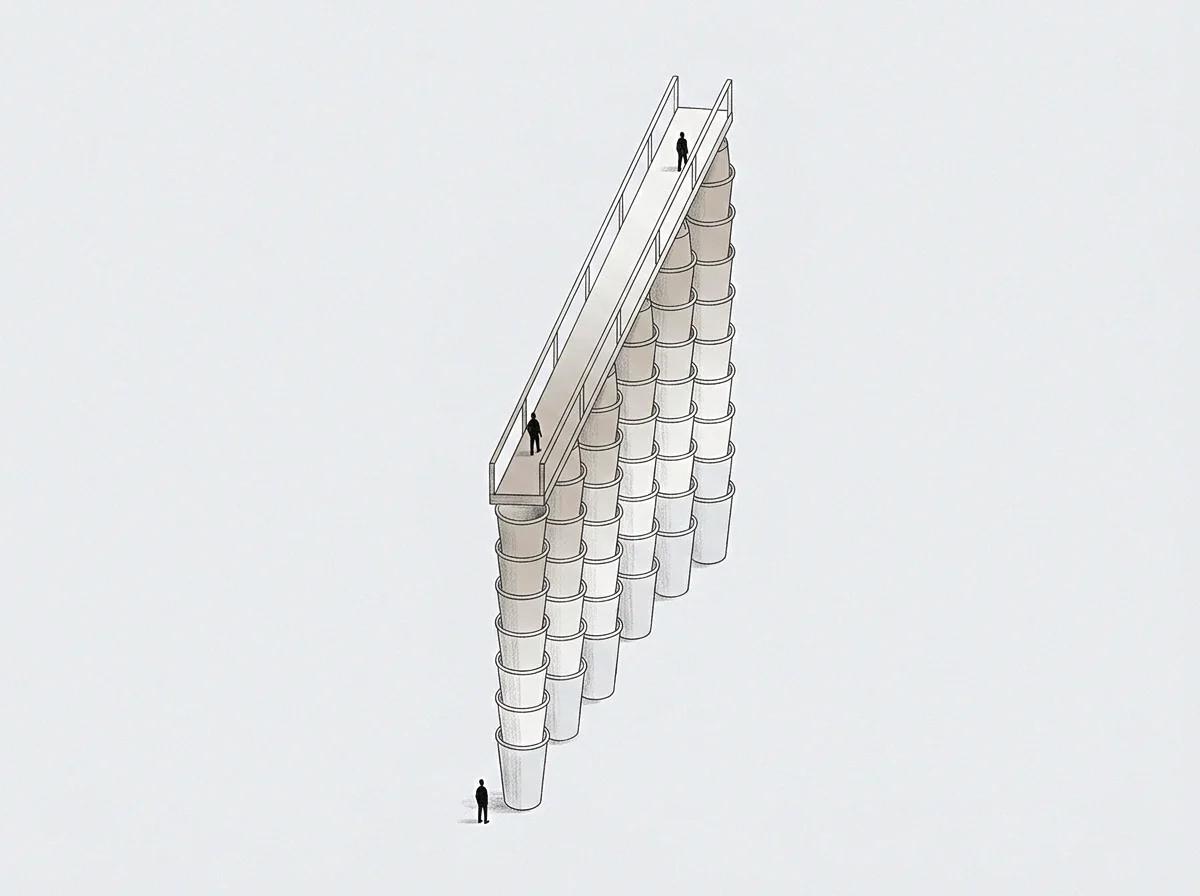
Meaning
Physiological homeostasis describes the process whereby a body maintains internal equilibrium despite external disturbances or heavy cognitive demands. Autonomic stabilization functions through the continuous adjustment of parasympathetic and sympathetic nervous system activity to preserve metabolic efficiency. This mechanism governs the rate at which a founder returns to a baseline state after high-stress episodes associated with organizational volatility.
Its scope ends at the biological boundary where stress reactions exceed the capacity for self-correction without external intervention.
Physiological Cost
The energy expenditure required to maintain internal steady states creates a measurable deficit in executive capacity. When a founder exerts effort to control emotional or physical responses to work pressure, autonomic stabilization depletes the available glucose and neural resources needed for complex decision-making. Long periods of activation decrease the time available for recovery, causing a cumulative decline in the precision of operational judgment.
This exhaustion occurs because the nervous system prioritizes immediate survival tasks over the long-term planning required for sustained organizational health.
Operational Boundary
Environmental stability provides the external condition under which these internal mechanisms function without constant friction. When a founders environment contains high levels of unpredictability, the autonomic stabilization system experiences frequent over-activation or premature fatigue. Such a state forces the system into a rigid pattern where it cannot adapt to new information effectively.
Practitioners observe that persistent misalignment between the demands of the office and the capacity of the body leads to a breakdown in standard regulatory routines.
Regulatory Mechanism
Reflexive adjustments occur beneath the level of conscious thought to counter the stressors that define a founder’s daily output. Autonomic stabilization relies upon sensory input from the body to modulate heartbeat and respiratory frequency before a deliberate reaction becomes necessary. Each corrective action follows a feedback loop that determines whether the current arousal level matches the requirements of the immediate task.
The efficiency of this regulation determines the upper limit of the hours an individual can perform high-intensity work without experiencing a performance decline.