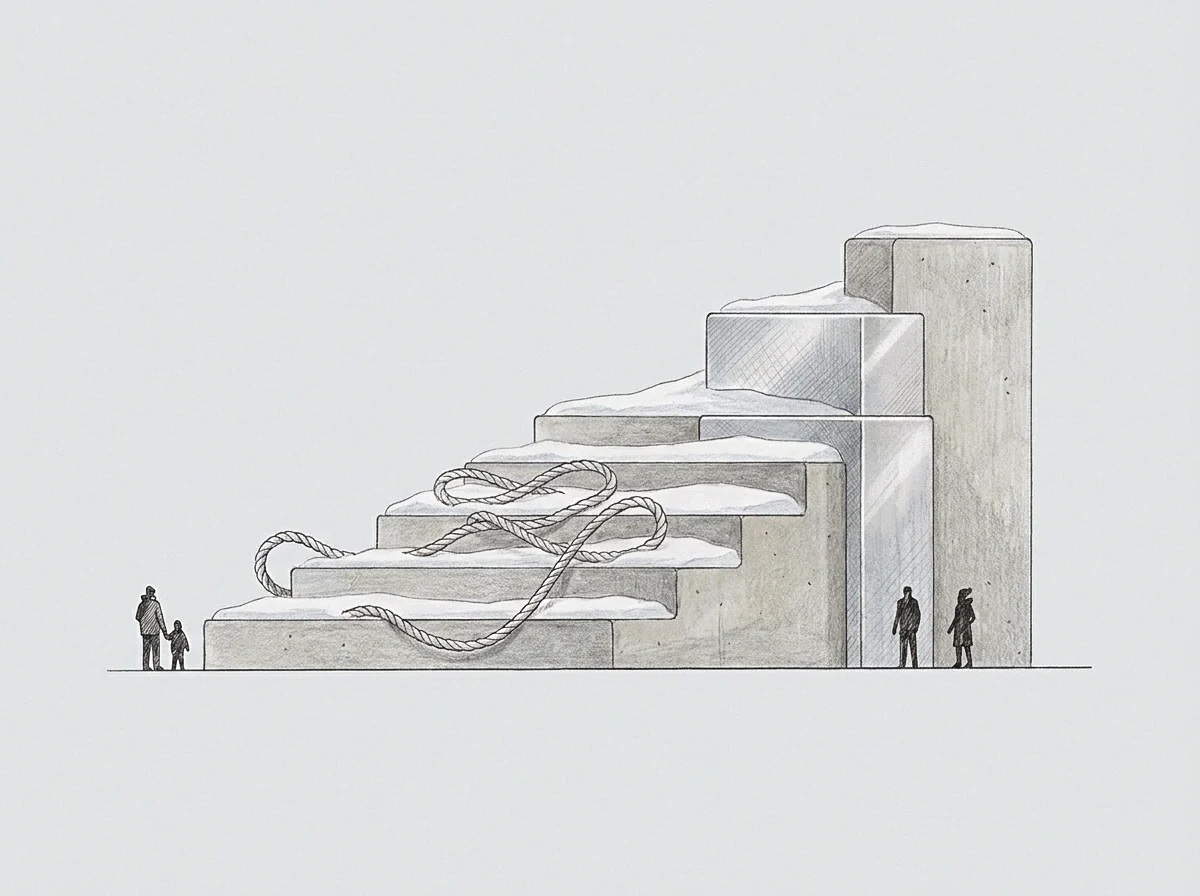
Meaning
Interpersonal pacing dissonance occurs whenever two interdependent executive nervous systems attempt to stabilize operational volatility through conflicting somatic baselines. During periods of sustained institutional stress, co-regulation friction manifests as drag produced by incompatible speeds of recovery, divergent communicative demands, and mismatched metabolic rhythms between partners. The phenomenon ceases to apply once actors disconnect their communicative channels and operate as fully autonomous functional agents.
Contact Resistance
Real-time synchronization attempts between dysregulated executives trigger acute attentional depletion before strategic work even commences. Such co-regulation friction converts simple conversational exchanges into expensive metabolic negotiations, where tone, posture and silence must be managed alongside the legal agenda. The founder attempting deliberate deceleration meets an anxious partner demanding immediate verbal reassurance.
Neither operator achieves physiological stabilization. Energy drains directly into relational calibration rather than executive output.
Attunement Expenditure
Prolonged proximity to an agitated colleague generates an unavoidable systemic drain on personal biological capacity. In sustained co-regulation friction, an executive expends enormous energetic reserves suppressing sympathetic nervous activation while processing the urgent vocalizations of a peer. That somatic buffering extracts a predictable toll, measurable in diminished late-day focus and compromised sleep quality.
The cost compounds across weekly cycles, degrading cognitive processing long before official working hours conclude.
Asynchronous Spillover
Physical separation provides the sole reliable operational relief when mutual stabilization channels become chronically compromised. Once co-regulation friction settles into an executive dyad, written asynchronous communication shields both parties from raw affective contamination. Replacing verbal deliberations with structured text documents establishes an artificial pacing delay.
This procedural interval allows each nervous system to reset without absorbing the unspoken micro-demands of the other. Biological proximity ceases to dictate functional capacity. Unmediated exposure inevitably re-establishes co-regulation friction.