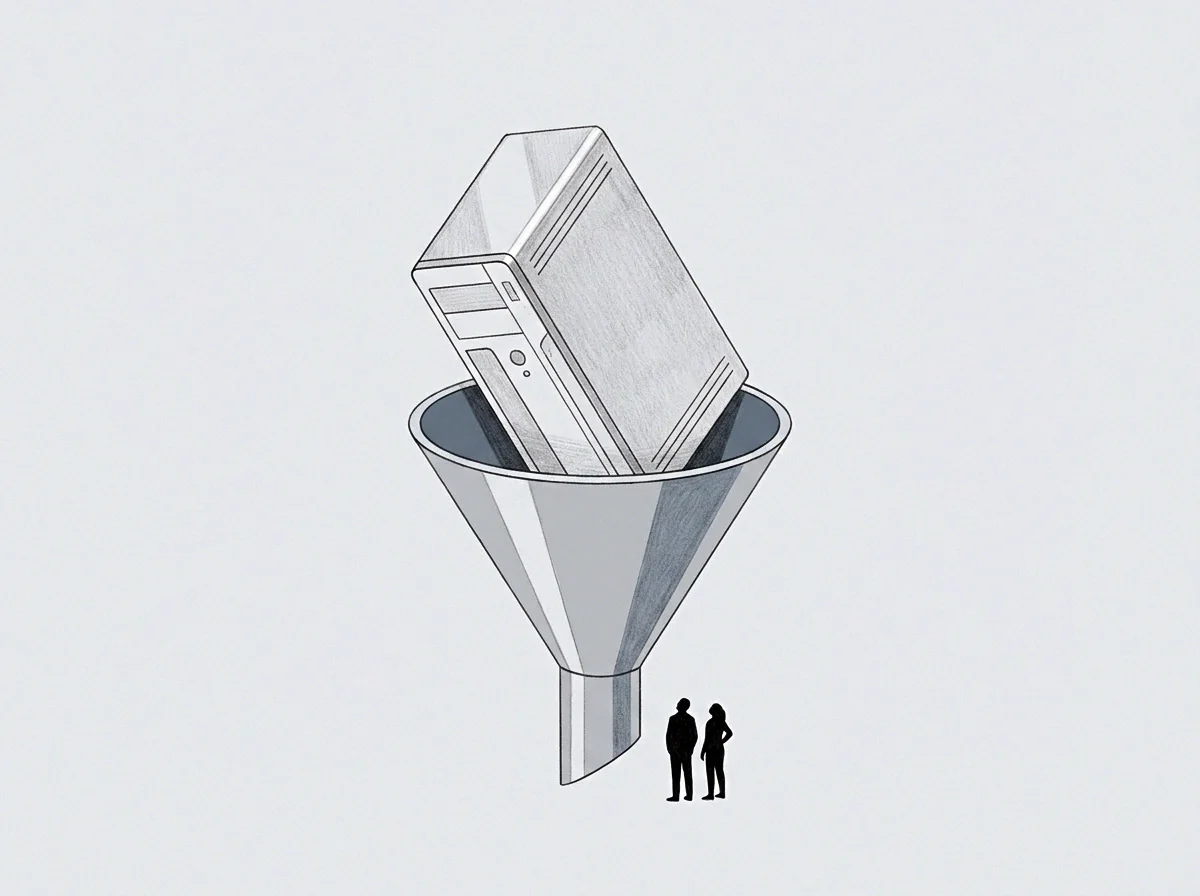
Meaning
Structural buffer deployed between external volatility and internal operational systems absorbs unexpected disruptions without compromising baseline performance. Acting as an operational shock absorber, surplus capital, redundant staffing, or flexible scheduling protects core production environments from sudden supply chain or financial shocks. The boundary of this mechanism terminates when systemic shifts permanently invalidate the underlying business model.
Damping Geometry
Strategic slack is deliberately embedded into critical paths to insulate primary operational workflows from external turbulence. Serving as an operational shock absorber, these reserve assets decouple interdependent teams, allowing one department to endure an acute disruption without triggering cascading halts across the entire firm. Inventory buffers, committed credit lines, and modular staffing configurations represent standard physical manifestations of this isolation layer.
As variance strikes the organization, the shock absorber compresses mechanically, preserving executive attention for core long-term execution rather than perpetual crisis management.
Structural Dissipation
Maintaining idle capital or excess capacity carries measurable carry costs that reduce short-term financial efficiency. The presence of an operational shock absorber requires capital allocation trade-offs that lower return on equity during stable economic periods. Balancing the cost of maintenance against the insurance value of systemic stability represents a permanent structural challenge for governance boards.
Compliance Limit
Massive structural market transformations will rapidly exhaust finite operational buffers if underlying unit economics are unviable. An operational shock absorber cannot compensate for permanent demand collapse or regulatory prohibition. When external conditions undergo permanent phase shifts, reliance on damping structures merely delays necessary organizational contraction.