
Calculating Operational Latency From Executive Cognitive Overload
Operational latency results when input volume exceeds executive working memory, turning saturated leadership nodes into compounding organizational queues.

Queue
Four browser windows sit open beside an unread contract review, three internal messages ask for confirmation on vendor spend, and the executive calendar shows eighteen meetings across five operational functions. The day ends with zero decisions logged on the ledger. The delay that accumulates across an enterprise when leadership experiences cognitive overload is operational latency.
It measures the time between an operational signal requiring executive action and the deployment of that action into the working system. Companies measure this latency in hours, days, or quarters. Cognitive overload occurs when incoming operational volume exceeds working memory capacity and executive bandwidth, operating as an upstream bottleneck.
Execution stalls when operational inputs overwhelm cognitive capacity. A software engineer waiting on architecture approval remains idle, a sales director holding a discounted proposal delays outreach, and a marketing lead pauses ad spend pending creative review. Stalled execution is the immediate result of these processing delays.
Work-in-progress inventory multiplies across teams, incomplete cycles consume administrative overhead, and staff generate status requests to trace stalled approvals. As delay compounds across dependent workflows, executive saturation turns into systemic friction.
A saturated executive tier converts every dependent operational line into an unbuffered waiting queue.
Calculating operational latency begins by treating executive attention as a constrained node. Industrial queuing systems demonstrate that as utilization approaches one hundred percent, wait times increase exponentially rather than linearly. Executive nodes operate under the same mechanics.
An executive operating at ninety-five percent cognitive capacity generates massive wait states across dependent units, stretching turnaround times from minutes to weeks and turning administrative layers into bottlenecks.

Execution Delays Compound Through Dependent Chains
Delays compound through interdependent corporate sequences. Strategic decisions rarely end at the executive desk; a single approval unlocks five subordinate work streams, each with its own cycle times and dependencies. Delaying an executive decision by two days does not produce a simple two-day shift downstream.
Instead, it triggers rescheduled meetings, misaligned resource allocations, and postponed deliverables.
Total operational costs scale with organizational depth. A five-tier hierarchy waiting on executive direction incurs compounded latency at every handoff. Front-line workers redirect effort toward secondary priorities while holding unresolved primary tasks.
Cognitive fatigue at the top creates hesitation across the entire organization.
When leadership becomes unresponsive, the enterprise defaults to defensive stalling. Mid-level managers hold pending items until attention clears, and front-line staff delay escalations knowing messages accumulate unread. Eventually, the entire operation synchronizes its tempo to match the backlogged processing speed of overloaded leaders.

Clock
Quantifying operational latency requires breaking systemic wait states into distinct mathematical units. The baseline begins with queue latency, defined as the time an input sits stationary before receiving attention. Total latency combines queue latency with execution time.
When cognitive saturation impairs working memory, queue latency accounts for most of the overall delay.
System throughput depends directly on processing rates and items in flight. Little’s Law from queueing theory states that average inventory equals arrival rate multiplied by average wait time. In administrative systems, inventory consists of unresolved requests, unapproved budgets, open technical tickets, and pending sign-offs.
If request volume increases while processing speed stays constant, backlog inventory expands, causing total wait times to compound exponentially.
A backlog multiplies waiting times throughout interdependent operating layers.
Quantifying cognitive overload latency involves several operational variables:
- Arrival cadence tracks the incoming frequency of complex, non-delegable decisions per working cycle.
- Cognitive service rate defines the time needed to evaluate and resolve an individual request under baseline mental capacity.
- Context switching drag accounts for the attentional penalty incurred when alternating between disparate fields without consolidation intervals.
- Attention fragmentation factor scales the compounding operational degradation experienced as concurrent open loops exceed memory limits.
- Subordinate idling multiple captures the downstream labor hours suspended while awaiting clearance from the saturated executive node.

Mathematical Quantification Of Processing Backlogs
Calculating the operational latency penalty uses an explicit waiting line model. Let arrival cadence represent mean decisions received per day, and cognitive service rate represent mean decisions resolved per day. When arrival cadence approaches capacity, queue latency accelerates toward infinity.
Heavy cognitive loads reduce effective processing speed, amplifying wait times across connected workflows.
Context switching accelerates this decline. Shifting focus between marketing allocations, technical hiring, legal disputes, and product roadmaps fractures cognitive continuity. Measurements of executive attention show that switching between contradictory problem domains leaves cognitive residue.
This residual attention consumes working memory and lowers the net processing rate by twenty to forty percent, widening the gap between incoming demands and completed decisions.
| Executive Capacity State | Context Switches Per Day | Mean Decision Latency | Downstream Team Idle Drag | Weekly Lost Execution Hours |
|---|---|---|---|---|
| Balanced Allocation (60% load) | 4 to 6 | 3.5 hours | 8% across dependencies | 14 hours |
| Constrained Bandwidth (80% load) | 10 to 14 | 18.0 hours | 24% across dependencies | 68 hours |
| Cognitive Saturation (95% load) | 20 to 28 | 76.0 hours | 58% across dependencies | 210 hours |
| Executive Thrashing (110% load) | 35 or more | 164.0 hours | 82% across dependencies | 480 hours |
Executive availability is a finite systemic constraint. Treating leadership attention as an infinite resource distorts capacity planning across the enterprise. Routing routine approvals through saturated executive channels causes operational latency to expand geometrically, slowing execution across all business functions.
Prolonged operational latency ultimately produces systematic capital waste across downstream operating units.

Block
Cognitive overload impairs the biological mechanisms governing decision-making. Prefrontal cortex function relies on metabolic reserves, sustained attention, and working memory limits. When an executive encounters continuous informational inputs without recovery windows, the nervous system enters an allostatic survival state that degrades working memory, impulse regulation, and analytical deduction.
Fatigued leaders default to predictable avoidance patterns, postponing complex assessments in favor of low-stakes administrative tasks that offer an illusion of productivity. Trivial emails receive instant replies while ambiguous product shifts sit unaddressed for weeks. This selective responsiveness distorts organizational priorities: the executive appears perpetually busy, yet core decisions required for progress remain deferred.

Attentional Degradation Induces Decision Paralysis
Paralysis deepens as context switches accumulate during the work cycle. Every unaddressed operational item generates cognitive residue, occupying scarce working memory slots. Once working memory reaches capacity, new problems trigger elevated stress responses.
The overloaded prefrontal cortex struggles to synthesize disparate variables, forcing defensive deliberation loops that delay clarity.
Cognitive thrashing occurs when energy goes entirely into alternating between unresolved problems without finishing any of them. The result is total systemic latency. The leader enters meetings unprepared, requests redundant briefing decks, and schedules unnecessary alignment calls—cycles that masquerade as due diligence while simply reflecting attentional exhaustion.
Organizations often misdiagnose this fatigue as poor time management or structural dysfunction, adding governance syncs, cross-functional alignment sessions, and formal reporting cadences. These interventions increase the burden on overloaded leadership. Adding coordination overhead to an executive bottleneck exacerbates delays and pushes core functions into paralysis.
A saturated executive remains unable to evaluate high-consequence alternatives until mental capacity clears.

Shift
Reducing operational latency requires restructuring authority rather than trying to accelerate executive throughput. Organizations must transition from centralized review to distributed, terms-based autonomy. Leaders cannot outwork structural cognitive constraints through longer hours or multitasking; relieving bottlenecks requires rearchitecting workflows to run independently of executive attention.
Organizations need explicit decision boundaries to safeguard operational momentum. Front-line teams require clear guidelines detailing when to act autonomously and when to escalate. Establishing explicit budgetary limits, project tolerances, and risk thresholds allows managers to advance initiatives without executive sign-off.
Shifting routine choices away from leadership channels protects processing capacity for high-impact work.
A team operating without explicit terms defaults to constant executive escalation.
Structural friction drops once teams operate within defined delegation boundaries. Moving execution rights closer to operational signals shortens turnaround times from business days to immediate cycles. Front-line operators execute within stated mandates rather than submitting formal approval requests, eliminating unnecessary checkpoints and processing delays across connected units.
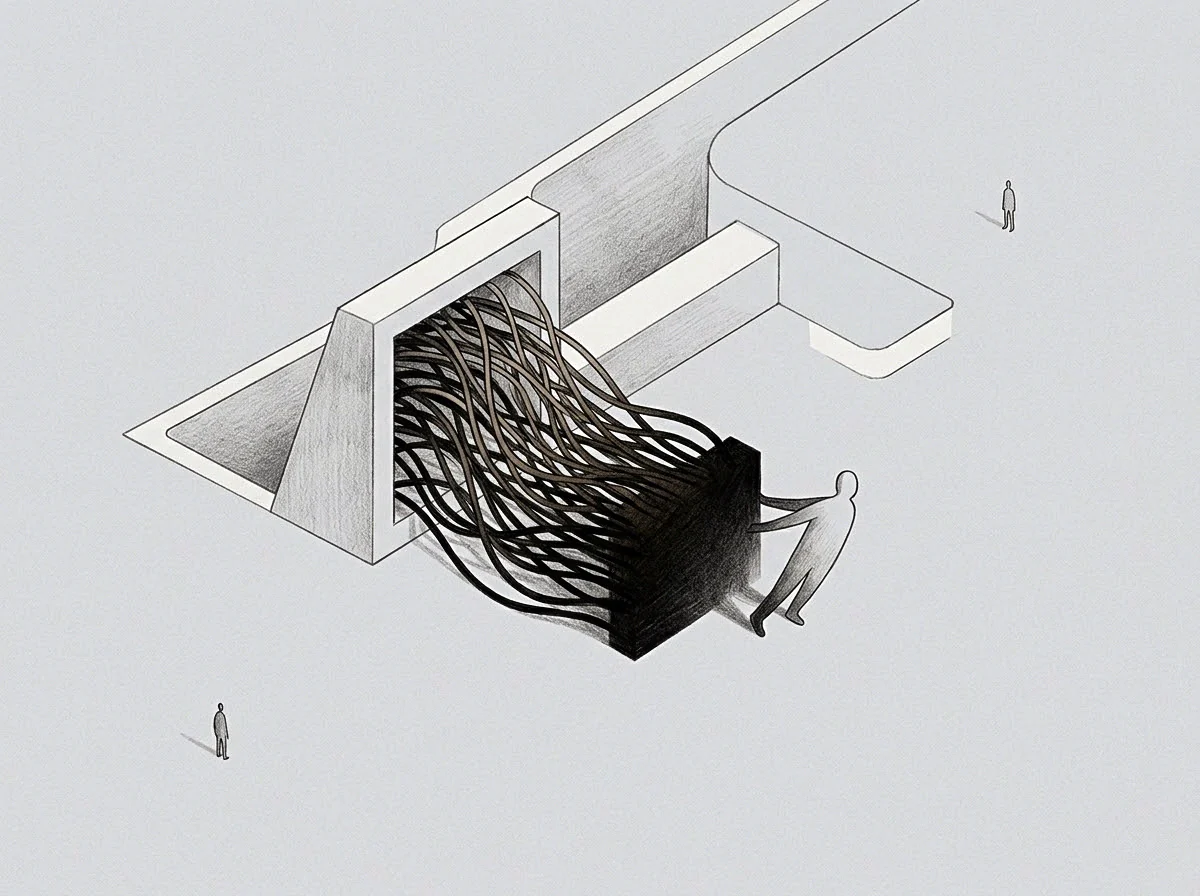
Could Structural Autonomy Clear Operational Delays?
Decentralizing operational choices requires clear performance boundaries and explicit operating limits. Leadership must establish measurable standards that govern decision-making across core domains:
- Threshold definition specifies the exact fiscal, contractual, and technical limits within which functional leads execute without executive consent.
- Protocol documentation establishes precise operating sequences for managing critical exceptions, standardizing escalations, and maintaining compliance across all operational units.
- Review cadence shifts ad-hoc operational interruptions into structured, retrospective evaluations that isolate pattern trends without delaying immediate execution pipelines.
- Containment parameters define acceptable failure margins within autonomous tiers, allowing localized operational errors while preventing existential enterprise exposure.
This structural move treats executive cognitive bandwidth as a scarce organizational asset. Leaders actively divert incoming informational volume, delegate routine governance, and focus working memory on systemic challenges. Protecting cognitive bandwidth directly compresses operational latency across the enterprise, accelerating business velocity.
The operating contract states that decisions carrying capital exposure below fifty thousand dollars deploy automatically without executive review, transferring operational momentum directly to functional unit heads.