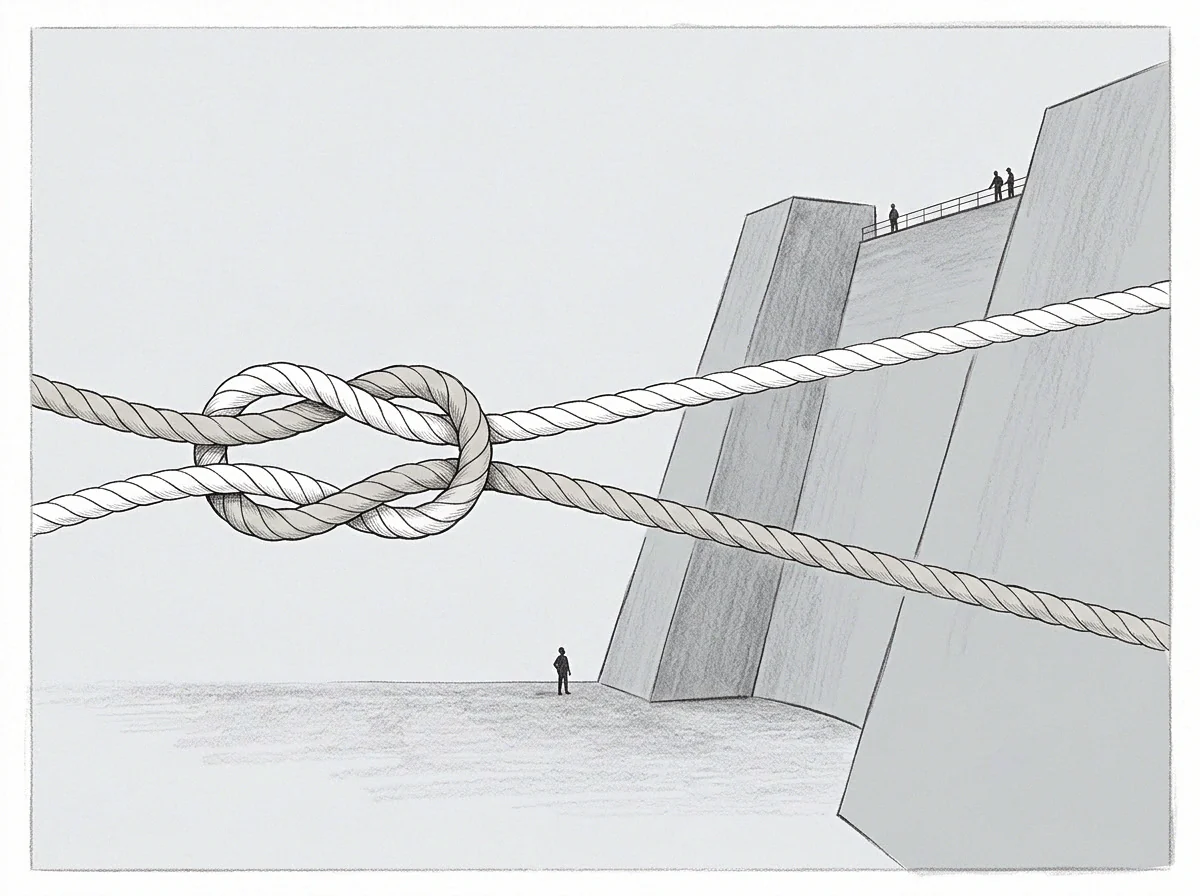
Meaning
Legally constituted empowerment confers an enforceable right to allocate resources, direct personnel and enforce compliance across an enterprise. Operating as a baseline governance asset, structural authority flows downward from corporate charters, shareholder mandates and official appointments, independent of the personal charisma of the officeholder. It defines the formal scope within which a leader issues legitimate operational commands.
Its mandate terminates where corporate jurisdiction ends or statutory employment rights supersede institutional directives.
Mandate Enforcement
Institutional power functions by translating contractual status into operational control. Through structural authority, a director signs commitments, reallocates budgets and enforces internal discipline without seeking peer consensus. Subordinates comply because institutional sanctions, such as termination or reassignment, back every formal directive.
The dynamic guarantees operational execution when personal persuasion proves insufficient. Coercion remains structural rather than interpersonal. Process replaces personality.
Operational Toll
Exercising unilateral institutional commands creates persistent friction that drains managerial reserves. Directing through raw structural authority frequently provokes covert employee resistance, demanding heightened monitoring and formal administrative audits. The supervising officer spends valuable hours documenting non-compliance and executing corrective measures.
Over-reliance on formal prerogative weakens the voluntary alignment of skilled teams. Enforcing mandates consumes attention that could otherwise support product innovation.
Legitimacy Evaporation
Formal institutional mandates fail when disconnected from functional competence or ethical compliance. If an executive repeatedly uses structural authority to enforce illegal or contradictory directives, operational cohesion rapidly breaks down. Subordinates choose lateral evasion, whistleblowing or collective resignation over compliance with formal orders.
The enterprise’s legal apparatus cannot preserve operational control once executive credibility disappears. Raw power proves brittle without foundational respect.