
Internal Regulator Template Attenuation In Executive Power Structures
Solitary executive regulation attenuates internal templates, forcing leaders to process relational baseline bids as metabolic loads rather than regulatory resources.

Desk
Four communications arrive after midnight on a board member’s terminal while three senior operators await operational clearance on a pending acquisition. The officer in the primary seat remains motionless, reading each incoming message without a change in heart rate or posture. Direct reports anchor their operational stability against this unyielding demeanor during periods of acute capital volatility.
Lower-tier managers interpret the absence of visible strain as evidence of limitless operational capacity. The executive functions as an environmental shock absorber for the entire organization, maintaining a stable systemic baseline so others can execute complex tasks without absorbing market turbulence directly.
This stabilizing function operates through basic biological mechanisms. In high-density organizational hierarchies, human nervous systems actively monitor the emotional stability of surrounding authority figures to budget their own cognitive and metabolic resources. When the occupant of an executive seat maintains a steady presence under stress, immediate subordinates experience a measurable drop in autonomic arousal.
Their cardiac output stabilizes, cognitive bandwidth widens, and threat detection systems downshift. The primary executive bears the metabolic expenditure of this regulation quietly. The organization operates efficiently because one seat continuously absorbs the physiological toll of stabilizing the collective baseline.
A structural asymmetry emerges over extended operational horizons. Subordinates access low-cost regulation by working in physical or operational proximity to the steady leader. The leader, conversely, occupies an isolated locus with zero local opportunities for shared regulatory baseline access.
Higher authority structures offer oversight and performance evaluation rather than metabolic co-regulation. The occupant of the seat must rely entirely on internal self-regulation to digest incoming operational shockwaves while simultaneously broadcasting calm outward. Over several reporting quarters, this imbalance alters the neural models that govern executive behavior under threat.
The Asymmetric Baseline Load
Nervous systems burn significant energy when forced to regulate threat responses in complete isolation. Social baseline theory establishes that human physiology operates under an implicit assumption of shared relational support. Proximity to a reliable peer reduces the neurological cost of threat processing.
When an executive operates without access to a peer who offers comparable baseline stability, the brain treats the environment as fundamentally hostile. Self-regulation becomes the most expensive operational mode, requiring continuous prefrontal inhibition to override survival signals. The officer stays calm because the seat demands calm, yet every hour spent in this state draws heavily from finite allostatic reserves.
Continuous internal baseline maintenance forces the brain to adapt its predictive models. In healthy developmental conditions, a person forms an internal working model based on a responsive partner who offers calm during stress. The individual learns to seek external baseline support when personal load exceeds capacity.
Within executive power structures, this standard cycle runs backwards. The executive acts as the stabilizing figure for everyone else, internalizing a rigid predictive model where they are the sole source of regulation. The external baseline partner disappears from the model entirely.
The brain adapts by closing off the perceptual avenues through which shared regulation normally occurs.
Shared regulation lowers autonomic stress responses across an organization while raising the metabolic expenditure of the solitary executive who supplies it.
The primary seat eventually becomes a closed regulatory circuit. Operational demands increase while the internal mechanism for accepting external baseline support deteriorates. Subordinates continue to attach their operational stability to the leader, unaware that the leader’s internal regulatory template is losing its capacity to reset.
The executive becomes exceptionally effective at calming a room while becoming entirely incapable of receiving calm from any source within or outside the organization.
The operational team remains entirely confident because the primary seat never shows a crack.
Budget
Metabolic resources allocated to threat management reduce the energy available for long-horizon strategic planning. Human brains budget physiological energy based on perceived environmental safety and relational density. When an individual operates alone, the nervous system calculates high baseline costs for every potential risk, keeping inflammatory responses and baseline cortisol elevated.
When an individual operates in genuine proximity to a trusted peer, the brain offloads threat detection tasks to the pair, reducing systemic stress expenditure. In corporate power structures, this dynamic dictates whether an executive operates in structural efficiency or continuous depletion.
Solitary executive operation represents an exceptionally inefficient metabolic model. An officer who must continuously regulate their own state while serving as the emotional anchor for six vice presidents operates under severe allostatic strain. Allostatic load refers to the cumulative physiological wear and tear resulting from chronic exposure to fluctuating or elevated neuroendocrine responses.
As this load accumulates, the brain prioritizes immediate survival mechanisms over complex integrative thought. High-level synthesis deteriorates, emotional range narrows, and the ability to process subtle human signals diminishes. The executive remains functional, but the underlying operational budget runs a chronic deficit.
Quantitative Comparison of Regulatory Modes
The structural difference between isolated executive self-regulation and proximity-based co-regulation alters long-term capacity across several measurable operational vectors.
| Operational Vector | Isolated Self-Regulation | Shared Co-Regulation |
|---|---|---|
| Primary Energy Source | Solitary Glucose and Cortisol Burn | Distributed Relational Baseline |
| Threat Processing Cost | Maximum Metabolic Expenditure | Shared Environmental Monitoring |
| Long-Horizon Synthesis Capacity | Severe Suppression Under Stress | Sustained Cognitive Headroom |
| Relational Signal Processing | Filtered as Task Demands | Decoded as Contextual Input |
| Systemic Vulnerability | Sudden Catastrophic Exhaustion | Gradual Managed Degradation |
The table demonstrates how isolated self-regulation forces an organization to trade long-term cognitive flexibility for short-term emotional stability. An executive operating under solitary conditions consumes metabolic reserves at twice the rate of an executive embedded in a co-regulatory leadership team. The elevated cost is not immediately visible on balance sheets, but it manifests through subtle delays in high-level decision-making and a total inability to absorb unexpected market shocks without personal collapse.
Continuous high-cost regulation fundamentally alters how executive power structures process incoming operational friction. When energy reserves drop past a critical threshold, the brain initiates protective throttling mechanisms. The officer begins to limit exposure to complex relational inputs, preferring standardized data streams and predictable reporting structures.
This behavioral shift is often misidentified as administrative discipline. It is actually a protective biological response to an unsustainable regulatory budget.
Chronic allostatic load forces executive nervous systems to trade strategic cognitive flexibility for immediate baseline survival.
Unchecked allostatic accumulation guarantees a structural collapse of executive bandwidth across subsequent operational quarters.
Attunement
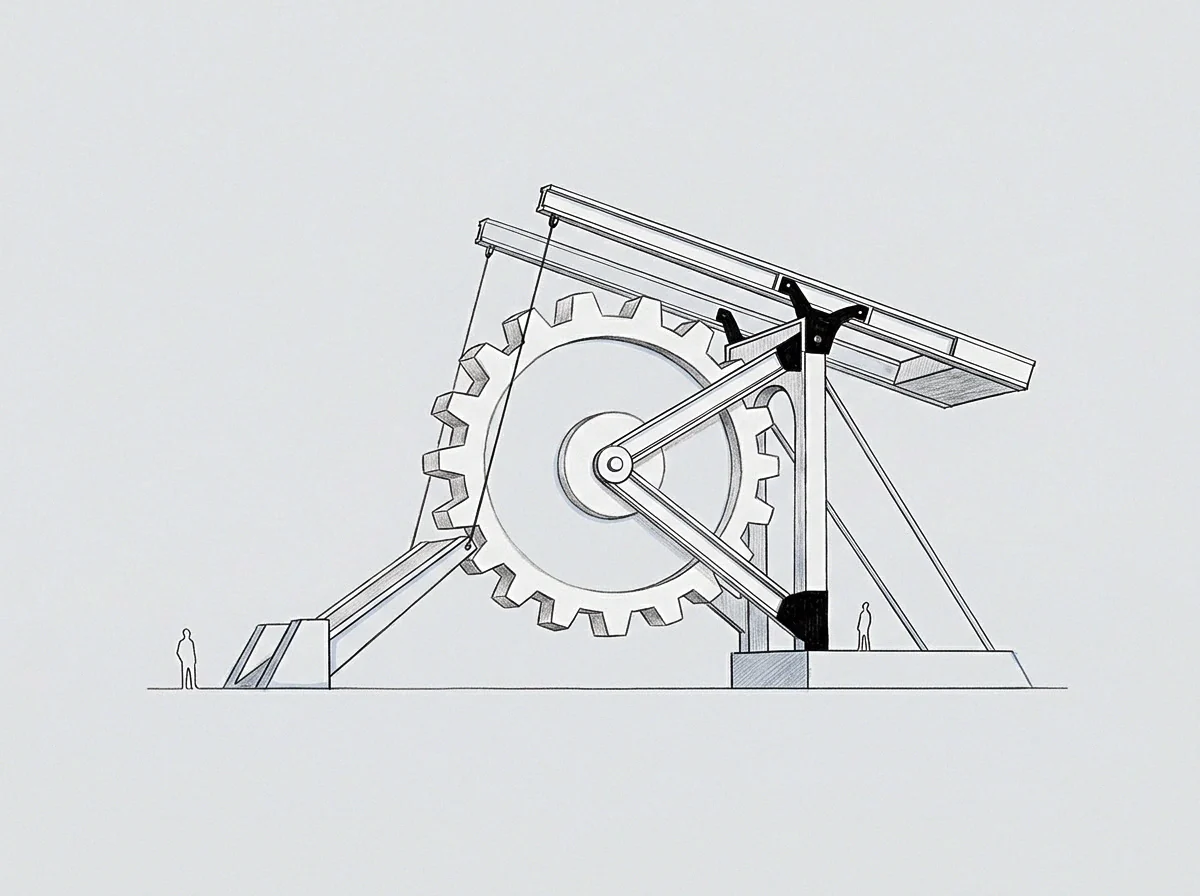
Attentional capacity within high-stakes environments depends directly on the integrity of the internal regulator template. This template acts as a neural architecture, dictating how an individual interprets relational cues, processes incoming demands, and restores biological equilibrium after crisis events. Under normal conditions, a robust template contains a dedicated receptor slot for external baseline support.
The individual recognizes when personal reserves are depleted and actively engages trusted peers to restore equilibrium. In executive seats, continuous unidirectional regulation causes this receptor slot to atrophy. The template shifts from an open relational loop to a closed internal loop.
Why Does Proximity Fail To Lower Allostatic Load?
Proximity alone cannot restore an attenuated regulatory template. When an executive with a damaged template enters a supportive environment, the brain fails to register the relational safety available in the room. The neural circuitry required to translate peer presence into reduced autonomic arousal has been offline for too long.
Instead of offloading threat detection, the executive’s brain continues to monitor the room for potential dysregulation. The offer of support is perceived as an additional variable to manage rather than a resource to draw upon. The individual sits among trusted allies yet continues to pay the full metabolic price of total isolation.
This closed-loop state creates a profound operational misunderstanding between the executive and their team. Subordinates offer loyalty, open communication, and personal empathy, expecting these inputs to ease the leader’s load. The leader, operating with an attenuated template, processes these gestures as noise that requires active management.
The internal working model has adapted so completely to solitary baseline control that genuine offers of relational baseline access register as systemic anomalies. The leader cannot download calm from the environment because the internal hardware for doing so has been overwritten by years of solitary burden bearing.
The breakdown of this internal template follows a predictable trajectory across executive tenures.
- Template Isolation occurs when the executive stops viewing peers as potential sources of baseline stabilization and relies exclusively on self-soothing mechanics.
- Receptor Atrophy manifests as a physical inability to experience metabolic relief during supportive personal or professional interactions.
- Signal Misinterpretation transforms incoming relational pings into perceived operational demands that demand immediate defensive boundary setting.
- Functional Decoupling completes the process when the leader operates entirely separate from the emotional baseline of the surrounding organization.
Once functional decoupling occurs, the leader’s internal working model functions strictly as an engine for outward control. The executive becomes remarkably skilled at projecting stability while becoming totally immune to inward regulation. The organization receives a steady stream of authoritative presence, but the human inside the seat has lost the capacity to be held, grounded, or reset by any human interaction.
What structural mechanisms prevent a decoupled executive from recognizing their own template attenuation before operational performance degrades?
Depletion
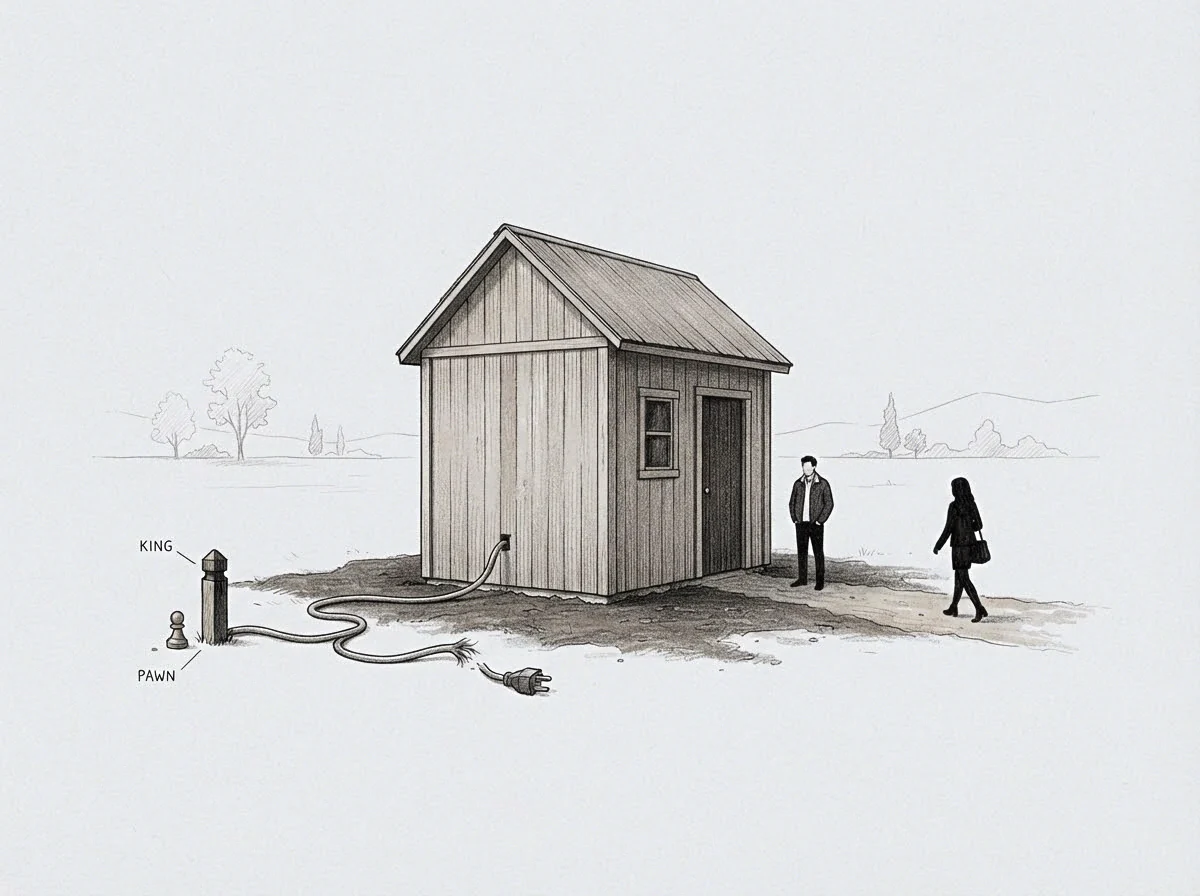
Systemic breakdown in executive leadership rarely begins with strategic failure. It begins when the leader’s attenuated regulator template collides with sustained operational volatility. Consider a scenario involving two managing partners overseeing a mid-sized private equity firm during a major fund restructuring.
Assume the primary partner has spent seven years operating as the sole regulatory anchor for thirty-five investment professionals. Assume the secondary partner manages investor relations while relying entirely on the primary partner’s steady demeanor to stay grounded during market drawdowns. The firm faces an unexpected regulatory audit compounded by a liquidity squeeze in its core portfolio asset.
Under these conditions, the primary partner’s attenuated template reaches a critical failure point. The partner can no longer synthesize complex legal inputs while managing the secondary partner’s rising panic. Because the primary partner’s internal receptor slot for receiving support is entirely atrophied, the secondary partner’s attempts to help are experienced as intrusive interference.
The primary partner responds by withdrawing into isolated micro-management, locking out the executive committee, and working twenty-hour shifts to maintain absolute operational control. The firm’s leadership structure splits along operational lines, creating massive strategic friction at the precise moment unity is required.
The progression of this structural decoupling follows a strict sequential pathway across four distinct phases.
- Continuous absorption of organizational turbulence depletes the executive’s baseline metabolic reserves without triggering internal recovery signals.
- The internal regulator template shuts down open relational channels to conserve remaining cognitive bandwidth for core decision-making tasks.
- Subordinate bids for connection or support are systematically re-encoded by the executive as operational noise or competence failures.
- The leadership seat structurally isolates itself from the organization, replacing genuine relational baseline stability with rigid procedural controls.
This four-step sequence transforms a highly capable leader into a rigid operational bottleneck. The executive does not lose intelligence, industry expertise, or dedication to the enterprise. The underlying failure is purely biological and structural.
The brain, exhausted by years of solitary baseline regulation, adopts maximum defensiveness to protect its remaining reserves. The organization interprets this defensiveness as political toxicity or executive arrogance, missing the underlying metabolic collapse entirely.
An attenuated regulatory template converts every incoming relational bid into an operational demand on finite metabolic reserves.
When an executive structure replaces relational baseline access with rigid procedural control, the firm’s adaptational capacity drops by half, altering the long-term risk profile of the entire enterprise.

Update
Restoring executive regulatory capacity requires a fundamental update to the internal working model rather than intellectual insight into leadership style. Executive coaching, strategic retreats, and conceptual education routinely fail to resolve template attenuation because they target higher cognitive functions. The regulator template lives in lower brain structures that respond only to repeated physical and relational experiences over time.
Understanding the physics of allostatic load does not change a nervous system’s threat budget. The template updates only when the nervous system experiences actual, repeated instances of shared regulation under real load without experiencing catastrophic loss of control.
Earned security defines the process of building a functional secondary regulatory template later in professional life. This process requires deliberate, low-stakes exposure to environments where the executive is not the primary stabilizing baseline. The leader must occupy seats where another competent authority holds the environmental baseline entirely.
In these settings, the executive’s nervous system receives continuous biological proof that safety can exist without personal intervention. Over extended operational cycles, the brain begins to rebuild the atrophied receptor slot, learning to offload threat detection tasks once again.
This recalibration alters the leader’s internal software through measurable behavioral micro-steps. The officer begins by tolerating brief moments of relational presence without converting them into task lists. They learn to recognize the physical signals of baseline depletion before operational capacity collapses.
Crucially, they practice allowing trusted peers to share the weight of complex crisis management without assuming total personal control. These experiences do not replace the executive’s capacity for solitary leadership. They add a flexible secondary template that can be deployed when operational load threatens to exceed metabolic capacity.
The delta over time between an attenuated executive and a recalibrated executive manifests clearly under acute stress. The attenuated leader stiffens, isolates, and consumes immense metabolic energy to maintain an illusion of control. The recalibrated leader remains accessible, distributes regulatory load across a trusted core team, and maintains cognitive headroom throughout the crisis.
The organization retains its stability not because one person is burning themselves out to anchor the room, but because the leadership seat operates within a sustainable economy of shared regulation.