
Longitudinal Integration Of Reciprocal Coregulation In Systems Managed By Individuals With Backward Working Templates
Systems managed by operators with backward working templates process incoming coregulation as load, restricting reciprocal regulation until new templates form.
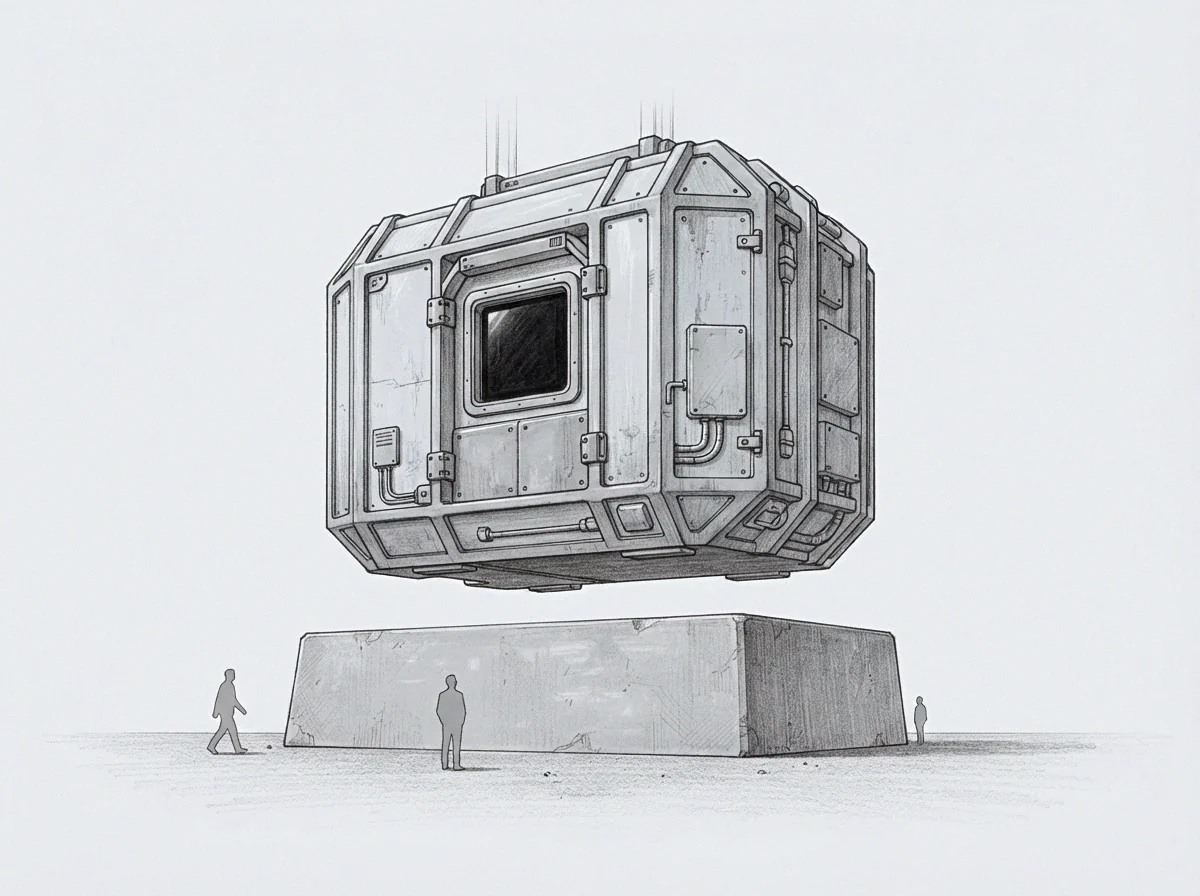
Asymmetry
Four operational threads sit open on a workstation late at night after three months of expansion. System leaders managing high organizational throughput often find themselves operating as the single source of stability for their teams. When distress hits an operational unit, the individual in the primary seat stabilizes the room, absorbs the incoming anxiety, and maintains execution standards.
The baseline absorbs the stress.
This operational dynamic stems from an internal working model formed early in development. In standard developmental attachment patterns, an individual experiences coregulation from a primary caregiver during moments of autonomic arousal. That experienced calm forms an internal receptor slot, allowing the person to seek and receive external regulation when adult demands exceed personal resources.
In a backward working template, this sequence ran in reverse. The individual acted as the primary regulator for their early environment, absorbing the autonomic instability of others to secure environmental safety. They internalised a functional model where regulating themselves and regulating the surrounding system became a single unified operation.
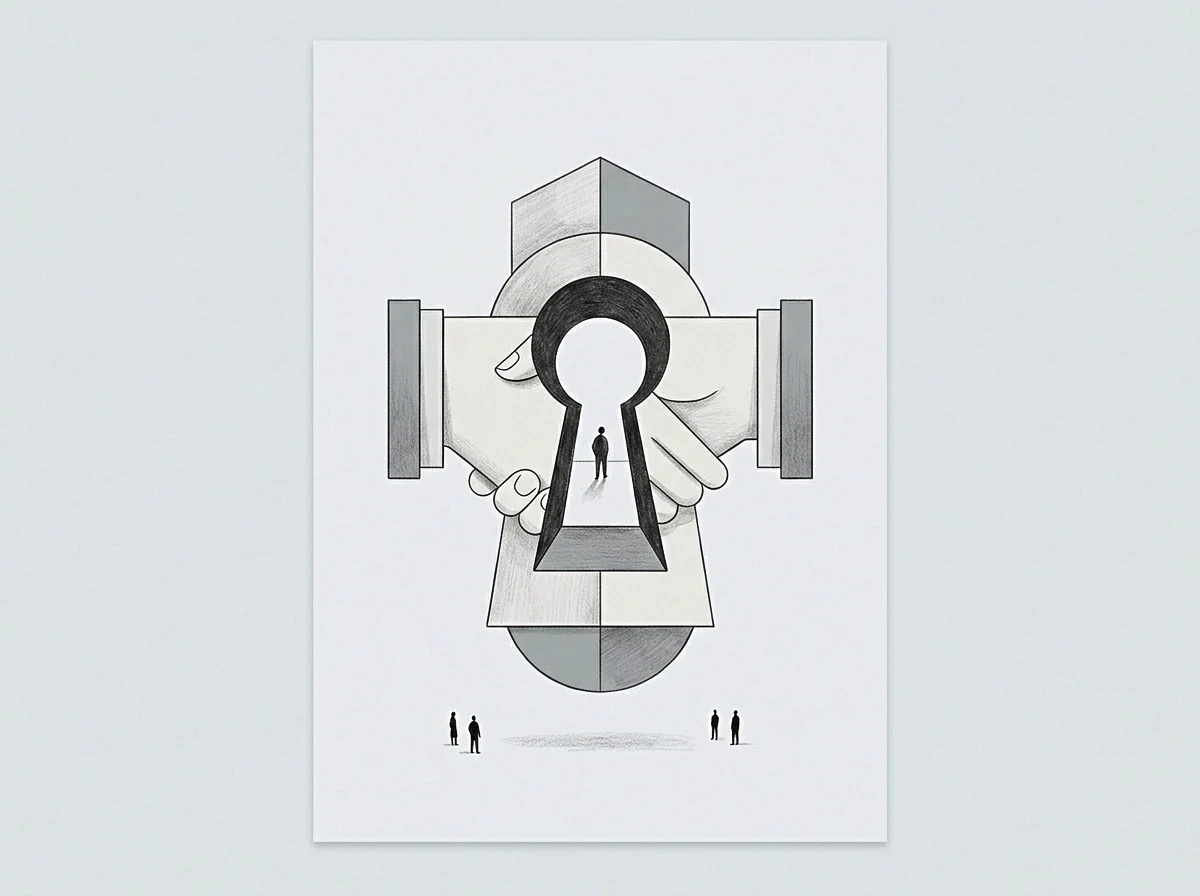
Origins of the Unilateral Pattern
Early developmental demands create structural expectations about how emotional energy moves within a group. When an individual learns that safety depends on their ability to soothe surrounding instability, their neural architecture adapts to prioritize monitoring over receiving support. The template operates without variance.
The individual grows into an adult manager who experiences external calm not as a resource to lean on, but as a condition they must produce for the enterprise.
Operational teams quickly adapt to this regulatory asymmetry. Team members subconscious adapt their physiology to the manager’s calm presence, offloading their own operational anxiety onto the leader. The leader reads this offloading as competence and responsibility.
The operational budget balances on paper because one seat pays the energy cost for the entire structure. Silence replaces active coregulation.
A system operator with a backward template experiences an offer of support as an unexpected operational task.
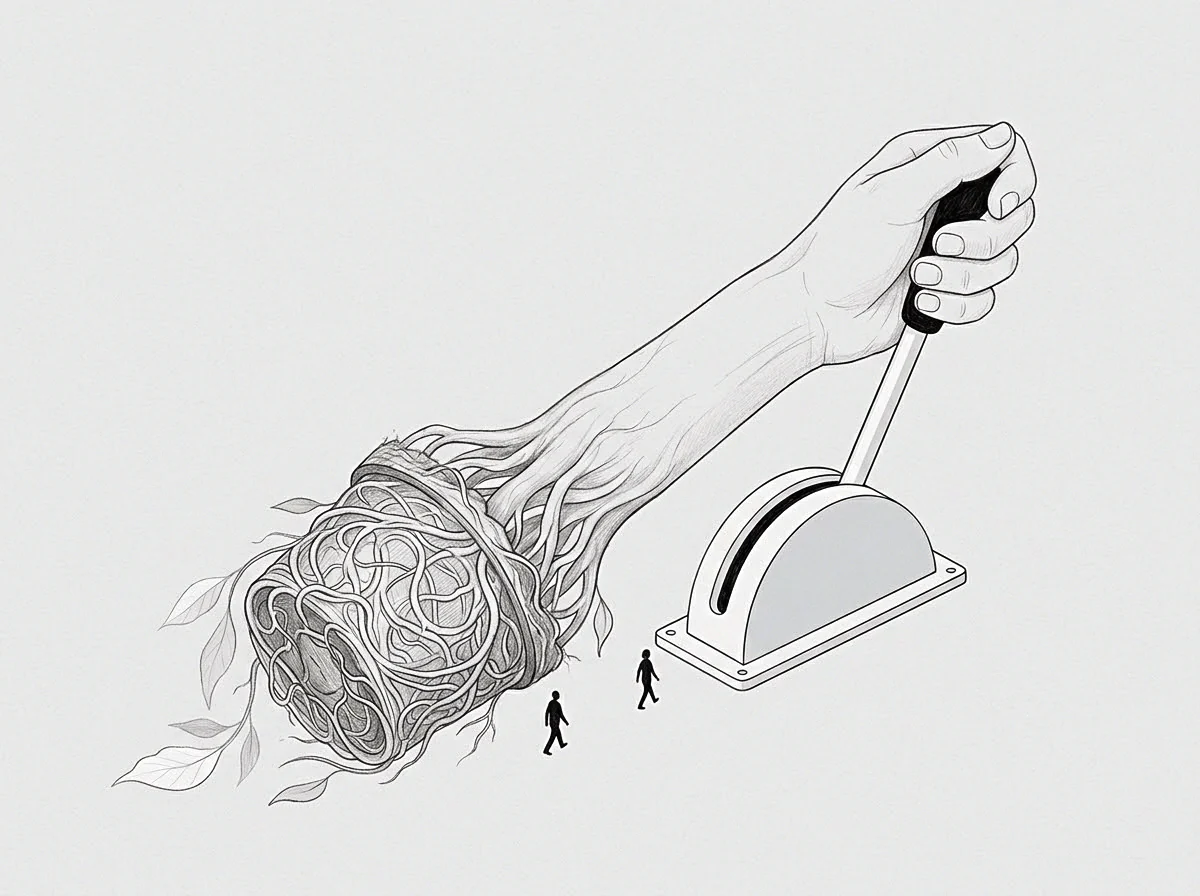
Fusing System Stabilization with Internal Balance
For an operator holding a backward template, self-regulation requires active control over the external environment. They cannot achieve internal equilibrium while an adjacent team member displays unmanaged distress or operational drift. The manager steps into the team member’s problem space immediately, treating the other person’s autonomic state as an urgent internal system alert.
This fusion creates an operational environment where delegation collapses under pressure. The manager reclaims tasks not due to poor execution metrics, but because carrying the task directly is the only way their nervous system can regulate the incoming noise.
When a peer or partner attempts to offer reassurance, the backward template processes that input through its historical baseline. The gesture registers as an anomaly. The manager does not feel relieved; they feel an immediate spike in vigilance, searching for what the partner requires or where the system is failing.
The steady presence at the head of the organization makes external reassurance unnecessary.
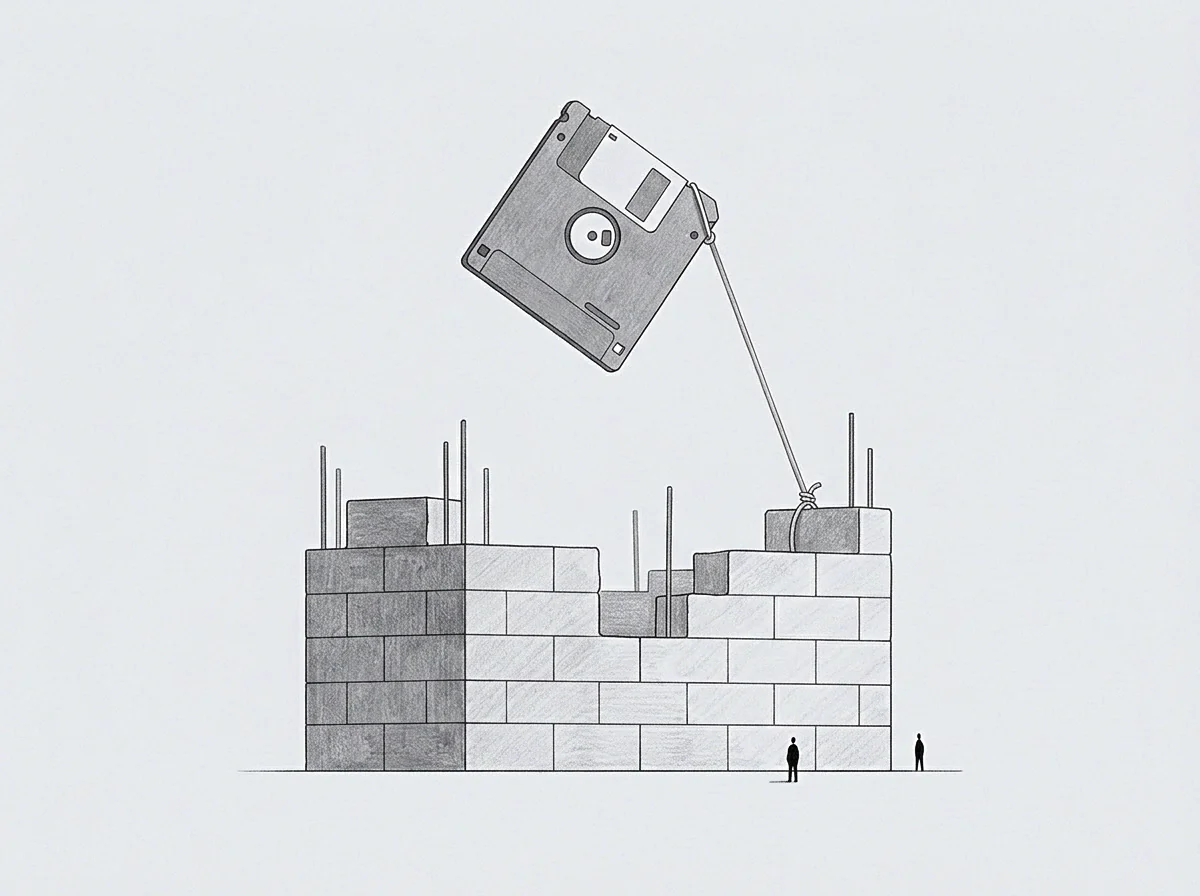
Gate
Social baseline theory establishes that human neural architecture conserves energy when proximity to a reliable individual is perceived. The brain calculates environmental risk and metabolic costs differently depending on whether it projects facing threats alone or with a trusted peer. When a reliable partner is present, the central nervous system downregulates vigilance, lowering the energy spent on baseline environmental monitoring.
Proximity functions as a metabolic subsidy, allowing individuals to run complex projects without burning out their internal reserves.
For a system manager carrying a backward working template, this metabolic discount fails to materialize. The physiological apparatus designed to register proximity as safety remains obstructed. The receptor slot remains closed.
When a reliable partner stands near, the manager’s system continues to budget threat monitoring as if operating in complete isolation. The presence of another person adds a potential management target rather than a regulation partner.
Receptor Slot Deficits and Threat Response
The neural mechanics of borrowed calm require an open receptor slot. That slot is the autonomic capacity to perceive another person’s stable state and allow one’s own cardiovascular and endocrine markers to downregulate in response. When early life conditioning frames other people as sources of load rather than sources of calm, the brain treats incoming proximity signals with caution.
Load shifts back to the origin.
System managers in this condition experience continuous allostatic load. They spend high metabolic energy maintaining executive function while simultaneously broadcasting calm to their surrounding organization. Their physiological system runs at ceiling capacity, even during routine operations, because their brain never accesses the cost-sharing mechanisms inherent to human proximity.
The signal carries no friction.
- Receptor slot occlusion occurs when the system manager perceives external stability as an additional monitoring obligation.
- Allostatic throttling forces the manager to compress internal stress signaling to preserve regulatory headroom for team load.
- Asymmetrical proximity pricing raises the metabolic expenditure of shared workspaces for the primary regulator while lowering it for team members.
- Vigilance retention keeps executive neural networks active during downtime due to an inability to transfer safety monitoring to peers.
Processing Incoming Coregulation as Operational Anomaly
When an operator with a backward template meets genuine coregulation, the incoming signal breaks their predictive framework. An offer of calm, structured assistance from an executive peer or board member demands that the manager relinquish control over a system parameter. The backward model equates relinquishing control with immediate environmental vulnerability.
The manager responds by rejecting the assistance, accelerating their own task throughput, or insulating the peer from operational reality.
This operational block creates a severe bottleneck in organizational scaling. The enterprise can only grow to the physical and cognitive limits of the primary manager’s isolated nervous system. Capacity dictates the operational limit.
As long as incoming coregulation is processed as threat or work, the manager remains trapped in unilateral baseline management, unable to build an executive team capable of shared emotional and operational load.
Whether an internal receptor slot can open while baseline operational demands remain at ceiling capacity remains unclear.
Load
Physiological regulation under continuous threat demands measurable metabolic expenditure from the central nervous system. When a manager operates as a unilateral baseline, their heart rate variability drops, salivary cortisol patterns flatten, and prefrontal cortex function experiences fatigue. The system reaches baseline equilibrium.
The cost of running an enterprise on an unreciprocated regulation budget is paid directly out of the manager’s long-term physical resilience.
Over extended periods, this physiological strain manifests as allostatic overload. The manager experiences continuous physical exhaustion while maintaining an unbroken external presentation of composure. Team members, sensing no distress signals from the top, continue to route operational complexities toward the leader’s desk.
The organization functions smoothly on the surface, entirely unaware that its structural stability relies on the metabolic consumption of a single individual. Metabolic costs accumulate over time.
Allostatic Accumulation Across System Roles
The distribution of regulatory costs across an organization determines its operational sustainability. In a healthy system, coregulation flows bilaterally. When one leader faces cognitive overload, peers step in to absorb tactical friction, allowing the overloaded leader’s autonomic system to rest.
In a backward-template system, coregulation flows exclusively downward and outward from the primary manager.
The manager operates under a covert operational contract. They provide emotional grounding and structural clarity to the organization, while the organization provides the manager with a sense of safety derived entirely from remaining in control. This arrangement works until external stress events elevate the total system load past the manager’s maximum physiological capacity.
When strength under stress is demonstrated continuously, incoming operational load expands to match the perceived capacity.
Comparative Mechanics of Regulatory Operations
Evaluating how different regulatory structures handle operational friction clarifies the long-term metabolic strain placed on system leaders. The table below compares unilateral baseline regulation against reciprocal coregulation across specific structural parameters.
| Operational Dimension | Unilateral Baseline Model | Reciprocal Coregulation Model |
|---|---|---|
| Primary Regulation Source | Single manager absorbing total system distress | Distributed baseline shared across executive peers |
| Response to Incoming Support | Perceived as threat, disruption, or extra work | Registered as metabolic relief and shared capacity |
| Allostatic Load Distribution | Concentrated at the top leadership layer | Balanced continuously across functional roles |
| System Capacity Ceiling | Bounded by one individual’s physiological limit | Expanded dynamically through network coregulation |
| Longitudinal Health Impact | High risk of sudden operational exhaustion | Sustained executive performance over years |
Sustaining unilateral baseline regulation through prolonged expansion exhausts metabolic reserves and breaks system responsiveness at the leadership layer.
Cable
Constructing structural channels for reciprocal calm requires modifying how feedback moves between system operators and team members. The primary manager cannot simply decide to trust others or attempt to relax their way into coregulation. Structural changes to communication flows, reporting cadence, and authority boundaries are required to enforce reciprocal interaction patterns.
The contract dictates the boundary.
System designers must implement mechanisms that force bidirectional coregulation into the daily rhythm of work. These mechanisms act as external scaffolding, holding the operational space open while the manager’s nervous system slowly learns to tolerate shared regulation. The operator pays the difference.
Bilateral Feedback Loops in Daily Operations
Establishing bilateral feedback requires breaking the pattern where the manager acts as a universal sink for operational noise. Team interactions must be structured so that operational updates include clear metrics on team stability alongside task progress. When team members demonstrate operational control over their domains, the manager is required to step back from active monitoring, systematically exposing their nervous system to the experience of safety without direct intervention.
Shared presence reduces metabolic expenditures. By forcing the manager to observe successful execution without stepping into the regulatory role, the operational architecture creates repeated micro-experiences of unearned safety. These experiences begin to loosen the early working template.
Is Structural Reciprocity Possible Without Template Revision?
Attempting to implement reciprocal workflows while leaving the backward template unaddressed leads to structural failure. The manager will consistently bypass new protocols during high-stress periods, re-establishing unilateral control to manage their internal autonomic spike. Structural intervention and template revision must occur concurrently for systemic changes to take hold.
- The manager declares operational capacity limits prior to taking on new project threads.
- Team members state their own baseline stability metrics during weekly operational reviews.
- The leadership layer accepts external stabilization attempts during acute stress events without stepping into a management role.
The integration of a secondary working template alters how proximity signals register, turning incoming support from an unexpected task into physiological relief.
Drift
Earned security develops through repeated real experience over extended operational timeframes. Intellectual understanding of a backward template changes nothing about autonomic threat response. The nervous system updates its predictive models exclusively through live experience that contradicts early historical conditioning.
The second template forms slowly.
In a system managed by an individual working through this shift, longitudinal integration manifests as a gradual change in how incoming proximity is processed. Over months of consistent exposure to reliable, non-demanding operational peers, the manager’s central nervous system begins to open the receptor slot. Incoming offers of coregulation cease to trigger immediate threat responses and begin to register as actual metabolic relief.
Repeated experience overrides early templates.
Earned Security and Second Template Formation
The formation of a second internal working model does not erase the historical backward template. Instead, it creates an alternative neural path that can be selected during routine and high-stress operations. When a crisis occurs, the early template will still fire first, prompting the manager to step forward and absorb total system distress alone.
However, with earned security in place, the secondary template activates immediately after, allowing the manager to pause, assess the capacity of peers, and distribute the regulatory load.
This dual-template state requires active conscious management during its initial years. The manager must learn to recognize the physical markers of their early template activating, high shoulder tension, rapid shallow breathing, an sudden urge to micromanage, and deliberately choose to engage the secondary pattern. Presence produces immediate calm.
A secondary internal working model forms only when repeated experiences of shared regulation contradict the early historical pattern.
Longitudinal Delta Over Time
Tracking the transformation of an enterprise system over a multi-year horizon reveals clear markers of integration. In the early stage, system throughput correlates directly with the manager’s personal hours and metabolic expenditure. In the fully integrated stage, system throughput expands independently of the manager’s direct input, while the manager’s markers of allostatic load decline significantly.
The manager shifts from acting as the sole structural baseline to operating as one node within a resilient regulatory network. Team members take ownership of their own emotional and operational states, reducing the regulatory demand routed to the top. The enterprise achieves true operational scalability, grounded not in the heroic exhaustion of a single leader, but in the reciprocal coregulation of an integrated leadership team.
True system stability arrives when the primary regulator allows another person to share the operational weight without taking back control.