
Operational Capacity Limits And Authority Delegation In Executive Filter Architecture
Executive capacity limits require hard filter architectures and explicit parameter terms to delegate authority down to proxy leaders under load.

Overload
Four escalation messages arrive simultaneously on a Tuesday night while the operational setpoint of the executive seat sits at absolute zero. The incoming stream demands immediate analytical evaluation, contextual triage, and policy decisions. Cognitive processing reserves exhausted hours prior leave the seat incapable of processing multi-variable trade-offs.
Incoming signals hit an unmanaged set of decision pathways. High-intensity inputs bypass triage protocols, forcing the executive into reactive setpoint resets.
The Physiological and Cognitive Ceiling
Human operational capacity operates under strict biological constraints. Allostatic load accumulates as unmediated cognitive demands pile onto the executive seat over continuous operating cycles. The prefrontal architecture responsible for working memory, selective attention, and impulse control degrades rapidly under sustained load.
Brain regions governing executive function depend on limited metabolic resources. Continuous high-stakes triage drains glycogen reserves, elevating stress hormones like cortisol and adrenaline.
The seat holds zero reserve.
Cognitive bandwidth drops predictably as uninterrupted operational hours accumulate past basic metabolic limits. When decision fatigue sets in, the executive filter fails to distinguish high-priority strategic signals from routine operational noise. Every incoming message feels urgent.
Standard decision thresholds dissolve, turning routine delegation pathways into chaotic bottlenecks.
A system operating at total capacity processes all incoming signals as equal priority regardless of true structural value.
Capacity limits define the exact point where internal processing fails to match external information rate. When incoming operational friction exceeds internal processing speed, the system enters allostatic overload. The executive seat becomes a structural liability, approving unvetted proposals or stalling critical approvals due to pure exhaustion.
Throttling mechanisms become essential components of systemic longevity rather than personal preferences.

Information Transfer Function Dynamics
State functions act as the internal transfer function of the executive seat, determining how incoming data turns into systemic action. Mood represents an operational output carrying no structural signal, whereas state dictates processing efficiency across open channels. When physical capacity hits the floor, internal setpoints drop to preserve basic cognitive function.
A low-capacity state automatically restricts the complexity of incoming problems the executive can process.
State controls system output.
Unmanaged allocation across open operational channels creates persistent friction between incoming demands and executive setpoints. Operators who treat availability as an infinite resource allow external noise to dictate internal priorities. Structural limits demand clear parameters around what enters the executive filter.
Unfiltered access guarantees rapid operational degradation across all core functions.
Ignoring operational capacity limits converts high-performing executive seats into erratic decision bottlenecks that paralyze downstream execution.

Gate
A stated limit functions as a hard structural object inside an operational system. When an executive states clear terms around availability, the organization meets a firm boundary rather than an elastic individual. The push against an executive seat continues until it contacts an immovable structural parameter.
Stated terms replace personal negotiation with deterministic operational boundaries.

Structural Wall Definition
A stated limit stands firm.
Unstated limits rely on continuous personal pushback, generating immense friction across team boundaries. Stating explicit parameters transforms personal availability into a defined operational component. The organisation adapts to the term once the boundary is clearly set.
Operational clarity increases as personal intervention decreases across daily triage cycles.
- Implicit Capacity Assumption expectations of unlimited executive availability lead directly to structural collapse when incoming operational volume spikes without warning.
- Boundary Degradation repeated exceptions to stated limits signal to downstream teams that operational parameters remain flexible under moderate pressure.
- Ambiguous Authority Parameters incomplete delegation boundaries force routine operational choices back into the executive queue, consuming critical cognitive reserves.
- Triage Channel Saturation failure to separate primary signal channels from operational noise overwhelms executive attention during acute crisis cycles.

Decoupling Authority from Presence
Delegation of authority acts as a primary load-transfer mechanism within executive architectures. Effective systems transfer decision rights downward based on deterministic rules rather than real-time executive permission. Clear authority delegation creates operational redundancy, allowing internal teams to maintain momentum during executive absence.
Load shifts to the proxy.
Stating explicit operational boundaries converts executive availability from a real-time negotiation into a derived operational constant.
Downstream operators require predictable criteria to exercise delegated authority effectively. Ambiguity in filter rules creates hesitation, causing operational items to spill back into the executive queue. Clear filter parameters specify exact boundaries where proxy authority ends and executive review begins.
Operational throughput scales directly with the clarity of these delegated terms.
Defining an explicit delegation term transfers operational load to downstream proxies, restricting executive access strictly to high-level strategic exceptions.

Relay
Authority delegation requires precise architectural design to prevent operational items from cascading back upward. Executive filter architecture establishes distinct relays for routine decisions, escalation pathways, and strategic overrides. Downstream proxies manage operational noise within bounded parameters, preserving executive capacity for multi-variable trade-offs.

Comparative Filter Architectures
Organizations construct different filtering models to handle operational load. The structural performance of these systems depends on how decision authority passes between the executive seat and operational proxies.
| Evaluation Dimension | Deterministic Priority Filtering | Ad-Hoc Escalation Delegation |
|---|---|---|
| Executive Capacity Draw | Bounded within scheduled review windows | Continuous and unpredictable spikes |
| Downstream Proxy Autonomy | High within defined parameter rules | Low; frequent verification needed |
| Signal-to-Noise Ratio | Optimized through pre-filtered categories | Degraded by routine operational noise |
| System Throughput Under Load | Sustained via proxy execution paths | Stalled at executive decision bottlenecks |

Why Does Authority Spill Back During Outages?
Operational outages test the integrity of filter architectures. When unexpected friction hits a business unit, downstream operators default to risk avoidance by escalating decisions back to the executive seat. This upward spill occurs when delegation parameters lack clear boundary conditions for high-stress events.
The executive queue saturates rapidly precisely when cognitive bandwidth is needed for strategic crisis management.
The queue grows without end.
Deterministic delegation rules prevent crisis-driven operational noise from breaching executive capacity boundaries.
Consider an operational unit managing product deployment with two distinct leadership tiers. Assume the executive seat reserves twenty hours per week for long-range planning, delegating daily release approvals to an engineering lead. If the deployment parameter relies on verbal alignment rather than written metrics, minor technical anomalies trigger immediate executive escalations.
The executive seat absorbs five additional hours of daily triage, collapsing strategic planning capacity to zero within forty-eight hours.
Conversely, establishing explicit parameter terms changes system performance. Define an operational rule where release anomalies below a fixed financial impact metric are handled exclusively by the engineering lead. The executive seat remains completely isolated from routine deployment friction.
Downstream operators resolve technical issues using pre-authorized parameters, maintaining system momentum without drawing on executive capacity.
Downstream teams execute authority effectively only when delegation boundaries remain absolute during unexpected operational outages.

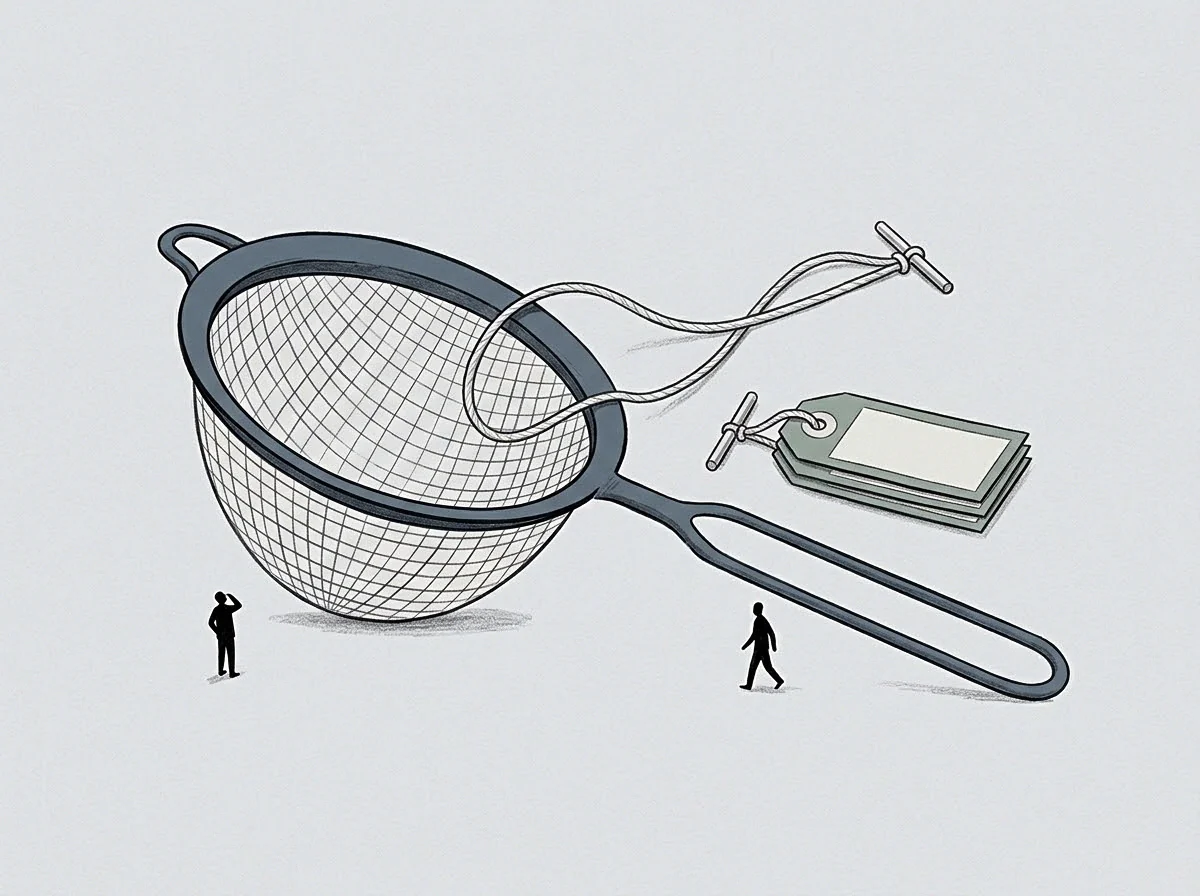
Sieve
The executive filter functions as an information sieve, separating critical strategic signals from ambient background noise. Channel design dictates how information moves through the organization toward the executive seat. Asynchronous channels reduce immediate cognitive load, permitting deep analytical work without constant interruption.
Synchronous channels introduce real-time friction, demanding constant context switching that exhausts executive setpoints.
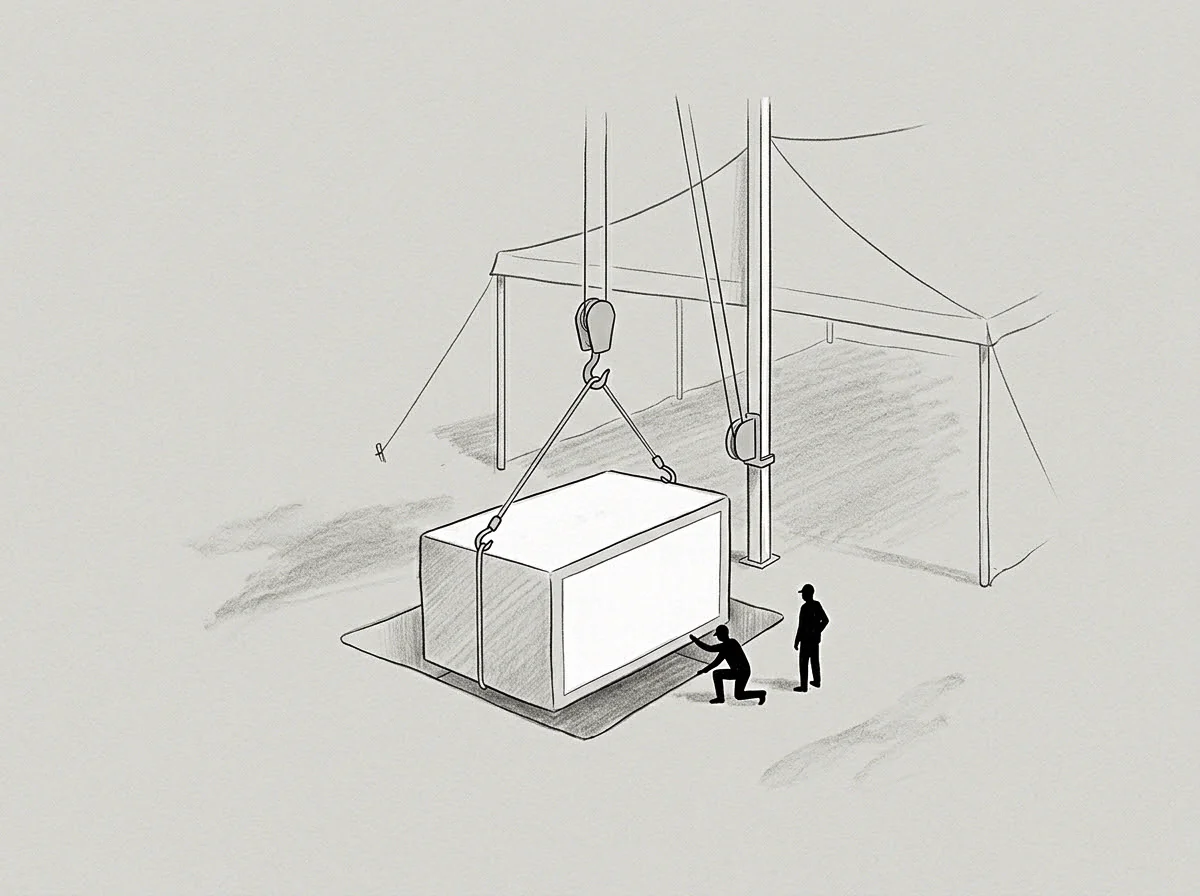
Channel Dynamics and Priority Signals
The ping signal carries weight.
Channels that produce continuous pings hijack selective attention networks, forcing the executive seat into chronic hyper-vigilance. Silence within a well-designed filter architecture signals operational stability rather than neglect. Executive availability must be derived by downstream teams through published schedules and clear SLAs rather than real-time presence markers.
- Unrestricted access channels allow routine operational updates to reach the executive seat instantly.
- Continuous context switching drains prefrontal glycogen reserves, reducing analytical capability.
- Decision fatigue lowers critical evaluation setpoints across open operational pathways.
- Systemic degradation occurs as downstream teams receive erratic approvals from an exhausted executive seat.
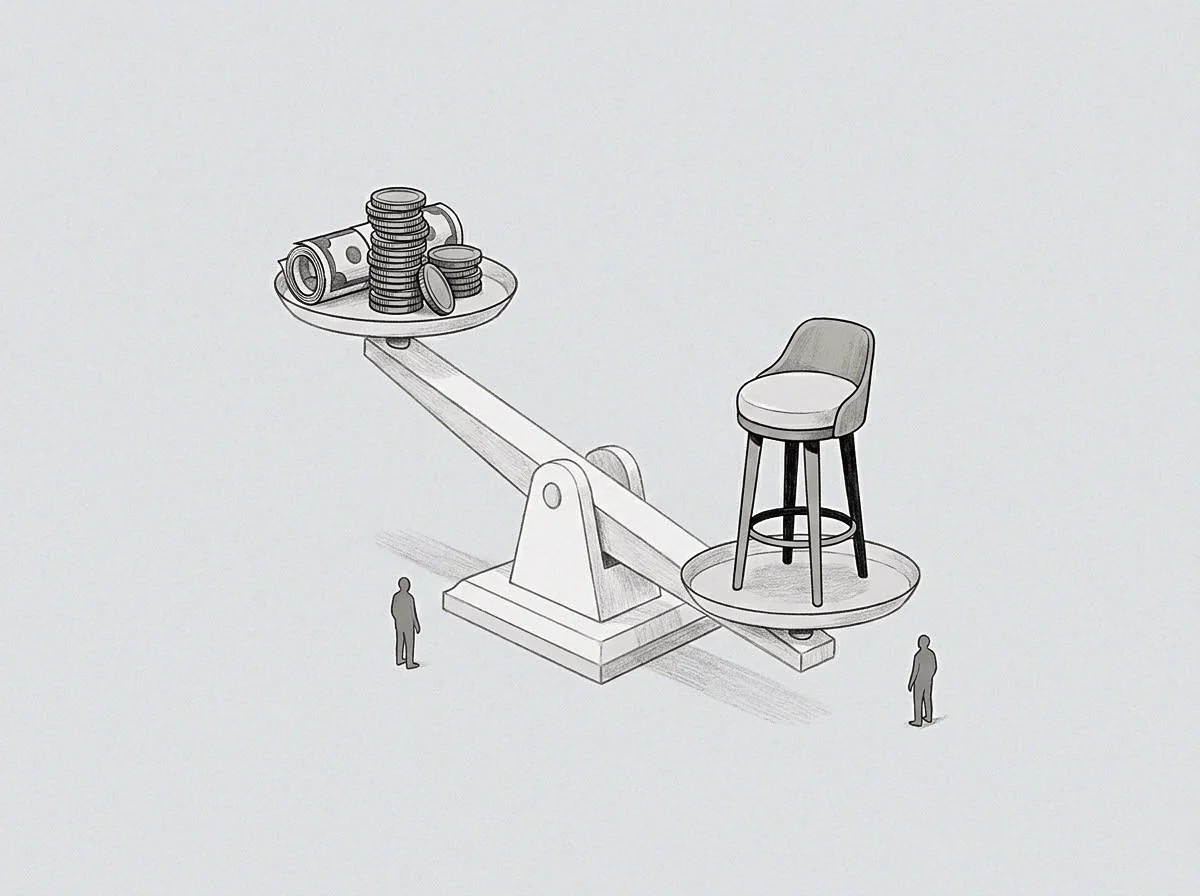
Degradation Patterns in High-Load Systems
System capacity degrades predictably when incoming signal volume consistently exceeds filter capability. Under persistent load, the executive filter experiences structural atrophy, allowing low-value items to pass through while high-value signals sit unread in crowded queues. The proxy layer collapses when rules governing escalation remain loose or poorly defined.
Every filter alters the stream.
When capacity limits are reached, does the organization default to automated operational throttling or does it rely on executive exhaustion to absorb the excess load?

Margin
Systemic margin represents the remaining operational capacity held within the executive seat after accounting for all active commitments. Preserving margin requires intentional filter architecture design and absolute adherence to stated authority boundaries. Without explicit margin, an executive system possesses zero resilience against market shifts, internal crises, or high-stakes strategic moves.

State-Gated Operational Acts
Certain executive actions depend entirely on internal system state rather than conscious decision-making. Strategic synthesis, deep negotiation, and complex structural evaluations require high cognitive headroom. No amount of personal discipline generates effective strategic synthesis when the executive system operates in allostatic overload.
State-gated acts demand strictly protected operational margin.
The setpoint holds the floor.
Operational margin provides the structural headroom required for high-stakes strategic synthesis under conditions of severe market uncertainty.
Preserving state-gated capacity requires hard boundaries around executive focus time. Decision-gated acts, such as routine signatures or standard status approvals, require minimal cognitive depth and can be processed under moderate load. Conflating decision-gated tasks with state-gated strategic analysis leads directly to compromised judgment.
Proper filter architecture isolates state-gated reserve space from routine administrative execution.
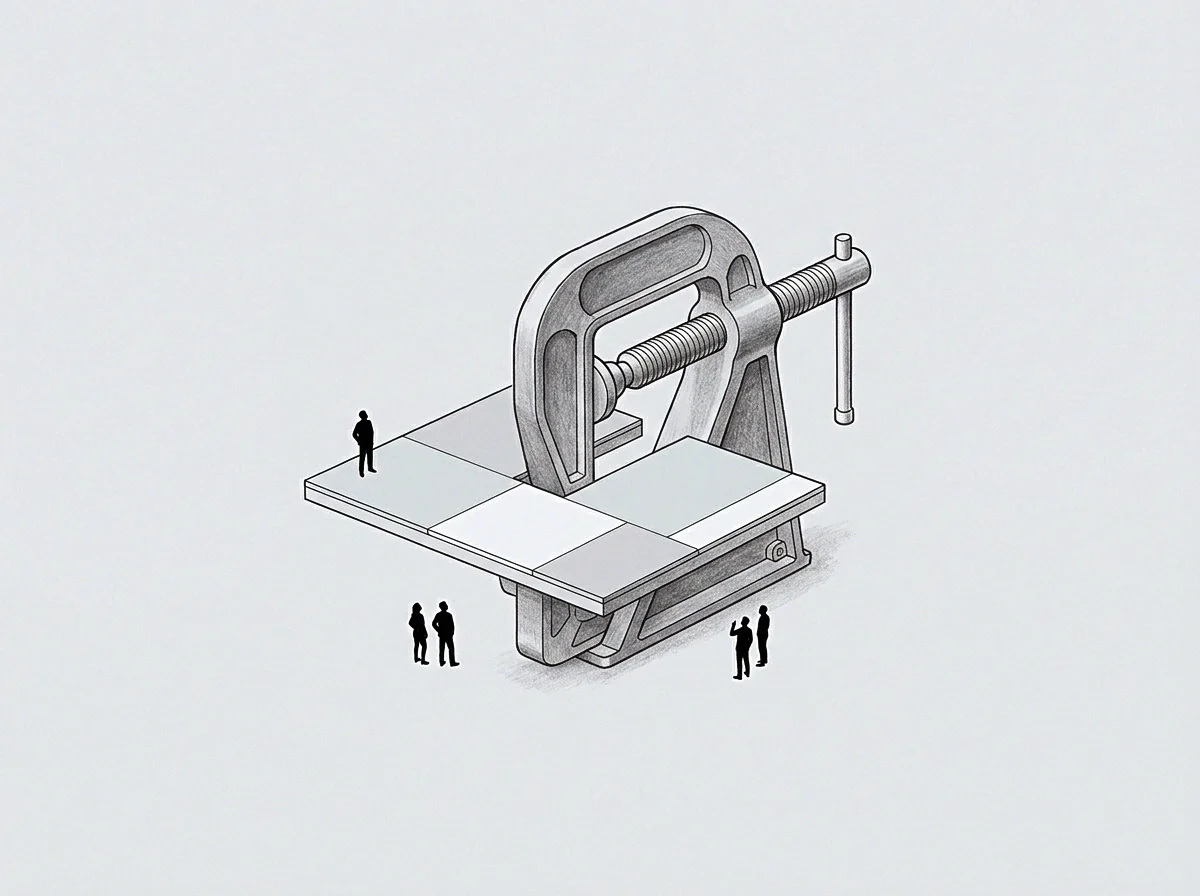
Availability Derivation and System Equilibrium
Silence communicates the cost.
Downstream teams derive executive availability through the structural behavior of the filter architecture. When the filter consistently absorbs routine operational items, downstream operators recognize that executive access is reserved exclusively for structural exceptions. The organization achieves equilibrium when proxy authority handles daily operational noise, protecting executive margin for high-value strategic execution.
The proxy absorbs direct load. Stated terms define the filter boundaries, authority transfers through explicit parameters, and executive capacity stays locked onto long-term strategic objectives.