
Structural Limits in High Concurrency Operational Leadership Seats
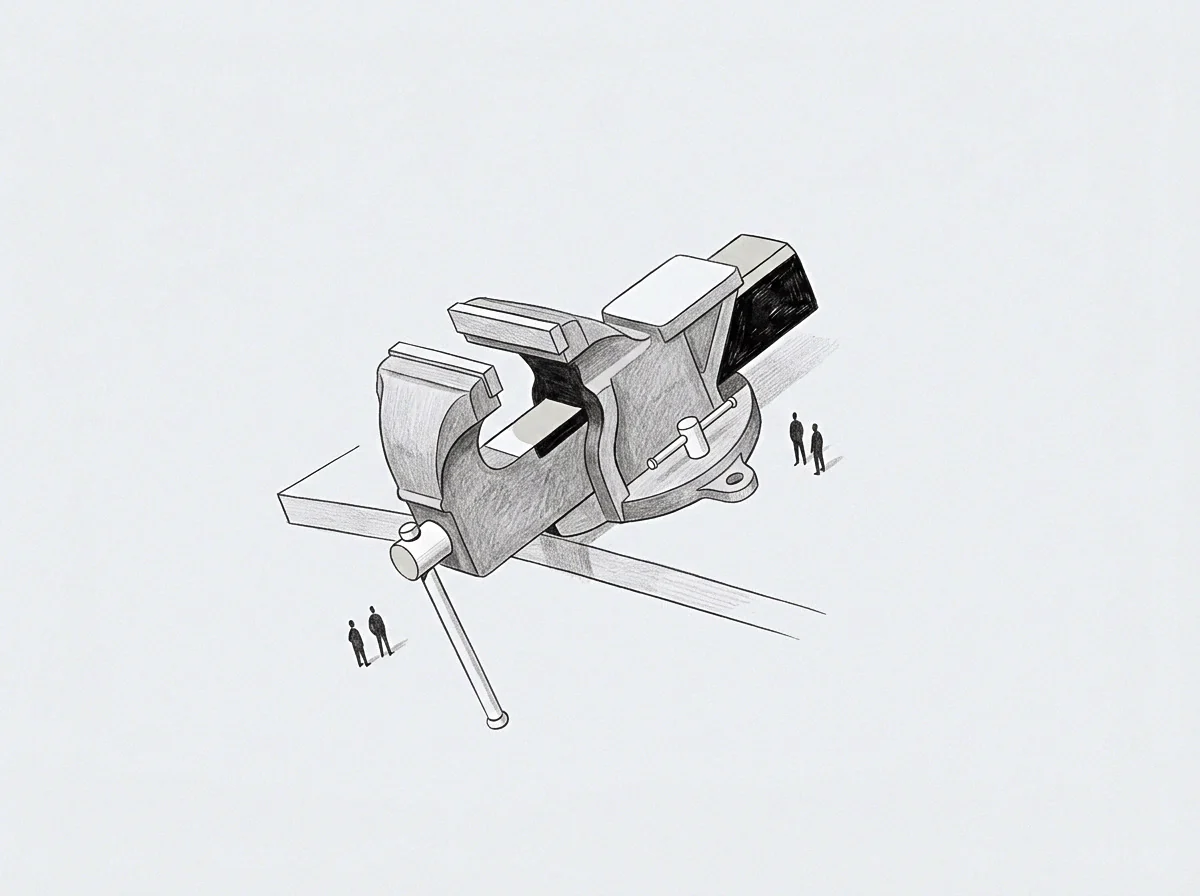
Operational leadership seats break when unmetered concurrency converts organizational coordination friction directly into biological wear.

Influx
Four communication streams run simultaneously past midnight while operational fires compete for immediate resolution. High concurrency operational seats accumulate incoming items because human systems naturally route unshaped problems toward whoever resolved the previous disturbance. When an executive demonstrates rapid incident recovery, adjacent units reclassify complex triage as general operational support.
The incoming queue deepens.
A leadership seat configured for open intake operates as an unmetered resource. Functional leads bring unresolved disputes, client escalations bypass intermediate filters, and technical incidents land directly on the operational calendar. This pattern develops because individual contributors experience their specific blocker as singular, while the central seat receives the aggregate volume of every active vector across the organization.
Parallel streams demand attention.
A central clearing seat facing unregulated demand defaults to physiological throttling whenever explicit processing boundaries remain unstated.
The neurobiology of concurrent attention explains why continuous task arbitration degrades executive capacity. Working memory holds approximately four active informational chunks during complex problem solving, yet modern operational seats routinely manage dozens of concurrent incident channels. Physiological systems respond to uninterrupted context switching by elevating sympathetic tone and maintaining prolonged cortisol secretion.
Stress physiology demonstrates that sustained allostatic load impairs prefrontal cognitive control, narrowing perceptual fields and reducing the temporal horizon of subsequent choices.
Operational leaders frequently misinterpret autonomic depletion as personal fatigue. Cognitive narrowing reduces peripheral scanning, suppresses deliberate calculation, and drives reactive concessions during contract reviews or staffing allocations. The failure to place a structural boundary at the intake layer converts organizational coordination friction directly into biological wear, eventually triggering silent cognitive failure across routine administrative commitments.
Room
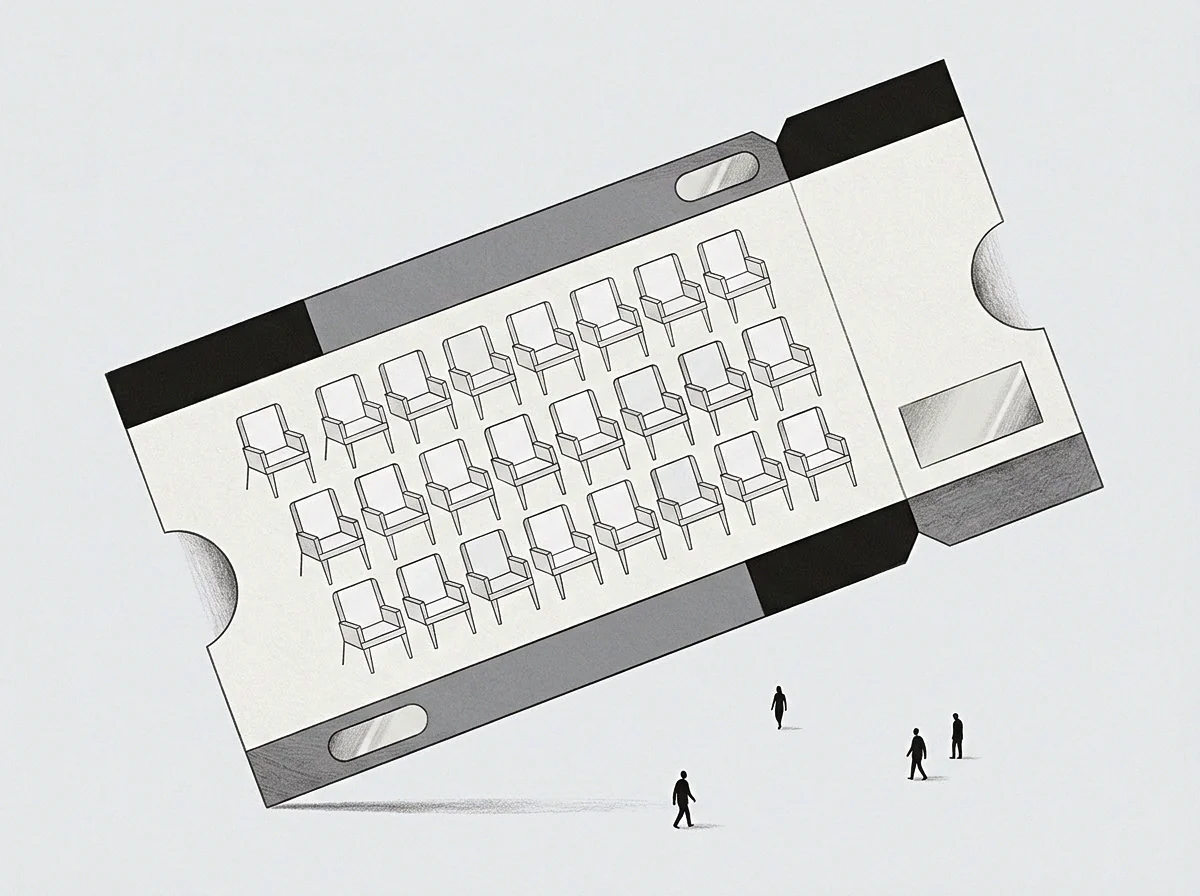
Physical workspace layout and temporal architecture govern how many simultaneous demands reach an operating officer. Physical boundaries separate deliberate strategic assessment from incoming logistical noise. When an executive operates within reach of continuous interruption, every passing question commands instantaneous evaluation.
Load seeks low resistance.
Structural Allocation of Attentional Space
Cognitive endurance depends on isolating operational execution from unstructured inquiry. Organizations that fail to zone their administrative environments force their operators to arbitrate priority in real time. The body absorbs delay.
- Scheduled Processing Blocks confine transactional evaluations to two distinct windows each working day, preventing intermittent inquiries from fragmenting cognitive bandwidth.
- Arbitration Thresholds mandate that cross-functional disputes arrive with two fully evaluated proposals, eliminating raw informational transfer to the central desk.
- Asynchronous Latency Defaults establish four-hour minimum review periods for non-critical operational submissions, interrupting the expectation of instantaneous feedback.
- Channel Containment restricts operational emergency declarations to a single monitored circuit, leaving ancillary messaging spaces silent during execution hours.
Interruption volume expands to occupy whatever continuous availability an operating leader projects to peers.
Attention splits across threads. When an operational seat establishes dedicated zones of complete isolation, peers develop alternate pathways for local problem resolution. Removing continuous availability forces adjacent departments to stabilize internal workflows rather than exporting volatility to the center.
An operator maintaining a structured room permits incoming items to wait until predetermined clearing intervals, protecting strategic clarity from transactional decay.
Siphon
Informational draws across an enterprise siphon attentional reserves long before operational failures become visible. Co-regulation demands between executive peers represent a substantial drain on functional capacity. When a partner experiences elevated anxiety regarding market developments or product milestones, the operational officer frequently serves as an informal shock absorber.
The operator absorbs friction.
Social baseline theory establishes that human organisms conserve metabolic resources by delegating vigilance and emotional stabilization to trusted social partners. In enterprise hierarchies, operational leaders routinely carry delegated vigilance for the entire executive committee. This dynamic transfers metabolic costs from the collective unit directly onto the central coordinator.
The capacity breaks first.
| Evaluation Dimension | Open Latency Routing | Arbitrated Protocol Queuing |
|---|---|---|
| Intake Arbitration Point | Central executive desk | Standardized intake rubric |
| Concurrent Escalation Handling | Simultaneous interruptions across live media | Serialized review based on pre-set financial exposure |
| Metabolic Cost Distribution | Concentrated entirely on the operational seat | Distributed across submitting division leads |
| Resolution Speed for Routine Tasks | Immediate initial reaction with high cognitive drift | Batched resolution with controlled context switching |
| Systemic Single Point Vulnerability | Executive cognitive collapse halts execution | Workflow proceeds through distributed criteria |
A stated term serves as an immovable object within relational systems. When an operating leader defines an immutable boundary around triage intervention, the load-transferring apparatus within the enterprise encounters resistance. A term sets boundary.
Without an explicit term, interpersonal reassurance cycles consume hours that operational architecture requires for systemic maintenance.
Unstated boundaries invite continuous testing from organizational components seeking rapid emotional regulation.
A founder frequently attempts to resolve ambiguity by scheduling emergency operational alignments. The push finds edges. Establishing that tactical reassessments occur strictly during weekly governance blocks shifts the problem back to functional heads.
When the operating desk refuses to process panic-induced escalations, the submitting party either resolves the underlying friction independently or documents the risk through standard administrative channels.
Operational contracts containing an unambiguous five-hundred-thousand-dollar threshold for emergency weekend intervention eliminate eighty percent of incoming executive escalations without damaging enterprise performance.

Drift
Gradual expansion of operational responsibilities occurs without formal mandate or organizational debate. The phenomenon of scope expansion manifests through minute incremental concessions. An operating officer reviews one vendor agreement outside normal parameters, agrees to mediate an isolated departmental disagreement, or monitors a minor operational dashboard over a single holiday.
Silence marks an exhausted buffer.

Mechanisms of Latency Accumulation
Operational decay rarely announces itself through dramatic institutional ruptures. Systems experience a slow lengthening of standard response times as executive attention fragments across peripheral obligations. Every thread claims priority.
- Uncataloged Delegation transfers administrative stewardship to the operational desk when functional managers vacate their seats or experience temporary operational confusion.
- Peripheral Governance Infiltration inserts operational executives into secondary advisory committees, draining hours needed for essential supply chain oversight.
- Emergency Normalization converts temporary crisis triage procedures into permanent operational protocols without subsequent administrative review.
Prolonged operational latency indicates an administrative seat carrying informal responsibilities beyond its structural design.
A leadership seat subjected to continuous creep demonstrates measurable degradation in decision quality. Stress research confirms that executive exhaustion promotes risk aversion in minor negotiations while simultaneously encouraging reckless oversight in major capital allocations. The body maintains biological equilibrium by dampening vigilance across complex analytical domains, leading to downstream contractual liabilities.
No reply arrives tonight. When an operating officer steps back to evaluate annual throughput, the cumulative volume of unassigned tasks dwarfs formal duties. The stated wall remains.
Colleagues observing an operating leader step back from informal commitments frequently interpret the transition as personal detachment, remarking that previous accessibility made departmental operations much simpler.
Anchor
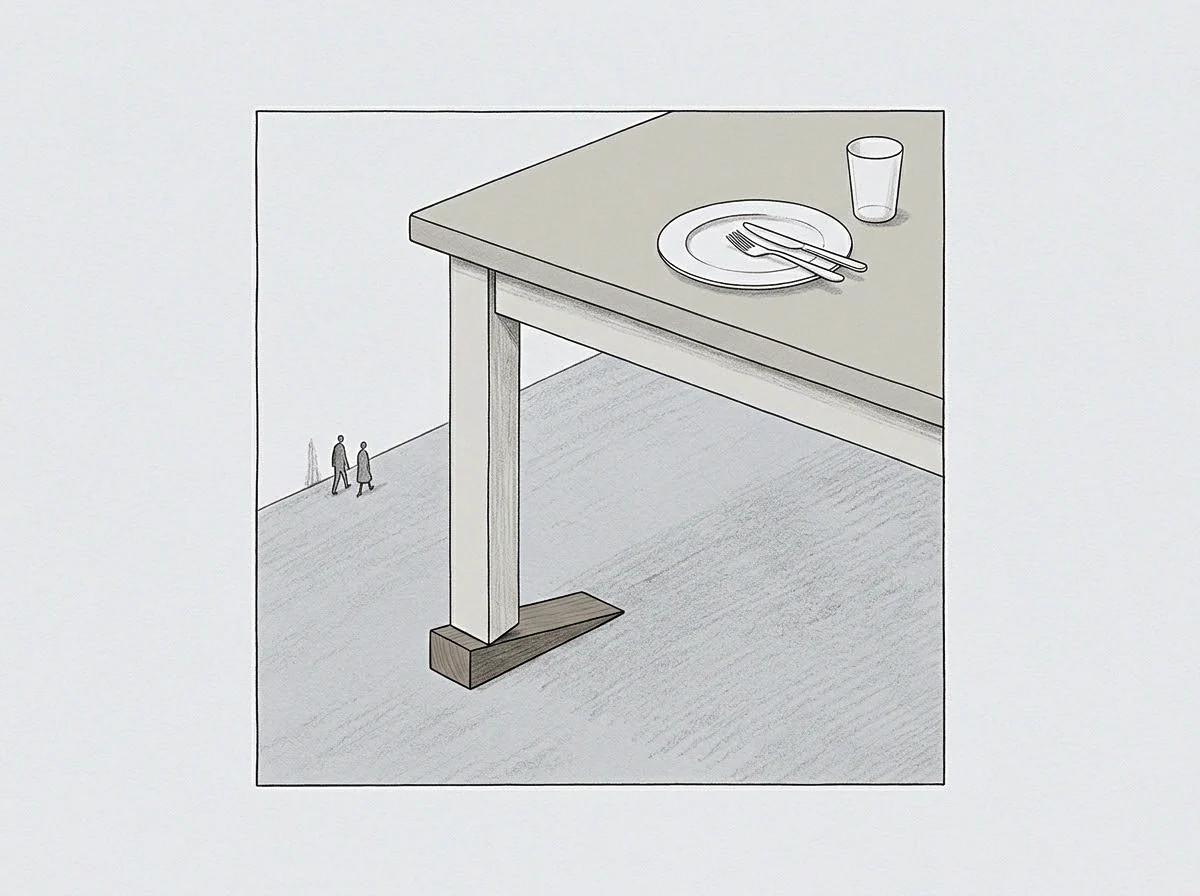
Physical constraints and explicit operational parameters anchor an executive seat against systemic pressures. The stability of an operating division depends on the presence of unyielding boundaries that do not bend under relational leverage. When an organization recognizes that the operational seat functions behind clear contractual walls, administrative transactions adjust to the constraint.
The system tests limits.
Establishing an operational limit involves identifying the precise point where additional concurrency produces negative system returns. An operating officer who manages eight major capital initiatives while supervising daily fulfillment pipelines reaches a mathematical ceiling on cognitive evaluation. Stating this ceiling clearly to investors and governance boards transforms a private physical vulnerability into a collective organizational parameter.
The distinction between operational state and momentary emotional disposition guides effective executive stewardship. State reflects the physiological and structural capacity of the operating apparatus to absorb input without systemic disruption. Momentary sentiment represents an internal reaction carrying no structural information.
Decisions regarding organizational intake must rest entirely on state measurements, ignoring transient guilt or collective urgency.
An operator who grounds operational intake in measurable state parameters protects enterprise survivability through sustained economic cycles. The operating desk establishes specific communication windows, formal intake requirements, and immutable priority matrices. System participants gradually learn that the central desk processes verified inputs through defined channels rather than reacting to uncalibrated interpersonal pressure.
Operational integrity persists through adherence to these structural limits.