
Structural Protocols for Restoring Autonomic Headroom and Closing Open Loops in Founder Seats
Autonomic headroom recovers when ambiguous operational loops receive defined scope, dates, and termination criteria, halting chronic sympathetic activation.

Count
Eleven unresolved messages sit in the client interface at midnight while the heart rate stays fifteen beats above baseline. A person sitting at the desk stares at a vendor query regarding contract renewal dates. The question demands three minutes of arithmetic, yet cognitive output halts before the calculation begins.
Physical exhaustion usually responds to rest, but this immobility reflects autonomic saturation, where the central nervous system reaches its ceiling for active, unresolved queries. The body treats every open loop as an impending somatic claim. When eight operational queries remain ambiguous, sympathetic tone remains elevated through the evening, suppressing vagal tone and halting parasympathetic recovery.
Each pending transaction occupies a discrete biological register. Research in cognitive ergonomics and allostatic load measures how ambiguous responsibilities tax the executive control network. Working memory retains unresolved tasks with priority status, maintaining cortical activation until the system registers completion or formal deferral.
When an operator attempts to sleep with unresolved disputes regarding equity or release milestones, neuroendocrine markers show continuous cortisol elevation. The brain treats unanswered strategic ambiguity identically to physical environmental hazards, diverting metabolic resources toward vigilance.
A biological system holding seven ambiguous commitments maintains sympathetic arousal regardless of physical posture.
The distinction between raw project volume and unmanaged concurrency explains systemic collapse. A company builder can oversee twelve linear workstreams when every stream carries defined delivery dates, documented boundaries, and designated owners. Distress appears when four lines lack resolution criteria.
The cognitive apparatus repeatedly scans open items to prevent administrative failure. This scanning rhythm consumes glycogen, degrades prefrontal regulation, and reduces the autonomic headroom needed to absorb routine operational friction.
When chronic regulatory demand exceeds restorative sleep cycles, peripheral tissues accumulate wear. The allostatic load model, derived from neuroendocrinology, measures this exact biological friction through circulating catecholamines, systemic blood pressure, and inflammatory cytokines. Under prolonged operational ambiguity, glucocorticoid receptors downregulate.
An individual often interprets this physiological state as an emotional collapse or an inability to sustain ambition, though it stems from an unbuffered regulatory deficit generated by ungated inputs.
Persistent neglect of autonomic depletion produces involuntary cognitive shutdown, precipitating severe executive paralysis and a sudden operational halt across every line.
Seat
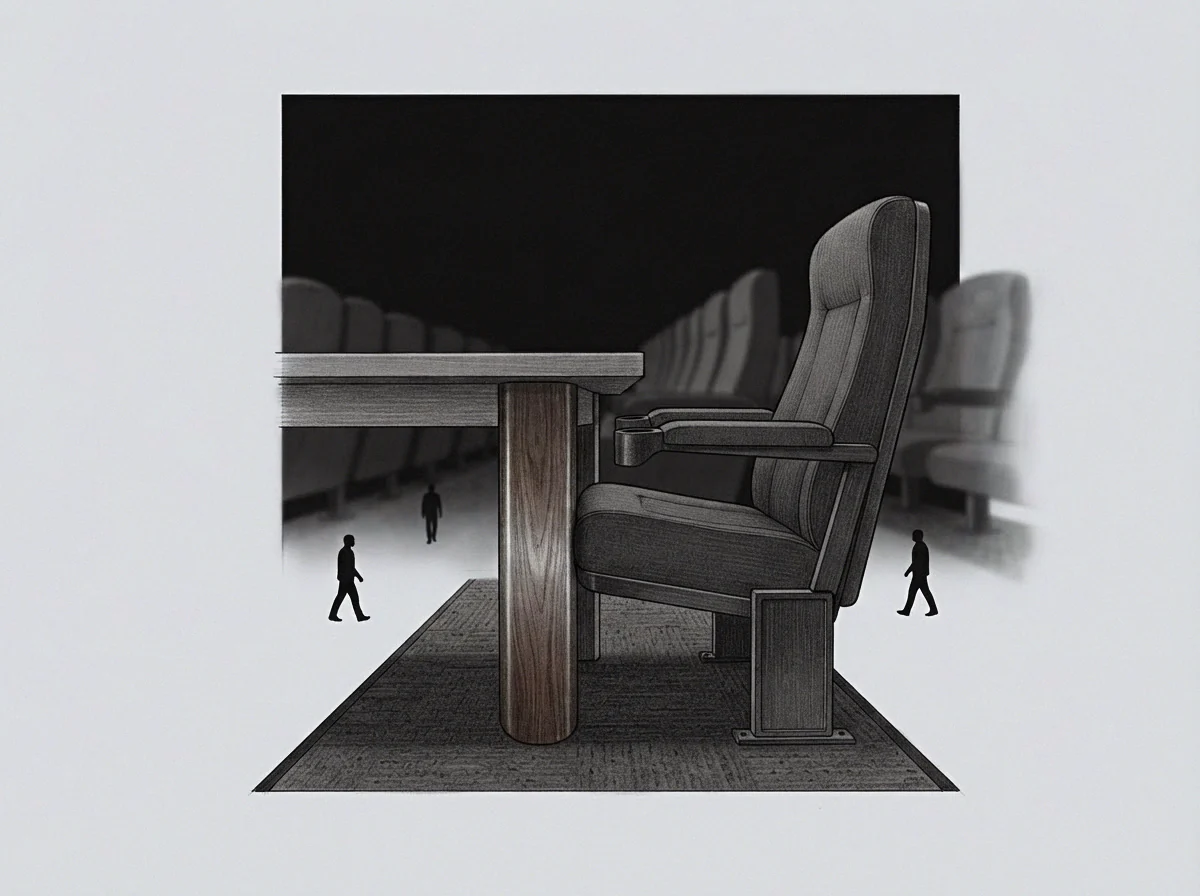
The institutional center of an enterprise acts as an emotional heat sink. Employees, co-founders, and capital partners project their anxieties toward the principal office, seeking reassurance during market contraction. Social baseline theory demonstrates that proximity to an unshakeable figure reduces the metabolic expense of risk for the surrounding group.
The person occupying the central role absorbs the shared load. When an executive displays calm during cash flow volatility, the team expends less neural effort on survival calculations, and that transferred regulatory burden settles directly onto the central actor.
This dynamic creates an asymmetric regulatory arrangement. Subordinates offload systemic dread into the executive office through routine updates, escalations, and unstructured status checks. The central operator processes these incoming alarms, modulates group affect, and returns stabilizing communication.
Over three quarters of consistent market stress, this continuous down-regulation of external panic exhausts personal autonomic reserves.

What Distinguishes Structural Throttling From Depressive Exhaustion?
Diagnostic confusion routinely mislabels autonomic defense as affective illness. When incoming load overwhelms regulatory capacity, the nervous system engages throttling to prevent cardiovascular and neurochemical failure. Throttling preserves basic execution.
The executive continues fulfilling statutory obligations, approving vendor disbursements, and maintaining investor reports, yet self-directed initiative disappears. The clinical interpretation of depression identifies anhedonia and loss of agency, whereas throttling represents an adaptive metabolic circuit breaker designed to halt discretionary expenditure while core life support continues.
A regulatory sponge operating without replenishment defaults to involuntary operational throttling.
Clinical instruments developed within corporate psychology associate this state with secondary trauma and systemic burnout rather than psychiatric collapse. When occupational health researchers analyze salivary alpha-amylase and heart rate variability among enterprise leaders, findings consistently correlate executive exhaustion with the sheer density of incoming interpersonal demands. The validity of these physiological metrics rests on populations observed during economic restructuring, where baseline autonomic stability recovers once lines of accountability clarify.
The partner across the table observes the flattened affect and assumes indifference toward the shared venture.
Term
Loop closure demands rigid administrative boundaries rather than heroic endurance. An open operational item consumes systemic reserves until it receives three definitive parameters: fixed scope, a specific delivery calendar, and explicit termination criteria. When an inbound inquiry lacks these components, the nervous system keeps the query active in working memory.
Converting an open loop into a dormant item frees autonomic headroom immediately, a transition achieved through explicit contractual and operational language.
Consider an operational sequence involving vendor renegotiations. An unmanaged interaction invites open-ended discussions, ambiguous pricing models, and ongoing review sessions. The executive centralizes the entire engagement through explicit conditions:
- Defined Scope Boundary restricts incoming negotiations to a single written exchange containing complete contract specifications.
- Arbitrary Review Calendar designates an explicit calendar window for evaluation, removing the obligation for immediate inbox monitoring.
- Explicit Termination Default states that an absence of counter-party resolution by the target date dissolves the transaction automatically.
- Delegated Interface Ownership shifts ongoing correspondence to an administrative proxy, insulating the central decision space from daily friction.
Control theory in telecommunication networks handles buffer overflows by dropping excess packets rather than degrading transmission speed across the entire exchange. Enterprise operators require identical structural gates. When an open inquiry enters the executive queue without an explicit resolution date, the system defaults to holding the transaction in active memory.
As every open query drains glucose, wear accumulates without conscious registration.
Unbounded communication channels convert every casual inquiry into an active autonomic tax.
A specific operational clause mandating that unresolved team requests expire after forty-eight hours without executive intervention releases the vigilance circuit instantly.

Grid
Restoring executive resilience requires analyzing concurrency limits across distinct operational designs. Queueing theory establishes that when capacity utilization approaches one hundred percent, transaction delays trend toward infinity. A human nervous system behaves under identical mathematical constraints.
When every cognitive slot remains occupied by active projects, small disturbances trigger total systemic stall. Structural protocols create synthetic gaps in operational throughput, insulating personal physiology from ambient corporate volatility.
The comparative balance between ungated operational postures and gated regulatory architectures illustrates the divergence in biological expenditure.
| Structural Variable | Ungated Operational Posture | Gated Regulatory Protocol |
|---|---|---|
| Interface Access | Continuous direct pings across multiple digital channels | Batch evaluation restricted to designated operational hours |
| Resolution Standard | Informal consensus requiring iterative conversational alignment | Documented scope with binary acceptance criteria |
| Autonomic Headroom | Sustained high sympathetic tone with suppressed vagal recovery | Periodic parasympathetic rebound via scheduled communication dark periods |
| Loop Management | Passive retention of ambiguous obligations in working memory | Formal parking of deferred items in verified external repositories |
Implementing systemic drainage of active loops proceeds through a specific operational sequence. The individual audits every active line, categorizes the obligation according to institutional necessity, and enforces closure through structural triage:
- Audit Current Concurrency identifies every unfulfilled promise, open chat channel, and pending governance decision currently claiming attention.
- Enforce Scope Truncation eliminates peripheral initiatives that offer marginal yield while commanding significant administrative focus.
- Execute External Parking transfers pending strategic questions into dated repository files, releasing immediate cognitive surveillance.
- Establish Interface Buffers positions administrative deputies between executive attention and incoming partner queries.
Field studies examining executive teams during restructuring show marked reductions in biological wear once communication channels adopt strict latency permissions. The evidence rests on cohorts evaluated over eighteen months. Whether complete loop closure can restore autonomic flexibility during active liquidity crises remains uncertain, leaving practitioners to balance physiological survival against capital insolvency.

Post
Preserving autonomic headroom requires physical and temporal separation from organizational machinery. The executive station easily becomes an echo chamber for systemic anxiety. Relocating operational analysis to analog environments breaks conditioned stress reflexes associated with digital hardware, as a quiet room without screens interrupts the continuous vigilance cycle that modern communication tools enforce.
A founder who led an industrial manufacturing venture through three rounds of debt financing maintained a secondary workshop devoid of internet connectivity. Strategic decisions took form on paper sheets, isolated from incoming alarms. The practice mirrored nineteenth-century railway dispatchers who separated track management offices from telegraph reception halls to prevent mental fatigue from causing fatal signaling collisions, demonstrating how physical distance preserves cognitive clarity and provides the structural defense that reserve capacity demands.
A boundary written on paper withstands operational pressure only when reinforced by physical absence.
Establishing absolute unavailability periods tests the resilience of supporting teams while replenishing executive neurochemistry. The central operator clarifies that non-emergency operations must proceed without real-time validation. Sustaining personal capacity over decades requires treating autonomic reserve as non-negotiable capital.
A seat held without reserve capacity empties itself through biological default.