

Neural Mechanics of Co-Regulatory Restoration for Technical Founders Experiencing Baseline Depletion
The brain defaults to shared regulatory budgeting, making isolated self-regulation metabolically expensive for depleted technical leaders.
The brain defaults to shared regulatory budgeting, making isolated self-regulation metabolically expensive for depleted technical leaders.

Autonomic allostatic throttling downregulates executive capacity during solitary technical sprints when unbuffered sympathetic stress suppresses vagal recovery.

Solitary regulation forces the central nervous system to fund threat monitoring entirely from unbuffered individual metabolic reserves.
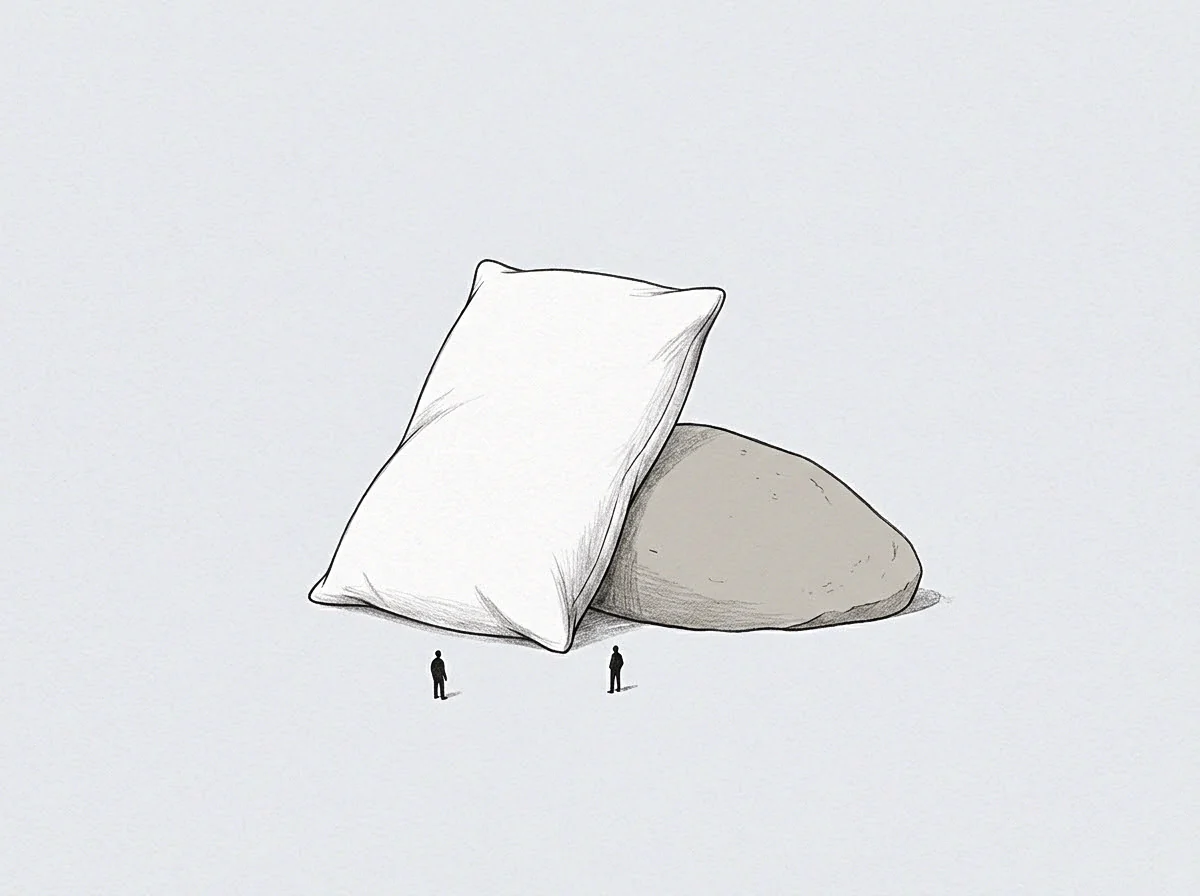
Chronic autonomic exhaustion destroys the neural capacity for social engagement, rendering founding partners biologically unable to execute sustainable relational renegotiation.

Chronic operational stress down-regulates relational safety receptors, but structured non-demanding co-regulation systematically restores earned security.

Coregulation rebuilding requires transitioning from solitary neural budgeting to reciprocal presence that distributes metabolic loads across trusted bodies.

Predictable proximity and explicit autonomic limits reset parasympathetic baseline by lowering the metabolic cost of self-regulation in high-stress partnerships.

Cognitive concurrency caps represent structural processing limits under ungated operational load, whereas clinical anhedonia stems from neural reward pathway impairment.

Solitary autonomic regulation under organizational scaling drives allostatic overload, forcing neuroendocrine biological throttling when shared social baselines are absent.
The terms are written where they belong. Each field holds three desks, and every entry a desk writes raises the terms it uses, each term given a meaning, a mechanism and the places it appears. The record on these pages stays first person and hand made; the fields grow the nomenclature.