
Managing Allostatic Wear and Attentional Switching Costs After Founding
Systemic throttling limits voluntary cognitive output to protect biological reserves when chronic operational inputs outpace working memory clearance capacity.
Throttle
Four messaging threads remain open at midnight on an external monitor. One thread holds an unresolved dispute between two engineers over database migrations. Another contains a vendor invoice with an unexpected eighteen percent surcharge.
The third displays a draft response to a prospective enterprise buyer who altered evaluation criteria. The fourth shows an incoming message from a co-founder asking for fifteen minutes on equity adjustments before tomorrow morning. The founder sits immobile, scrolling through terminal logs that require no decisions.
The capacity to originate a single coherent reply has evaporated, yet the ability to review automated alerts persists for another two hours.
This state carries an observable signature. An operator facing high input rates reduces voluntary cognitive output while preserving execution on routine, pre-structured tasks. Stress physiology measures this reduction as an adaptive defense against systemic failure.
The nervous system limits voluntary initiation to preserve basal function. Observers outside the seat regularly misread this conservation state as indifference or executive withdrawal.
Under chronic input rates exceeding cognitive clearance capacity, the autonomic nervous system restricts voluntary working memory to preserve motor execution.
When input volume outpaces clearance for weeks, the organism institutes defensive rate limiting. In mechanical systems, an engine controller restricts fuel flow when operating temperatures cross thermal thresholds. In human physiology, sustained sympathetic activation elevates baseline cortisol, shifts neural metabolism away from the prefrontal cortex, and concentrates activity within the dorsal striatum.
The person continues to process procedural requests. Strategic synthesis halts entirely.

Predictable Friction Points During Sustained Inputs
Attentional resources disperse across fragmented operational fronts during early venture phases. Each distinct domain imposes a sustained processing obligation on working memory:
- Unresolved commercial disputes consume foreground attention until formal written parameters limit the scope of financial exposure.
- Personnel performance ambiguities hold persistent working memory slots when expectations remain undocumented across consecutive reporting cycles.
- Capital allocation decisions command continuous autonomic arousal until banking transfers complete or contractual terms reach formal execution.
Classifying this state as depression creates systemic diagnostic errors. Depressive conditions involve generalized anhedonia, pervasive helplessness, and psychomotor deceleration independent of operational demands. Throttling represents an active regulatory maneuver performed by a taxed cognitive architecture.
Remove the incoming queues, and spontaneous generative thought returns within forty-eight hours. Retain the incoming queues while applying mood interventions, and the underlying autonomic strain continues uninterrupted.
Mistaking systemic throttling for characterological failure leads founders to redouble exertion against diminishing cognitive returns, precipitating acute vascular exhaustion and involuntary operational collapse.

Shelf
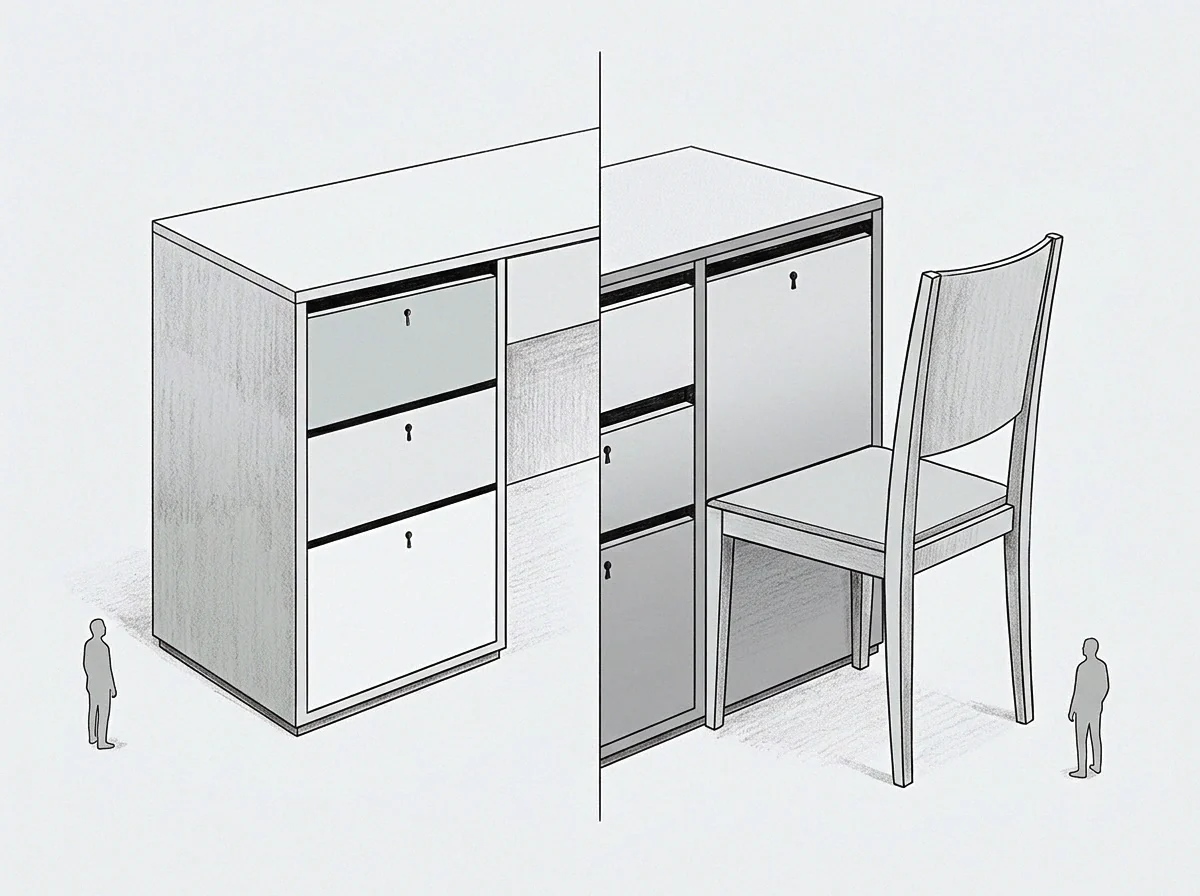
Attentional capacity functions like physical shelf space with rigid spatial boundaries. Every active project, unread alert, and relational ambiguity occupies a measurable footprint on this surface. Cognitive psychologists measure the cost of switching attention between divergent tasks through reaction-time latency and error accumulation.
Moving between a financial model and a personnel dispute does not clear the cognitive register. A residual trace of the prior activity clings to working memory, reducing analytical precision on the next task.
Attentional residue thickens when tasks lack crisp boundaries. An interaction ended without clear closure remains active in neural processing networks. The human cognitive apparatus treats every open operational loop as a live thread requiring monitoring.
Four active projects bounded by clear dates and defined artifacts exert minimal background pull. Conversely, four vague, unstructured problems consume all available cognitive reserve.
A parked operational line with documented parameters stops consuming active working memory slots.
The distinction between gated and ungated threads governs cognitive solvency. A gated thread possesses three explicit components: a bounded scope, a fixed milestone date, and written terms defining completion. An ungated thread lacks one or more of these elements, allowing it to generate continuous predictive anxiety.
The mind continually polls ungated threads to prevent operational failure, creating phantom cognitive drain.

What Separates Gated Operations From Open Demands?
The physical structure of incoming communication determines whether an operational item functions as a stable asset or an ongoing attentional liability. Ungated incoming demands arrive without predefined stopping points, forcing continuous evaluation cycles.
Consider two operational models managing six concurrent initiatives across venture development. One model processes demands as continuous streams through real-time communication tools. The other routes incoming requirements through asynchronous tickets governed by strict evidentiary criteria.
The second model preserves cognitive capacity by establishing rigid structural interfaces for each incoming item.
The operational shelf empties only when external structural constraints replace internal vigilance. Without documented operating limits, counter-parties expand communication frequency to match their own operational anxieties.
The sender assumes that immediate acknowledgment indicates abundant operational bandwidth, prompting them to transmit additional unstructured inquiries without restraint.

Load
Allostatic load names the cumulative physiological wear exacted on an organism by continuous adaptation to environmental stressors. In enterprise leadership, this wear originates in chronic uncertainty, relational tensions, and relentless contextual shifting. Unlike acute stressors that activate neuroendocrine responses for brief intervals before returning to baseline, founder responsibilities maintain sympathetic arousal across consecutive calendar quarters.
Biomarkers of allostatic load capture this systemic degradation without relying on subjective emotional self-reports. Primary mediators include elevated nocturnal salivary cortisol, suppressed dehydroepiandrosterone sulfate, elevated inflammatory cytokines such as interleukin-6, and reduced heart rate variability. Secondary outcomes manifest as elevated resting blood pressure, elevated fasting insulin, and disrupted sleep architectures characterized by reduced slow-wave restorative intervals.
When systemic wear accumulates across twelve to eighteen months, biological regulatory systems begin failing at the margins. The operator experiences cognitive slowing, reduced emotional regulation, and persistent gastrointestinal irritation. These indicators reflect physical tissue degradation induced by sustained hormonal elevation.
| Evaluation Dimension | Systemic Throttling | Depressive Deficit |
|---|---|---|
| Response to Queue Reduction | Spontaneous restoration of generative focus within two days | Persistent affective flattening and anhedonia regardless of workload |
| Structured Execution Capacity | High retention of routine operational and procedural output | Generalized psychomotor slowing across all behavioral domains |
| Physiological Biomarkers | Elevated diurnal cortisol alongside high sympathetic tone | Flattened diurnal cortisol curves with blunted stress reactivity |
| Cognitive Interference Cause | Attentional residue from open, unmanaged external threads | Endogenous ruminative loops independent of operational input |
Understanding these distinctions prevents misdirected clinical interventions. Addressing allostatic wear demands aggressive reduction of biological stressors rather than psychological reframing. Cognitive restructuring cannot reduce systemic inflammatory cascades driven by sixty continuous hours of weekly attentional fragmentation.
A stated operational limit with clear exclusionary criteria restores systemic headroom by establishing verifiable friction against incoming environmental demands.

Split
Human beings regulate affective and physiological states through social connections. Social baseline theory demonstrates that the human nervous system defaults to assuming proximity to reliable social partners. Operating in isolation or bearing sole responsibility for collective outcomes forces the solitary nervous system to expend substantially more metabolic energy regulating baseline stress responses.
Founders frequently experience an asymmetry in relational regulation. Subordinates, co-founders, and outside investors bring their uncontained operational anxieties to the founder for containment and resolution. The leader acts as an external biological regulator for the organization, processing uncertainty, absorbing interpersonal hostility, and projecting institutional stability.
This borrowed regulation demands immense metabolic expenditure from an already depleted physical reserve.
A regulator proven resilient under severe environmental pressure inevitably attracts additional unstructured volume from surrounding observers.
Over time, the leader carries an untenable relational split. They absorb volatility from the perimeter while finding no internal structural container for their own operational uncertainty. Venture capital partners assess performance based on output metrics, while employees depend on the leader for psychological assurance.
The founder operates as an isolated terminal node in a complex regulatory network.
This dynamic accelerates allostatic degradation. When the person in the central seat attempts to access co-regulation within professional relationships, counter-parties interpret the disclosure as a sign of operational instability. The leader learns to suppress outward displays of fatigue, locking the autonomic nervous system into permanent hypervigilance.
How long an isolated human biology can sustain the collective emotional regulation of fifty dependents without external structural support remains an unsettled empirical question in organizational physiology.

Line
Recovering operational headroom requires erecting unambiguous operational lines. These lines do not depend on interpersonal goodwill or empathetic understanding. They function as contractual parameters embedded directly within organizational workflows.
A stated limit protects cognitive bandwidth by replacing real-time emotional negotiations with deterministic structural rules.
The construction of a reliable operational gate rests on three structural parameters:
- Temporal access constraints restrict incoming interpersonal queries to narrow synchronization windows across the calendar week.
- Evidentiary submission standards require all internal operational proposals to contain complete analytical summaries before gaining review slots.
- Explicit operational delegation transfers final authority over specific commercial outcomes to designated lieutenants without mandatory executive review.
Enforcing these parameters produces immediate institutional friction. Counter-parties accustomed to continuous real-time access will register procedural constraints as personal slights or corporate calcification. The operator accepts this temporary friction as the necessary price of biological preservation.
Yielding to early institutional pushback instantly re-establishes open cognitive loops.
Parked operational initiatives require rigorous administrative isolation. Once an initiative is designated as parked, all calendar notifications, messaging channels, and status tracking documents associated with it must be archived. Tracking a parked project visually continues to consume cognitive slots on the attentional shelf.
Out of sight creates cognitive clearance.
Clear structural boundaries protect cognitive capacity when personal resolve deteriorates under chronic operational exhaustion.