
Managing Prefrontal Concurrency Limits to Prevent Operational Capacity Collapse
Prefrontal concurrency collapses when ungated active threads exceed working memory slots, forcing executive throttling that standard metrics misdiagnose as depressive fatigue.

Count
Four messages arrive within six minutes on a Tuesday night while an operational outage unfolds in another channel. Each message contains a different request, an unstated timeline, and an implicit expectation of executive decision. The person sitting in the executive seat reads all four, closes the laptop, and feels an immediate inability to draft a single sentence in response.
The difficulty in that moment has nothing to do with personal discipline, character strength, or enthusiasm for the venture.
Working memory relies on prefrontal cortical structures that maintain a strictly limited number of active information slots. Historical research in cognitive psychology established that human working memory holds roughly four distinct chunks of information simultaneously. When an executive manages operational priorities, the primary unit of cognitive load is not the total project inventory listed on a corporate roadmap.
The true metric is the count of active, ungated cognitive threads running without bounded terms, dates, or clear ownership boundaries.

Thread Density Versus Task Volume
Operational leaders often assume that executive capacity scales with organizational size or financial capitalization. The prefrontal architecture operates under physical constraints that remain fixed regardless of corporate valuation. A founder can comfortably monitor twenty distinct projects if nineteen of those projects run on clear schedules, delegated authority, and deterministic reporting triggers.
A single project transformed into three ungated cognitive loops will saturate executive bandwidth faster than a dozen structured initiatives. An ungated loop occurs whenever an issue lacks a definitive owner, an explicit decision deadline, or a clear term governing acceptable resolution. Every ungated loop claims a dedicated slot in prefrontal working memory, continuously drawing background processing resources to monitor potential outcomes.
An ungated operational loop consumes prefrontal working memory continuously whether active decision work occurs or remains pending.
When the number of concurrent ungated loops exceeds working memory capacity, executive function degrades predictably. Information processing slows, context switching costs increase exponentially, and emotional regulation capacity drops. The seat stays filled, but the processing substrate reaches saturation.

Open Loop Allocation Mechanics
Each unclarified request entering executive awareness represents an incoming load vector. If an incoming vector arrives without clear parameters, the prefrontal cortex must construct and hold multiple hypothetical scenarios to evaluate the issue. This scenario generation consumes precious metabolic headroom within the brain.
Consider the structural difference between two operational scenarios in executive management:
- Structured Delegated Thread identifies an explicit owner, defines acceptable parameters for resolution, and schedules a single future review checkpoint.
- Ungated Relational Request demands vague ongoing attention, lacks clear success metrics, and remains open indefinitely in working memory.
- Parked Strategic Initiative holds complete contextual notes in external storage, setting explicit reactivation conditions before consuming active slots.
When four ungated threads occupy working memory simultaneously, capacity collapses, and any additional incoming ping forces the immediate ejection of existing operational context. The resulting state manifests as severe context fragmentation, where the executive spends more energy restoring lost context than making decisions.
The partner across the table observes a sudden refusal to engage on minor operational choices and concludes that commitment to the shared venture has vanished entirely.

Wall
The human nervous system protects vital physiological function through automated throttling mechanisms when regulatory demand exceeds available capacity. In high-demand operational environments, chronic exposure to excessive ungated loops increases overall allostatic load. Allostatic load represents the cumulative biological wear and tear resulting from sustained stress response activation.
When allostatic load approaches physiological limits, the prefrontal cortex reduces active processing capacity to prevent severe neural exhaustion. This protective downregulation reduces working memory slot availability from four items down to two or one. The executive encounters an operational wall where basic synthesis feels completely impossible.

Throttling Versus Depressive Collapse
Clinical observers routinely misdiagnose prefrontal throttling as clinical depression or occupational exhaustion syndromes. The physiological observables of a throttled executive mirror depressive states on superficial evaluation: flattened affect, reduced verbal output, delayed response latency, and avoidance of complex decision scenarios. The underlying mechanisms, however, diverge sharply.
Depressive collapse reflects a broad systemic reduction in reward sensitivity and general behavioral initiation across all domains. Throttling represents an active regulatory maneuver executed by an overloaded control system to preserve core baseline survival functions. A throttled individual who receives a sudden, total reduction in ungated thread volume restores normal cognitive agility almost immediately once prefrontal slots clear.
Throttling acts as an active biological defense mechanism designed to prevent complete neural resource depletion under chronic load.
When an organization treats a throttled executive as a depressed or unmotivated leader, the standard interventions applied often compound the structural problem. Encouraging self-reflection, adding qualitative alignment meetings, or demanding emotional processing adds fresh ungated loops to an already saturated prefrontal system.

Is open loop count readable without introspection?
External behavioral metrics provide immediate visibility into prefrontal capacity saturation long before the individual sitting in the seat acknowledges cognitive overload. Monitoring the structural properties of communication outputs reveals prefrontal availability directly.
An executive operating with full prefrontal headroom produces balanced, contextualized, and forward-looking communications. As slot saturation increases, communication patterns alter along measurable axes: sentence length shrinks, response delays grow non-linearly, reliance on binary approvals rises, and long-range planning syntax disappears from daily speech.
Ignoring these physical capacity signals leads directly to systemic operational breakdown, broken governance relationships, and costly tactical mistakes born of fragmented context.

Gate
Managing prefrontal concurrency requires structural mechanisms that transform ungated, slot-consuming loops into gated external assets. The primary instrument of prefrontal conservation is the formal gate. A gate consists of explicit scope, a binding date, and clear operational terms that relieve working memory of the obligation to track an issue actively.
Without explicit structural gating, every incoming request automatically enters prefrontal working memory as an active obligation. Establishing systemic gating protocols ensures that incoming operational vectors remain externalized until designated resolution windows open.

Conversion of Ungated Loops to Stated Terms
Converting an active thread into a gated state demands specific verbal and structural definitions. An issue cannot be parked using vague promises of future attention. Vague promises retain their slot allocation in working memory because the prefrontal cortex remains responsible for tracking the unresolved risk.
Effective thread conversion replaces continuous monitoring with deterministic conditional triggers. The executive states the exact parameters under which the topic will re-enter active processing slots. Until those parameters are met, working memory discards all monitoring routines associated with that topic.
| Thread State | Prefrontal Slot Consumption | Re-entry Latency | Relational Friction | Escalation Risk |
|---|---|---|---|---|
| Ungated Active | High (1.0 Slot) | Zero (Immediate) | Low Initial / High Sustained | Continuous |
| Gated Conditional | Minimal (0.1 Slot) | Low (Triggered) | Moderate Initial / Low Sustained | Bounded |
| Parked External | Zero (0.0 Slots) | High (Scheduled) | High Initial / Minimal Sustained | Low |
| Terminated | Zero (0.0 Slots) | Infinite (Closed) | Variable Fixed Cost | Zero |
By systematically pushing operational issues from ungated states into parked or gated states where they consume no slots, executive working memory regains necessary headroom for high-value synthesis work.
The conversion succeeds only when the external storage system, whether a written operational record or a reliable operator seat, proves completely trustworthy to the executive nervous system.
An operational rule holds that any agreement lacking explicit resolution dates or explicit metric thresholds automatically converts into an ungated prefrontal loop within forty-eight hours of negotiation.

Room
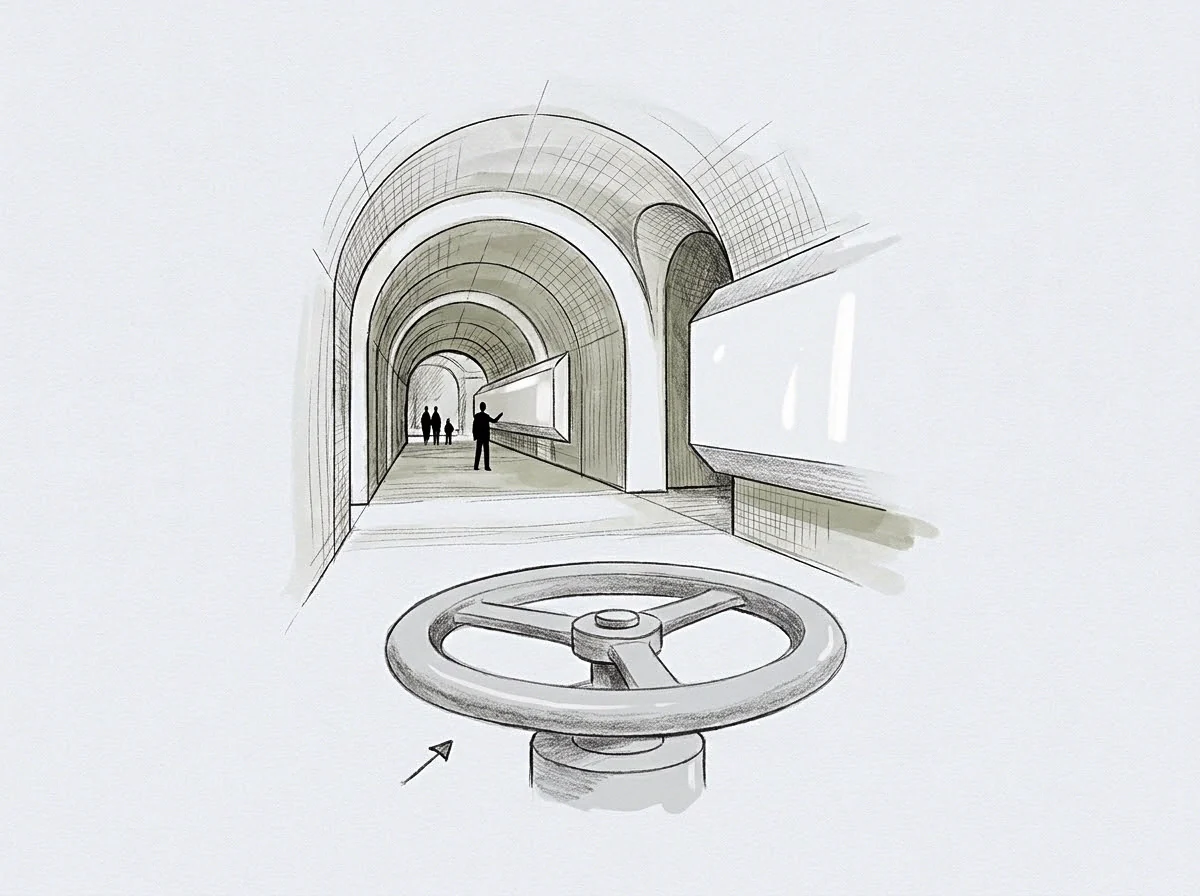
Human beings do not process regulatory demands in total isolation. Social baseline theory demonstrates that proximity to reliable co-regulating partners reduces the metabolic cost of baseline emotional and cognitive regulation. In an operational context, an executive leverages borrowed regulation from trusted team members to cushion prefrontal wear.
When high-trust co-regulation exists within an executive room, individual prefrontal processing demands drop significantly. Complex threat evaluation, market risk assessment, and internal conflict management demand fewer biological resources when distributed across a high-cohesion leadership team.
Borrowed Regulation and Social Baselines
Borrowing regulatory capacity from a colleague depends entirely on mutual predictability and explicit relational terms. If a co-founder or senior operator maintains unpredictable communication patterns, unstated expectations, or emotional volatility, proximity increases metabolic cost rather than reducing it.
In high-friction executive environments, the presence of an unpredictable partner consumes prefrontal capacity continuously. The executive must allocate working memory slots simply to model the partner’s potential reactions to routine operational updates.
Unpredictable leadership relationships convert co-regulatory partners into permanent sources of prefrontal background load.
When relational tension forces continuous internal tracking, available headroom drops to zero and executive function experiences severe degradation regardless of external operational conditions.

Availability Signal Misinterpretation
A primary source of relational breakdown in founder teams stems from the misinterpretation of availability signals during periods of prefrontal throttling. When an executive throttles to preserve core operational function, incoming communication channels are intentionally muted or delayed.
Counterparties routinely interpret this protective silence as personal rejection, strategic evasion, or professional incompetence. The incoming counterparty increases message volume and urgency, attempting to force a response.
- An executive hits maximum prefrontal slot capacity during an operational emergency.
- Automated physiological throttling activates, reducing external communication throughput to protect remaining context.
- Partners read the sudden silence as an intentional boundary violation or breach of faith.
- Partners generate rapid, high-urgency pings designed to command immediate executive attention.
- The additional pings flood the saturated prefrontal system, accelerating total operational capacity collapse.
This escalating cycle raises a fundamental operational question: how can executive teams design explicit structural protocols that signal prefrontal exhaustion without triggering relational panic across the leadership room?

Move
Preventing capacity collapse requires deliberate structural moves executed before prefrontal saturation reaches critical thresholds. Operational leaders cannot rely on personal willpower to overcome basic neurobiological limits. Systemic architecture must defend working memory slots from ungated incoming demand.
The first structural intervention involves instituting strict concurrency caps on active operational decisions. An executive must establish a hard ceiling on the number of un-gated issues permitted in active review during any single operational cycle.
Throttling Implementation Protocol
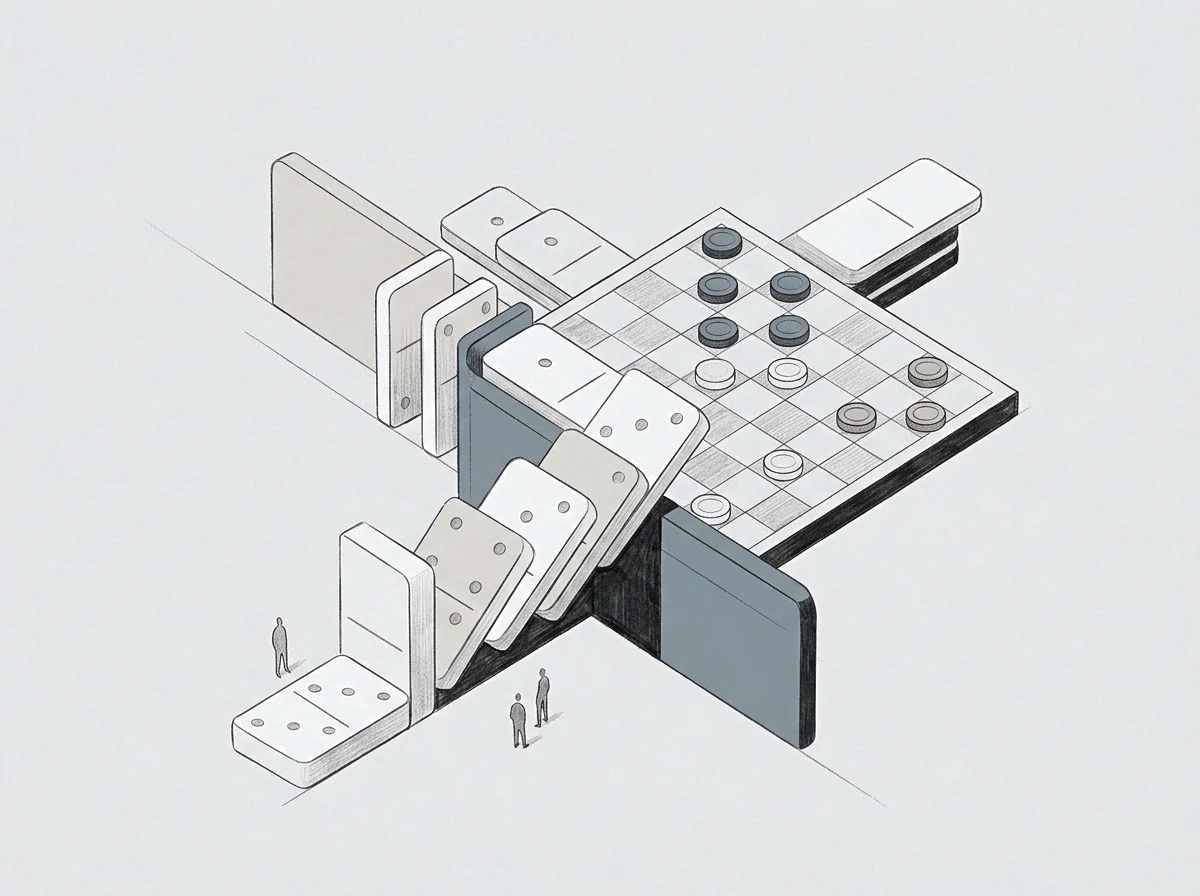
When working memory slot saturation occurs, the executive implements a formal throttling protocol. This move involves declaring an explicit operational hold on all non-emergency decision threads, externalizing current open loops into a written record, and delegating execution authority across defined operational domains.
Communicating a throttling state clearly prevents counterparties from misinterpreting defensive silence. The executive states current processing status directly: incoming items are logged, prioritized by explicit operational metrics, and assigned fixed future review slots.
By formalizing capacity limits, the organization protects its core decision-making infrastructure from catastrophic fatigue and context fragmentation while maintaining continuity in the executive seat.

Structural Headroom Preservation
Sustained operational health demands permanent headroom preservation mechanics within organizational governance. Executive schedules must maintain intentional unallocated blocks specifically designed to process residual background loops and restore prefrontal working memory capacity.
Organizations that fill every hour of executive calendar time with active meetings force working memory to operate permanently at ceiling. This practice guarantees that any unexpected operational crisis will instantly trigger prefrontal saturation and capacity collapse.
Preserving prefrontal headroom is an operational mandate that safeguards venture longevity, capital deployment efficiency, and executive resilience. Establishing deterministic gates, enforcing concurrency ceilings, and maintaining transparent co-regulatory protocols allows operational capacity to endure under intense environmental demand, using throttling to protect core functional capacity.