
Neuroendocrine Degradation From Persistent Sensory Coupling In Founders Retaining Real Time Automated Exception Monitoring
Retaining direct mobile exception alerts maintains continuous sympathetic arousal, suppressing HPA axis recovery and forcing neuroendocrine throttling.

Screen
A mobile device illuminates on a nightstand at two in the morning. The glowing display presents a high-severity stack trace from an automated error tracking pipeline. The person in the executive seat picks up the device, scans the log lines, assesses the database connection pool exhaustion, sends a message to an engineering room, and attempts to return to sleep.
The entire interaction consumes four minutes. The operational issue reaches resolution quickly. The biological system, however, remains fully awake.
Retaining direct automated exception notifications creates an unbroken channel between raw infrastructure events and executive sensory processing. Operational software systems generate continuous telemetry. System anomalies, unhandled exceptions, latency spikes, and deployment failures trigger push notifications designed to demand immediate visual and auditory attention.
When a founder retains subscription to these real-time streams, the human nervous system functions as an integrated node within the software architecture.
Retaining direct mobile exception alerts past midnight maintains executive physiological arousal at daytime operating levels regardless of system stability.
Sensory coupling occurs when external digital signals trigger immediate somatic and endocrine responses without cognitive mediation. The acoustic signature of a alert ping causes an instantaneous contraction of the tensor tympani muscle, a spike in galvanic skin conductance, and an immediate elevation in heart rate. The device vibrates on the nightstand.
Escalation rules remain undefined. Sympathetic activation occurs instantly. This sensory coupling persists even during periods when no errors occur, because the anticipatory state requires continuous cortical monitoring of the auditory and visual environment.

The Sensory Coupling Loop
Monitoring systems rely on low-latency delivery to minimize time to resolution for software incidents. Biological survival networks operate on identical low-latency pathways designed for acute environmental threats. The human brain does not distinguish between an unexpected exception log indicating a database deadlock and an environmental threat requiring physical defence.
Both events process through the basolateral amygdala, initiating a rapid neural cascade that bypasses conscious deliberation.
The retains of exception streams typically begins in early-stage operations, when executive roles and technical operational roles reside in the same person. As the organization grows, the automated alerts remain routed to the founder long after dedicated engineering teams take responsibility for system reliability. The founder views retaining these alerts as an accurate method for maintaining operational awareness.
The endocrine system records every alert as an unmediated physical disruption.

Persistent Arousal in Silent Operational Windows
The physiological cost of sensory coupling extends beyond the moments of active alert delivery. The continuous expectation of an incoming alert alters sleep architecture throughout the entire nocturnal period. Electroencephalographic studies of individuals awaiting unpredictable signals reveal a marked reduction in slow-wave delta sleep and a high frequency of micro-arousals.
Sleep architecture fragments rapidly. Parasympathetic tone drops to zero. The brain remains trapped in a hypervigilant state, continuously scanning for auditory or haptic cues from the nearby device.
The absence of an incoming ping does not restore physiological rest, because the neural architecture remains allocated to threat detection. Over months of uninterrupted exception monitoring, the baseline set point for autonomic recovery shifts, keeping the systemic nervous response elevated through every hour of the night.
The immediate consequence of maintaining unfiltered sensory coupling to technical exception streams is the gradual breakdown of executive autonomic recovery, which guarantees that systemic cellular repair processes remain permanently halted.

Spike
Automated notifications initiate rapid chemical surges within the human body. When an exception alert interrupts a period of rest or focused strategic work, the hypothalamic-pituitary-adrenal axis executes a rapid hormonal mobilization sequence. The paraventricular nucleus of the hypothalamus releases corticotropin-releasing hormone, which prompts the anterior pituitary gland to secrete adrenocorticotropic hormone into the bloodstream.
Within minutes, the adrenal cortex releases cortisol into systemic circulation while the adrenal medulla floods the vascular system with epinephrine and norepinephrine.
This hormonal response evolved to mobilize energy reserves during short acute physical emergencies. Epinephrine increases cardiac output, elevates blood pressure, and dilates bronchial passages. Cortisol inhibits non-essential metabolic processes, suppressing gastrointestinal function, immune system responses, and reproductive hormone synthesis while promoting rapid gluconeogenesis.
When automated exception monitoring delivers dozens of acute notifications throughout a twenty-four-hour cycle, this emergency cascade fires continuously, transforming an adaptive survival mechanism into a source of chronic biological wear.
Continuous exposure to unpredictable auditory exceptions forces the hypothalamic-pituitary-adrenal axis into permanent baseline elevation.

Adrenocortical Pathways Under Repeated Alert Stimulation
Repeated activation of the adrenal glands disrupts the normal negative feedback loops that maintain neuroendocrine balance. Glucocorticoid receptors in the hippocampus and hypothalamus gradually down-regulate in response to sustained high cortisol levels. This down-regulation reduces the central nervous system’s ability to shut off the cortisol response after an alert ends.
The hormonal surge triggered by a single midnight exception ping does not clear within twenty minutes. Elevated circulating cortisol persists for hours, destroying the natural circadian trough required for tissue regeneration.
Continuous neuroendocrine activation leaves measurable biomarkers across multiple physiological systems. Biological systems demand recovery windows. Primary escalation channels bypass filters.
Allostatic load accumulates quietly. Somatic symptoms follow neuroendocrine shifts. The persistent elevation of systemic catecholamines alters vascular resistance and promotes vascular inflammation, while unremitting glucocorticoid exposure disrupts glucose regulation and impairs cellular repair.
- Cortisol Awakening Response Suppression represents the flattening of the natural morning cortisol peak, indicating severe hypothalamic-pituitary-adrenal axis exhaustion and reduced morning energy availability.
- Heart Rate Variability Dampening marks the decline in high-frequency autonomic variations, reflecting the loss of vagal nerve control over cardiac rhythms under continuous threat monitoring.
- Basal Catecholamine Elevation measures the persistent concentration of circulating norepinephrine in resting blood samples, confirming unremitting sympathetic nervous system tone.
- Alpha-Amylase Persistent Elevation indicates continuous salivary gland activation driven by sympathetic nerve inputs, serving as an indicator of persistent central nervous system stress.

Suppression of Parasympathetic Down-Regulation
The parasympathetic nervous system relies on vagal nerve signaling to lower heart rate, stimulate digestive motility, and facilitate restorative cellular processes. High sympathetic tone driven by exception alerts suppresses vagal signaling entirely. The body remains locked in an ergotropic state aimed at energy expenditure, unable to shift into the trophotropic state required for cellular recovery and metabolic replenishment.
Long-term suppression of vagal tone alters systemic physiology across every major organ network. Gastrointestinal motility declines, leading to functional bowel disturbances and impaired nutrient absorption. Systemic inflammatory markers, including interleukin six and C-reactive protein, rise as cortisol loses its anti-inflammatory efficacy due to receptor resistance.
The systemic baseline shifts from health maintenance to continuous defensive crisis management.
Configuring notification channels to bypass silence rules guarantees that glucocorticoid receptors down-regulate within twelve weeks, rendering normal metabolic recovery biologically impossible until the alert pathways are fully removed.
Tether
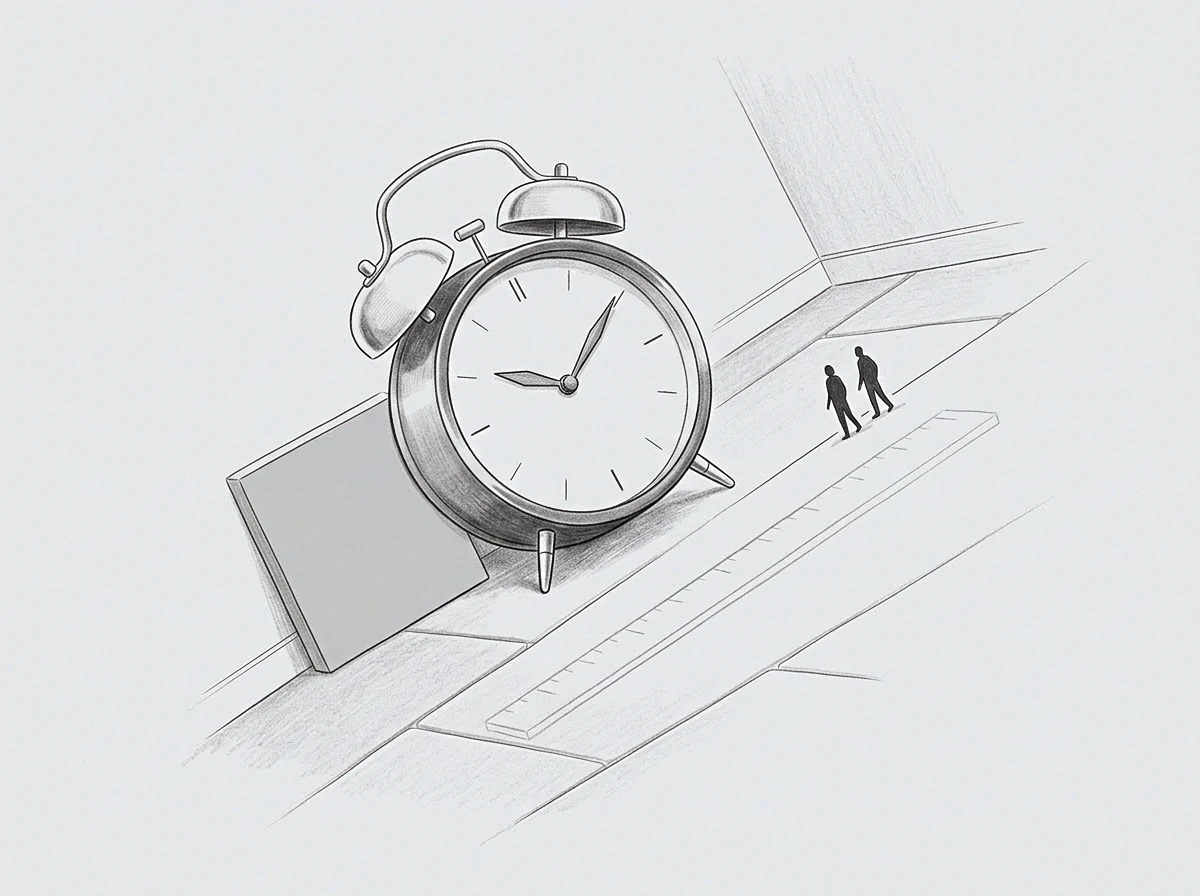
Retaining real-time exception ownership binds executive cognitive slots to routine software infrastructure performance. Every human biological system possesses a concurrency limit for unmanaged open threads. An open thread represents an unresolved operational loop that requires continuous central monitoring.
When a founder receives direct notifications for application errors, unhandled exceptions, and server timeouts, each incoming event claims a slot in active working memory. The human processor cannot differentiate between an alert that requires immediate intervention and one that resolves automatically via platform auto-scaling.
The structural decision to retain real-time monitoring reflects an operational architecture where executive authority replaces formal escalation procedures. Instead of routing exceptions to structured engineering teams with clear triage rules, the technical organization relies on the founder as the ultimate failure circuit. The founder remains tethered to the real-time operational state of the company, sacrificing strategic focus and biological capacity to serve as an automated alert parser.
An ungated exception stream converts operational software infrastructure into an external pacemaker for human endocrine fatigue.

The Failure Circuit of Retained Technical Exception Ownership
Operating as a default failure circuit creates a high switching cost every time an alert arrives. Cognitive science establishes that returning to deep analytical work after a sensory interruption requires up to twenty-three minutes of focused effort. When exception alerts fire at an average interval of forty-five minutes, deep cognitive work becomes impossible.
The executive day breaks into fragmented intervals spent processing low-level technical notifications.
The allocation of cognitive slots to raw exception streams starves long-term strategic initiatives of necessary processing capacity. The human brain prioritizes immediate sensory inputs over abstract future planning. Real time alerts enforce continuous vigilance.
Automated exception monitoring destroys headroom. The urgent sensory signal of an incoming system exception continuously displaces the complex, unprompted cognitive work required to build durable organizational infrastructure.

Structural Comparison of Monitoring Architectures
The physical consequences of monitoring choices depend on the structural path an exception takes between the software application and the human biological apparatus. Direct sensory coupling forces the executive to process raw telemetry, while structured escalation filters exceptions through explicit operational protocols.
| Operational Criterion | Direct Sensory Coupling Model | Gated Escalation Pathway Model |
|---|---|---|
| Primary Sensory Modality | Unfiltered mobile vibration and acoustic push alerts | Structured dashboard updates during scheduled operational windows |
| Nocturnal Autonomic State | Persistent sympathetic activation and high micro-arousal frequency | Sustained parasympathetic dominance with full slow-wave sleep cycles |
| HPA Axis Recovery Window | Zero hours due to continuous anticipatory vigilance | Eight hours of uninterrupted circadian baseline recovery |
| Executive Concurrency Cost | Consumes up to seventy percent of cognitive capacity on triage | Zero cognitive capacity consumed outside formal escalation events |
Shifting from direct sensory coupling to a gated escalation pathway requires formalizing internal operational boundaries. The engineering team assumes direct responsibility for system reliability, enforcing triage protocols that isolate executive leadership from routine operational noise. The executive nervous system disengages from real-time monitoring, releasing stored allostatic load and freeing cognitive capacity for high-level organizational governance.
The engineering team notes that as long as real-time alerts deliver directly to the founder’s phone, formalizing on-call rotations and resolving root-cause infrastructure defects remain low priorities for the development group.

Shift
Sustained neuroendocrine activation inevitably leads to a state of allostatic overload, where the body’s adaptive mechanisms break down under chronic stress demand. Biological systems enter a protective state termed throttling, in which energy expenditure drops drastically to prevent catastrophic tissue damage. Throttling is a defensive physiological adaptation designed to conserve metabolic resources during prolonged stress exposure.
Throttling preserves essential metabolic life.
Throttling is routinely misdiagnosed as clinical depression. While both states present with reduced motivation, profound fatigue, and executive dysfunction, their underlying mechanisms differ fundamentally. Clinical depression often involves primary mood disturbance and cognitive distortions regarding self-worth.
Biological throttling represents a high-load system running at its absolute regulatory limit, shutting down non-essential drive functions to protect myocardial, hepatic, and neural tissue from glucocorticoid toxicity.
When operational delivery continues cleanly while executive self-initiated capacity stops, the system is throttled rather than depressed.

What Separates System Throttling From Pathological Depressive Atrophy?
Discerning systemic throttling from primary depressive pathology requires examining operational output under external demand. A throttled individual continues to execute external obligations with high precision when prompted by direct incoming requirements, because external demands tap into remaining sympathetic reserves. Self-initiated work, creative strategy, and spontaneous social engagement cease entirely, because internal energy allocation pathways are locked down by central neuroendocrine protection protocols.
Treating a throttled founder with standard psychotherapeutic framing or mood-oriented interventions fails because the underlying driver is not an emotional distortion but a physiological resource deficit. As long as the real-time exception streams continue to deliver acute stress pings to the sensory apparatus, no amount of cognitive reframing can restore autonomic balance or rebuild depleted neuroendocrine reserves.

Progression to Chronic Allostatic Exhaustion
The transition from acute hypervigilance to chronic neuroendocrine exhaustion follows a predictable physiological sequence. The body moves through defined stages as allostatic load accumulates across months of retained exception monitoring.
- Continuous sympathetic elevation driven by unfiltered nocturnal alerts produces elevated resting cortisol and persistent sleep architecture disruption.
- Glucocorticoid receptor resistance develops in peripheral tissues, leading to chronic low-grade systemic inflammation and metabolic fatigue.
- Adrenocortical output flattens, resulting in a loss of the morning cortisol awakening response and severe physical exhaustion upon waking.
- Central metabolic throttling initiates, suppressing thyroid hormone conversion, reducing gonadal steroid synthesis, and halting self-initiated creative cognition.
When an executive reaches the final stage of neuroendocrine exhaustion, the capacity to process complex strategic decisions disappears entirely. The mind operates in a reactive state, processing immediate inputs while losing the temporal horizon required for long-term planning. The organizational consequences are severe: strategic vision degrades, risk tolerance vanishes, and execution quality drops across every department under the founder’s direct authority.
What remains unknown in long-term endocrine research is whether full receptor sensitivity can ever be restored to baseline levels after years of uninterrupted real-time exception coupling?

Filter
Restoring neuroendocrine function requires complete physical separation between the executive sensory apparatus and real-time operational exception channels. The human nervous system cannot heal while remaining exposed to unpredictable acute alerts. Decoupling demands structural changes to the operational environment, replacing direct biological intervention with robust automated filtering and clear organizational escalation protocols.
The first structural intervention requires terminating all direct push notifications, acoustic alerts, and haptic vibrations originating from monitoring systems to executive personal devices. Mobile devices must be removed from sleeping environments entirely. Operational telemetry must route exclusively to dedicated monitoring dashboards and automated on-call rotation management software configured to notify designated engineering personnel.
Establishing explicit availability thresholds protects executive headroom while maintaining operational continuity. The founder states clear parameters defining what constitutes a true business emergency requiring immediate executive escalation, such as complete platform outages affecting total revenue generation, severe security breaches, or regulatory compliance failures. All routine software exceptions, database latency spikes, and localized application errors must be handled by technical teams according to documented runbooks.

Decoupling Executive Physiology From Operational Pings
Implementing an operational filter requires inserting an intermediary layer between technical events and human sensory processing. Automated alert management tools must apply suppression rules, grouping duplicate errors and requiring minimum severity thresholds before triggering human notification. Gated escalation paths restore headroom.
Operational continuity demands structural delegation.
On-call responsibility must rotate among qualified engineering personnel, ensuring that no single individual carries continuous nocturnal monitoring duties. When engineering teams hold exclusive responsibility for incident response, systemic platform stability improves rapidly. Engineers facing immediate nocturnal alerts possess direct incentives to fix root-cause software bugs, eliminating fragile technical debt that generates recurring exception noise.

Establishing the Availability Threshold
Decoupling the executive seat from operational exception monitoring creates immediate physiological benefits. Within fourteen days of uninterrupted nocturnal sleep, vagal tone begins to recover, resting heart rate declines, and parasympathetic activity resumes during sleep windows. Over eight to twelve weeks, glucocorticoid receptor sensitivity recovers, permitting the restoration of a healthy cortisol awakening response and rebuilding metabolic energy reserves.
Protecting long-term executive capacity requires treating biological headroom as a critical operational asset. The founder who removes all real-time exception channels reclaims cognitive processing slots, restores neuroendocrine balance, and protects the strategic decision-making capacity necessary to lead the enterprise.
An operational exception channel left connected directly to an executive sensory device eventually claims the biological health of the person carrying it.