
Physiological Headroom Reconstitution Protocols Operating Across Asymmetric Operational Load Sharing Environments
Restoring physiological headroom requires strict gating of active operational loops to reduce allostatic wear across unbalanced partner structures.
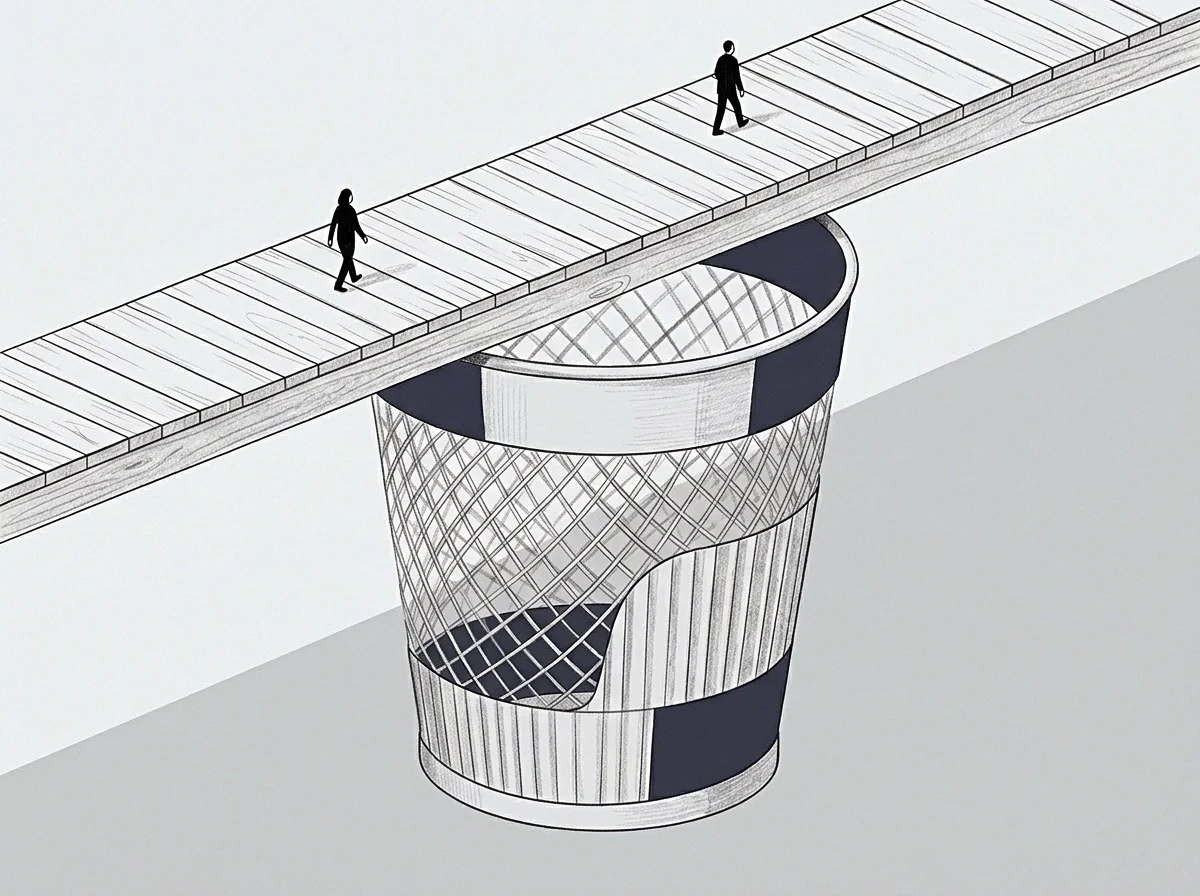
Asymmetry
Four messaging channels remain open at midnight while the secondary partner sleeps. The operational lead processes inbound queries from legal advisors, venture partners, and department heads. Meanwhile, the co-founder manages a single linear software build with bounded weekly milestones.
This structural divergence in task exposure creates unequal regulatory pressure across the executive pair.

Disproportionate Regulatory Load Distribution
The operational lead manages external investor queries, internal personnel disputes, and legal negotiations simultaneously. The phone chimes at midnight. Each inbound message demands immediate cognitive contextualization, risk assessment, and emotional dampening before a clear reply goes out.
Research in cardiovascular stress physiology demonstrates that holding open monitoring state continuously elevates baseline sympathetic nervous system arousal. The body treats persistent operational uncertainty as a sustained metabolic threat.
When two partners build an organization, operational tasks split naturally according to individual technical aptitudes. The co-founder who takes customer success, funding, and team alignment absorbs the entire variance of the external environment. The technical partner operates inside a predictable internal environment protected by project boards and release schedules.
This structural asymmetry means one partner maintains high physiological headroom while the other operates near biological ceiling.
Systemic wear accumulates when unbuffered environmental volatility strikes a single partner continuous intake channel.
The account stands empty. Systemic allostatic load accumulates through repeated regulatory adaptation rather than discrete crisis events. Over six months, the regulatory lead experiences elevated baseline cortisol, fragmented sleep architecture, and suppressed heart rate variability.
The partner holding the static technical workload observes no change in their own physiological state and assumes the operational lead experiences identical operational ease.
Misreading this physiological divergence leads directly to organizational misalignment. The technical partner interprets the operational lead’s diminished responsiveness, dry communication tone, or reduced working memory capacity as emotional withdrawal or reduced commitment. The operational lead, experiencing continuous biological throttling to protect core physiological functions, perceives the technical partner’s calm as detachment or neglect.
Uncorrected structural asymmetric load distribution eventually forces the throttled operator to halt external communication entirely to preserve basic somatic baseline stability.

Valve
Unbounded intake channels saturate executive processing capacity within weeks. When operational incoming messages enter an executive’s day without structural filtering, the active processor count remains permanently maxed out. Implementing strict intake parameters acts as a protective boundary for autonomic nervous system recovery.

Gating Mechanics for Open Operational Loops
Every unclosed query consumes an active cognitive slot regardless of its strategic priority. The loop remains active. When an operational lead receives fifteen informal messages across three platforms, the working memory system holds each open item in passive readiness.
Cognitive switching cost research confirms that carrying open loops drains executive control capacity, even during off-hours.
Effective operational valves convert open, unchaperoned communication loops into structured, scheduled intake gates. The operator holds the line. Establishing explicit operational gates protects physiological capacity by bounding the precise hours during which high-variance external inputs reach the executive core.
- Asynchronous Intake Windows process non-urgent external requests exclusively during two designated sixty-minute operational blocks daily.
- Scope Boundary Definitions enforce hard categorical limits on which operational topics reach the primary regulatory lead directly.
- Emergency Override Terms establish clear criteria for real crises, preventing routine operational delays from triggering emergency alerts.
- Direct Delegation Firewalls route incoming vendor and client queries to secondary team leads before executive review occurs.
The secondary channel closes. Systemic gating protocols prevent informal messaging channels from breaching recovery windows. When team members submit unstructured requests via instant message at all hours, the executive regulatory system remains in perpetual hypervigilance.
Enforcing explicit ticket-based or document-based submission gates reduces autonomic stress reactivity by eliminating unexpected pings.
Operational headroom expands when incoming demands pass through deterministic structural gates rather than open channels.
The cost accumulates daily. In teams lacking explicit gating mechanisms, the operational lead repeatedly absorbs external volatility without structural buffering. The partner holding the gated technical workload continues working efficiently, unaware that the operational lead pays for organizational stability through steady neuroendocrine depletion.
Without operational valves, the intake volume inevitably exceeds physiological recovery speed.
Allocation
Balancing operational duties depends on a clear separation between strategic decision intake and task execution. When load sharing arrangements rely on informal assumptions rather than documented boundaries, structural imbalance deepens over time. Establishing precise operational allocation protocols balances systemic strain across the entire leadership structure.

Can Throttled Capacities Reset Without Complete Operational Shutdown?
Systemic fatigue alters neuroendocrine baseline states before conscious perception identifies functional decline. The capacity floor drops. When executive performance drops, team members often misdiagnose physiological throttling as lack of motivation or emotional burnout.
Throttling is an active protective downregulation executed by the autonomic nervous system to prevent irreversible metabolic damage.
Resetting throttled physiological capacity requires systematic redistribution of active operational channels without abandoning organizational responsibilities. The static limit holds. By transferring specific high-variance intake responsibilities to the secondary partner, the primary regulatory lead recovers the physiological headroom necessary to process complex strategic decisions.
| Intake Protocol | Concurrency Limit | Allostatic Cost | Physiological Response |
|---|---|---|---|
| Unchaperoned Open Intake | Unbounded parallel channels | High chronic wear | Protective regulatory throttling |
| Scheduled Gate Intake | Three concurrent active channels | Moderate manageable strain | Sustained baseline autonomic control |
| Partner Redistributed Intake | Shared split intake channels | Low balanced wear | Rapid physiological headroom recovery |
The term remains unstated. Load sharing arrangements that fail to define explicit operational shifts leave the regulatory lead permanently exposed to incoming stress vectors. When strategic decision intake remains concentrated on one person, neuroendocrine recovery occurs too slowly to match ongoing operational consumption.
Systemic capacity recovery begins when incoming operational allocation protocols enforce bounded parallel channel limits.
Reconstituting physiological capacity across an asymmetric leadership pair depends on formalizing explicit operational handover terms. The intake channel shuts. When the operating agreement explicitly states that the secondary partner assumes full ownership of vendor and legal intake during alternating operational cycles, the primary partner’s autonomic nervous system disengages from continuous monitoring mode.
Vault
Preserving biological capacity demands physical isolation from unscheduled operational pings during recovery windows. Establishing secure operational vaults prevents external demands from intruding into designated physiological restoration blocks. The system rejects input.

Securing Physiological Baseline During High Demand
Structural boundaries protect the autonomic nervous system from persistent neuroendocrine activation. The total load shifts. When an executive steps away from active operations without setting hard boundaries, passive anticipation of incoming alerts sustains sympathetic nervous system tone.
Research in psychoneuroimmunology highlights that the anticipation of stress produces physiological wear comparable to the stress event itself.
Creating operational vaults involves configuring physical, digital, and structural barriers that fully disengage the executive from active monitoring. The baseline recovers slowly. These isolation protocols allow the body to downregulate systemic inflammation, normalize cortisol secretion, and restore parasympathetic dominance.
- Complete digital disconnection from internal messaging systems during designated twelve-hour recovery windows.
- Delegation of full decision authority to the secondary partner for all routine operational issues arising during vault blocks.
- Physical removal of work communication hardware from personal living spaces to break environmental stress cues.
- Implementation of hard automated auto-responders directing external inquiries to scheduled intake windows.
The secondary partner manages all incoming operational queries independently during these protected blocks, holding full accountability for maintaining team momentum without escalating routine decisions.
Leaving operational intake channels open during rest windows guarantees continuous biological depletion. The secondary partner might remark that the operational lead appears unreachable and unresponsive during critical execution phases. This comment reveals a fundamental structural misunderstanding of the biological necessity for periodic isolation from high-variance external inputs.

Margin
Capacity restoration occurs when incoming operational volume drops below active processing thresholds. Reestablishing physiological margin allows executive leads to regain creative working memory, emotional stability, and strategic vision. The buffer exhausts itself.

Sustained Capacity Recovery Across Split Roles
Partners who establish explicit operational firewalls restore systemic resilience without sacrificing organizational momentum. The primary regulatory lead moves from chronic survival reactivity to high-level strategic reasoning once baseline autonomic stability returns. Long-term biological health and organizational longevity require maintaining a minimum twenty percent physiological headroom buffer during peak execution cycles.
Reconstituting headroom across asymmetric partner structures requires ongoing monitoring of operational intake speed and physiological wear indicators. When regulatory demands rise, the leadership team must immediately activate load-balancing gates to preserve baseline capacity.
Long-term organizational stability requires maintaining a permanent biological buffer between operational intake and maximum processing capacity.
Systemic resilience remains an operational variable governed by hard biological laws rather than personal effort or mental toughness. Executives who structure their load-sharing environments around explicit operational gates, strict concurrency limits, and protected recovery vaults consistently sustain high performance across multi-year operational timelines.