
Structural Gating Protocol Efficacy for Managing Allostatic Load in Founding Partners
Structural gating protocols manage founding partner allostatic load by converting open loops into bounded asynchronous threads with explicit scope, dates, and terms.
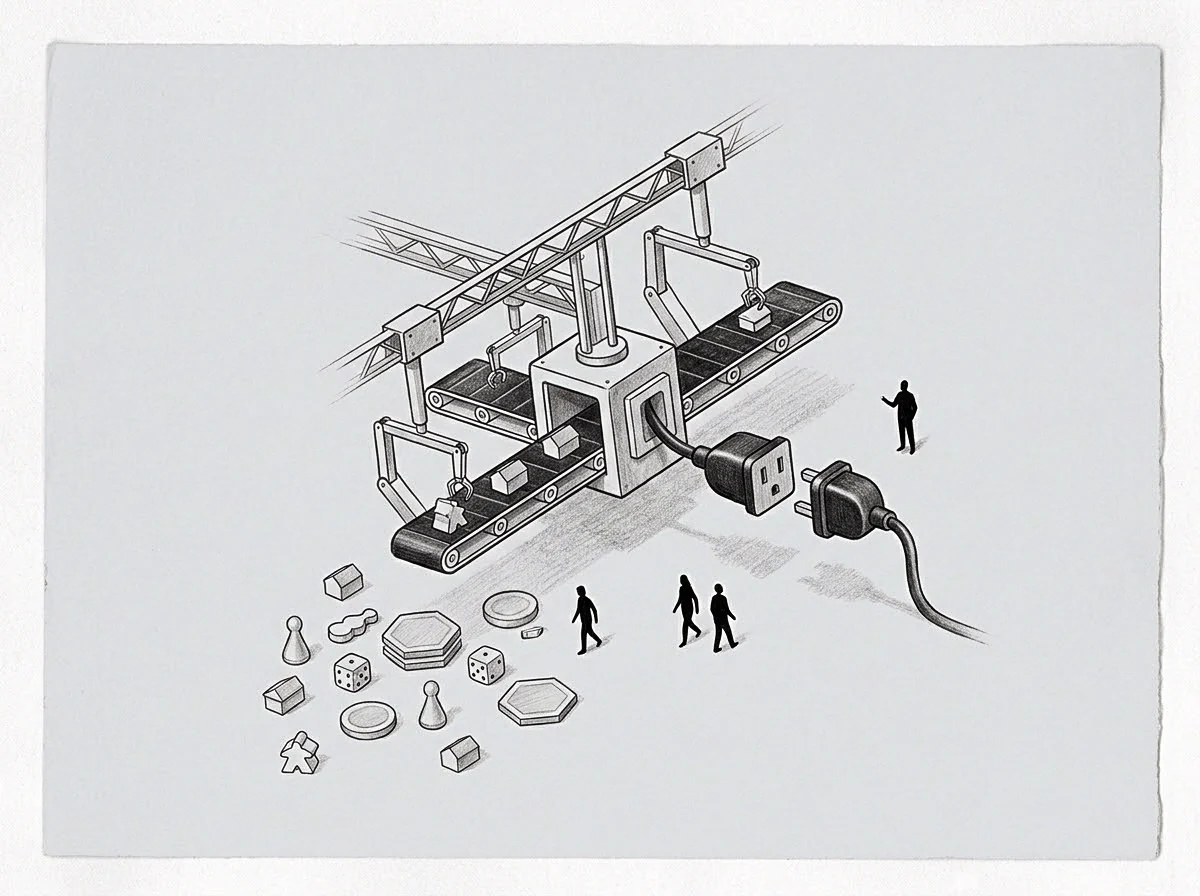
Drain
Allostatic load refers to the cumulative physiological wear on a biological system under chronic regulatory demand. In founding partners, this strain stems less from workload volume than from the constant expectation of real-time cognitive and emotional availability. Without structural boundaries around incoming communications, the brain interprets every open channel as an active threat.
Sympathetic nervous system activity stays elevated through the workday, suppressing parasympathetic recovery and shifting neuroendocrine baselines. Over several years, this shift degrades executive function, working memory, and emotional regulation well before exhaustion becomes conscious.

Distinguishing Throttled Systems From Depression
Clinical assessments frequently confuse a throttled founder with a depressed one. Depression marks a primary loss of motivation and hedonic capacity across all areas of life. Throttling is a protective down-shift by an otherwise functional system running at its limit.
Isolated from peripheral noise, a throttled partner retains full capacity for high-priority work, losing only the surplus energy needed to filter ungated social and emotional pings. Mistaking this metabolic defense for clinical depression leads organizations to recommend rest or therapy when what the system actually needs is structural gating.
Gating incoming demand preserves cognitive headroom long before biological systems show measurable markers of chronic wear.
The metabolic cost of continuous internal regulation accumulates through clear physiological pathways. Sustained cortisol production alters synaptic plasticity in the prefrontal cortex, impairing complex decision-making and risk calculation. At the same time, heightened amygdala reactivity amplifies perceived interpersonal threats, turning ordinary operational disagreements into sharp defensive reactions.
As daily energy shifts entirely toward managing the friction of ungated inputs, focus drifts away from the original strategic thesis.

Relational Load and the Economics of Proximity
Partnerships function as shared regulatory systems where each person relies on the other to absorb operational shock. Social baseline theory shows that working alongside a predictable, trusted partner lowers the physiological cost of self-regulation. But when both partners hit capacity at the same time, that shared buffer fails.
Proximity to an equally overtaxed partner increases vigilance rather than lowering metabolic output, as each scans the other for signs of withdrawal or strain—creating a continuous monitoring loop that consumes whatever cognitive space remains.
Unmanaged physiological strain eventually weakens governance. Decision latency grows as open operational loops pile up across shared channels, and partners avoid difficult strategic conversations because the energy required to navigate them exceeds what they have left. Leaving this strain unaddressed risks permanent damage to executive decision-making, followed by the breakdown of the partnership under stress.

Loops
An open loop is an unresolved operational or relational item without explicit limits on scope, date, or terms. Holding an ungated thread in working memory consumes a processing slot regardless of the item’s strategic or financial weight. Human cognition can generally manage only three to five complex items at once.
When partners communicate through unstructured channels, loose requests, unassigned decisions, and vague feedback occupy those slots indefinitely, leaving the system running at capacity while key work stalls.
Consider two partners running a company with forty open Slack channels, constant direct messages, and open calendars. If partner one introduces seven new strategic inquiries a day without specifying deadlines or required detail, partner two treats them as immediate tasks, breaking focus to parse every message. Within three weeks, partner two carries twenty-three unresolved cognitive threads.
Any mental capacity freed by finishing a deliverable is immediately swallowed by another ungated question.
- Gated threads carry clear parameters defining exact scope, required response windows, and absolute delivery conditions.
- Ungated loops stay active in working memory, incurring a cognitive switching cost every time attention drifts back to them.
- Parking limits set the maximum number of deferred decisions allowed in a shared backlog without a scheduled review date.
- Concurrency ceilings cap the total number of active initiatives a partner pair can execute at one time.

The Switching Cost of Interrupted Execution
Switching between focused work and unexpected partner messages creates substantial cognitive friction. Research shows that returning to full context after an interruption takes up to twenty-three minutes of uninterrupted focus. If messages arrive every fifteen minutes, working memory never fully recovers context.
Attention stays fragmented, stopping strategic work entirely while surface-level exchanges maintain a false sense of productivity.
Open operational loops extract continuous cognitive rent until structural parameters convert them into bounded backlog items.
Gating protocols reduce this friction by creating defined channels for incoming communication. Instead of letting direct messages break focus, partners use asynchronous drop boxes with fixed review windows. Assigning clear scope, resolution criteria, and a future review date to a thread releases its hold on working memory and frees the cognitive slot.
An unchecked accumulation of open loops changes how partners view each other’s commitment and performance. A partner managing fifteen ungated threads often becomes slow to respond, misses context, or appears abrupt. To an outside observer, this looks like disinterest or hostility, when in reality the silence reflects depleted system capacity rather than waning loyalty.

Parity
Managing allostatic wear requires formal protocols that substitute explicit rules for continuous personal negotiation. Passive availability models assume partners should always be accessible, relying on personal discipline or goodwill to avoid burnout. Structural gating protocols treat cognitive capacity as a finite physical resource governed by clear operational rules.
The table below outlines how these two approaches manage inputs, access, and cognitive load.
| Evaluation Vector | Passive Availability Regime | Structural Gating Protocol | Impact on Allostatic Load |
|---|---|---|---|
| Input Channel Access | Open direct messaging, instant notifications enabled across all devices. | Asynchronous updates batched into designated daily or weekly slots. | Reduces sympathetic baseline activation by eliminating unexpected pings. |
| Thread Definition | Informal inquiries with ambiguous depth and unspecified deadlines. | Standardized templates specifying scope, required depth, and target resolution date. | Frees working memory by removing thread ambiguity and constant monitoring. |
| Concurrency Limits | Unbounded project initiation based on immediate strategic interest. | Hard ceiling on active parallel initiatives per partner (maximum three threads). | Prevents cognitive capacity exhaustion and limits task switching overhead. |
| Availability Expectations | Real-time responsiveness expected throughout extended working hours. | Explicit quiet windows where zero internal responsiveness is mandated. | Enables parasympathetic nervous system recovery and cognitive consolidation. |
Scope, Date, and Terms Mechanics
Turning an open loop into a gated protocol requires three parameters: defined scope, fixed target dates, and explicit acceptance terms. Scope sets clear boundaries to prevent expansion during execution. Target dates schedule evaluation for a specific point in the future, freeing the receiving partner from tracking the item beforehand.
Terms define completion criteria, removing friction around subjective evaluation after the fact.
A thread containing explicit scope, resolution dates, and completion terms releases its hold on working memory instantly.
Consider a team evaluating expansion into a secondary market. Under a passive approach, partners trade real-time thoughts across chat channels, bringing up unexamined risks and objections throughout the day. Under a gating protocol, the initiating partner writes a single memo outlining the expansion thesis, scope limits, decision criteria, and a review date set fourteen days out.
Neither partner discusses the proposal before that date, keeping cognitive capacity focused on core operations until the review window opens. Setting a formal review date turns an active stressor into a parked administrative task.

Throttle
When allostatic load nears its limit, the body uses protective throttling to preserve primary functions. Throttling cuts non-essential energy expenditure by dampening emotional response, pulling back from peripheral social interaction, and narrowing cognitive focus strictly to immediate operational needs. Identifying this state through objective variables prevents misinterpreting system preservation as operational failure or personal withdrawal.

State Variables of Operational Exhaustion
Three measurable variables signal throttling long before self-reporting detects distress. Headroom measures the remaining buffer between current cognitive demand and full operational capacity. Ping frequency tracks how many self-initiated communications a partner sends over a set timeframe.
Response latency measures the time between receiving an input and returning a structured response. When headroom approaches zero, ping frequency drops sharply while response latency rises, signaling that the partner has entered a protective operational mode.
Physiological recovery timelines rarely follow a linear pattern relative to load reduction once structural gating begins. Recovery from multi-year allostatic strain varies widely based on genetic factors, sleep quality, and historical stress markers. Given this variability, partners maintain conservative gating parameters for at least twelve consecutive weeks before evaluating long-term baseline recovery.

Why Does Throttled Capacity Present as Emotional Withdrawal?
Managing interpersonal communication demands substantial metabolic energy, especially on ambiguous or high-stakes topics. When headroom drops below critical levels, the brain automatically shifts resources away from social nuance toward basic execution. A throttled partner may speak concisely, skip relational framing, or decline open-ended strategic discussions.
This shift is a structural self-preservation measure rather than a rejection of the partnership.
Throttling represents an intact biological system executing a protective downshift to protect operational core functions from structural collapse.
Messages received during a throttled state cause sharp micro-frustrations because every input threatens to exceed remaining capacity. The throttled partner feels an incoming message not as a routine query, but as a demand on depleted reserves. If the other partner reacts to this withdrawal by sending more messages or asking for reassurance, systemic strain escalates quickly.
Restoring baseline trust in a partnership that has operated at capacity for years often requires a sustained period of reduced operational contact.

Terms
Implementing gating protocols requires turning regulatory principles into clear governance terms within the founding agreement. Operating agreements should extend beyond equity splits and voting rights to address day-to-day cognitive load management. Framing these boundaries as structural standards ensures that setting a limit is treated as adherence to protocol rather than personal distance.
- Set a strict concurrency ceiling limiting each partner to a maximum of three active strategic initiatives at a time.
- Use asynchronous channels as the primary mode of operational alignment, reserving real-time messaging for explicit emergencies.
- Require standardized inquiry templates that specify scope, target review dates, and completion terms for all non-routine requests.
- Define quiet windows during which neither partner sends internal communications or expects active responses.
- Schedule quarterly capacity audits to review active thread counts, average response latencies, and overall system headroom.

Parameterizing the Emergency Override
A functional protocol includes a tightly bounded emergency override for genuine crises, preserving daily boundaries during ordinary operations. Emergencies are defined by clear quantitative criteria, such as threats to financial solvency, critical system outages, or major legal exposure. Using the override requires a dedicated high-priority channel that bypasses quiet windows and asynchronous queues.
Using this channel for routine inquiries prompts a protocol review during the next governance cycle.
Clear parameters around availability protect individual capacity from chronic exhaustion, supporting long-term partnership viability. When these limits are documented in operating agreements, partners avoid negotiating capacity on a daily basis. The protocol absorbs the operational friction, leaving partners to focus energy on primary strategic goals.
Under sustained operational pressure, structural limits protect partnership longevity far more reliably than mutual goodwill.