Meaning
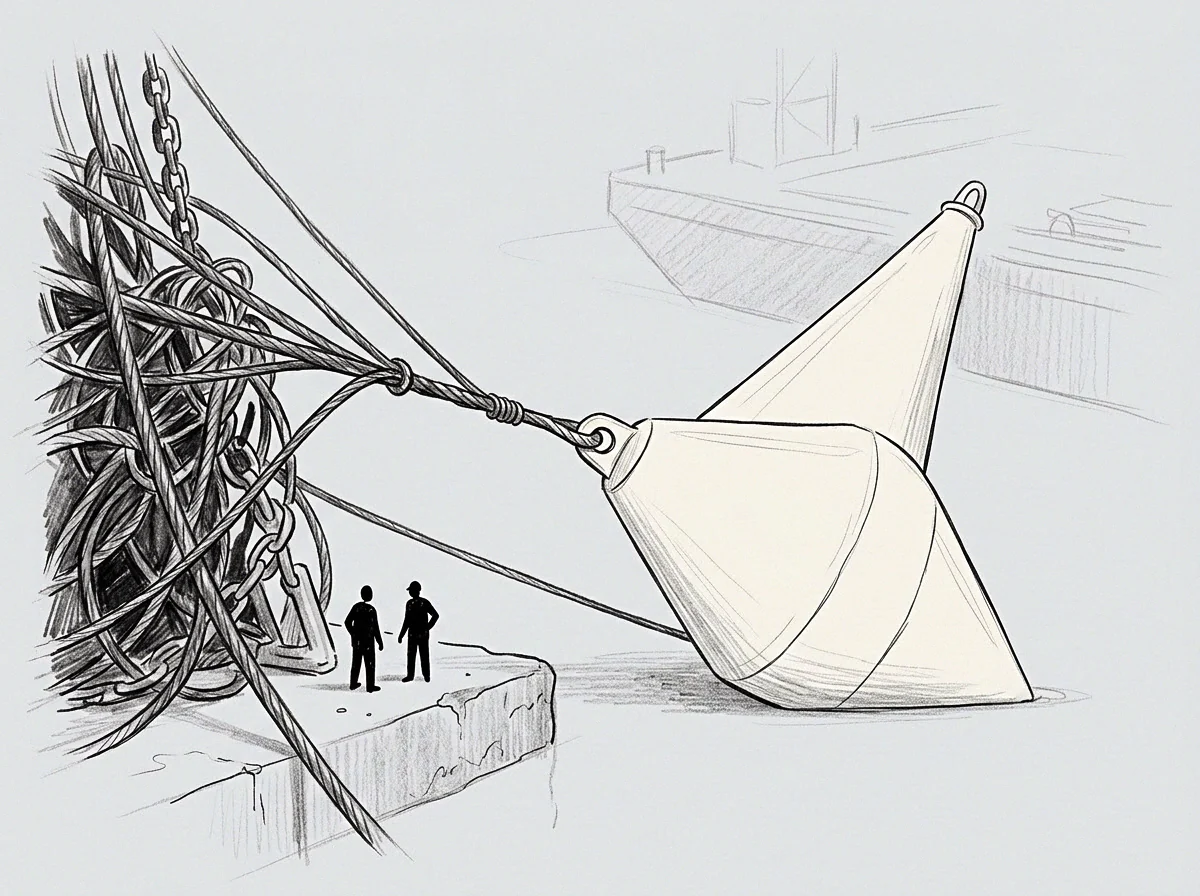
Upper neurobiological ceiling on the discrete information chunks human consciousness can simultaneously manipulate and maintain in an active state sets the boundary for situational processing. Within high-velocity executive command, working memory limit restricts how many moving variables, contract contingencies or risk vectors a leader can weigh without external computational aids. Rooted in prefrontal cortical capacity and parietal attentional networks, this biological constraint enforces an absolute ceiling of approximately four novel conceptual units at any single moment.
The restriction stops governing cognitive throughput once information is thoroughly consolidated into long-term procedural schemas or offloaded onto external tracking systems.
Cognitive Overload
Flooding the central executive with excessive operational variables induces rapid analytical paralysis. As daily inputs exceed the working memory limit, incoming tasks displace existing critical data from conscious attention, resulting in dropped commitments and missed operational anomalies. The overloaded executive forgets crucial conversation details, miscalculates simple balance sheet trade-offs and misinterprets tactical memos.
This mental bottleneck cannot be expanded through sheer willpower, as the biological limits of the prefrontal cortex remain invariant under acute pressure.
Schema Utilization
Advanced domain expertise circumvents conscious processing bottlenecks through information chunking. By compressing complex patterns into consolidated mental models, an experienced operator bypasses the strict working memory limit, processing entire balance sheet structures or competitive landscapes as single cognitive units. This mastery enables swift pattern recognition where novices experience overwhelming noise.
When entering entirely unfamiliar markets, however, chunking mechanisms fail, and the leader instantly drops back to the raw, fragile limits of basic short-term memory buffers.
External Offloading
Systematic reliance on externalized documentation protects decision accuracy from cognitive saturation. Successful founders combat the working memory limit by establishing structured decision frameworks, visual dashboards and rigorous note-taking protocols that hold operational context outside the vulnerable biological mind. Offloading working data onto trusted institutional architecture frees scarce prefrontal bandwidth for high-order ethical and strategic evaluation.