
Neurobiological Update Paths For Solitary Leaders Rebuilding Co-Regulatory Capacity Under High Load
Repeated unhurried physical co-presence with steady peers gradually rewires a solitary leader's threat baseline from expensive isolation to shared bioenergetics.

Brace
Four communication threads sit unanswered past midnight while an operating chief waits for capital allocation instructions. The person at the center of the firm sits upright at a wooden desk, working through cash flow schedules alone. Autonomic tone remains locked in sympathetic dominance, heart rate variability stays suppressed, and peripheral blood vessels remain constricted.
The nervous system runs an emergency routine as its permanent operational baseline.
Social baseline theory describes the human central nervous system as an organ adapted to assume direct proximity to reliable conspecifics. Under ancestral conditions, presence distributed the metabolic load of environmental vigilance, thermoregulation, and threat defense across multiple bodies. Solitary existence served as an explicit signal of acute emergency, instantly spiking baseline bioenergetic expenditure.
When an executive operates in isolation while carrying enterprise liabilities, the brain treats the absence of somatic co-regulators as catastrophic exposure. The neural economy budgets threat detection entirely from internal reserves.
Baseline threat surveillance doubles metabolic fuel consumption when a solitary nervous system calculates survival probabilities without another body in physical reach.
The metabolic price rises compounding daily. Prolonged self-regulation exhausts prefrontal glucose reserves, blunts ventral striatal responsiveness, and accelerates hypothalamic-pituitary-adrenal axis wear. In this state, an executive experiences every external communication as an extractive demand rather than an opportunity for regulatory relief.
The organism enters defensive throttling. Messages go unanswered because incoming social signals register as claims against negative energetic reserves.
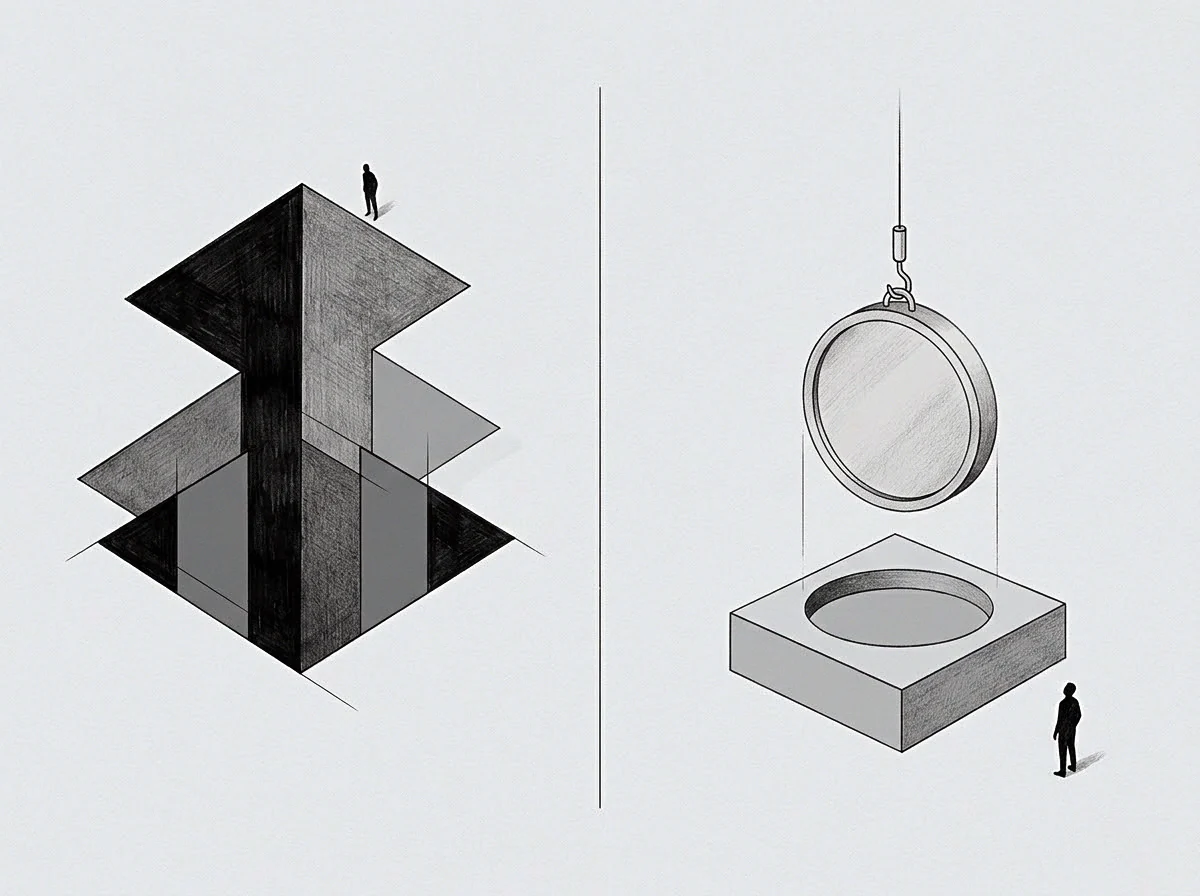
Allostatic Contraction and Throttling
Prolonged high load transforms regulatory architecture. An executive experiencing prolonged solitary exposure stops anticipating comfort from interpersonal interaction, categorizing every peer, investor, or subordinate as a metabolic claimant. Neural networks governing threat appraisal, centered in the dorsal anterior cingulate cortex and amygdala, maintain tonic activation.
The solitary leader becomes physiologically incapable of parsing an offer of presence as anything other than an administrative tax.
The resulting behavior resembles clinical depression while differing from it in etiology. Sleep architecture degrades under persistent nocturnal cortisol surges, executive working memory contracts, and emotional affect flattens into defensive steadiness. Subordinates view this steadiness as composure and pile more problems onto the desk.
The proved shock absorber attracts heavier impact. The executive contracts inward, restricting conversational exchanges to operational directives and transactional queries.
This solitary stance produces a specific relational consequence when sustained over quarters: the surrounding leadership team stops offering peer support, assuming the person in the center either needs nothing or regards interpersonal warmth as incompetence.

Table
Physical presence alters the bioenergetic arithmetic of threat surveillance. When two individuals sit across a heavy oak surface in unhurried silence, subtle nonverbal channels begin recalibrating baseline neural tone. Micro-movements of the facial musculature, vocal prosody, pupil dilation, and respiratory cadences transmit safety cues beneath conscious cognition.
Stephen Porges documented this transmission route through the polyvagal phylogenetic hierarchy, demonstrating that the unmyelinated ventral vagal complex suppresses defensive sympathetic fight-flight reactions during reciprocal face-to-face contact.
Social baseline studies using functional magnetic resonance imaging reveal that threat-related neural activation in the dorsal anterior cingulate cortex, insula, and periaqueductal gray drops sharply during physical touch or simple spatial proximity. The magnitude of this neural attenuation correlates directly with relational tenure and perceived reliability. For an executive accustomed to solitary containment, stepping into shared physical space without an operational agenda feels unfamiliar and counter-instinctive.
Physical proximity to a steady peer dampens amygdala activation during high-threat evaluations without requiring verbal reassurance.
Consider two executives managing a venture through structural restructuring. In one arrangement, partners communicate purely via asynchronous project management tools and formal thirty-minute video calls. In the second arrangement, partners occupy the same physical room for three continuous hours twice a week, working on separate spreadsheets with zero mandate for conversation.
The physiological outcomes separate rapidly over a fiscal quarter.
The silent co-presence in the second room creates a passive somatic channel. Blood pressure stabilizes, respiratory rates gently entrain, and autonomic defensiveness softens without a single conversational debriefing. The body borrows stability from the adjacent physiology.

Comparative Dynamics of Relational Workspace
Examining regulatory outcomes across physical environments clarifies how proximity modifies executive bioenergetics.
| Variable | Solitary Containment | Transactional Collaboration | Shared Somatic Presence |
|---|---|---|---|
| Heart Rate Variability | Suppressed below 25 ms | Fluctuates 25 to 40 ms | Recovers above 55 ms |
| Threat Network Recruitment | Continuous tonic activation | Intermittent acute spikes | Rapid post-stimulus recovery |
| Metabolic Surveillance Cost | Borne entirely by individual | Slightly amplified by friction | Distributed across both bodies |
| Relational Schema Engaged | Compulsive self-reliance | Contingent task performance | Pre-reflective safety baseline |
| Subjective Burden State | Severe cognitive narrowing | Persistent relational alertness | Grounded operational clarity |
Physical proximity alone fails to reconstruct neural capacity if the underlying template treats everyone as an eventual liability. An isolated executive sitting across from a colleague may remain hyper-vigilant, monitoring micro-expressions for signs of judgment or withdrawal. Somatic borrowing requires lowering defensive neural gates.
When the regulatory channel stays blocked despite physical contact, the organism remains starved of restorative connection while expending double the effort to maintain professional posture.

Intake
Rebuilding physiological capacity requires an executive to distinguish between an extractive transaction and authentic co-regulation. Transactional interaction involves asymmetric energetic transfer: one party offloads anxiety, ambivalence, or operational uncertainty, while the other party absorbs the tension and synthesizes composure. For solitary leaders who scaled organizations through relentless personal endurance, interpersonal contact has almost always taken this extractive form.
The nervous system learns that contact equals outflow.
Co-regulation follows an inverted energetic logic. Two nervous systems create a reciprocal feedback loop where autonomic settling in one body induces down-regulation in the second. Neither party manages the other.
Stability emerges as a systemic property of the shared field. The solitary executive lacks neural circuitry for this exchange because their foundational attachment models, reinforced by corporate rank, equate vulnerability with organizational collapse.
A tired executive instinctively misidentifies an offer of genuine somatic backing as another administrative deliverable.
Attachment researchers define the internal working model as a set of conscious and procedural expectations regarding the availability of protective others. A solitary leader often operates from a backwards attachment template. Such an individual experienced developmental or early-career environments where emotional containment came only through absolute self-containment.
They internalized a mental representation of themselves as the sole provider of containment for surrounding people. They possess well-worn neural pathways for soothing panic in colleagues, yet their template contains no open receptor slot for taking in care from an outside source.

The Backward Template Under Pressure
Under acute organizational stress, this backward template hardens. When a board member, spouse, or fellow founder offers authentic presence, the solitary leader perceives an anomaly. The offer violates procedural expectations.
The leader suspects covert motives or anticipates the inevitable fatigue of the other person, preemptively shutting down the intake channel.
- Hyper-activating defensive routine accelerates speech cadence, presents extensive analytical justifications, and deflects attention away from bodily distress during interpersonal encounters.
- Compulsive caregiving reflex converts an incoming gesture of concern into an inquiry about the other person’s welfare within thirty seconds of contact.
- De-activating cognitive cutoff terminates eye contact, dissociates somatic sensations, and redirects the dialogue toward operational metrics whenever emotional resonance surfaces.
- Defensive competence performance projects unyielding confidence to prevent the interlocutor from realizing the leader’s internal fuel reserves reached zero days earlier.
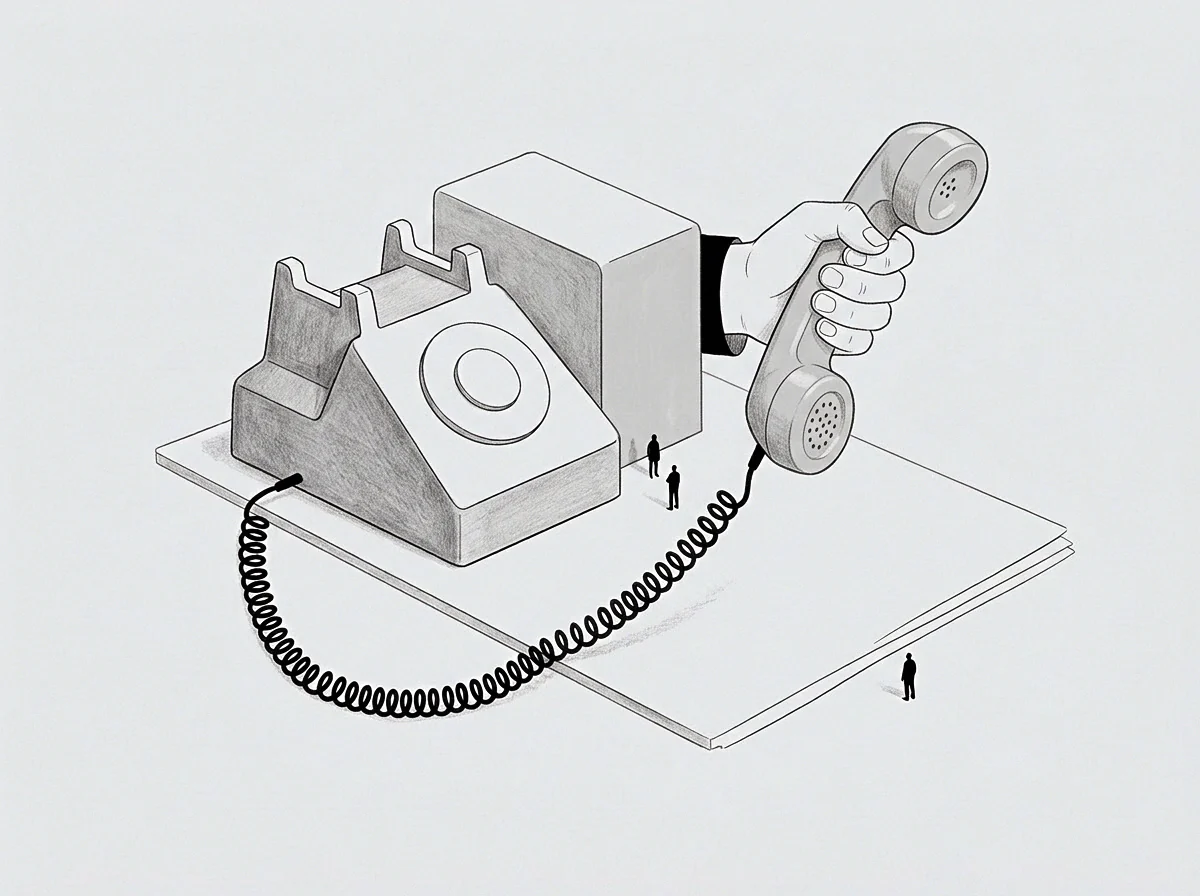
Breaking this automatic deflection demands deliberate neural recalibration. The leader must intentionally expose their nervous system to low-stakes co-regulatory inputs without jumping in to solve problems, direct operations, or manage feelings. The partner in that moment usually thinks: please stop managing my perception and sit with what is happening.
Repair
Modifying a procedural attachment template cannot be accomplished through analytical introspection. Intellectual insight identifies the pattern, yet the autonomic nervous system alters its defensive thresholds only through repeated physical exposure to disconfirming relational experiences. This developmental achievement carries a specific name in empirical attachment research: earned security.
An adult who entered corporate leadership with avoidant or disorganized relational habits can build secure neurobiological update pathways by engaging in sustained, micro-dosed co-regulatory encounters with reliable peers.
The repair sequence begins at the neuro-affective level through somatic tracking during interpersonal stress. The executive notices physiological contraction markers: breath holding, shoulder elevation, clenching along the masseter muscles, and visual tunnel focus. Rather than retreating into isolation to resolve the distress, the leader purposefully remains in the physical presence of a vetted, emotionally grounded peer.
The empirical research literature on adult attachment establishes that shifting from insecure defensive strategies to earned security takes twenty-four to thirty-six months of consistent relational stability. That finding rests primarily on longitudinal interviews of clinical cohorts and community samples evaluating narrative coherence. How quickly those neuro-affective pathways update inside hyper-accelerated corporate executive teams under relentless capital constraints remains empirically uncertain.
Careful practitioners proceed by introducing small, repeatable somatic exposures rather than demanding sudden relational vulnerability.

Phased Reconstruction of Relational Receptors
Updating the regulatory apparatus requires a disciplined behavioral trajectory carried out across concrete operational milestones.
- Somatic cue identification tracks physiological warning signals of impending nervous exhaustion before cognitive denial masks bodily fatigue.
- Micro-dosed presence trials expose the nervous system to silent co-working arrangements with selected partners for sixty minutes without agenda items.
- Direct vulnerability articulation states acute bandwidth limits plainly to close operational collaborators without attaching elaborate apologies or justifications.
- Bidirectional regulatory exchange permits another individual to witness moments of operational uncertainty without rushing to reassert absolute executive control.
A founder might spend five uninterrupted minutes sitting with an executive coach or trusted board director, holding open conversational space around a critical financing failure without generating an immediate recovery thesis. In that brief window, the brain registers that displaying distress does not trigger abandonment, ridicule, or functional destruction. The anterior insular cortex updates its predictive models, registering that the presence of another body reduces metabolic strain.
Repeated across dozens of interactions, the receptor slot for being held begins to widen.
What remains undetermined is whether solitary leaders who built their operational empires entirely on compulsive self-sufficiency can retain aggressive competitive drive once their autonomic systems learn the efficiency of shared peace.
Pace
Structural integration of co-regulatory capacity transforms how an organization functions under crisis. When an executive team operates as a distributed physiological baseline, systemic resilience multiplies. Threat detection remains sharp, yet the bioenergetic cost of vigilance spreads across five people instead of crushing one.
Meetings shift from performative competence rituals into functional co-regulatory spaces where leaders calibrate nervous systems, clarify strategic dilemmas, and release somatic tension.
The transition demands structural patience. Neural pathways that spent four decades running solitary emergency protocols do not yield overnight. When operational crises hit, the leader instinctively recoils toward solitary containment, midnight spreadsheets, and unanswered threads.
Recognizing this regression without condemnation forms the heart of sustainable governance.
A reliable regulatory rhythm protects an enterprise far more effectively than an isolated leader heroic enough to burn out alone.
The leader establishes non-negotiable temporal boundaries around collaborative resets. One afternoon per month, key operating partners step away from dashboards and sit together without presentation decks. They review organizational challenges slowly, matching conversational cadence to respiratory settling.
The enterprise learns to breathe at an altered rate.
The update holds whenever an unexpected shock arrives and the executive stays in the room with colleagues instead of locking the office door. The leader looks across the physical table, admits ambiguity, and allows the quiet steadiness of the group to absorb the first wave of autonomic shock. In that shared stillness, the brain confirms its new foundational lesson: carrying everything alone was never strength, merely an expensive misunderstanding of human biology.
If an executive maintains a stated limit that denies solitary panic routines, the whole enterprise steadily learns to pace itself against shared capacity rather than personal destruction.