
Neuroendocrine Limits of Solitary Autonomic Regulation Across Long Periods of Structural Scaling
Solitary autonomic regulation under organizational scaling drives allostatic overload, forcing neuroendocrine biological throttling when shared social baselines are absent.
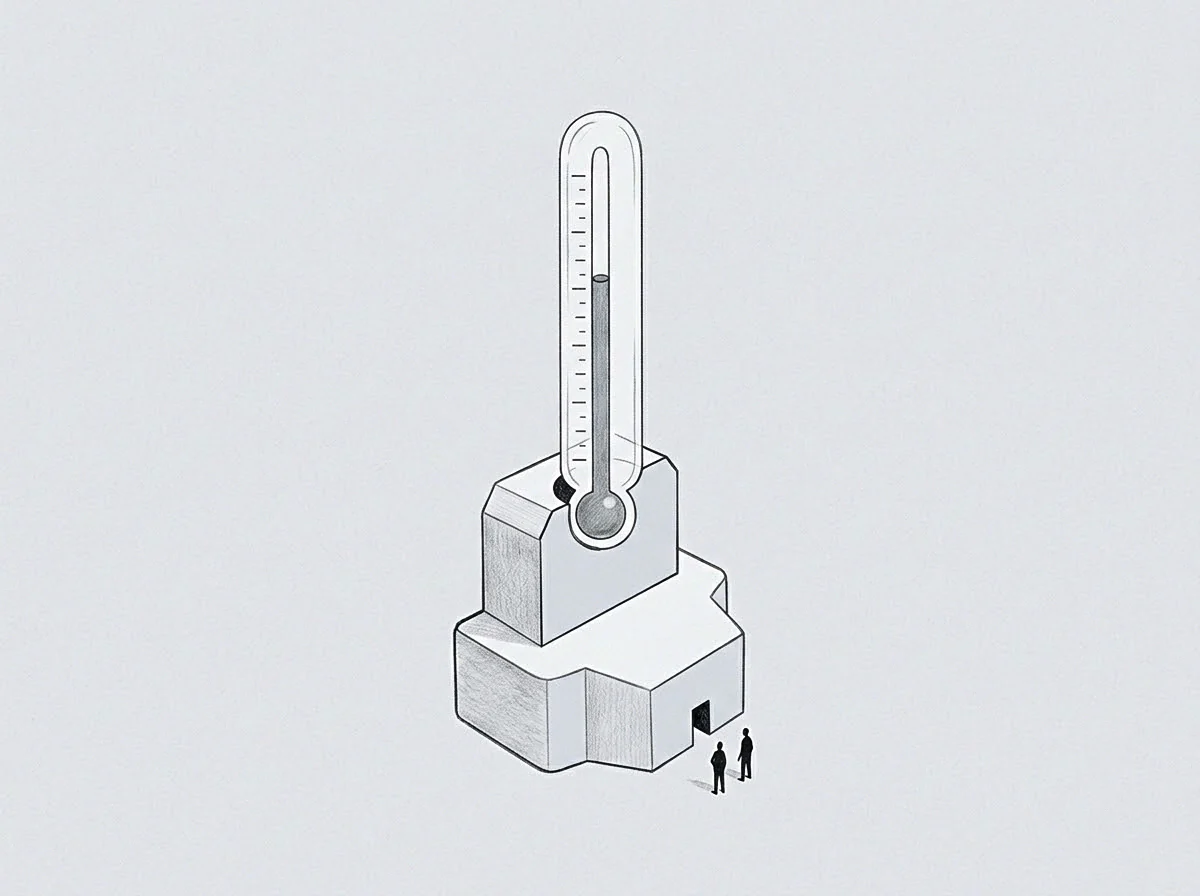
Frame
Four operational messaging channels sit open past midnight while a critical infrastructure outage coincides with board requests for quarterly re-forecasting. The person managing the response maintains a flat vocal tone and steady hand. Onlookers read this composure as psychological strength.
In reality, the central nervous system is sustaining an elevated physiological baseline without an external buffer, drawing down finite internal metabolic reserves to keep executive attention online.
Social baseline theory demonstrates that the human brain evolved to budget energy under the assumption of shared proximity with reliable conspecifics. When an individual operates as the sole autonomic baseline for a growing organization, the neural architecture reassigns environmental risk processing entirely to central metabolic pathways. Solitary regulation treats proximity as absent, forcing the anterior cingulate cortex and hypothalamus to recruit sympathetic resources for operational tasks normally offset by shared physiological presence.
Environmental risk processing shifts entirely to central metabolic expenditure when social baseline buffering is absent.
Structural scaling increases the number of concurrent operational vectors requiring executive monitoring. As headcount and operational surface area expand, the central nervous system encounters a steady influx of unbuffered organizational risk. The brain budgets threat based on perceived resource availability.
When no secondary regulator is present to share the autonomic load, the perceived cost of every decision, conflict, and ambiguity escalates proportionally. The nervous system measures threat continuously.
An individual attempting solitary regulation under scaling demands operates in a state of continuous physiological expenditure. The baseline economy of the brain shifts from low-cost social baseline assumptions to high-cost individual containment. This operational mode yields initial clarity and rapid execution, but the underlying neuroendocrine support structures experience steady structural wear.

Ceiling
Persistent reliance on solitary autonomic regulation during long periods of organizational growth eventually triggers biological limits. The hypothalamic-pituitary-adrenal axis governs the systemic response to chronic workload demands. Under sustained operational strain without co-regulatory relief, the baseline secretion pattern of cortisol undergoes fundamental structural alteration.
Biochemical Throttling and Allostatic Load
Basal cortisol profiles normally display a robust morning peak followed by a continuous decline toward an evening trough. Prolonged solitary containment flattens this diurnal curve. The cortisol awakening response becomes blunted, reducing morning metabolic mobilization, while evening cortisol levels remain abnormally elevated.
This elevation in evening trough levels disrupts slow-wave sleep architecture, impairing cellular repair and neural metabolite clearance. Concurrently, hyper-activation of the sympathetic nervous system depresses parasympathetic tone, reflected in sustained reductions of high-frequency heart rate variability. Heart rate variability measures autonomic flexibility, and lower values signal a system trapped in hypervigilance, unable to transition into restorative physiological recovery.
| Parameter | Solitary Autonomic Regulation | Co-Regulatory Baseline Integration |
|---|---|---|
| Diurnal Cortisol Profile | Flattened curve with elevated evening trough levels | Distinct morning peak with low evening baseline |
| Heart Rate Variability | Suppressed high-frequency power indicating sympathetic dominance | Elevated vagal tone with rapid recovery post-stressor |
| Threat Perception Threshold | Lowered; neutral operational inputs register as urgent risks | Calibrated; accurate distinction between routine and critical threat |
| Working Memory Headroom | Constrained by continuous autonomic containment costs | Preserved for complex strategic synthesis and abstraction |
| Systemic Capacity Horizon | Finite temporal availability ending in biological throttling | Sustained baseline stability across extended scaling periods |
Extended exposure to high systemic cortisol leads to glucocorticoid receptor down-regulation within the prefrontal cortex and hippocampus. Hippocampal atrophy and prefrontal dendritic retraction degrade the neurobiological substrate required for working memory, cognitive flexibility, and emotional modulation. The brain responds to chronic allostatic overload by initiating biological throttling.

Autonomic Disruption Across Organizational Scale
Biological throttling is a protective neurobiological shutoff mechanism designed to prevent fatal somatic overdrive. The central nervous system reduces neurochemical expenditure across specific executive networks. The individual experiences this physiological shift as persistent lethargy, flattened emotional responsiveness, and an inability to generate high-value strategic synthesis.
Elevated evening cortisol trough levels signal a compromised allostatic capacity across scaling operations.
When the internal baseline reaches ceiling, perceptual processing changes. The nervous system interprets routine communications, strategic ambiguity, and minor interpersonal friction as severe operational threats. The individual exhibits heightened defensiveness or sudden withdrawal.
These behaviors represent involuntary autonomic self-preservation responses generated by a depleted physiological budget.
Continuous reliance on solitary baseline management converts acute operational stress into systemic somatic throttling, forcing involuntary operational withdrawal.

Toll
Autonomic limits exert direct structural costs on relational dynamics and operational culture. Early developmental experiences shape an individual’s internal working model of regulation. Someone who learned early that environmental stability requires self-reliance often constructs a template where self-soothing is equated with survival.

Internal Working Models and the Missing Receptor Slot
This relational template creates an operational architecture with no functional receptor slot for incoming co-regulation. When peers, board members, or partners offer presence or administrative assistance, the central nervous system fails to process the input as physiological relief. The offer registers as operational friction or an additional management variable requiring supervision.
An individual who functions as a reliable baseline attracts external volatility. Subordinates, investors, and peers implicitly detect the stable state and anchor their own emotional regulation against it. The stable individual absorbs external volatility without discharging it, operating as a one-way energy sink for organizational anxiety.
- Hypervigilant threat scanning accelerates executive exhaustion by processing routine operational noise as structural crisis.
- Receptor slot suppression prevents the nervous system from absorbing actual co-regulatory input from reliable peers.
- Sympathetic tone dominance shifts decision criteria toward defensive risk mitigation during standard capital allocation.
- Perceptual isolation bias frames all incoming assistance as an additional supervisory task.
The accumulation of unbuffered organizational load creates an invisible ceiling on structural growth. The central regulator becomes the primary systemic bottleneck, unable to process higher volumes of complexity without accelerating personal neuroendocrine breakdown.
Unstated limits invite continuous load transfers until the underlying physiology fractures.
The inclusion of an explicit availability clause converts covert expectations into countable operational boundaries.

Pillar
Organizational scaling is frequently attempted through the addition of structural management layers. Founders assemble executive teams to delegate operational tasks and protect administrative bandwidth.

Structural Scaling as an Autonomic Multiplier
Delegating administrative execution does not automatically reduce autonomic load. Adding organizational nodes increases the total surface area through which threat signals can enter the system. Unbuffered emotional volatility from direct reports elevates upward to the central regulator.
- An expansion of structural headcount increases the volume of unbuffered operational exceptions elevated to the executive seat.
- High emotional stability in the leader encourages direct reports to offload baseline anxiety rather than developing internal containment.
- Chronic neural threat processing degrades executive cognitive flexibility, reducing strategic option generation during capital allocation.
- The leader initiates defensive operational throttling, creating administrative bottlenecks across all scaling units.
The executive seat acts as an autonomic shock absorber for the entire organization. When direct reports lack internal regulatory capacity, every strategic pivot, market fluctuation, or internal conflict is brought to the leader for baseline containment. The leader pays for this stability in continuous cortisol and catecholamine elevation.
Capacity under severe pressure acts as a magnet for external volatility.
Executive composure under crisis appears indistinguishable from infinite capacity.
Relay
Sustaining operational performance across long temporal horizons requires shifting from solitary containment to shared baseline architectures. Biological limits cannot be altered through willpower or cognitive reframing alone. The baseline economy demands actual physiological co-regulation.

Rebuilding Shared Baseline Architectures
Updating an autonomic template requires repeated physical and relational experiences of shared regulation under real load. The central nervous system updates its environmental safety estimates only when co-regulatory presence successfully lowers central metabolic expenditure.
Building a secondary baseline requires placing reliable conspecifics into operational decision channels where authority and emotional weight are genuinely shared. When authority is held entirely by one person, co-regulation cannot occur because the ultimate burden of risk remains unshared. Distributing real structural accountability creates the physiological conditions required to lower central sympathetic tone, restore diurnal cortisol rhythms, and rebuild executive cognitive capacity over extended temporal horizons.
Shared physiological baseline regulation always lowers total metabolic expenditure compared to solitary self-containment under structural expansion.