
Throttling Boundary Conditions Under Accelerated Allostatic Load in Scaling Systems
A stated limit acts as a structural wall, forcing a scaling system to distribute load rather than draining the regulator to biological exhaustion.
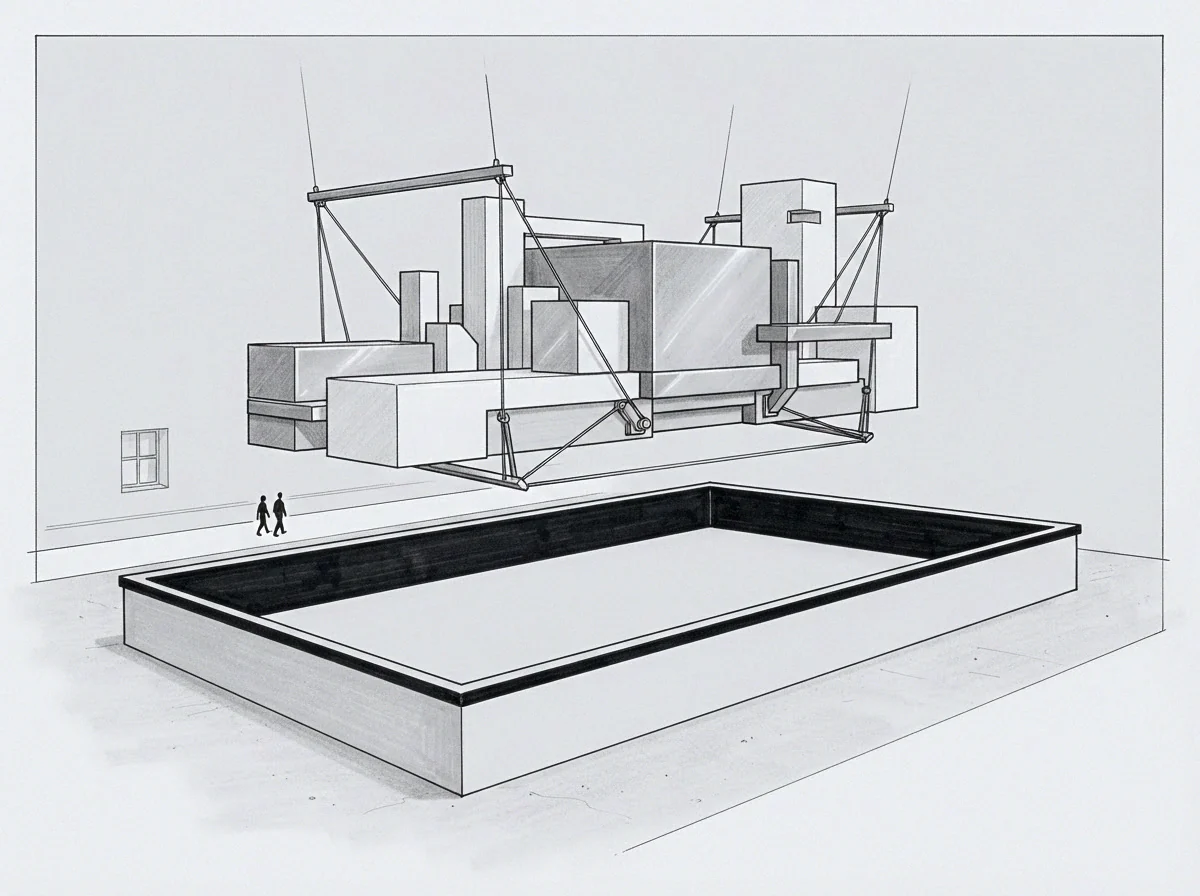
Wall
Four conversations remain open at midnight while the incoming ticket volume doubles. An operator at the console experiences sharp physical fatigue, but executive teams routinely misinterpret that depletion as an emotional failure. Biological systems under sustained load do not break down from poor attitude.
They fail when operational throughput outpaces metabolic recovery. As an enterprise grows, it operates as a load-transferring system, routing unresolved friction toward whichever node responds fastest. That node is usually the person who designed the initial architecture.
Having absorbed early operational spikes through personal endurance, the organization treats that reserve as permanent capacity.
Managing this requires treating personal capacity as an unyielding boundary rather than a flexible guideline. When operational volume meets an explicit partition, work stops or routes elsewhere. An unstated limit simply stretches until the material fails.
Early on, personal absorption functions because overall volume is low enough that overnight rest resets neuroendocrine baselines. As headcount and customer numbers multiply, systemic errors fire continuously. Cortisol stays elevated, sleep fragments, and working memory contracts, leaving the operator attempting to reason their way out of a biochemical deficit.
A load-transferring system continuously routes operational friction toward whichever node demonstrates the highest tolerance for unmetered absorption.
Explicit operational rules establish the barriers that willpower fails to hold. Announcing that technical escalations past eight in the evening will sit unread until seven the following morning removes personal discretion from the exchange. When a channel stops responding after hours, the surrounding team absorbs the immediate operational cost of its defect rate, forcing the unit to reroute tasks or accept the delay.
Leaving that boundary unstated forces an operator to cushion the volatility of every adjacent department, until autonomic exhaustion triggers sudden illness or cognitive failure.

Clamp
Industrial governors prevent thermal runaway when mechanical revolutions exceed design thresholds, and human cognition demands the same structural restraint. Without hard caps on execution, every inbound request claims space in working memory, driving continuous context switching. Sustained rapid switching quickly exhausts available glucose, measurably degrading decision accuracy within two hours of constant interruption.
Operating under unconstrained concurrency produces identifiable organizational failure patterns:
- Unbounded Work In Progress degrades delivery quality while expanding the backlog of half-completed decisions.
- Continuous Channel Monitoring locks the sympathetic nervous system into perpetual readiness, eliminating physical opportunities for metabolic restoration.
- Emergency Decision Bypassing trains peripheral team members to transfer minor operational tensions upward rather than resolving structural ambiguities locally.
A formal governor caps active obligations at a fixed threshold. Once reached, intake stops. Incoming demands hold in an external queue rather than entering the executive loop, and the founder refuses to evaluate parallel proposals until existing work clears review.
Restricting active items protects overall throughput by keeping cognitive latency low.
| Operational Dimension | Unconstrained Concurrency Model | Throttled Boundary Model |
|---|---|---|
| Systemic Error Rate | Escalates exponentially with input volume | Remains stable across variable input spikes |
| Neuroendocrine Drain | Sustained elevation of allostatic markers | Pulsed elevation followed by complete recovery baseline |
| Escalation Routing | Direct upward funneling to executive node | Lateral containment within designated tier architecture |
| Executive Processing Speed | Degraded through fragmented attention | Concentrated on single sequential checkpoints |
Execution stability depends entirely on intake controls. Restricting access during high-volume periods preserves cognitive energy while forcing peripheral teams to structure their problems into actionable requests before seeking review. Short-term processing speed dips, but systemic stability improves across longer cycles.
Applying an unyielding governor to incoming operational tasks maintains decision accuracy while transferring diagnostic discipline back to peripheral teams.
Intake volume must match the metabolic rate of recovery, or the organization simply consumes its personnel to underwrite rapid expansion.

Baseline
Working alongside dependable peers changes the physiological cost of decision-making. Under social baseline theory, the brain treats social support as an energetic asset. Operating inside a predictable group reduces the neural expenditure required for continuous threat detection, keeping baseline metabolic demand low.
During rapid expansion, this regulatory cushion breaks down as specialization splits founding teams into separate silos, removing the informal co-regulation that kept early stress sustainable.
Operators often interpret this professional isolation as routine organizational maturity. Without shared regulation, an isolated executive spends individual physiological reserves assessing risks that previously required half the metabolic cost. The autonomic nervous system reads this isolation as acute exposure, triggering heightened reactivity to minor operational variances.
Operating in organizational isolation doubles the neurological fuel consumed by mundane operational evaluations.
Rebuilding that baseline demands fixed, predictable contact with peers whose judgment carries operational weight. These discussions are not venting sessions; they serve as stabilizing checkpoints where risk assessments are calibrated jointly. Sharing the observational burden lowers peripheral vascular resistance and restores normal circulation to the prefrontal cortex.
Withholding responses to urgent queries during platform-wide stress preserves the founder’s immediate attention capacity while shifting diagnostic latency to downstream services.

Ceiling
Biological limits create hard operating ceilings that strategic goals cannot bypass. Constant exposure to operational volatility forces steady physiological adaptation, measured as allostatic load. The endocrine system releases catecholamines and glucocorticoids to stabilize immediate performance, but prolonged overproduction disrupts vascular health, impairs glucose regulation, and blunts immune defense.
Ignoring these physical indicators inevitably degrades executive processing capacity.
Accurate differentiation between cognitive readiness and emotional volatility governs effective self-regulation. The operating state acts as the internal transfer function, determining how an external signal converts into physical output:
- Metabolic State Verification precedes any irreversible strategic commitment, requiring adequate glycogen supply and cardiovascular stability before major negotiations.
- Circadian Latency Recognition restricts critical architectural changes to morning hours when prefrontal executive control remains intact.
- Depletion Threshold Enforcement halts active communication channels immediately upon the emergence of sympathetic overarousal.
Certain tasks operate as state-gated acts that produce structural errors when executed during exhaustion. Drafting partnership terms, managing terminations, or allocating capital require parasympathetic stability; executing them under severe physical fatigue skews judgment toward defensive, risk-averse, or catastrophizing choices. By contrast, decision-gated acts, such as processing standard invoices or clearing operational logs, function reliably even during degraded states.
Distributed operational models decouple corporate survival from individual physical limits only until structural alignment begins to fracture.
Brake
Enforcing an operational halt relies on procedural precision rather than personal negotiation. The most direct approach uses silence as position. When communication volume exceeds the intake threshold, the founder stops answering.
Silence establishes an operational ceiling far cleaner than an explanatory note, which routinely invites counter-framing and attempts to negotiate exceptions. Absolute silence creates a hard stop that forces the sender to find alternative paths.
Communication channels signal organizational discipline through the ping. The frequency and urgency of inbound alerts reveal whether a team respects attention budgets or treats leadership capacity as an unmetered resource. Channels that fall quiet during scheduled offline blocks reflect operational alignment; those that blast urgent notifications through stated dark hours signal structural disregard.
Correcting this requires decisive boundaries: revoking relay permissions, turning off alerts, and letting backlog accumulate openly until regular hours resume.
Silence acts as an impermeable structural limit that stops negotiation and compels peripheral components to resolve their own operational friction.
Installing operational throttles avoids personal appeals for patience. An operator outlines explicit constraints, publishes processing turnaround standards, and lets upstream pressure push back against those limits until the broader team develops independent competence.
Applying a twenty-four-hour hold on non-critical technical escalations converts reactive organizational anxiety into structured diagnostic documentation.