
Designing Operational Perimeter Thresholds To Manage Allostatic Cognitive Load
Allostatic cognitive load is managed by establishing strict perimeter thresholds that convert ungated communication threads into bounded inputs with explicit scope.

Floor
Four messaging channels remain active past midnight while an operator evaluates structural choices for a quarter that begins in nine days. The incoming volume does not exceed historical norms, yet simple decisions regarding resource allocation generate physical tension in the jaw and stomach. Standard operational metrics report nominal team performance, but internal execution has ground to a halt.
Initiating new work feels impossible. The state is frequently misread as emotional fatigue or clinical depression. In stress physiology, chronic exposure to fluctuating or heightened neural or neuroendocrine response from ongoing regulatory demand defines allostatic load.
It represents the structural wear accumulated when human regulatory systems work continuously at their limit to maintain internal stability against un-gated environment inputs.
Acute cognitive demands clear once a discrete task closes. Continuous background tracking of open commitments creates a steady baseline expense that never resets. When an operator holds three unresolved personnel disputes, two pending vendor renegotiations, and an ambiguous capital timeline, the nervous system treats every incoming notification as a potential threat requiring active evaluation.
The physiological system operates at an elevated biological baseline. The toll accrues.
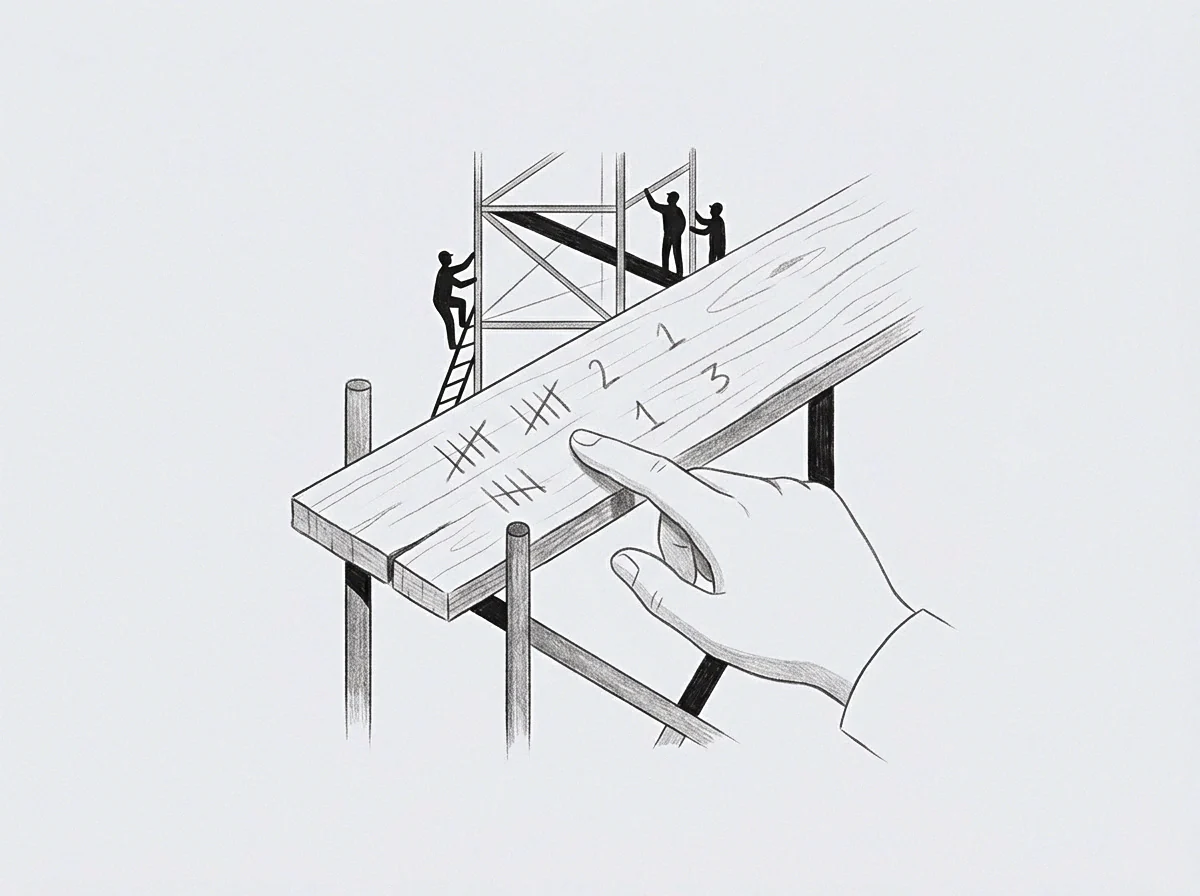
Physiological Ceiling vs Operational Capacity
The distinction between physical work volume and regulatory load determines how operational capacity must be calculated. Work volume measures output produced over time, whereas regulatory load measures biological energy expended to monitor inputs, hold context, and suppress panic. High work volume with zero ambiguity consumes operational capacity cleanly.
Low work volume paired with extreme ambiguity drains biological headroom rapidly.
Unbounded inbound communication forces continuous subconscious threat evaluation long after active decision-making stops for the day.
When allostatic load approaches biological ceiling, executive functioning throttles automatically to preserve basic system stability. Self-initiated creative tasks, long-horizon planning, and complex analysis halt first. Routine administrative tasks may continue seamlessly because they follow pre-existing procedural tracks.
External observers often view this state as sustained performance, failing to recognize that system headroom has reached zero. The slot remains full. Continuing to push through this biological wall without altering perimeter controls triggers cognitive degradation, sensory hypersensitivity, and systematic decision failure.

Screen
Cognitive processing operates under a fixed count of concurrent mental slots. Holding an ungated communication thread open consumes one slot continuously, regardless of whether any action occurs on that thread during the day. A thread with defined scope, a firm execution date, and clear resolution terms frees its slot immediately.
An open request lacking explicit parameters forces the brain to run background polling loops to monitor for changes.
The total number of open loops, rather than the formal project count, dictates total cognitive wear. An organization running three major initiatives with strict operational perimeters generates low regulatory wear. The same organization running three initiatives alongside twelve informal, unbounded requests from internal partners generates continuous regulatory friction.
The loop remains open.

Classification of Cognitive Threads
Managing operational perimeter thresholds requires categorizing inbound requests by their active cognitive expense. Threads fall into distinct operational states based on clarity of scope and temporal demands:
- Ungated Thread consumes a full cognitive slot continuously because the resolution criteria, response timeline, and operational boundaries remain undefined by the sender.
- Monitored Thread requires periodic cognitive evaluation due to shifting external conditions, consuming partial headroom even when primary execution rests with another party.
- Gated Thread releases its cognitive slot entirely by establishing explicit conditions, fixed evaluation dates, and bounded input parameters before work begins.
- Parked Thread retains structural state in external storage without consuming real-time mental processing capacity until a pre-determined temporal trigger fires.
When an operator accepts ungated threads from team members or external partners, those counterparties offload their uncertainty onto the operator. The counterparty experiences relief because the tracking duty shifted, while the operator absorbs an elevated baseline of regulatory demand. The capacity drops.
Over time, the cumulative weight of these borrowed loops saturates the operator’s concurrency limit, leaving zero headroom for strategic intervention.
A thread lacking explicit resolution terms demands continuous neural processing even when no active work occurs.
A finding in cognitive research demonstrates that working memory capacity bounds active processing units to approximately four concurrent chunks. This finding rests on laboratory visual-spatial tracking tests using isolated visual items among healthy young adult populations. Standard operational environments present far higher semantic complexity and relational risk than synthetic visual tracking tests, meaning real-world operational concurrency limits are likely lower under sustained stress.
If an operator attempts to hold six complex organizational problems simultaneously without external gating mechanisms, processing fidelity breaks down across all six. The partner reads the quiet channel as cold detachment, unaware that the receiver’s processing architecture has completely saturated.

Meter
Quantifying allostatic load demands readable variables rather than subjective introspection. Relying on self-reported feelings of exhaustion yields inaccurate operational data, as high adrenaline levels mask physiological depletion during critical execution phases. Operational parameters must measure system input rates, slot occupancy, and boundary permeability directly.
System headroom reflects the spare capacity available to process unexpected operational shocks. Inbound rate tracks the number of unscreened communication events hitting the perimeter per unit of time. Switching toll measures the biological cost of shifting attention between incompatible contextual domains.
When inbound rate exceeds perimeter filtration capacity, system headroom declines toward zero, forcing the system into active throttling. The count sits at four.
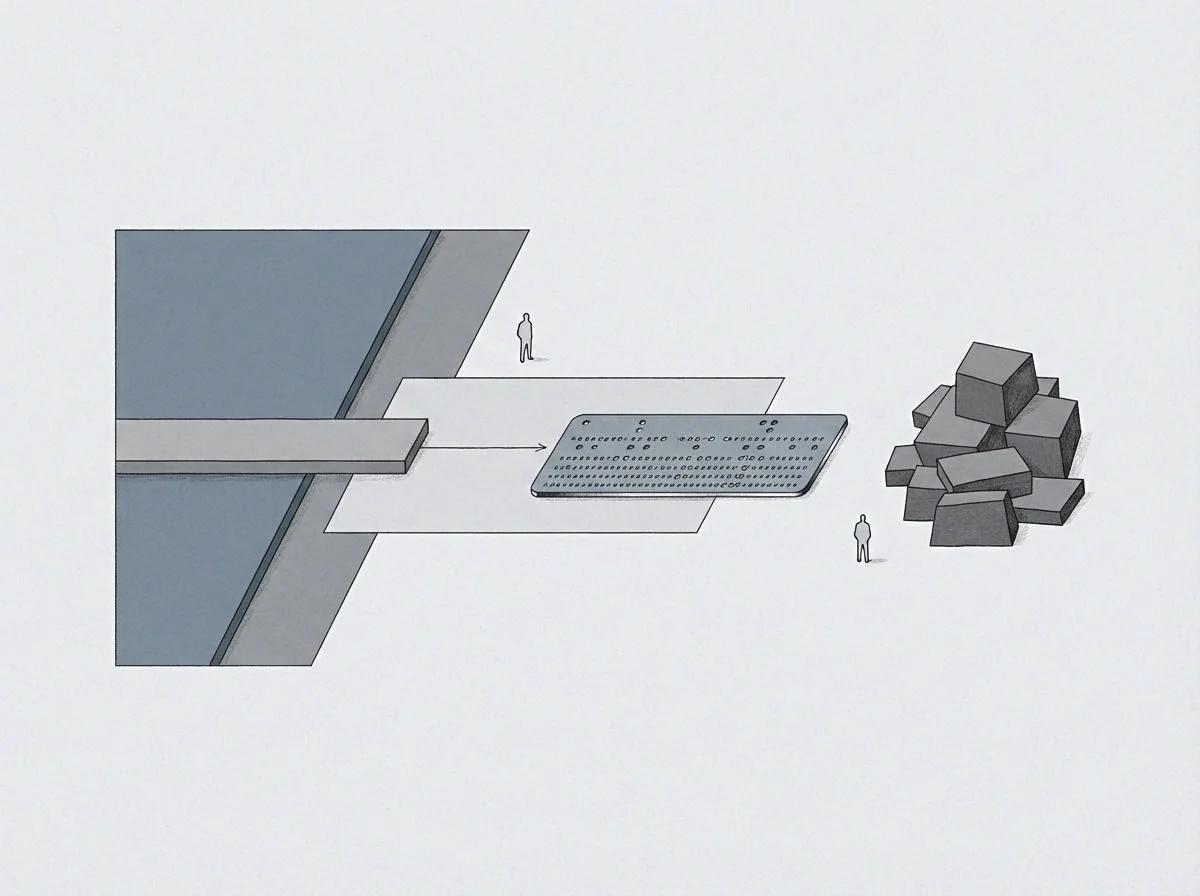
How Does Inbound Demand Wear System Headroom?
Measuring the effectiveness of perimeter thresholds requires comparing different boundary structures across key operational variables. The structural configuration of an operational perimeter directly dictates the rate of allostatic accumulation in the operator.
| Perimeter Configuration | Concurrency Slot Allocation | Regulatory Demand Rate | Switching Cost Index | Primary Failure Mode |
|---|---|---|---|---|
| Ungated Ingress | Full saturation across all open channels | Continuous high baseline elevation | Maximum continuous disruption | Systemic burnout and executive paralysis |
| Soft Boundary Threshold | Partial saturation with periodic queue overflow | Fluctuating moderate to high wear | Moderate recurring disruption | Boundary degradation under external pressure |
| Hard Gated Boundary | Deterministic allocation reserved for active work | Low stable operational baseline | Minimal batched disruption | Counterparty friction over access limits |
Data derived from occupational health research indicates that workers subjected to unpredictable notification schedules exhibit elevated salivary cortisol levels throughout non-work hours. This finding rests on continuous biomarker collection from mid-level managers in corporate office environments over multi-week periods. If structural job autonomy increases or notification windows are hard-constrained to set hours, baseline cortisol levels return to homeostatic norms within five business days.
The evidence confirms that variable-ratio notification streams represent the primary driver of persistent biological allostatic load in modern knowledge seats.
The desk acknowledges an unresolved claim regarding whether complete isolation of executive channels produces long-term organizational blindness. Field data remains inconclusive on the exact threshold where perimeter defense degrades vital situational awareness. Under this uncertainty, a prudent operator maintains strict perimeter thresholds by default, relaxing them only during explicit, time-bounded reconnaissance intervals.
The price is paid.
The operational parameter defining perimeter integrity is the hard input limit, specifying that no inbound request enters active processing without a pre-attached execution scope and a fixed decision deadline.

Door
Converting an ungated operational environment into a gated one requires establishing physical and digital perimeter thresholds. A threshold functions as a mechanical filter situated between incoming operational demands and internal cognitive slots. It rejects inputs that fail to meet minimum structural standards for clarity, timing, and authority.
Establishing perimeter thresholds requires moving from reactive availability to explicit operational contracts. An operator who remains accessible across all communication channels at all hours invites external actors to deposit ungated loops at will. Establishing explicit intake criteria forces the sender to perform the initial cognitive work of defining the issue, clarifying the required decision, and bounding the temporal scope before the request touches the operator’s perimeter.

Constructing Perimeter Thresholds
Implementing functional perimeter thresholds involves configuring explicit operational filters across all inbound communication vectors. The process follows a strict structural sequence:
- Define batch processing windows for incoming communication, restricting active intake to two discrete operational periods per day.
- Publish explicit intake requirements stating that requests without proposed solutions and deadlines will remain unprocessed.
- Deploy automated intake routing to isolate direct channels from unvetted internal or external inquiries.
- Establish a minimum threshold for immediate escalation, requiring monetary or operational risk parameters to be exceeded before breaking quiet periods.
During crisis periods, external stakeholders frequently attempt to bypass established perimeter thresholds by escalating emotional intensity. A perimeter that yields to high emotional tone while ignoring structural intake criteria fails its fundamental design objective. The gate shuts.
Establishing explicit intake criteria forces the sender to complete structural context preparation before an input reaches the operator.
A practical rule of thumb dictates that any incoming request lacking a proposed solution should be returned to the sender without entering a cognitive slot.

Vault
Sustaining operational capacity over multi-year horizons demands building a structural vault for deferred obligations. A vault isolates inactive projects, historical context, and non-critical communications behind fixed operational perimeters. Unlike active working memory or open communication channels, the vault holds structural state without requiring continuous biological monitoring.
The term holds.
Social baseline theory establishes that human risk calculation and metabolic expenditure depend heavily on the perceived proximity of reliable co-regulatory partners. When an operator lacks trusted operational partners capable of holding perimeter thresholds, the operator’s individual nervous system must bear the full metabolic cost of monitoring every environmental threat alone. Distributing perimeter defense across a unified operational team lowers individual metabolic costs, preserving biological headroom for high-stakes decision-making.
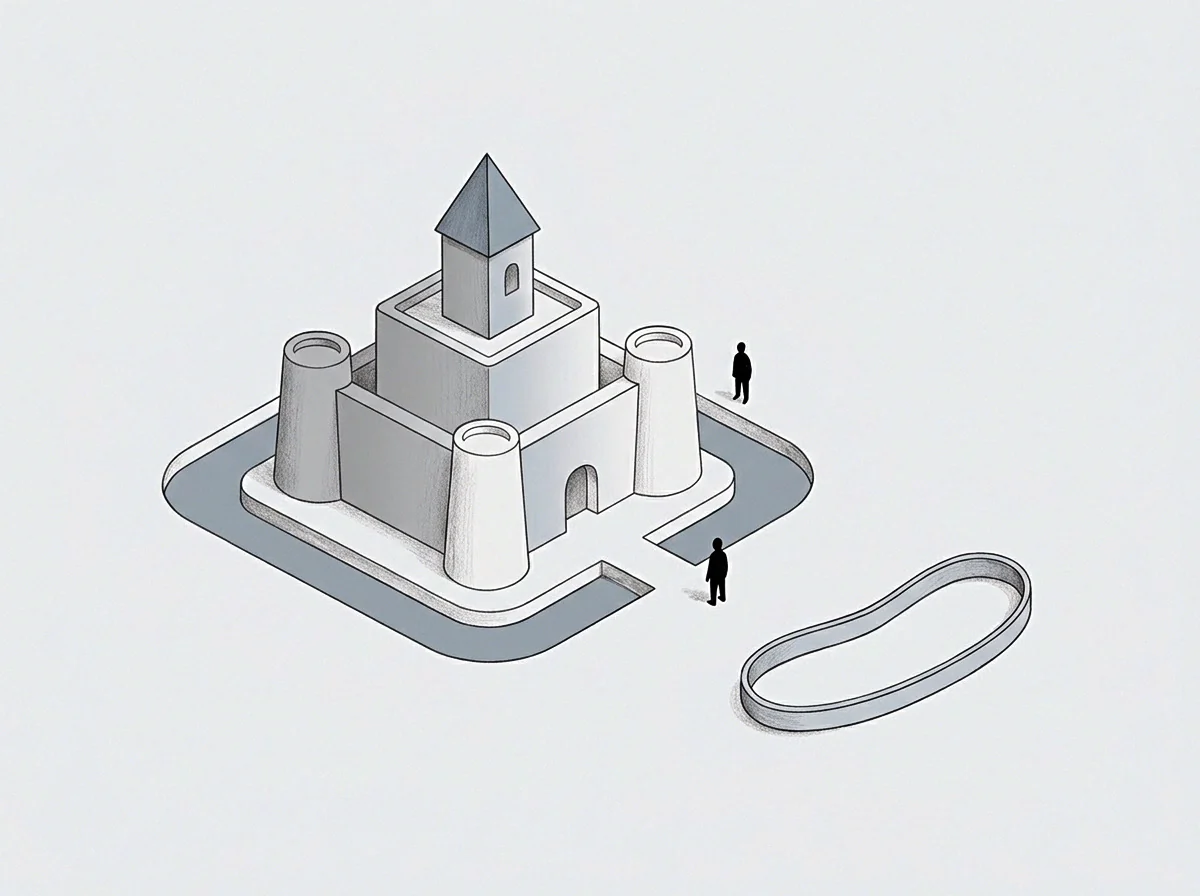
Long-Term Capacity Preservation
Parking line items effectively requires clear decoupling of storage from active monitoring. When an initiative hits an external block, the operator transfers all associated files, context, and tracking metrics into the vault. The line item receives a future review date, and all real-time tracking stops immediately.
The slot opens.
The secondary benefit of functional perimeter defense appears in team dynamics. Teams operating under clear perimeter thresholds exhibit lower turnover, higher execution precision, and reduced interpersonal friction. By eliminating the background noise of ungated communication, team members focus available cognitive capacity on deep execution rather than continuous signaling and availability management.
Sustaining operational headroom over long execution horizons requires hard mechanical limits rather than relies on personal endurance.
A persistent problem in operational perimeter design lies in determining the exact balance between protective threshold rigidity and adaptive organizational intake under rapid market shifts. If a perimeter threshold blocks unexpected strategic signals to preserve short-term cognitive headroom, at what point does structural efficiency morph into dangerous institutional blindness?