Meaning
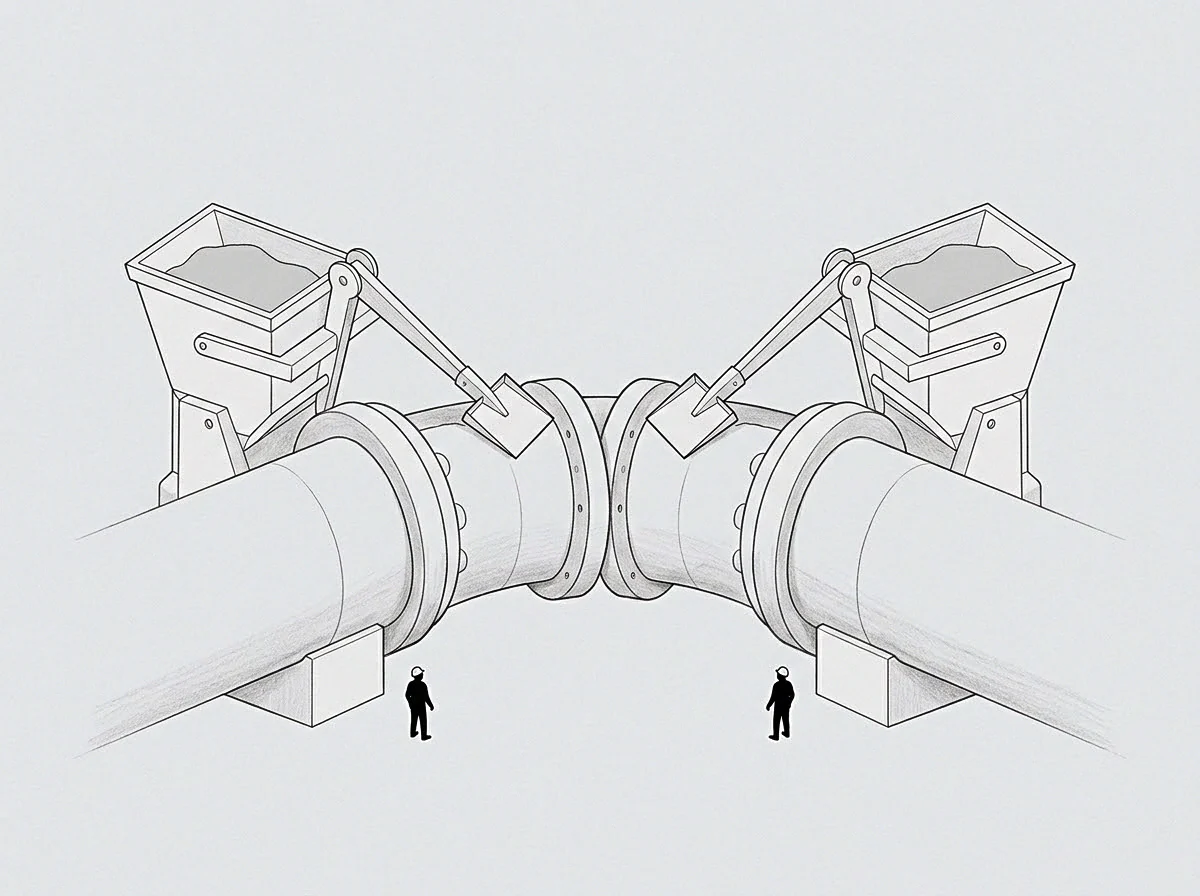
An escalation gate is a structural constraint within an operational hierarchy that pauses automatic progression until specific capacity thresholds or authority verifications are met. The mechanism acts as an administrative filter designed to protect human capacity from unmanaged cognitive load during periods of high organizational throughput. It belongs to the family of regulatory instruments known as self-imposing throttling systems.
The boundary of its application stops at the point where automated routines replace human oversight entirely.
Operational Friction
The physical cost of the mechanism manifests as a direct drain on human attention hours. Operating the filter requires sustained focus from the founder, diverting cognitive energy away from strategic development toward routine authorization tasks. Every review cycle consumes operational bandwidth that would otherwise support direct production or product refinement.
The capacity cost scales proportionally with the volume of incoming exceptions hitting the boundary.
Authorization Threshold
The limit separates normal baseline operations from emergency intervention states through defined quantitative markers. Crossing the marker requires explicit validation from a designated authority rather than an automated transition. The state change alters the speed of organizational response from continuous flow to discrete batch processing.
The boundary protects the system from cascading failures by forcing a deliberate pause in processing velocity.
Capacity Maintenance
Sustaining the regulatory mechanism demands continuous calibration of the thresholds that trigger human intervention. A poorly adjusted filter either floods the founder with trivial exceptions or allows critical failures to bypass review entirely. The stability of the system depends on matching the sensitivity of the gate to the actual available attention hours of the operating team.
Proper tuning prevents both operational gridlock and unchecked systemic overload.