
Neural Receptor Slot Development For Reciprocal Regulation In High Stated Limit Systems
Reciprocal regulation in high limit systems requires developing neural receptor capacity to ingest external calm rather than using boundaries for isolated throttling.

Gate
Four operational channels open simultaneously on an evening when an individual’s metabolic reserves reach floor levels. The messages carry varied demands: a key hire requests clarification on equity vesting, an investor asks for immediate downside modeling, an engineering lead reports a deployment failure, and a personal partner sends a quiet check-in. The individual sitting in the center seat responds to each inbound text within eight minutes.
The responses are calm, direct, and structurally organized. Operational boundaries are asserted with clear phrasing that sets availability for the following morning. On paper, the arrangement demonstrates high operational discipline and explicit boundary setting.
Inside the nervous system, the physiology reflects severe isolation.
A high stated limit defines the maximum operational access a system permits outside actors. People building complex organizations frequently rely on stated limits to manage incoming pressure. Stated limits take the form of locked calendars, explicit response latency rules, off-hours communication bans, and rigid scopes of authority.
The operational boundary functions as an external filter, but the internal economy of regulation operates independently of administrative policies.
Social baseline theory establishes that the human brain treats proximity to reliable conspecifics as the default, low-cost state for energy management. When an individual perceives that a reliable companion is present to share environmental load, the brain lowers its baseline prediction of danger and conserves metabolic resources. Self-regulation without proximity is expensive.
Managing internal emotional state, cognitive load, and environmental threat without a coregulating presence demands high metabolic expenditure from the prefrontal cortex.
Stated limits protect calendar hours while leaving the neural baseline unassisted. The individual manages the entire threat baseline through unilateral effort. Setting a firm boundary often increases short-term metabolic load because asserting the boundary against an operational request requires active cognitive suppression.
Calm costs energy; the boundary holds the external line while the internal motor runs at maximum output to maintain that steadiness.
The metabolic expenditure of regulating alone rises exponentially when operational boundaries are enforced without coregulating presence.
High stated limit systems fail when the central operator treats boundary enforcement as a substitute for reciprocal coregulation. When the limit is set solely to defend against incoming demands, the operator remains in an isolated regulatory state. The external friction drops, but the baseline physiological cost remains unchanged.
Left uncorrected, this dynamic leads directly to allostatic overload, where the physical cost of maintaining internal stability under perpetual load degrades cognitive executive function, sleep quality, and physical resilience.
Siphon
The internal working model forms early in personal development through repeated interactions with primary caregivers. Normally, an infant experiences distress, signals the caregiver, and receives regulatory input from a steady adult nervous system. The infant internalizes a template of a responsive other who holds a dedicated receptor slot for distress.
Through thousands of repetitions, the child develops the neural architecture required to seek, receive, and digest coregulation from trusted individuals in adult life.
A backward working template develops under inverted conditions. When a child learns that personal survival depends on stabilizing a volatile caregiver, the regulatory circuit runs in reverse. The individual internalizes a model of the self as sole regulator.
Regulating personal emotional states and stabilizing the emotional states of surrounding people collapse into one single operation performed on one outbound channel. The internal architecture contains no structural receptor slot for receiving held presence from another person; the circuit is wired exclusively for output.
In high stated limit systems, the backward template produces a distinct structural failure. The operator builds formidable systems to suppress operational chaos and protect personal working space. Yet when a partner, peer, or companion offers steady, non-demanding presence, the operator’s nervous system cannot process the input as regulatory support.
The offer registers as an anomaly or operational noise. Lacking a receptor slot to receive external calm, the operator treats incoming presence as a subtle demand for engagement or an implicit test of vigilance.
The sequence follows a predictable pattern when a backward working template governs a high stated limit system:
- Unilateral Baseline Setting occurs as the operator absorbs all ambient systemic volatility, utilizing personal baseline reserves to project continuous operational calm to staff and stakeholders.
- External Presence Offering emerges when a partner or close colleague attempts to offer coregulation through physical presence, low-arousal listening, or shared domestic burden.
- Receptor Slot Deficit manifests because the operator lacks the neural pathway to convert external presence into reduced physiological strain, treating the gesture as an additional input stream to monitor.
- Boundary Escalation follows as the operator asserts increasingly rigid stated limits against the offering party, misinterpreting coregulatory gestures as intrusions upon protected recovery time.
- Relational Baseline Withdrawal settles in when the offering party ceases regulatory outreach, leaving the operator in complete operational isolation while confirming the operator’s core belief that self-reliance is the sole surviving strategy.
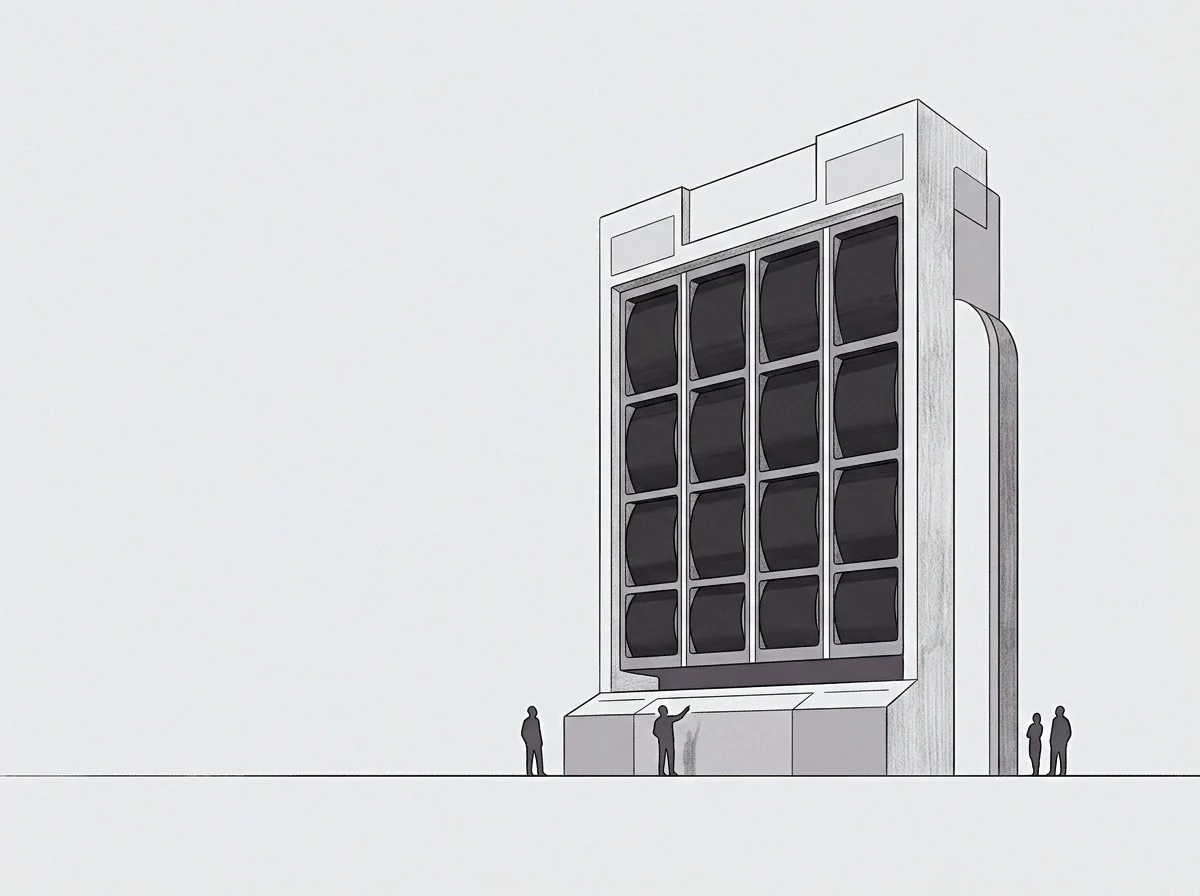
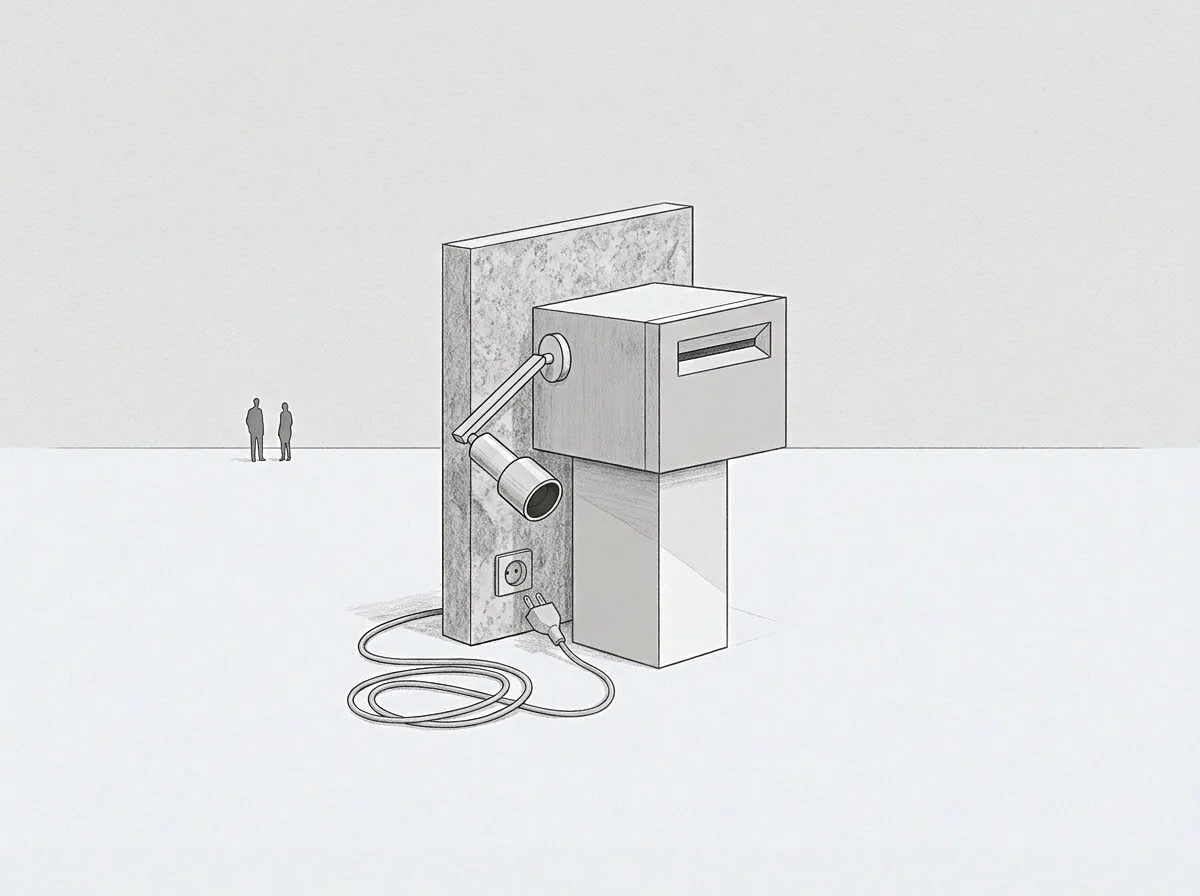
The partner or close peer eventually leaves the interaction holding a clear impression of the dynamic. Presence was offered without demand, but the space contained no hardware to receive it, leaving the gesture standing outside the wall like uncollected freight.
Scaffold
A stated limit can operate as an isolated barrier or as an active scaffold for reciprocal regulation. The distinction rests on whether the system possesses active receptor slots capable of ingesting external regulatory signals. In an isolated system, the stated limit simply throttles incoming traffic to preserve what little baseline capacity remains.
In a reciprocal system, the stated limit creates a safe enclosure within which mutual regulatory exchange occurs.
Reciprocal regulation requires two functional capacities: the ability to project regulatory calm to another nervous system and the neural receptor capacity to downregulate personal arousal upon receiving another’s steady state. High stated limit operators routinely exhibit exceptional capacity for outbound regulation. Their neural circuits excel at absorbing environmental shock, suppressing visible panic, and providing steady anchoring for team members during severe operational crises.
They act as the baseline for the entire organization.
The bottleneck resides entirely on the inbound side. Developing a receptor slot requires exposing the nervous system to coregulatory input without immediately deploying cognitive override mechanisms. When an individual has spent decades operating as the sole anchor, receiving calm feels physiologically indistinguishable from surrendering operational control.
The slot stays closed under pressure.

What transforms an operational limit into a regulatory channel?
Transformation occurs when the stated limit shifts from defending an isolated regulator to protecting a shared space of mutual attunement. Under unilateral regulation, the operator uses the limit to keep people far enough away that their emotional states do not demand active management. Under reciprocal regulation, the limit keeps operational noise out so that two individuals can attune their physical baselines without task friction.
A stated limit without an active receptor slot functions as an isolation vault that accelerates operator depletion.
The operational differences between unilateral boundary throttling and reciprocally regulated limit systems are structural and measurable across key system variables.
| System Variable | Unilateral Throttle System | Reciprocally Regulated System |
|---|---|---|
| Primary Function of Limit | Defend isolated baseline from external demand | Enclose shared space for mutual coregulation |
| Response to Incoming Calm | Monitored as potential operational interference | Ingested to lower baseline metabolic expenditure |
| Metabolic Cost Trajectory | Scales linearly with total operational load | Plateaus as coregulatory proximity absorbs load |
| Systemic Single Point Failure | Operator baseline depletion halts core operations | Load redistributes across attuned companion baseline |
| Long-Term Adaptive Capacity | Decreases through cumulative allostatic strain | Increases through earned neural template expansion |
A specific operational condition changes the dynamic entirely. When a stated limit includes explicit permission for non-operational physical proximity without task agenda, the nervous system begins registering the presence of the other as safety rather than potential work, lowering the baseline cost.
Current
Intellectual insight into attachment theory or social baseline economics does not build a neural receptor slot. The prefrontal understanding of a relational defect leaves the underlying autonomic machinery untouched. The autonomic nervous system updates its predictive models exclusively through direct, repeated physiological experiences that contradict established threat expectations.
Cognitive comprehension explains the template; somatic experience alters it.
Growing a receptor slot requires small, controlled exposures to coregulatory input under conditions of high stated limits. The high stated limit provides the safety boundary required for the nervous system to risk dropping its defensive posture. If the limit is too low or permeable, ambient operational demands flood the space, forcing the backward template to resume its default role as outbound regulator.
The boundary creates the low-threat room in which the new neural pathway can form.
Inside that protected space, the operator practices non-action in the presence of another steady nervous system. The physical protocol is understated and precise. It involves remaining in physical proximity with a trusted conspecific while experiencing internal physiological arousal, without executing any move to fix, soothe, manage, or instruct the other person.
The operator sits with an unvoiced need while absorbing the non-judgmental, stable baseline of the companion.
Several distinct failure modes routinely interrupt the development of neural receptor slots in high limit environments:
- Cognitive Translation Drift occurs when the individual converts a somatic coregulatory moment into an analytical post-mortem, using intellectual discourse to re-establish cognitive control over the experience.
- Somatic Refusal Surge manifests as a sudden spike in visceral restlessness, muscle tension, or impulse to return to active work the moment coregulatory physical proximity begins.
- Preemptive Coregulation Outburst occurs when the operator detects minor discomfort in the companion and immediately switches back to outbound soothing, abandoning the receptive posture to resume the familiar anchor role.
- Limit Dissolution Failure happens when the operator allows operational tasks to bleed into the dedicated coregulation window, destroying the low-threat environment necessary for template update.
The metabolic cost drops only when the brain stops predicting that presence requires management. As the receptor slot develops, the baseline metabolic rate during quiet joint presence decreases, verified by reduced resting heart rate and increased vagal tone during shared downtime.
Insight clarifies the historic baseline while somatic coregulation builds the new hardware.
Whether a backward template can ever achieve identical neural efficiency to a naturally developed secure template remains unsettled in clinical research. Current findings indicate that earned security utilizes secondary prefrontal pathways to monitor and clear autonomic threat signals, achieving functional parity at a slightly higher baseline energy cost than early-formed secure attachment.

Deck
The update path toward earned security is measured in years of consistent structural repetition. A high stated limit system provides the stable architecture within which this long-term template update takes place. Over time, the repeated experience of receiving calm without operational consequences alters the brain’s baseline budget models, gradually expanding the neural hardware to include a functional receptor slot.
The transition alters how the operator handles organizational shock. When an operational crisis hits a mature reciprocal system, the individual does not default to isolated panic suppression behind locked doors. The operator asserts stated operational limits to protect core work hours, but uses off-hours space to actively ingest coregulatory support from trusted partners or peers.
The dynamic between stated limits and coregulatory capacity reaches balance when boundaries are no longer held out of fear of collapse. The limit ceases to be a frantic dam holding back an overwhelming ocean of external demand. It becomes a simple, well-maintained gate that opens deliberately to admit restorative presence and closes cleanly to execute focused work.
A simple principle governs the development of regulatory hardware in high boundary environments: operational limits defend working capacity, but only reciprocal coregulation restores the baseline energy required to hold those limits under load.