
Social Baseline Economics in High Pressure Professional Dyads
Social baseline economics shows that professional dyads share regulatory load, where one partner's steady physiological state lowers another's metabolic stress cost.

Signal
Four operational alerts arrive in parallel while the partner sits in silence during a capital call, leaving the chief executive to absorb the entire immediate threat load without assistance. The central nervous system measures risk through environmental cues and the immediate physical availability of supportive peers rather than abstract strategy. Social baseline theory demonstrates that the human brain treats social proximity as the baseline condition for conserving energy.
When a reliable partner is present, the brain budgets neural and physiological resources under the assumption that operational burdens are shared. Operating in isolation forces an executive to maintain high autonomic arousal, elevating baseline cardiovascular activity, baseline cortisol output, and continuous vigilance.
In high-pressure leadership dyads, this baseline economic model dictates daily performance capacity. The physical or real-time operational presence of a steady partner functions as an external regulatory resource. Neural circuits responsible for threat detection, particularly within the amygdala and anterior cingulate cortex, show diminished activation during stressful tasks when a trusted peer is accessible.
This suppression of metabolic expenditure occurs automatically, reducing the energetic cost of self-regulation through proximity alone.
When two operators maintain physical or real-time operational proximity, the neural cost of monitoring environmental risk decreases for both individuals.
Borrowed regulation operates below conscious awareness. One partner’s steady heart rate variability, calm vocal cadence, and somatic stability stabilize the other partner’s fluctuating nervous system. This energetic subsidy allows both individuals to direct cognitive capacity toward complex strategic tasks rather than internal containment.
When professional partners lack this attunement, each individual operates in solitary threat mode; the physiological toll of continuous solitary regulation manifests as systemic fatigue, degraded decision quality, and operational friction.
The presence of a responsive partner acts as an implicit metabolic subsidy, shifting the baseline operational budget from expensive solitary threat monitoring to efficient shared processing.

Desk
Physical presence in a shared room transforms how the central nervous system processes urgent threats. Sitting across a table or maintaining an unmuted audio channel creates an immediate channel for physiological co-regulation. Executives under pressure frequently attempt to manage relational strain through formal governance artifacts, written memos, and strategic updates, yet human nervous systems attach to a partner’s live somatic state rather than written documentation.
A steady executive sitting at the same workstation lowers the peripheral stress responses of an agitated colleague without uttering an analytical argument.

Physiological Attunement Across Shared Physical Space
Co-regulation relies on continuous somatic feedback loops between individuals operating under load. When operational velocity accelerates, partners continuously scan one another for cues of stability or distress.
- Vocal cadence matching downregulates autonomic spikes during crisis negotiations.
- Postural stillness communicates resource availability directly to the counterparty’s peripheral nervous system.
- Micro-expression stability reduces the frequency of speculative risk assessments in high-velocity dyads.
The stable partner absorbs surplus autonomic arousal from the volatile partner, creating a temporary energetic asymmetry where one person consumes regulatory capacity while the other supplies it. Borrowed calm feels like personal composure to the person receiving it. The executive receiving the regulatory subsidy experiences a sudden clarity of thought and reduced somatic tension, rarely identifying that the calm was imported from the person sitting across the room.
A founder frequently mistakes a partner’s physiological calm for infinite capacity to absorb secondary operational load.
Sustaining this dynamic over long operational cycles alters the underlying terms of the partnership. The partner supplying the steady baseline incurs an unvoiced metabolic charge to suppress their own somatic oscillations and remain anchored. When environmental stress remains high, the borrowing partner increases their reliance on the stabilizing partner’s presence, creating an unacknowledged dependency structure within the firm’s leadership layer.
A partner who relies on another for autonomic stability inevitably increases their operational demands as external pressure accelerates.
Relay
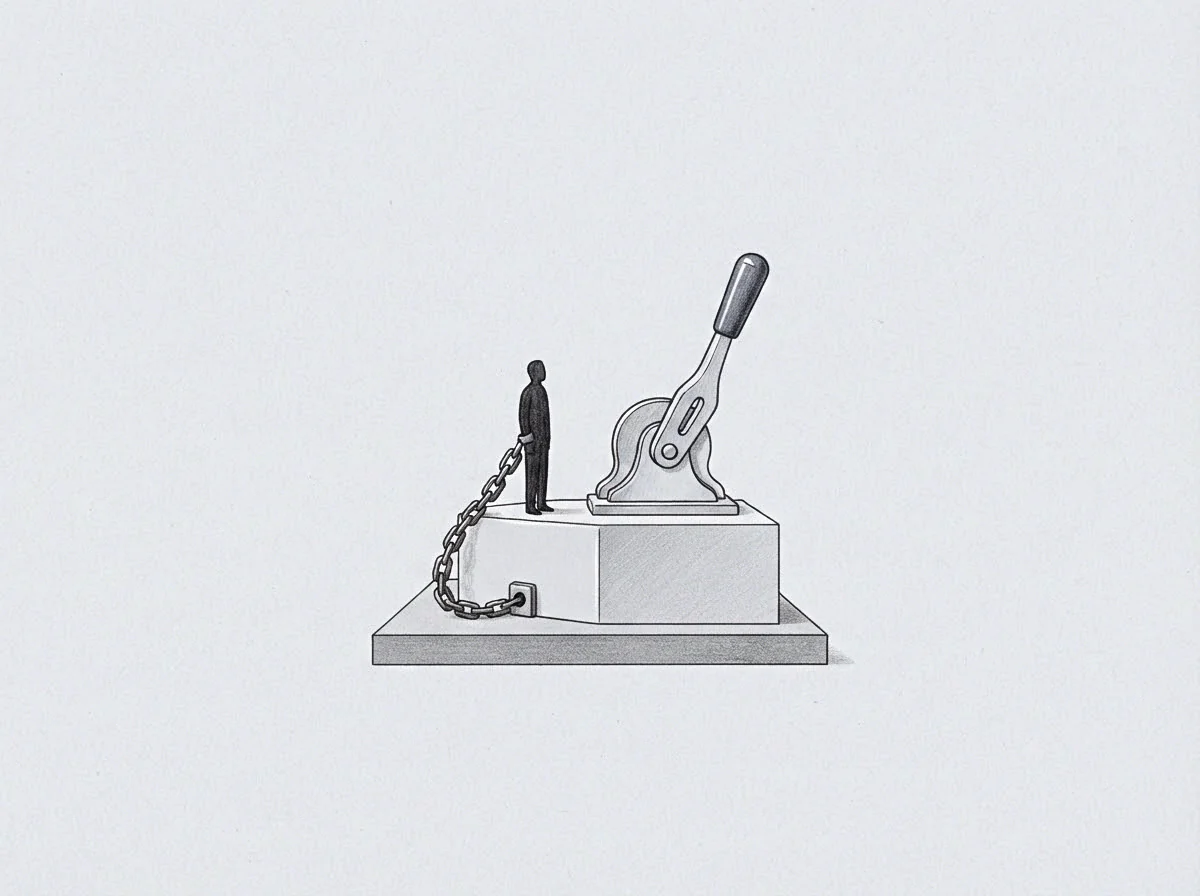
Internal working models dictate whether an executive experiences shared responsibility as mutual support or as an asymmetric demand. Attachment research demonstrates that early relational experiences form durable templates regarding the availability and responsiveness of others. These internal templates govern how individuals behave inside professional dyads under intense threat.
An individual with an internalized model of a responsive counterpart easily transfers load and accepts incoming regulatory support, whereas someone who learned early that counterparts were unreliable or overwhelming develops a backward regulatory template.
Under a backward regulatory template, an executive assumes they must act as the sole regulator for both themselves and their operational environment. Regulating the self and regulating others merge into a single operational directive. This pattern produces an executive who excels at maintaining external calm, absorbing team anxiety, and stabilizing volatile situations, while remaining structurally incapable of receiving regulation from anyone else.
The internal architecture lacks a functional receptor slot for incoming support.
Structural Profiles of Regulatory Exchange
The table below contrasts the physiological and operational differences between symmetric co-regulation and an asymmetric regulatory relay within an executive dyad.
| Operational Dimension | Symmetric Co-Regulation | Asymmetric Regulatory Relay |
|---|---|---|
| Baseline Assumption | Threat monitoring and coping resources are fully shared between partners. | The primary regulator assumes total solitary responsibility for systemic stability. |
| Metabolic Expenditure | Low per individual; energetic expenditure scales down during joint tasks. | High for the primary regulator; energetic cost escalates as partner distress rises. |
| Somatic Attunement | Bi-directional physiological tracking and mutual downregulation. | Uni-directional suppression of personal distress to regulate the partner. |
| Receptor Slot Status | Open and functional; easily absorbs incoming regulatory signals. | Closed or absent; incoming offers of support trigger hyper-vigilance. |
| Capacity Under Crisis | Resilient; dyad distributes incoming environmental load evenly. | Fragile; primary regulator reaches allostatic ceiling without warning. |
Inside an asymmetric relay, the partner with the backward template functions as the permanent grounding wire for the firm. When market pressures escalate, the secondary partner offloads somatic distress onto the primary regulator, who processes this incoming volatility through self-suppression while presenting an unshakeable exterior. Because the primary regulator displays zero outward signs of strain, the secondary partner assumes unlimited capacity and continues to pass operational complexity across, unaware that the regulator’s nervous system is burning through finite energetic reserves.

Does Co-Regulation Scale Beyond the Immediate Dyad?
Executive leadership teams often attempt to replicate dyadic co-regulation across broader organizational units, but scale introduces communication latency and dilutes somatic signaling. The central nervous system cannot maintain real-time autonomic attunement with ten people simultaneously. Attempting to spread bi-directional regulation across a large group converts mutual support into chaotic noise.
High-pressure co-regulation remains effective primarily within tight two-person or three-person operational units where physical proximity, micro-expressions, and immediate feedback loops stay intact.
An operator functioning on a backward regulatory template consumes personal energetic reserves to maintain the dyad’s outward composure.
This dynamic creates a structural vulnerability. The primary regulator cannot ask for relief because their internal template defines vulnerability as an immediate systemic threat. Offers of assistance from the secondary partner are frequently rejected or ignored by the primary regulator, who perceives incoming help as additional operational friction to manage.
The secondary partner, finding their offers of support blocked, retreats into passive reliance, deepening the structural asymmetry of the dyad.
The arrangement functions smoothly as long as one person remains completely unshakeable regardless of what arrives.
Reserve
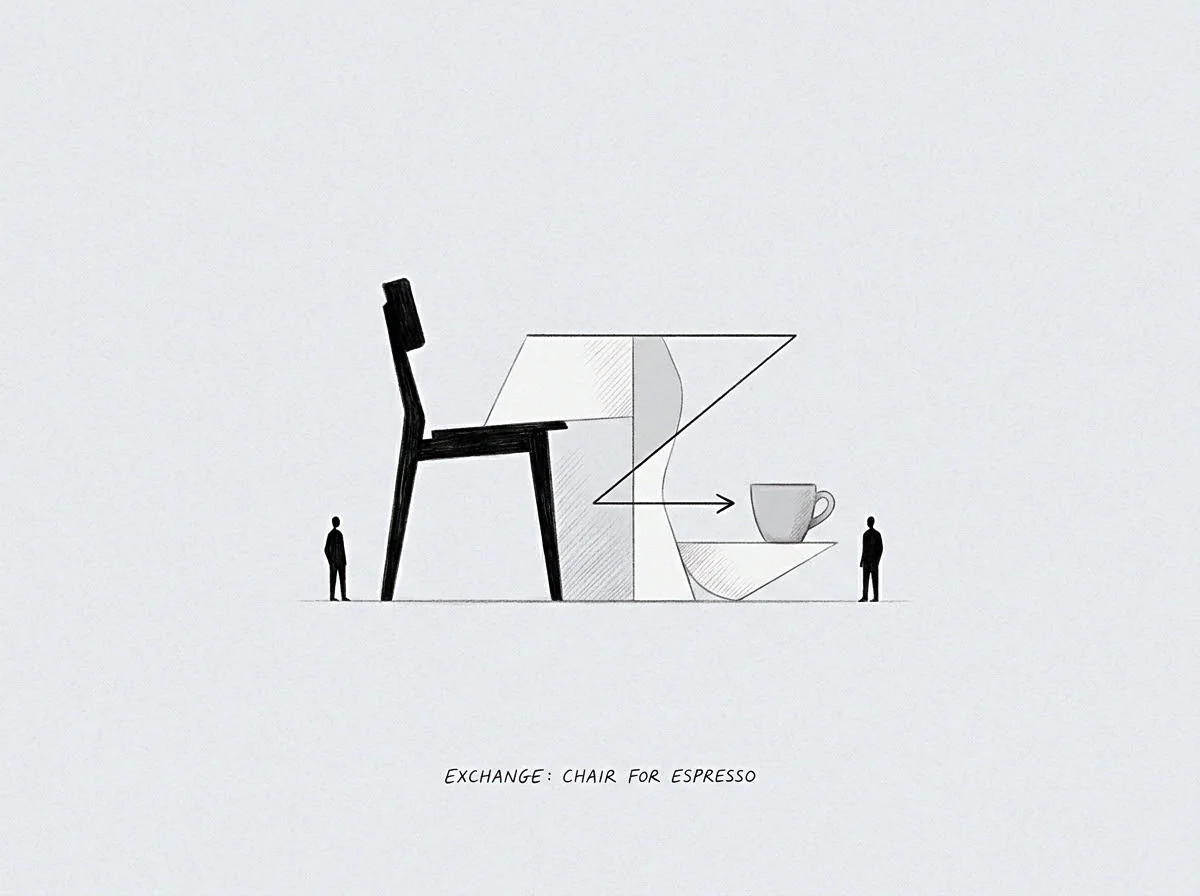
Allostatic accumulation accelerates when an executive repeatedly acts as the sole physiological grounding mechanism for an entire executive team. Allostatic load represents the cumulative wear on neuroendocrine and cardiovascular systems caused by sustained, unmediated stress responses. In professional leadership, a regulator proven under threat naturally attracts more threat load: board members, investors, and junior executives gravitate toward the somatically stable individual in the room during market crises, treating composure under stress as a container for unresolved organizational anxiety.
This structural attraction of load leads directly to systemic capacity depletion. The stable individual’s nervous system continuously processes both primary operational risks and secondary organizational panic. Over extended durations, this dual processing exceeds metabolic intake.
When recovery is absent, the autonomic nervous system initiates protective throttling measures to prevent biological collapse.

The Sequence of Systemic Regulatory Exhaustion
The progression from proven stability to autonomic throttling follows a predictable sequence within high-pressure dyads.
- High physiological stability signals surplus regulatory capacity to surrounding team members during operational crises.
- Surrounding team members transfer unresolved risk monitoring to the stable individual, expanding the stable individual’s span of threat awareness.
- The stable individual absorbs secondary emotional oscillations while attempting to execute primary strategic tasks.
- Metabolic expenditure exceeds intake, forcing the autonomic nervous system to initiate behavioral throttling to protect systemic baseline function.
Behavioral throttling is frequently misdiagnosed by external observers as sudden apathy or strategic disengagement. Throttling is an active, protective shutdown of non-essential emotional and cognitive processes. When an executive reaches their allostatic limit, the nervous system cuts power to empathy, creative problem-solving, and nuanced communication.
The individual becomes flat, blunt, and hyper-efficient, stripped of warmth. This state reduction preserves core metabolic function at the expense of relational cohesion.
The partner who never displays strain receives the load that everyone else offloads to stay functional.
When throttling occurs, the secondary partner often reacts with confusion or resentment. Accustomed to drawing on the primary regulator’s steady baseline, the secondary partner experiences this sudden detachment as a breach of trust. The secondary partner may escalate their emotional output to force a regulatory response, inadvertently accelerating the primary regulator’s systemic shutdown.
Unmanaged allostatic exhaustion breaks executive partnerships at the exact moment organizational pressure demands maximum unity.
Failing to recognize structural regulatory asymmetry results in sudden operational exhaustion and the unexpected breakdown of key executive partnerships.

Tether
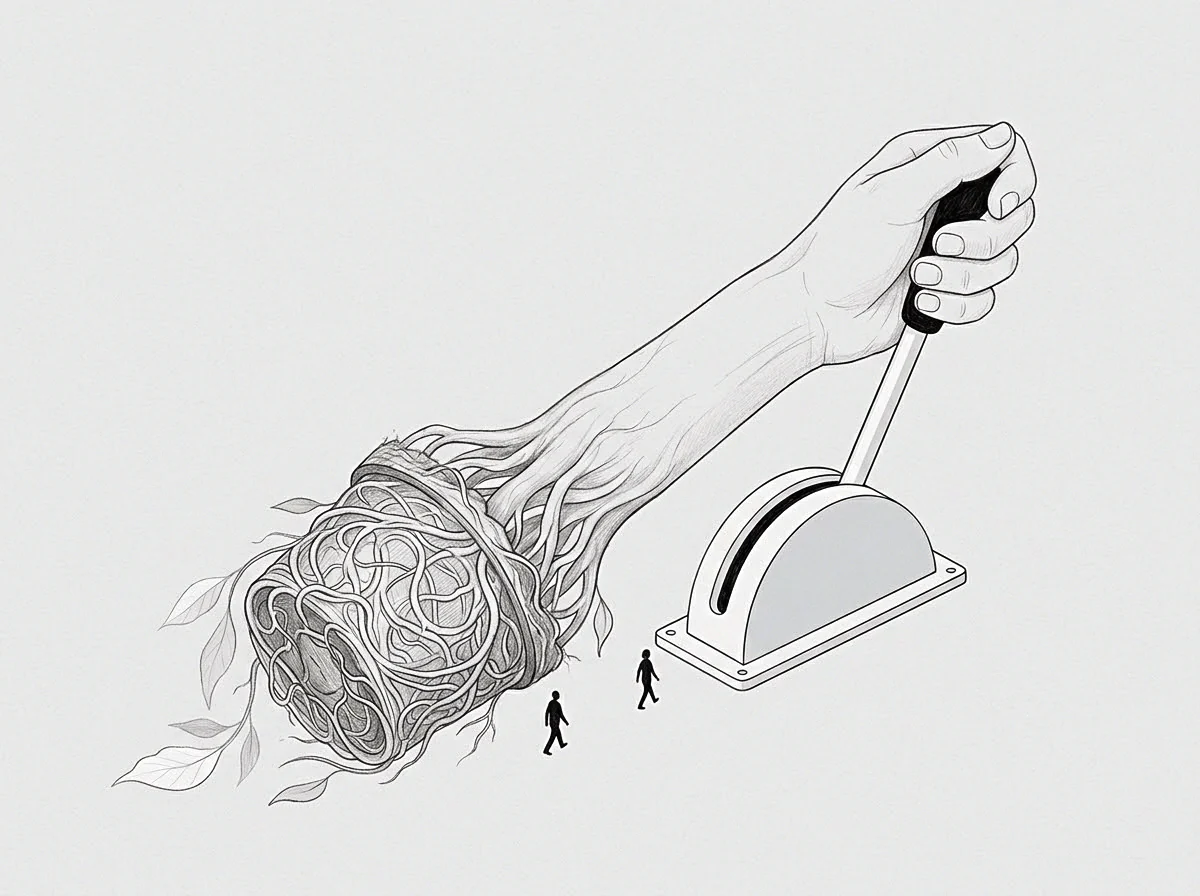
Updating an ingrained internal model of self-reliance demands repeated concrete experiences of shared regulation under authentic stress. Strategic insight into one’s regulatory habits does not alter autonomic physiology, and knowing that one operates on a backward template does not open a closed receptor slot. Autonomic re-patterning occurs only through new, embodied events where distress is expressed, held by a stable counterpart, and safely resolved without structural failure.
Earned Security Through Repeated Operational Experience
Earned security defines the process by which an individual with an insecure or backward template develops a stable internal baseline in adulthood. Within a high-pressure dyad, earned security is forged through consistent operational trials over long timeframes. The process requires both partners to alter their customary regulatory positions under load.
The primary regulator must practice stating explicit operational limits before reaching allostatic capacity. A stated limit acts as an external structural barrier, preventing the secondary partner from automatically offloading unresolved anxiety. When the primary regulator states a limit and the secondary partner receives it without collapsing or attacking, the primary regulator’s nervous system registers an unfamiliar sensory input: safety in bounded capacity.
Simultaneously, the secondary partner must build self-regulatory endurance. Rather than immediately seeking somatic calming from the primary regulator during a crisis, the secondary partner learns to contain their own autonomic arousal. As the secondary partner demonstrates capacity to hold their own baseline, the primary regulator gradually relinquishes solitary threat monitoring.
The divergence over time between compulsory self-reliance and conscious mutual reliance represents the true measure of dyadic maturity.
Repeated interactions where a partner holds their own position without collapsing or transferring distress allow the primary regulator to safely relinquish solitary vigilance.