
How Autonomic Threat Detection Overrides Intellectual Attachment Knowledge Under Sustained Pressure
Sustained pressure elevates allostatic load, triggering subcortical threat circuits that deactivate prefrontal regions storing cognitive attachment knowledge.

Ledge
Late at night, three operational escalations arrive while metabolic headroom is spent. Four unread messages sit open on a screen, each demanding an immediate allocation of attentional capital. The person in the seat possesses extensive conceptual knowledge of attachment security, internal working models, and co-regulation mechanics, having spent years cataloging relational theories and the necessity of steady presence.
Yet, as cardiac interoceptive signals accelerate, explicit cognitive literacy vanishes from executive awareness. Sympathetic arousal triggers subcortical survival pathways, framing incoming partner bids as additional metabolic load rather than sources of relational safety.
Subcortical threat structures operate on immediate neurochemical timelines. Threat circuits activate in twenty milliseconds, while prefrontal recall requires three hundred milliseconds. The amygdala and periaqueductal gray react to environmental stressors long before the dorsolateral prefrontal cortex can retrieve explicit mental frameworks.
Under conditions of low physiological stress, an individual easily accesses an intellectual understanding of secure communication, emotional accessibility, and shared problem-solving. As allostatic load accumulates over weeks of continuous operational responsibility, the nervous system shifts its primary objective from relational connection to physiological preservation.

Subcortical Latency and Prefrontal Deactivation
Evolutionary survival mechanisms prioritize speed over reflective accuracy. When systemic pressure remains elevated, autonomic threat detection mechanisms continually scan internal and external sensory streams for signs of vulnerability. The moment an incoming signal is categorized as a threat to metabolic baseline, neural pathways shunt resources away from higher-order cognitive centers.
Allostatic load suppresses dorsal prefrontal networks while epinephrine halts explicit memory retrieval, leaving explicit attachment knowledge physically locked behind deactivated neural circuits while primitive autonomic defense strategies govern the response.
Subcortical threat detection bypasses explicit prefrontal recall whenever sympathetic arousal exceeds the physiological safety threshold.
A founder who has spent years studying psychological safety can still experience an involuntary autonomic override during a high-stakes board dispute or partner conversation. The intellectual framework dictates staying calm, listening deeply, and projecting non-defensive availability. However, the autonomic nervous system registers the partner’s emotional intensity as a direct threat to depleted energy reserves.
The body responds by mobilizing defensive motor patterns: muscle tension increases, vocal pitch shifts, and interoceptive awareness narrows toward immediate threat isolation. Explicit attachment knowledge does not prevent this shift because subcortical structures process survival signals long before prefrontal regions can evaluate relational context.

Dissociation Between Explicit Literacy and Physiological State
Intellectual mastery of relational concepts creates an illusion of structural stability during periods of low stress. Operators frequently mistake an ability to explain attachment dynamics for actual physiological integration. This conceptual literacy operates within explicit declarative memory networks, which depend entirely on stable prefrontal functioning.
In contrast, autonomic threat detection relies on implicit procedural memory and subcortical reflex arcs. When sustained operational pressure forces autonomic activation into sympathetic overdrive, the neural architecture supporting explicit recall undergoes temporary functional decoupling.
Consider an operational arrangement where two partners build an organization over three years under continuous financial constraint. Assume one partner holds full operational liability while the other manages product delivery. When cash reserves drop below sixty days of operational runway, the managing partner’s autonomic nervous system enters a state of chronic hypervigilance.
The partner attempts to initiate an open conversation regarding long-term relational expectations. Although the managing partner intellectually recognizes the validity of the conversation, their physiological state reads the exchange as an unmanageable demand on non-existent metabolic reserves. The managing partner withdraws into monosyllabic responses because the autonomic system has disabled prefrontal retrieval to conserve metabolic energy.
Unaddressed autonomic activation leads to structural breakdown of relational arrangements, as cognitive models fail to prevent systemic depletion under chronic pressure.
Bypass
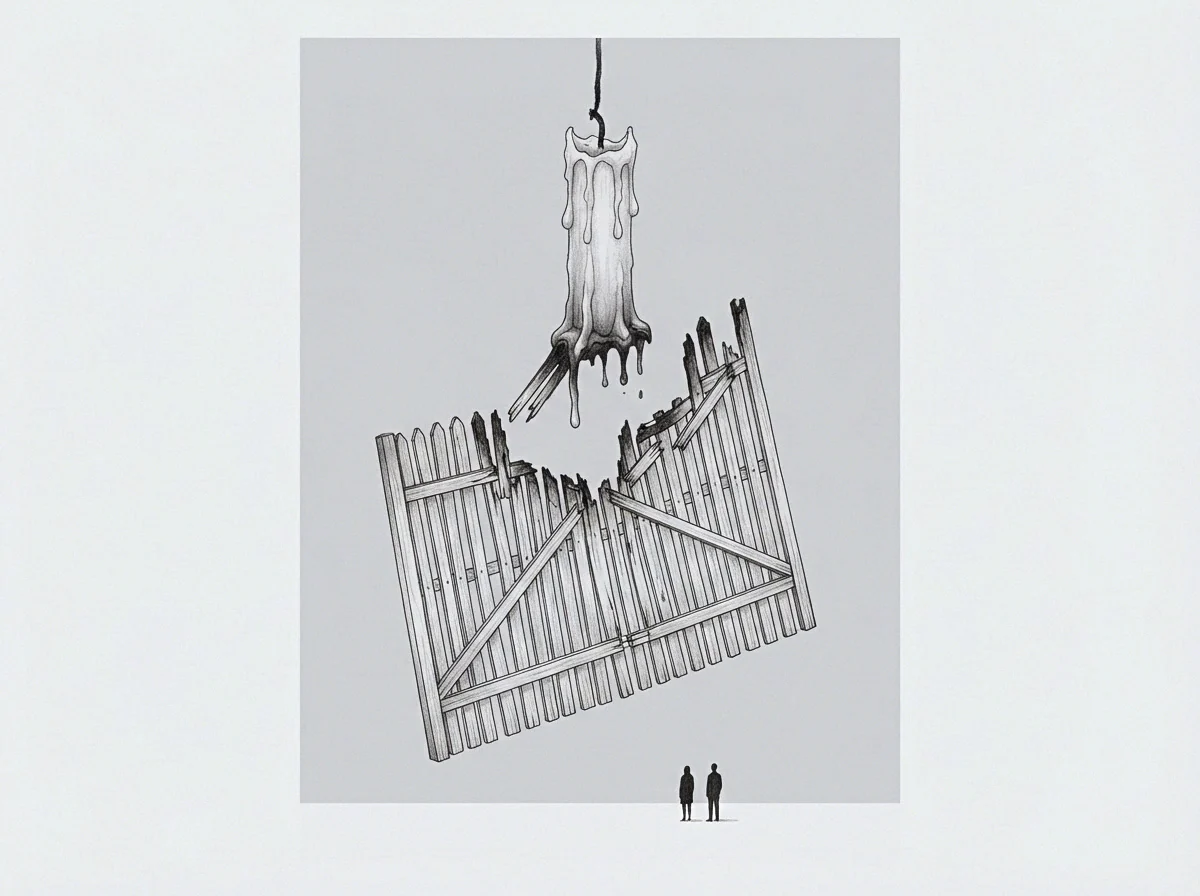
Subcortical threat structures disengage executive processing long before conscious awareness registers an incoming signal. This structural bypass ensures that rapid protective actions occur without the metabolic delay of analytical deliberation. In high-pressure operational environments, the autonomic nervous system continually adjusts physiological baseline settings based on incoming sensory feedback.
When sustained pressure exhausts systemic capacity, the neural threshold for threat detection drops significantly, miscoding benign relational signals as operational hazards and overriding long-term attachment commitments.

Neuroception Mechanics Under Chronic Load
Autonomous monitoring systems constantly scan internal and external environments for indicators of risk, modifying vagal tone and cardiac output beneath conscious awareness. Under normal conditions, a robust ventral vagal state supports social engagement, enabling soft facial expressions, warm vocal tone, and fluid relational interaction. However, chronic allostatic strain degrades ventral vagal regulation, causing the nervous system to fall back on older evolutionary defense circuits where interoceptive pathways override explicit relational concepts.
The transition between autonomic states follows a strict physiological sequence as threat levels escalate and energy reserves deplete across sustained high-stress periods:
- Ventral Vagal Withdrawal Parasympathetic brake disengages, raising heart rate and signaling immediate loss of social engagement capacity.
- Sympathetic Overdrive Epinephrine surges, directing metabolic resources toward defensive motor output while suppressing prefrontal executive circuits.
- Dorsal Vagal Shutdown Systemic immobilization occurs when active defense mechanisms fail, locking the individual into passive dissociation and metabolic preservation.
- Interoceptive Distortion Internal sensory feedback misinterprets benign relational bids as incoming operational threats under sustained load.
When an individual enters sympathetic overdrive, their cognitive architecture becomes hyper-focused on risk mitigation. Relational bids that normally foster intimacy are reinterpreted as demands for attention that the individual cannot supply. The brain prioritizes survival efficiency over relational processing, ensuring that any input requiring emotional regulation gets treated as an invasive pressure point.
Ventral vagal withdrawal converts relational bids into metabolic demands when systemic capacity falls below baseline.

The Breakdown of Conceptual Safety Signals
Elevated circulating stress hormones alter how incoming sensory data gets categorized. Cortisol and norepinephrine alter synaptic transmission within the hippocampus and prefrontal cortex, disrupting the retrieval of complex cognitive constructs while periaqueductal gray activity inhibits prefrontal networks. Under these neurochemical conditions, a person cannot access intellectual knowledge regarding secure attachment, emotional attunement, or shared vulnerability.
The cognitive maps remain stored in memory, but the neural retrieval pathways remain functionally offline due to high stress-hormone concentration.
Assume an operator managing an active crisis receives a text message from a partner asking for a conversation about shared personal schedules. Intellectually, the operator knows that responding with presence strengthens attachment security. Autonomously, the operator’s nervous system is already operating near maximum allostatic capacity.
The incoming request triggers an immediate surge of defensive adrenaline. The operator perceives the partner’s message as an unreasonable imposition, responding with sharp tone or complete withdrawal as the autonomic threat detection system prioritizes system stability over relational maintenance.
The steady posture was interpreted as emotional distance, and the silence that followed was read as confirmation of abandonment.

Surge
Prolonged allostatic stress shifts baseline autonomic tone into persistent sympathetic readiness. When an individual spends months navigating high-risk operational environments, the nervous system recalibrates its baseline setpoint. What was once an extraordinary emergency state becomes the default physiological baseline.
This chronic elevation of baseline tension consumes massive amounts of glucose and oxygen, leaving negligible metabolic headroom for unexpected relational friction, where even minor interpersonal misalignments trigger intense autonomic defense responses.

When Does Intellectual Security Fail Under Sustained Pressure?
Executive networks lose control over behavioral output once physiological strain reaches critical density. The point of failure occurs when the metabolic expenditure required to maintain top-down prefrontal control exceeds available systemic resources. At this threshold, the brain automatically shifts control to subcortical reflex loops.
Cognitive awareness may remain active, allowing the individual to observe their own defensive reaction in real time, yet explicit knowledge lacks the motor power to override the subcortical activation sequence once it has initiated.
The transition from cognitive governance to autonomic dominance proceeds through clear physiological stages as operational stress accumulates:
- Baseline metabolic headroom degrades through consecutive seventy-two hour operational cycles without adequate recovery intervals.
- Subcortical threat detection mechanisms lower activation thresholds, scanning benign interpersonal cues for hidden risk.
- Prefrontal executive networks lose access to explicit attachment models as stress hormone concentrations peak.
- Autonomic defense responses take complete control of vocal prosody, facial expression, and motor engagement.
Understanding attachment mechanics does not supply the physiological energy needed to suppress an autonomic fight-or-flight response. When systemic energy is exhausted, the body chooses energy conservation and threat avoidance over complex relational processing. Intellectual knowledge explains what should happen, but autonomic state determines what actually happens.
Cognitive literacy explains past behavior while autonomic state dictates immediate posture.

Proximity Budgeting and Social Baseline Shifting
Human nervous systems calculate metabolic expenditure based on the perceived presence of supportive partners. According to Social Baseline Theory, proximity to a reliable co-regulator lowers the neural cost of environmental threat management, budgeting energy around shared load. However, if an individual’s internal working model has been shaped by repeated relational instability, proximity to another person fails to lower regulation costs, registering instead as an additional operational demand.
Instead of registering a partner’s physical presence as a regulatory asset, the autonomic threat system registers the partner as an additional variable to monitor and manage. This interoceptive distortion doubles the metabolic cost of co-presence. When continuous operational strain depletes systemic energy, the individual’s nervous system attempts to lower its metabolic budget by physically or emotionally isolating itself from the partner, directly contradicting their intellectual knowledge of attachment value.
Whether an individual experiencing severe metabolic exhaustion can voluntarily restore autonomic safety without external co-regulation remains uncertain.

Frame
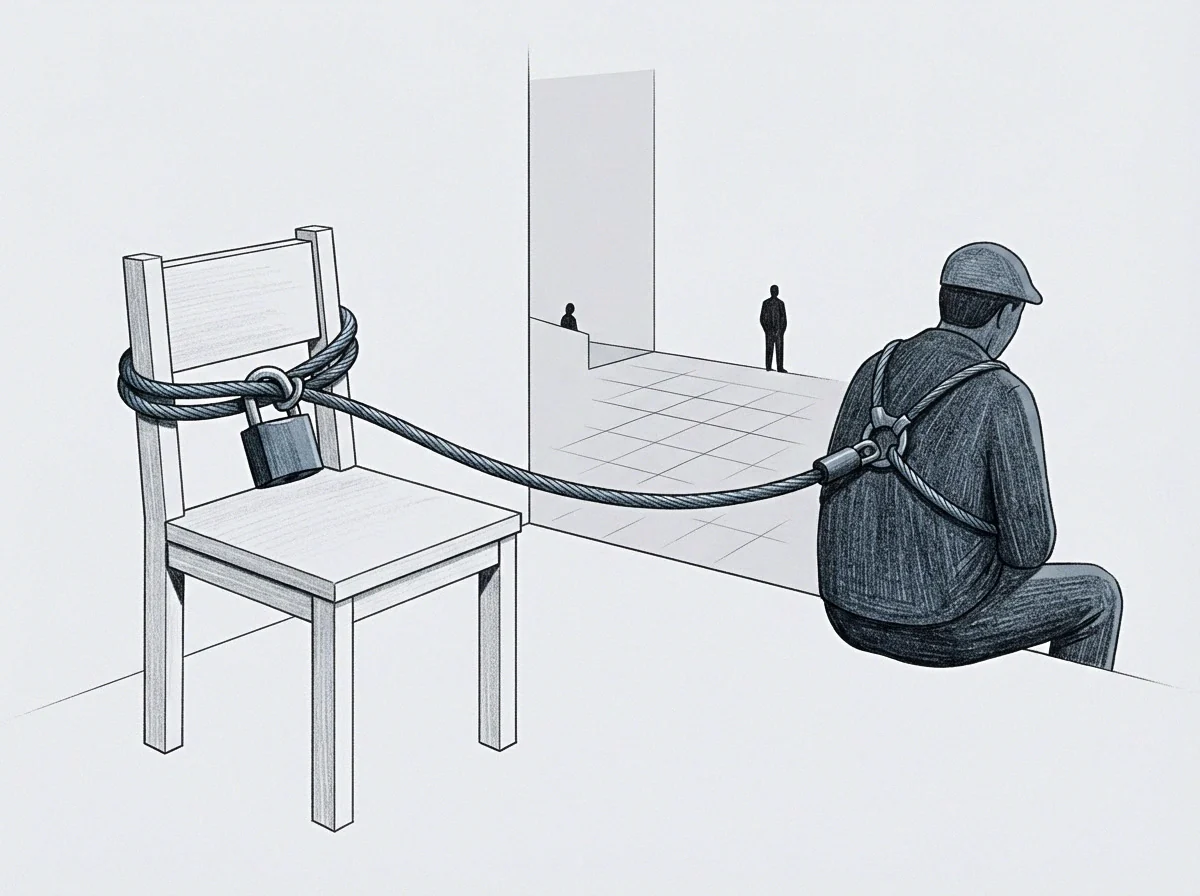
Structural comparison illuminates why conceptual understanding fails to govern behavior during acute survival activation. Explicit cognitive attachment knowledge operates within cortical structures designed for long-term planning, semantic analysis, and abstract reflection. Autonomic threat detection operates within subcortical and brainstem structures optimized for rapid energy mobilization and immediate physical defense.
Comparing these two systems on key operational variables demonstrates why subcortical threat circuits consistently dominate behavior under high pressure.
Comparative Mechanics of Cognitive Knowledge and Somatic Activation
Direct contrast between explicit mental models and autonomic threat responses reveals a fundamental operational imbalance. The following comparison outlines how explicit literacy and subcortical threat systems function across critical operational metrics under sustained load.
| Operational Variable | Cognitive Attachment Literacy | Autonomic Threat Activation |
|---|---|---|
| Neural Processing Latency | 300 to 500 milliseconds via cortical networks | 20 to 50 milliseconds via subcortical pathways |
| Metabolic Resource Allocation | Consumes high prefrontal glucose and oxygen | Mobilizes glucose rapidly for defensive motor output |
| Primary Systemic Objective | Analyzes relational meaning and long-term security | Ensures immediate physical and metabolic survival |
| Relational Signal Interpretation | Decodes subtle bids and intentions accurately | Filters presence as operational load or interference |
The operational reality outlined in the table demonstrates that cognitive literacy lacks the speed and physiological leverage to interrupt subcortical threat detection once sympathetic overdrive initiates. Explicit attachment models require significant metabolic energy to retrieve and apply, an expenditure that a depleted system cannot support. When pressure surges, the subcortical threat circuit wins the resource allocation battle every time.
The nervous system discards intellectual concepts to preserve immediate metabolic equilibrium.
When allostatic load exceeds physiological capacity, autonomic activation replaces prefrontal governance across all decision boundaries.

Update
Template transformation demands repeated physical experiences of safety rather than conceptual insight. Intellectual attachment knowledge remains an academic exercise until the nervous system experiences consistent, low-cost co-regulation under real operational pressure. Updating an internal working model requires altering the underlying autonomic setpoint, a task accomplished through somatic channels.
Cognitive understanding can frame the need for change, but only direct physiological experiences of safety alter subcortical threat sensitivity.

Somatic Recalibration and Co-Regulation Pathways
Physiological equilibrium restores itself through consistent physical interactions that communicate safety directly to subcortical structures, lowering cardiac metabolic expenditure. When two individuals remain physically present while maintaining calm autonomic states, their nervous systems engage in mutual physiological entrainment. The calmer state regulates the activated state through non-verbal channels such as vocal cadence, breathing rhythm, and micro-expressions.
Over time, repeated somatic co-regulation rewires the brain’s baseline threat detection settings. When a person whose autonomic system historically defaulted to hypervigilance experiences consistent co-regulation during operational stress, their neuroception adjusts. The brain learns that proximity to a partner reduces metabolic load rather than increasing it.
This physiological update creates earned security, embedding relational stability into implicit procedural memory rather than relying on vulnerable prefrontal retrieval systems.

Establishing Earned Security Through Physiological Consistency
Long-term structural changes in relational patterning develop as the nervous system internalizes reliable external regulation. Earned security represents a fundamental shift in autonomic baseline setting, achieved through hundreds of small, unglamorous interactions where threat signals were met with calm, non-defensive presence. Intellectual literacy serves only as an initial map; actual structural change occurs within subcortical neural networks through lived somatic consistency.
Consider an operational arrangement where partners establish explicit protocols for managing autonomic overload. When one partner recognizes signs of sympathetic overdrive, they initiate a somatic grounding protocol: sitting quietly in physical proximity without demanding verbal resolution or conceptual analysis. By removing the demand for high-level cognitive processing, the activated partner’s nervous system can down-regulate back into a ventral vagal state.
Through months of repeated application, this somatic practice updates the internal template, replacing defensive autonomic override with grounded relational safety.
Repeated physical safety in proximity rewires internal working models far more effectively than years of intellectual analysis.