
The Neural Mechanisms That Prevent Receptive Co-Regulation Slots From Forming During Deep Strain
Deep strain floods threat networks, suppressing prefrontal channels and blocking the neural slots required to process external calm as a physiological subsidy.
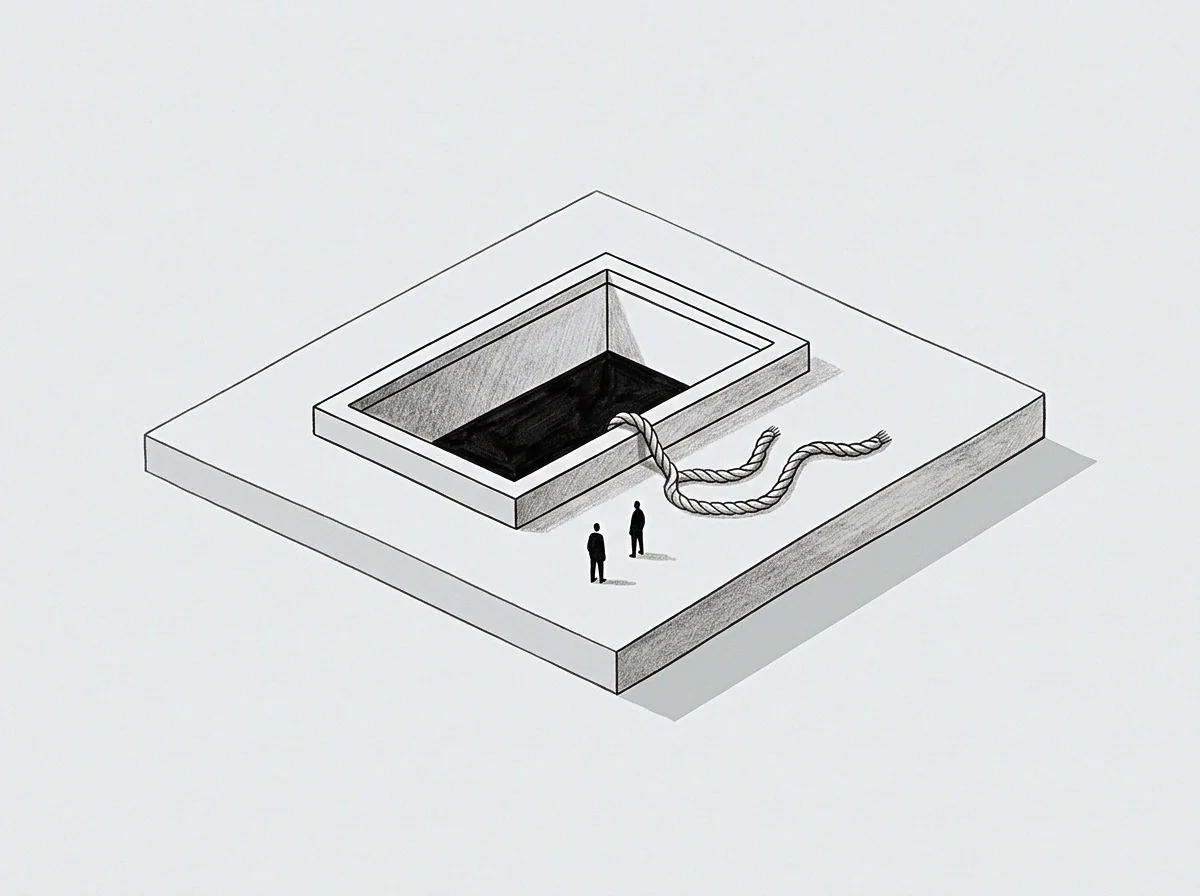
Threshold
The distinction between intentional retreat and autonomic incapacity defines how the brain handles proximity during crisis. A person under severe strain often appears to choose isolation, stepping out of shared rooms, turning away from offers of help, or staying silent. While this behavior is frequently classified as defensive detachment or social withdrawal, the underlying physiology operates differently.
Under sustained metabolic demand, the nervous system alters its sensory processing architecture. The brain does not choose to decline support. The biological receptor required to convert another person’s physiological calm into a reduction of internal threat simply ceases to assemble.
Social baseline theory establishes that the human nervous system defaults to sharing metabolic load with proximate, trusted conspecifics. When two individuals share a baseline, the neural cost of environmental vigilance drops, and the brain budgets energy assuming help is nearby. Under deep strain, this baseline economy collapses.
The threat evaluation network shifts from a shared distribution model to an isolated survival model. In this state, another person’s presence no longer registers as a physiological subsidy, and the brain treats every external input as unpredictable sensory data requiring active monitoring.
The failure to form a receptive slot occurs where subcortical threat detection meets cortical integration. A receptive co-regulation slot is a temporary neural state where the autonomic nervous system relaxes its defensive motor tone, opens ventral vagal pathways, and absorbs the lower arousal state of a present partner. Forming this slot requires spare metabolic capacity in the ventromedial prefrontal cortex.
When operational demands exhaust that capacity, subcortical structures default to high vigilance. A calm partner’s presence fails to downregulate the autonomic nervous system, and the offer registers as noise, an obligation, or an intrusion.
The structural difference between willingness and capacity shows when a partner offers presence without asking for performance. Under normal conditions, that input lowers heart rate variability stress metrics and reduces sympathetic tone almost immediately. Under deep strain, the exact same input produces no drop in sympathetic arousal.
The brain lacks open neural channels to convert external stability into internal relief, keeping the system locked in self-generated regulation and spending its remaining energy to hold structural stability while surrounded by unabsorbed calm.
When the neural gating threshold is breached, any incoming attempt at physiological grounding increases metabolic expenditure, regardless of the source’s intent.
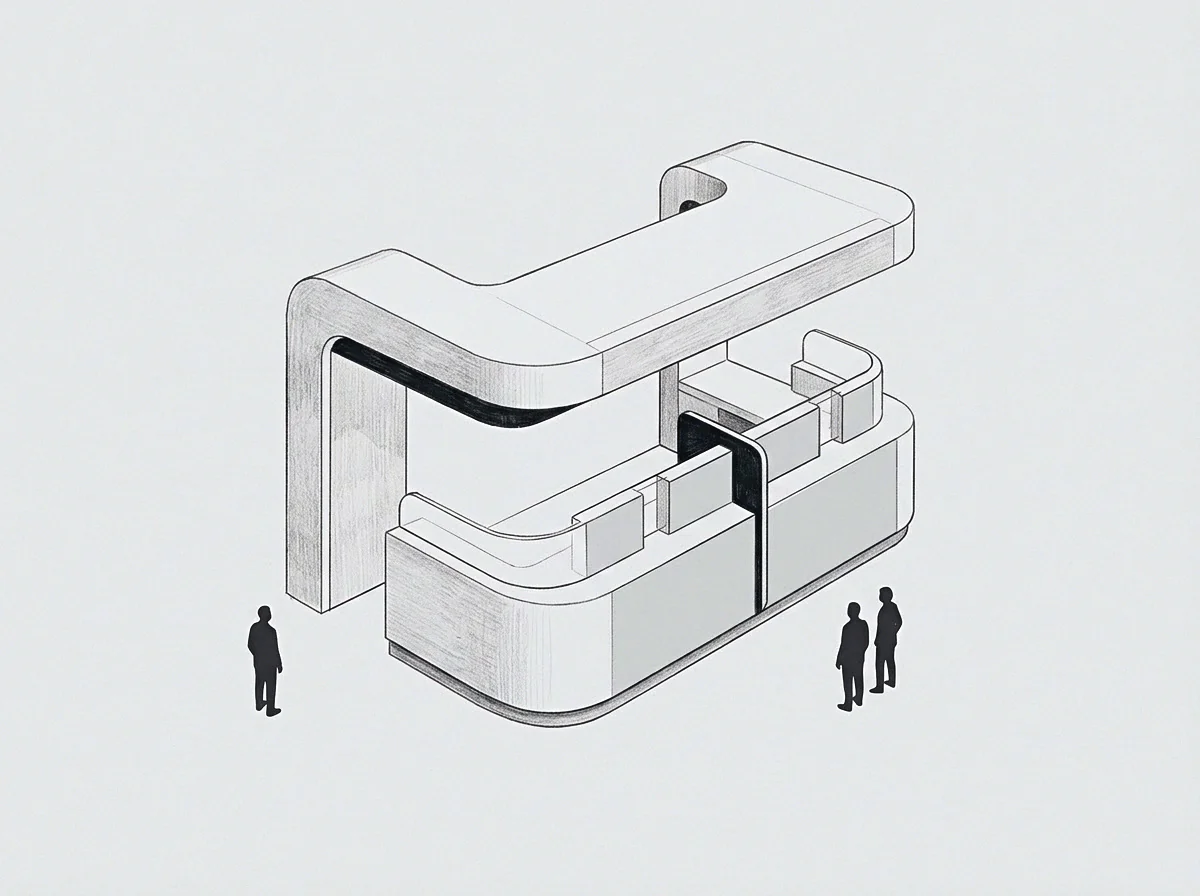
Substrate
The physical machinery of receptive co-regulation relies on sequential neural circuits. The ventral vagal complex controls the striated muscles of the face, vocal tract, and middle ear to enable social engagement. Alongside it, the anterior insular cortex maps internal visceral states, updating the brain’s interoceptive baseline in real time.
Under typical conditions, these regions work with the ventromedial prefrontal cortex to evaluate incoming social signals. When a calm voice or steady breathing pattern enters the environment, these structures suppress sympathetic outflow, letting the body mirror the companion’s lower autonomic state.
Deep strain disrupts this sequence by flooding the system with continuous threat signals from the basolateral amygdala. High allostatic load keeps the dorsal anterior cingulate cortex chronically active, forcing an urgent re-allocation protocol. Energy moves away from receptive interoceptive processing and toward immediate risk management.
The ventral vagal brake disengages, and the brain cannot afford the metabolic cost of opening a receptive window when doing so requires temporarily reducing defensive motor readiness.
The biological refusal to downregulate autonomic arousal occurs automatically whenever threat evaluation networks consume the total metabolic budget of the prefrontal cortex.
The neural mechanisms that block receptive slot formation operate through three distinct physiological gates:
- Afferent Interoceptive Suppression blocks incoming visceral signals of safety, preventing the insular cortex from registering the physical dampening of environmental stress.
- Prefrontal Inhibition Loss prevents top-down cortical structures from overriding subcortical alarm loops, leaving the sympathetic nervous system locked in continuous output mode.
- Polyvagal Circuit Shutdown disengages striated facial and middle ear neural pathways, leaving external vocal cadence and facial cues uninterpretable as soothing signals.
Consider sensory processing during this state. A steady hand placed on a shoulder during an acute crisis typically triggers oxytocin release and a drop in salivary cortisol. Under deep autonomic strain, the primary somatosensory cortex registers the physical pressure, but the anterior insula fails to attach a positive affective valence to it.
The amygdala treats the contact as unvetted touch requiring neural attention to check for threat. Instead of lowering autonomic arousal, the contact elevates sympathetic tone, and the body prepares its musculature to move.
The cost in energy and attention escalates over time. Unable to use proximate calm, the brain relies entirely on solitary self-regulation, which drains glucose and executive focus. Forcing down panic through cognitive control creates a feedback loop: that effort consumes the prefrontal resources required to restore ventral vagal receptivity.
The nervous system spends its remaining fuel to maintain an isolated defense, ensuring that future offers of co-regulation hit the same biological wall.
Misinterpreting this biological inability to receive regulation as an intentional refusal of intimacy causes partners to increase emotional pressure, directly amplifying the hyper-arousal driving the neural block.
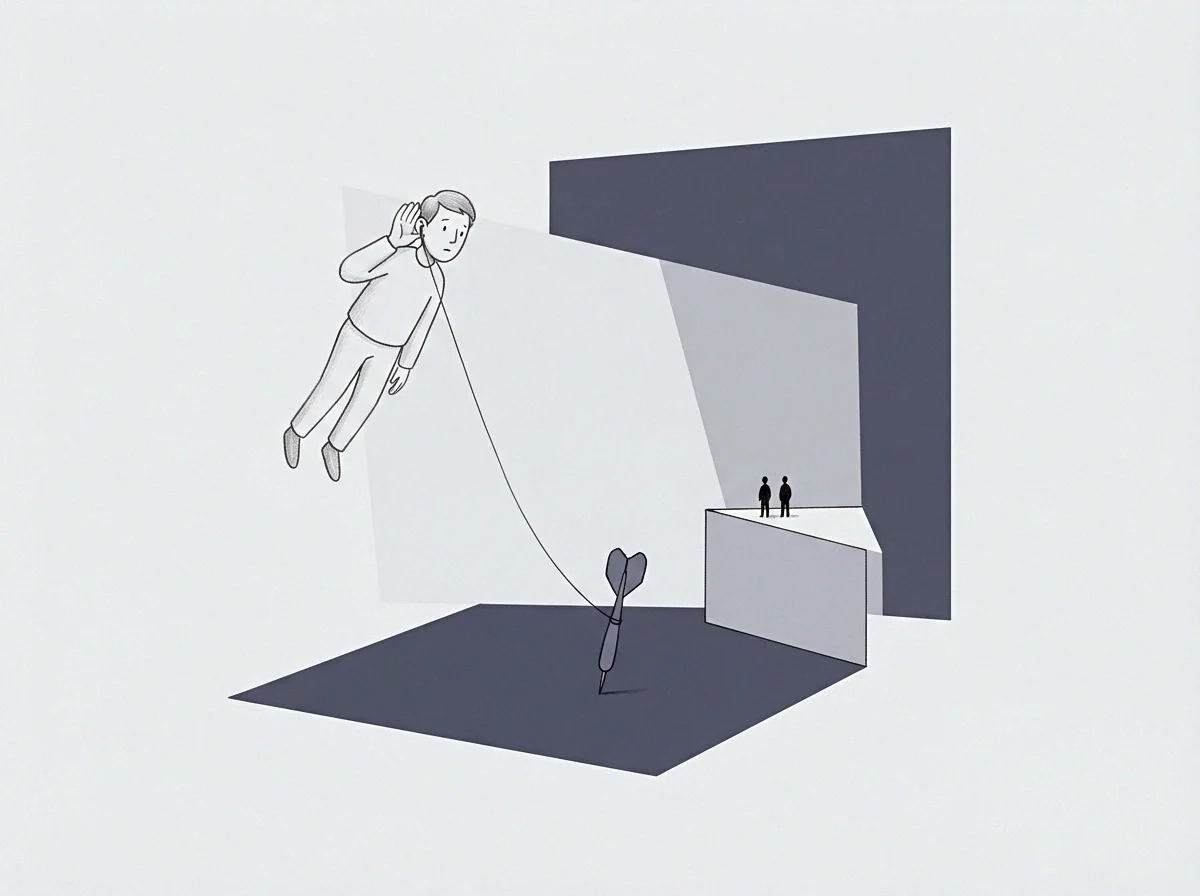
Bench
Take two partners who built an enterprise together over four years. Assume the primary operator holds complete operational liability while funding cycles dry up across twelve months of continuous burn. The operator sits at a dark wooden desk late on a Thursday evening, staring at three open financial projections.
The body is exhausted, yet muscle tone remains locked in acute fight readiness. Neck muscles are tight, heart rate rests at ninety beats per minute, and breathing is shallow. The partner enters the room quietly, sits on the wooden bench beside the desk, places a glass of water on the table, and stays present without asking questions.
In a balanced system, the partner’s physical steadiness acts as an external biological regulator. The operator’s brain registers the calm breathing, low heart rate, and absence of demand. The ventral vagal network opens, heart rate drops, muscle tone softens, and the internal working model lets the partner’s presence absorb part of the autonomic burden.
The operator rests their head on the desk, exhales deeply, and lets the tension break. This is the formation of a receptive co-regulation slot.
In conditions of deep strain, the operator’s primary internal working model is overwritten by an emergency operational state. Having run the regulation cycle backwards for years as the sole baseline for fifty employees, twenty investors, and the business itself, the operator internalized a single template: safety exists only when the self is regulating everything else. The neural architecture for receiving support has gone offline.
As the partner sits quietly on the bench, the operator’s brain processes the scene through this inverted template. The partner’s calm posture does not register as relief; the insular cortex reads it as an unstated demand. Background questions run constantly: What does the partner need right now?
How much energy must be spent explaining the financial numbers? Why is the partner watching? The partner’s steady breathing becomes another signal to monitor, and the presence simply adds to the operational load.
In a hyper-vigilant autonomic state, another person’s quiet presence is processed as an unassigned operational task rather than a physiological subsidy.
The operator turns to the partner and states flatly that work requires total solitude right now in a cold, sharp tone. The partner feels pushed away and leaves the room, closing the door softly. The operator remains at the desk alone, burning cognitive reserves to hold composure through willpower.
The operator paid in energy for the partner’s exit with an adrenaline surge, and pays for the remaining night in physical capacity through solitary exhaustion.
The exchange reads as a straightforward preference to be left alone to solve the problem.

Spectrum
Understanding the spectrum of autonomic receptivity requires examining how different physiological states respond to external offers of calm. The table below details four distinct operational states along the continuum of nervous system strain.
| Physiological State | Autonomic Tone | Receptive Slot Status | Metabolic Cost of Proximity |
|---|---|---|---|
| Autonomous Baseline | Ventral Vagal dominant | Fully available; flexible integration | Net positive energy yield; lowers baseline load |
| Strain Mitigation | Sympathetic elevated; vmPFC active | Partially restricted; requires explicit effort | Neutral; input requires light processing energy |
| Deep Autonomic Enclosure | Sympathetic hyper-arousal; dACC active | Completely closed; input gated at subcortical level | Net negative; external presence increases vigilance |
| Receptive Paralysis | Dorsal Vagal freeze response | Structural absence; internal working model offline | Severe drain; sensory input risks complete shutdown |
When an individual enters Deep Autonomic Enclosure or Receptive Paralysis, the main barrier to co-regulation is the absence of an internal receptor slot. An internal working model is a neural blueprint formed through early relational experiences that dictates how the brain handles threat and support. When early environments require a person to be the sole source of stability, the brain builds a unidirectional template: regulating self and regulating others merge into one operation.
The brain learns to project calm outward to stabilize its surroundings, but constructs no incoming pathway to receive calm back.
Under ordinary conditions, someone with a unidirectional template can simulate receptivity using executive function by listening, accepting touch, and consciously relaxing. Under deep strain, executive function drops offline to preserve core survival operations, collapsing that simulated pathway. The underlying hardware reveals its actual shape, leaving no incoming slots.
Co-regulation becomes impossible because the brain never built the neural pathways required to offload autonomic strain onto another person.
This dynamic creates structural asymmetry in high-stakes environments. An individual who operates as a perpetual baseline attracts partners and team members who seek regulation. That baseline absorbs organizational panic, filters it through rigid self-control, and projects steady presence back to the room.
The system balances on one person’s autonomic capacity. When that person reaches extreme strain, their system enters enclosure. The people who relied on their calm may attempt to offer comfort, but the regulator’s nervous system cannot process it.
Having spent years acting as the foundation, the system cannot suddenly function as a shelter.
The system remains locked in this configuration as long as environmental demand outpaces underlying recovery capacity.
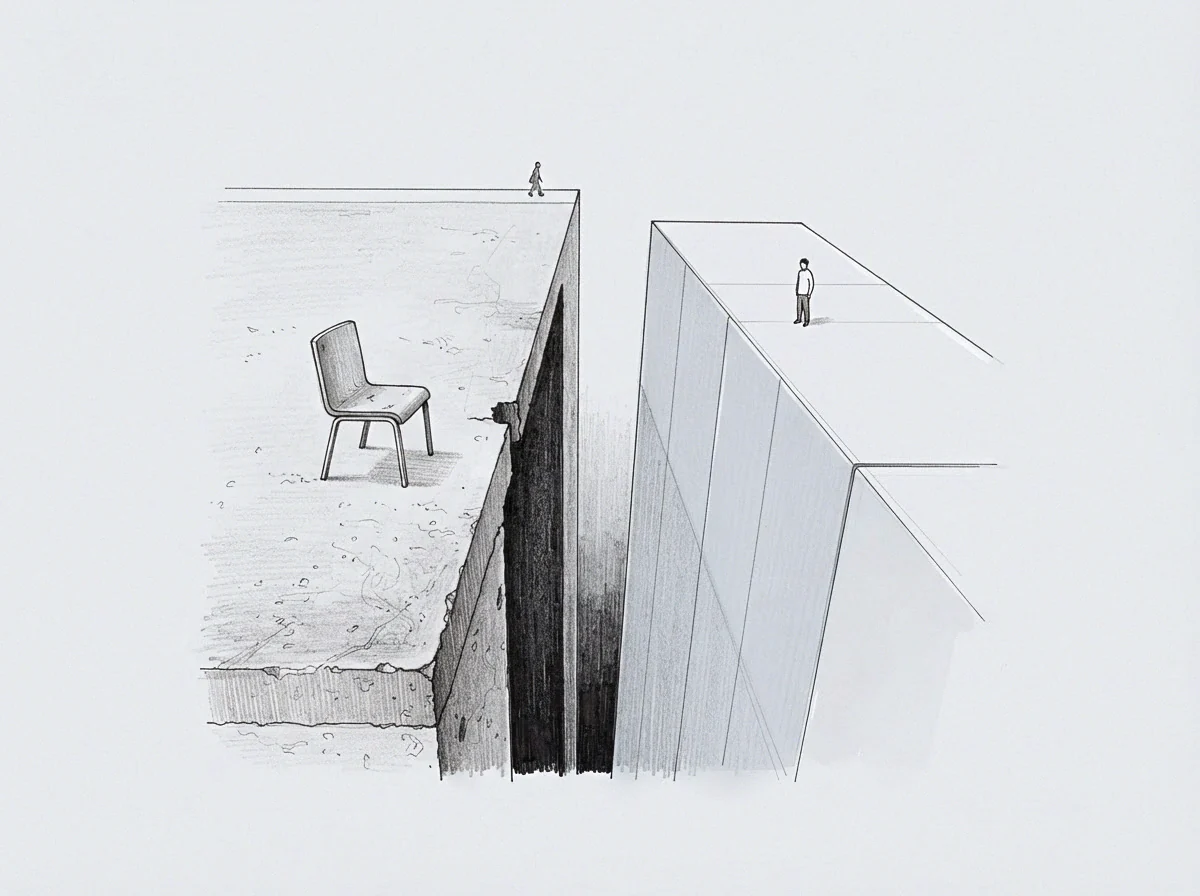
Tenor
Restoring neural receptivity after prolonged strain requires changing the nervous system’s operating rules. Intellectual insight alone cannot build a receptive slot. Someone can read every study on attachment theory, understand social baseline dynamics completely, and still remain biologically incapable of letting a partner’s presence lower their heart rate.
Subcortical gating mechanisms do not update through intellectual comprehension. Neural architecture changes through repeated micro-doses of physical experience that contradict the old template without triggering threat networks.
Is Biological Receptive Capacity Restoration Possible Under Sustained Demand?
The nervous system cannot construct a secondary template while operating at its ceiling; structural updates require temporary metabolic headroom. When someone is actively managing an existential operational crisis, the threat evaluation system rejects any attempt to lower defenses. Updating begins by establishing brief, bounded windows where no operational or relational performance is expected.
The goal is not to force emotional connection or vulnerability, but to expose subcortical threat networks to low-stakes proximity without setting off alarms.
The development of a functional secondary template follows a sequential order:
- The establishing of physical non-demand proximity, sitting in the same physical space without eye contact, conversation, or touching, allowing the somatosensory cortex to register safety without sensory overload.
- The introducing of passive parallel regulation, engaging in low-arousal motor tasks side by side, such as walking or manual labor, where external focus prevents hyper-vigilant internal monitoring.
- The introducing of micro-contact touches lasting under five seconds, explicitly bounded by time, allowing the insular cortex to process somatic contact without triggering defensive motor preparation.
- The practicing of explicit load offloading, deliberately transferring one small physical or administrative task to another person and observing the outcome without intervention.
- The sustained physical co-regulation phase, permitting longer periods of physical touch or quiet presence during moments of low stress, laying down the actual neural wiring for earned security.
Neural templates update exclusively through tiny repeated physical experiences of safety that occur beneath the threshold of autonomic activation.
This sequence builds what attachment literature terms earned security, representing the biological installation of a secondary internal working model. While the primary template formed in early life or reinforced through operational isolation remains in baseline circuits, the secondary template develops alongside it. Under mild or moderate stress, the brain defaults to this new pathway, forming receptive slots and offloading autonomic strain onto trusted conspecifics.
The difference over time between the old template and the new template is measured by recovery speed rather than initial reaction. When deep strain hits an updated system, the primary isolated template still activates at first. The nervous system attempts to close its gates, harden its posture, and manage the burden through solitary willpower.
In an updated system, however, the duration of this enclosure drops from months down to hours. The brain recognizes the metabolic cost of solitary regulation, accesses the secondary template, and re-opens the receptive slot before total depletion occurs.
A person grows a receptive slot by surviving small, bounded moments of physical non-reliance until the brain learns that lowering defenses does not cause systemic structural failure.
Grasp
The outer limit of human performance lives inside the metabolic ceiling of the autonomic nervous system. No amount of discipline, tactical planning, or psychological resolve overrides the raw physics of allostatic load. When an individual attempts to serve as a permanent regulation anchor for an organization while keeping a completely closed internal receptor system, structural failure is inevitable.
This failure rarely presents as a conscious decision to step down; it presents as physical shutdown through cardiovascular exhaustion, endocrine collapse, cognitive paralysis, or abrupt relational severance.
A stated limit is the first obstacle a load-transferring system encounters that is not the regulator’s body. When an operator or founder sets a clear, non-negotiable boundary around their availability, the surrounding environment is forced to re-organize its own regulation mechanisms. The organization, team, and partners must build internal stabilization pathways rather than offloading panic onto a single human anchor.
Establishing this limit is not emotional self-care; it is an operational necessity designed to preserve the leader’s physical substrate.
An unstated limit guarantees that the surrounding system will continuously transfer its unmitigated autonomic strain onto the single person willing to absorb it.
The long-term capacity of an individual depends on transitioning from a single-template isolation model to a flexible dual-template model. The primary template built their capacity, forged independence, and allowed them to navigate extreme operational environments alone. The secondary template provides the biological baseline needed over decades.
Without it, the regulator eventually burns through biological reserves, leaving the seat empty and the surrounding structure without an anchor.
How much metabolic structural damage must an autonomic nervous system sustain before it permits the construction of its very first receptive slot?