
Long Term Organizational Load Redistribution Following Executive Transition from Shock Absorber to Hard Terms
Executive transition from shock absorber to hard terms redistributes operational load by converting continuous personal availability into explicit structural limits.
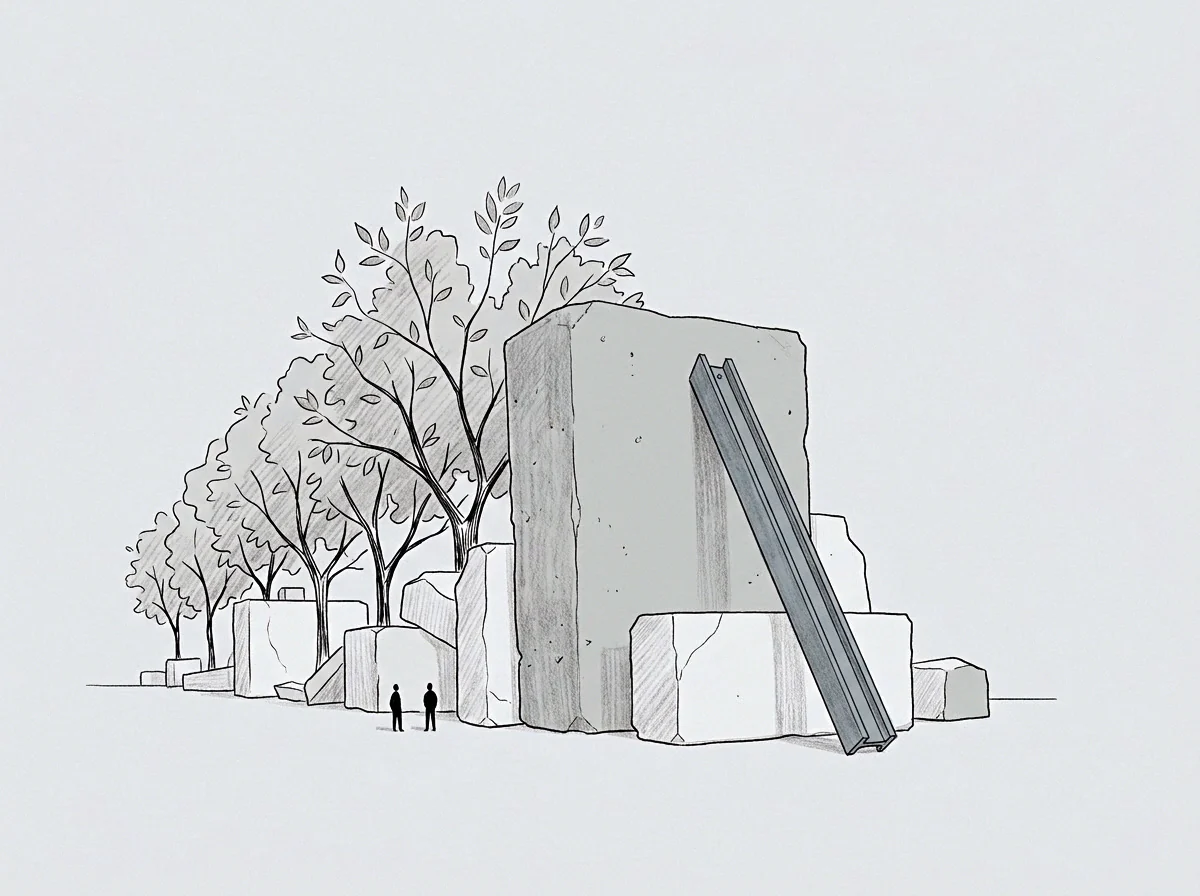
Wire
An executive sits with six competing messages at eleven on a Tuesday night, absorbing the operational spillover. Operations routed a delivery breakdown upward instead of running regional triage, product design asked for emergency arbitration on a launch delayed four times, and sales wanted a custom contract exception before the quarter closed. On the surface, the organization functions smoothly because one person turns systemic friction into personal labor.
Unmanaged variance, vague boundaries, and delayed calls across four departments travel down an informal wire directly to the executive, who absorbs the force so the teams do not have to.
When an executive acts as an organizational shock absorber, the surrounding systems direct more unfinished work toward that desk. Lower tiers face no immediate friction when escalating problems, which turns upward routing into an operational habit. The executive balances the system through constant individual availability, using personal capacity to compensate for absent organizational structure.
Over three to six quarters, this arrangement solidifies an unspoken operating agreement: teams run without hard capacity constraints, while the buffer desk absorbs all variance.
The human shock absorber conceals structural debt by converting systemic friction into silent executive overhead.
Relying on continuous executive intervention creates structural fragility across dependent units. Departments stop developing internal conflict resolution because escalating upward takes far less effort than negotiating with peers. The executive often misinterprets this influx of operational noise as proof of indispensable leadership.
In practice, the seat operates as a load sink that hides the organization’s true operational boundaries.
Teams adjust rapidly to an absolute buffer. Escalation becomes the default reaction to small ambiguities, localized problem-solving stalls, and team leads operate well inside their nominal authority. The executive remains caught in daily firefighting, mistaking the traffic on the wire for real strategic momentum.
The informal wire carries this load until executive capacity saturates completely. Unresolved friction between departments pools at the executive layer, while direct reports expect immediate interventions without assessing their own ability to resolve the underlying tension.
Without explicit structural terms, organizational load concentrates in a single seat until the arrangement breaks down.
If the executive abruptly stops answering messages without establishing new operating conditions, managers downstream take the silence as deliberate neglect rather than an exhausted capacity ceiling.
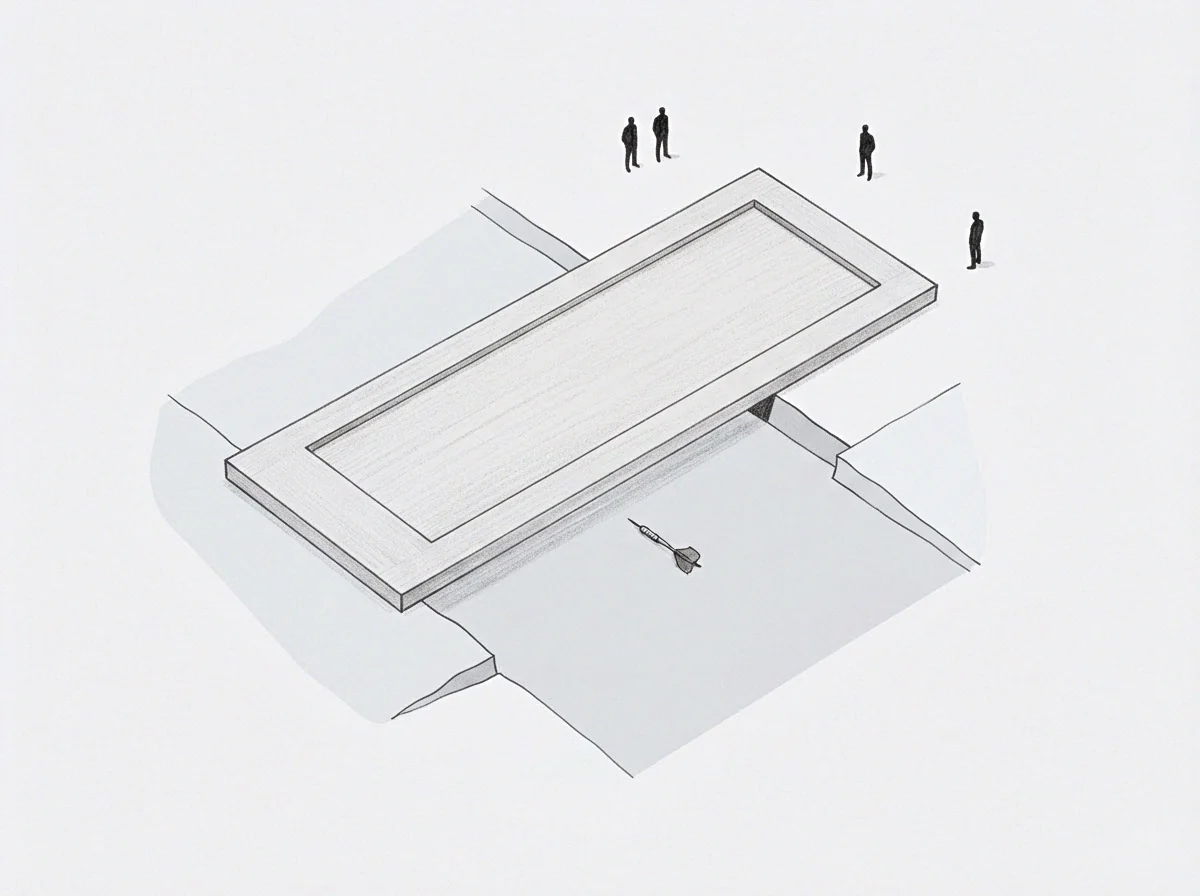
Grid
Analyzing organizational load distribution requires mapping how work moves through formal structures and informal conduits. A functional grid consists of defined decision rights, clear operational boundaries, and assigned capacity limits. When an executive absorbs operational friction, the formal grid gives way to an ad hoc network where unresolved problems slide toward the seat offering the least resistance.
Systems theory demonstrates that an active regulator under continuous load broadens its regulatory envelope until reaching capacity setpoints. When an executive absorbs operational variance, staff lower their own threshold for resolving problems. Responsibility for unresolved structural ambiguity shifts entirely to the executive.
The organization loses sight of localized breakdowns because the executive steps in to fix errors before they appear in departmental performance reports.
| Operational Dimension | Shock Absorber Executive Mode | Hard Terms Executive Mode |
|---|---|---|
| Escalation Pathway | Informal wires, direct messaging, late night requests | State-gated escalation criteria, formal briefs |
| Variance Resolution | Executive personally absorbs and resolves operational friction | Originating department resolves variance within stated boundaries |
| Capacity Allocation | Unbounded availability derived from executive exertion | Explicit capacity setpoints and scheduled decision windows |
| Structural Debt Visibility | Concealed within executive workload and personal hours | Exposed immediately at departmental boundary lines |
| Team Problem Solving | Atrophied due to rapid upward load transferring | Forced horizontal negotiation and localized resolution |
The structural debt created by silent load absorption stays hidden until executive capacity fails entirely. Departments report high satisfaction while operating with fundamental internal defects. Operational metrics look stable, but the operating apparatus depends on the stamina and constant presence of a single person.
The organization buys short-term delivery at the expense of systemic durability.
Continuous intervention at the leadership level masks systemic inefficiency across middle management. Managers report broad operational autonomy while regularly delegating complex friction upward. The executive seat becomes an operational bottleneck disguised as a core asset.
As incoming volume mounts, response latency slows, introducing secondary delays across the wider enterprise grid.
Constant personal intervention stops teams from establishing repeatable processes. Direct reports miss the chance to develop necessary problem-solving habits because the executive steps in before local mistakes produce local consequences. Team capacity remains flat while operational demands expand.
When leadership fails under this mode, organizations routinely misdiagnose the breakdown as personal exhaustion rather than poor structural design. They recruit a replacement into the identical shock absorber role, repeating the cycle. Establishing lasting organizational capacity requires replacing the buffer model with explicit terms that return operational load to its point of origin.
Attempting to resolve structural load imbalances through individual exertion depletes executive attention without altering downstream operational habits.
Shift
Transitioning an organization from an executive shock absorber model to a hard terms architecture requires an intentional operational pivot. A hard term represents a stated structural limit, an operational constraint that declines to absorb unpriced variance. The transition alters what the executive seat accepts: incoming requests must satisfy defined criteria, clear cost models, and explicit capacity thresholds rather than receiving immediate personal intervention.
Designing the Hard Terms Architecture
Establishing hard terms begins with auditing escalation patterns across all operational channels. The executive identifies every recurring instance where personal labor substitutes for missing team processes. Terms are stated once, plainly, and without procedural justification.
A hard term defines what the executive seat will accept, what must accompany an escalation, and the precise conditions that justify executive intervention.
Hard terms function as structural boundaries within an organization. When an escalating team meets a hard term, the operational load reflects back to its point of origin. The originating team must either resolve the friction horizontally or assemble the required decision package before resubmitting.
This load bounce forces teams to build internal problem-solving capacity and exercise localized judgment.
The executive replaces continuous availability with scheduled decision windows. Asynchronous channels replace real-time emergency messaging for routine operational matters. Emergency pings require explicit classification and carry formal post-mortem requirements to evaluate why localized resolution failed.
A hard term converts implicit executive availability into an explicit structural constraint that reallocates load to its source.
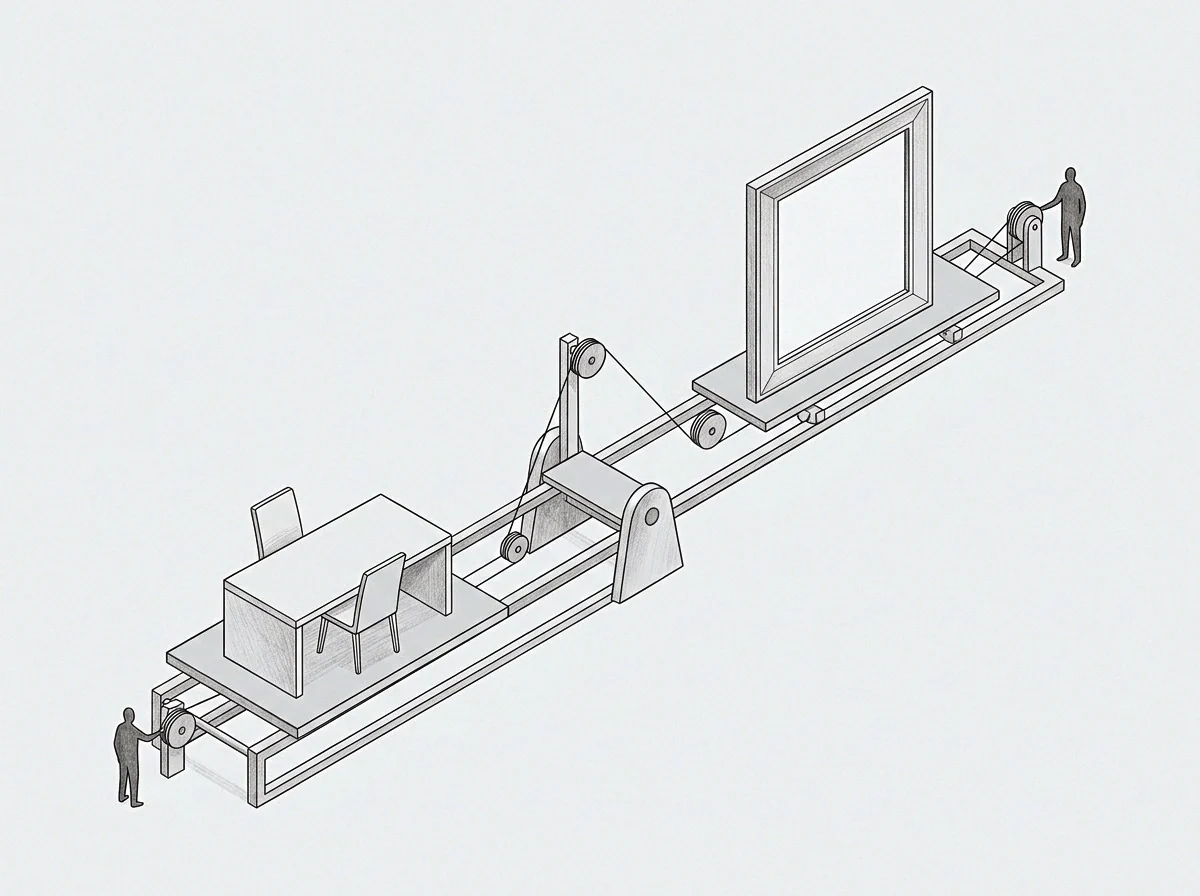
Which Operational Dynamics Transfer Load Under Stated Limit Constraints?
The immediate consequence of introducing hard terms is operational friction at departmental boundaries. Teams accustomed to rapid upward escalation experience immediate discomfort when meeting stated limits. Middle managers initially interpret hard terms as executive disengagement or reduced support.
Incoming pings multiply briefly as the system tests the durability of the newly stated boundaries.
During this testing phase, the executive holds the position without defense or continuous explanation. A limit defended through repeated justification invites negotiation; a limit stated flatly as an operational constraint functions as a wall. The pushing system tests the boundary repeatedly until confirming that the regulator will not yield.
Once the system detects an unyielding term, load redistribution begins automatically.
Consider a practical scenario involving an executive managing product engineering and commercial sales operations. Two departments operated for two years with an executive routinely resolving priority conflicts between custom sales commitments and engineering roadmaps. Commercial sales holds forty percent unallocated capacity while engineering runs at ninety-five percent utilization.
Under the shock absorber model, sales repeatedly closed non-standard contracts, leaving the executive to negotiate engineering sprint trade-offs every Thursday evening.
The executive introduces a hard term: custom sales requests require a fully funded engineering resource plan approved by regional leads prior to contract signing, alongside a fourteen-day lead time. Two days after the announcement, sales submits a non-standard contract without the resource plan, requesting an immediate executive override for a Friday deadline. The executive applies the hard term, declines the override, and returns the contract to sales without entering personal negotiation.
Sales attempts three distinct operational moves over forty-eight hours to bypass the term. First, sales escalates through informal messaging citing revenue targets; second, sales cites the risk of client defection; third, sales requests an emergency verbal exception. The executive maintains the position flatly: the contract proceeds only when accompanied by the required resource plan and lead time.
By Monday morning, sales alters its internal process. Sales leadership initiates direct horizontal negotiation with engineering management to pre-allocate capacity for upcoming deals, creating a standardized request pipeline. The load shifts from late-night executive arbitration to structured horizontal alignment between departmental peers.
Operational capacity aligns with true costs within ten business days.
A hard term requiring pre-approved resource allocation and a fourteen-day window for non-standard commitments shifts arbitration labor entirely back to requesting departments.

Term
Hard terms operate through explicit decision rules, formal availability limits, and precise state-gated entry criteria. A term is an institutional fixture within the organization, existing independently of executive mood or personal energy reserves. Where a shock absorber executive relies on individual stamina, a hard terms executive relies on institutionalized constraints that govern how work moves across organizational boundaries.
State-gated acts govern executive intervention. An act is state-gated when it cannot occur unless specific underlying operational conditions are fully satisfied. For example, an executive review becomes state-gated when it proceeds only after direct reports complete horizontal alignment, supply standardized data packages, and present two distinct option paths with explicit risk assessments.
If an escalation lacks these components, the entry gate remains closed, and the work returns to the originating team.
Decision-gated acts depend solely on personal executive choice. When an organization runs predominantly on decision-gated acts, the executive seat becomes an operational bottleneck. Every minor choice requires executive intervention, creating massive operational latency.
Hard terms convert decision-gated workflows into state-gated structures, enabling direct reports to move work forward autonomously as long as established conditions are met.
Implementing hard terms transforms organizational communication channels. Priority pings reduce in frequency while increasing in informational quality. Executive channels no longer function as continuous chat streams for unresolved anxiety; they become formal tools for state-gated authorization and strategic direction.
- Escalation Standardization specifies required data inputs, option analyses, and prior horizontal coordination efforts before an issue enters executive review pathways.
- Availability Windowing establishes fixed, non-negotiable blocks for deep strategic work, restricting operational consultations to designated daily windows.
- Variance Repricing attributes the operational and financial costs of custom exceptions directly to the originating department budget rather than absorbing them centrally.
- Horizontal Resolution Mandate prohibits upward escalation of inter-departmental friction until both departmental heads complete a documented alignment session.
Silence from the executive seat changes its operational character under a hard terms architecture. In a shock absorber context, silence implies neglect or hidden overload. Under hard terms, silence signals that operational parameters are within normal tolerances and local teams hold full authority to act.
Downstream managers learn to read silence as an operational green light rather than structural uncertainty.
Under hard terms, executive silence signals proper system operation and complete local authority rather than leadership absence.
Redistributing operational load exposes latent capability gaps across middle management. Managers who relied on continuous executive intervention must now exercise independent judgment, manage local variance, and resolve peer conflicts directly. Some managers flourish when granted genuine structural authority; others, selected primarily for upward communication skills, struggle when required to manage raw operational friction without an executive buffer.
Organizational performance under hard terms depends heavily on executive consistency during the initial ninety days of implementation. Yielding to exceptions re-establishes the informal wire, signaling to the organization that hard terms represent soft preferences rather than structural walls. Consistency converts new terms into stable organizational habits.
How does middle management capacity evolve when executive buffering is permanently removed?
Margin
The long-term outcome of transitioning from a shock absorber executive model to hard terms is structural load redistribution across the enterprise. Between sixty and one hundred eighty days following implementation, operational load settles into new equilibrium setpoints. Departmental teams absorb localized variance, horizontal negotiation becomes standard operating procedure, and executive attention expands significantly.
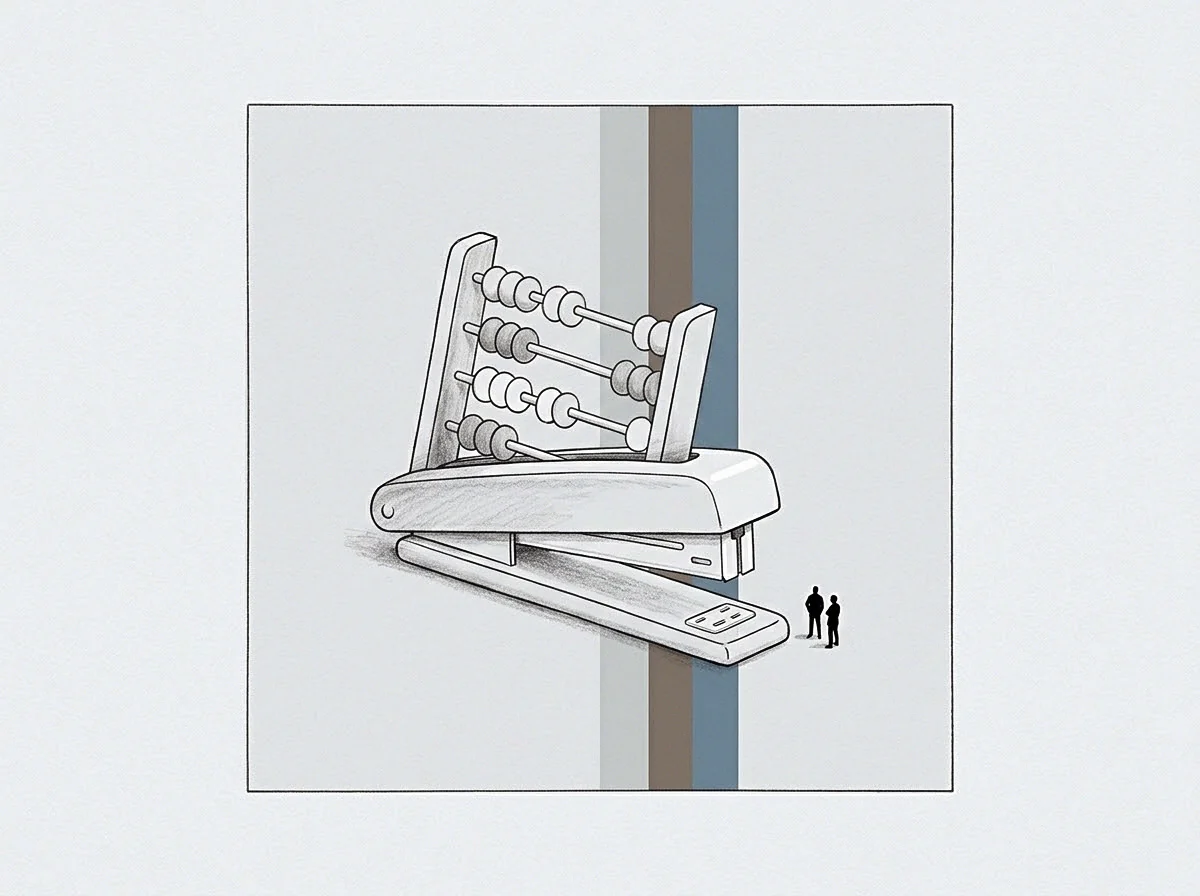
Organizational margin represents the structural capacity left over after meeting baseline operational demands. Under the shock absorber model, organizational margin drops near zero because the executive seat continually absorbs all excess friction, leaving no reserve capacity for strategic shifts, unexpected market changes, or systemic innovation. Hard terms restore organizational margin by establishing real boundaries and forcing operational units to maintain internal capacity buffers.
Sustained load redistribution changes executive capacity metrics. Time spent on reactive operational arbitration decreases while time dedicated to long-term capital allocation, structural design, and market positioning expands. The executive seat transitions from an operational shock absorber to a strategic architecture engine.
The organization achieves genuine scalability only after removing reliance on individual executive buffering. Scalability requires repeatable systems, explicit operational boundaries, and self-correcting teams. Hard terms convert individual leadership energy into durable institutional structure, ensuring the organization operates effectively regardless of executive presence on daily operational channels.
Maintaining long-term operational equilibrium requires periodic audits of organizational boundaries to prevent gradual return to informal load-transferring habits as new personnel join the enterprise.